BoredomBusted — Find Your Next Favorite Thing To Do
Discover hobbies, activities, places, and ideas that spark joy. Whether you're looking for something creative, active, social, or relaxing, BoredomBusted helps you find your next favorite thing to do.
Browse our hobby guides, things-to-do collections, and place ideas to never be bored again.
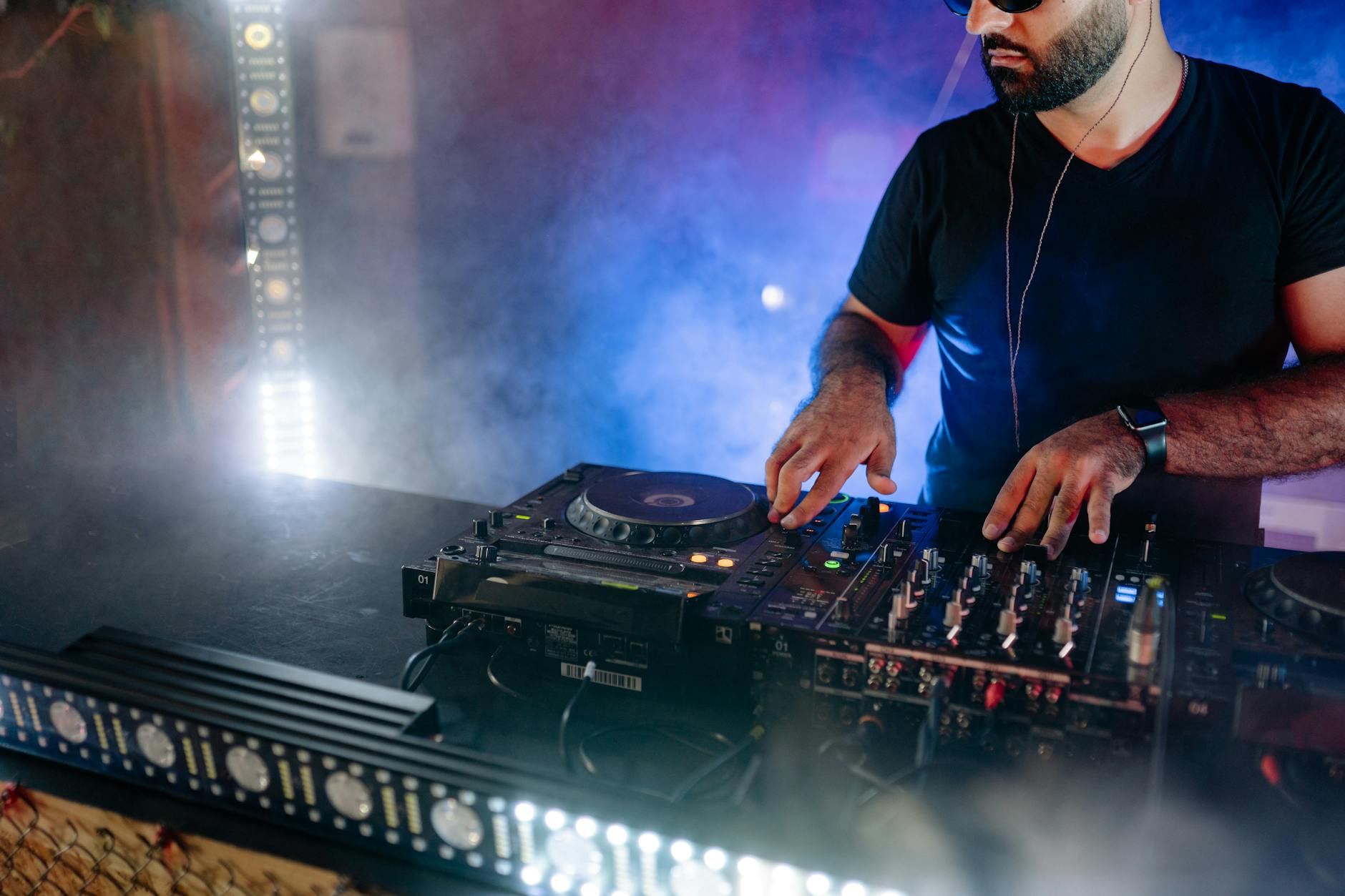
Live remixing isn't just DJing — it's real-time composition that transforms the music by reading the crowd's energy while performing.
Getting started with live remixing as a beginner involves learning how to manipulate existing music in real-time – chopping samples, layering loops, and reshaping tracks as they play.
Unlike DJing, you're not just sequencing songs; you're reconstructing them on the fly.
Unlike music production, there's no safety net – what the audience hears is built in the moment, not polished in a studio.
In live remixing, hobbyists manipulate 2-4 tracks from their music library in real-time using a DJ controller, employing techniques like scratching, layering acapellas, and adjusting EQ settings to create spontaneous mashups without pre-planning. They monitor waveforms, cue tracks, and blend elements on the fly, all while recording sessions to enhance their skills and simulate performance pressur…
Live remixing induces a flow state by aligning skill and challenge, allowing hobbyists to become fully immersed while tackling escalating technical tasks, such as improvising mashups. The immediate feedback from their actions builds confidence and muscle memory, while the novelty of endless track combinations maintains engagement and excitement, countering feelings of stagnation.
You think live remixing is just DJing with extra steps. Press play, twist a knob, look cool – that's the assumption sitting in your head right now, and it's keeping you from seeing what this actually is.
It's not performance dressing up a playlist. It's real-time composition – decisions made in seconds that change what the music becomes.
Live remixing is about reading the room and reshaping the music as it plays. You're not executing a plan; you're rewriting it on the spot.
Each choice has immediate consequences. Pull a vocal too early and the whole build collapses. Get the timing right and the room's energy shifts in four seconds.
It's the skill, not the gear, that matters. Hearing three layers simultaneously and knowing what to drop next is the real challenge.
Last year in Bristol, a DJ at a warehouse show dropped the bassline of a track two bars early. It wasn't a mistake – it was brilliance. The crowd had peaked.
He killed the low end.
Let the hi-hats run naked for eight counts.
Then brought everything back harder. Nobody knew he rewrote the ending live.
That's the job.
You're wondering what gear you'd even need to start. That's exactly where we're going next.
Live remixing looks fluid when others do it. Loops drop effortlessly, filters sweep perfectly, and the crowd loves every second. Watching, you think, "I could do that." Then, reality hits.
Your confidence from watching doesn't match what happens in practice. Two loops fight each other. The tempo is off. You forget to mute. It's chaotic and frustrating.
The frustration doesn't mean you're doing it wrong. It means your hands aren't aligned with your mind yet.
Expect a few rough sessions early on. You'll spend the first week figuring out where your hands should be. The first successful transition is thrilling, but it's often followed by chaos in the next attempt. By week three, the gap between what you intend and what you produce begins to close, just a little.
You'll get a few moves feeling automatic. However, many others will still feel like a precarious balancing act. You close your laptop after a bad session, feeling both frustrated and encouraged. Muscle memory, not just understanding, is where the skill truly lives. The path to syncing those isn't short.
Make sure the session tempo is set before loading any loops. Mismatched BPMs are a beginner's nightmare. It's better to pause and correct than to forge ahead and reinforce bad habits. Next, let's tackle the mistakes that prolong the struggle.
When to start: Early morning
Duration: 1 hour
Cost to try: $0 (using free software)
Success criteria: if you finished without knowing exactly how to use all the features, do session 2.
Beginners often rely too heavily on their ears. It seems noble, but fatigue sets in quickly.
Use the split waveform view to visually match transient spikes. Let your eyes guide your ears as you practice.
Many beginners just drop in the new track when it feels right. But dance tracks are built on repeating phrases, often 8 or 16 bars long.
Time your new track to enter at the 32nd bar from the current drop. This phrase-locked entry makes transitions smoother for everyone.
The high-pass filter becomes a crutch. After using it to swap tracks, it can feel like the easy option.
Focus on building clean transitions using EQ gain staging. Try cutting lows on the incoming track without relying on sweeping the filter.
Beginners often set gain levels once and leave them. A track that starts out balanced might clip or disappear during more intense sections.
Continuously adjust gain throughout the track. Check the master meter every 30 seconds to maintain balance.
Scouring for the first beat while a track is playing is a recipe for disaster. The mix can wobble, and the audience will feel it.
Always set a hot cue on the first downbeat of every track. This makes starting the next track as easy as pressing a button.
Live remixing thrives in settings with energetic crowds and sound systems. DJs who stick to home practice often stumble when playing live for the first time.
Look for events at open-format bars, underground club nights, warehouse parties, and mid-sized venues hosting DJ nights.
Introduce yourself to the event organizers. Saying you're new and eager for a short set almost always gets you a 15-minute slot. That's more beneficial than months of solo practice.
The original live remixing format uses two turntables, vinyl, and a mixer. It's all about cuts, scratches, and beat juggling without relying on software.
Expect $400–700 for a starter setup, plus vinyl costs.
Trigger loops, samples, and effects from a hardware controller connected to software. This method prioritizes real-time arrangement over traditional record mixing.
Start with controllers that cost around $200. The learning curve here is easygoing, ideal for those performing at events with minimal technical hurdles.
Perform using a DAW and a grid controller like a Launchpad or Push. Here, remixing and live composition blend smoothly.
Gear costs $300–600, but building your session beforehand requires significant time.
Mix audio and visuals together with synced video clips and motion graphics. This is for those adept with both sound and visual tools or collaborating with a VJ.
It's complex, so it's best tackled after mastering the audio side.
Live instrumentalists play over a remixed backing set with real-time sample manipulation. This approach suits musicians who want to integrate electronic layers into their performances.
Expect coordination challenges that can deter most attempts early on.
If the texture of this appeals to you, DJ Mixing is built on similar bones.
For something adjacent, see Band Performance.
If this resonates, Double Bass explores a similar direction.
Most beginners spend their energy collecting loops and samples, then wonder why their sets sound like a playlist with crossfades.
The real bottleneck isn't your library – it's knowing where the next track is going before it gets there.
Predictive phrase awareness is the skill to develop – the ability to hear a track's 8-bar structure in real time and anticipate the drop or breakdown before it hits.
Not counting beats. Not watching a waveform.
Hearing the musical tension that tells you a transition window is opening in four bars.
When you have it, transitions feel inevitable. Your next move is ready while others are still in the current one.
Without it, you're always reacting, always one beat behind, and the mix never builds into something bigger than its parts.
You'll see the same phrase position failing you repeatedly – that's your actual gap, not your gear.
Six sessions over 30 days. About one every five days, with enough time to reflect between them.
Live remixing tests your instincts. It doesn't rely on muscle memory. Over six sessions, you'll move past interface panic into actual listening.
If thoughts of remixing invade your daily life, it's a sign. If you catch yourself mentally layering tracks or rewinding to understand a move you made, you're hooked. Dive into learning basic EQ and cue management and join a community to get feedback.
Feeling indifferent after six sessions means something different. If it was just okay, the idea may have been more appealing than doing it. Consider one more session if a specific aspect calls to you, not just for the sake of it.
If the sessions felt punishing or stressful, it's not about warming up. The real-time aspect might not be your style. Consider production work in a DAW where edits are offline and you have control over the pace.
You're already listening differently. If you're noticing transitions in the music you hear everywhere, your brain is doing the work. That's not just enthusiasm, it's a budding interest in how sounds connect.
Looking for something different? The hobbies list is the easiest way to scan what else is on the table.
When you don't want to commit, things to do when bored is a better starting point.
You'll need a DJ controller, headphones, and mixing software like Serato, Pioneer, or Virtual DJ to get started. A laptop and quality speakers or monitors complete the basic setup, though you can begin learning with budget-friendly options before investing in professional gear.
Basic mixing skills like beatmatching and transitions can be learned in 4–8 weeks with consistent practice, but developing the ear and creativity for compelling remixes takes several months. Most people perform publicly within 2–3 months of focused learning.
No—you don't need music theory or instruments to start, just rhythm sense and willingness to practice. Modern DJ software has intuitive interfaces designed for beginners, and many successful DJs started without formal training.
Entry-level setups range from $200–$500 for a basic controller and software. Semi-professional rigs cost $1,000–$3,000, while professional club-ready systems exceed $5,000, but you can start small and upgrade as you gain experience.
Live remixing focuses on creatively manipulating and reconstructing tracks in real-time, while DJing traditionally emphasizes smooth track selection and transitions. Remixing is more about sound design and effects layering, making it a more hands-on, production-like experience.
You can perform at clubs, bars, festivals, parties, weddings, or online streams. Many beginners start by creating sets at home, sharing them on YouTube or SoundCloud, then graduate to booking local gigs or open-decks nights at venues.