BoredomBusted — Find Your Next Favorite Thing To Do
Discover hobbies, activities, places, and ideas that spark joy. Whether you're looking for something creative, active, social, or relaxing, BoredomBusted helps you find your next favorite thing to do.
Browse our hobby guides, things-to-do collections, and place ideas to never be bored again.
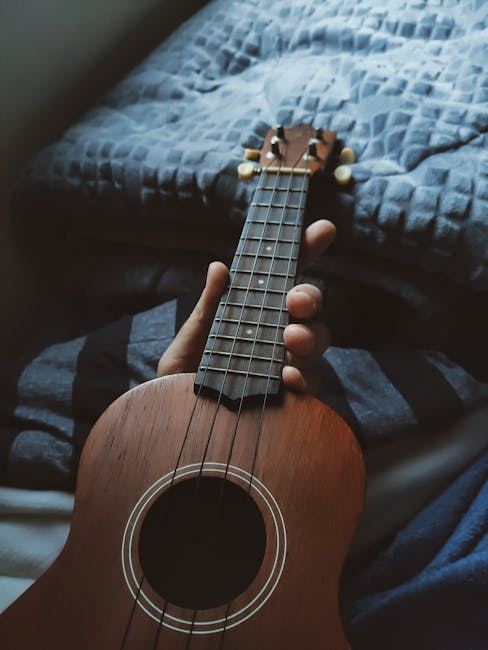
Think the ukulele is just a toy? Its four strings simplify the learning curve, making it a serious stepping stone to guitar and beyond.
Learning to play the ukulele as a beginner is a delightful way to engage with music, characterized by its small size and cheerful sound. The ukulele is a small, four-stringed instrument from Hawaii that produces sound through nylon strings you pluck or strum with your fingers or a pick.
Unlike a guitar, it has fewer strings, lighter tension, and a naturally cheerful tone – which means you're playing real songs in days, not months.
In ukulele practice, individuals engage in self-directed sessions where they physically hold the instrument, tune it, and perform targeted finger movements like fretting chords and strumming patterns, while mentally focusing on memorizing song progressions and tracking their progress in a journal.
Ukulele practice fosters quick-entry flow states through its portability and simplicity, enabling focused, enjoyable play during idle moments, while daily micro-sessions provide tangible skill feedback and a sense of accomplishment that combats boredom.
You think the ukulele is a toy. A novelty. Something you play "Somewhere Over the Rainbow" on at a family gathering and then hang on the wall.
That assumption is costing you access to one of the most genuinely versatile instruments you can learn.
Israel Kamakawiʻoʻe's "Somewhere Over the Rainbow" – the version everyone knows – wasn't chosen because ukulele was the easy option.
It was chosen because no other instrument would have carried that emotional weight the same way.
The question isn't whether the ukulele is a real instrument. It's whether you can actually learn one without quitting in week three – and that's exactly what the next section is about.
Watching someone play ukulele looks effortless. Four strings, small body, cheerful little thing. Then you pick one up and your fingers don't bend that way, the chord diagrams look like hieroglyphics, and nothing sounds like music yet.
That gap is normal — and it just helps to know it's coming.
Week one sounds like something a ukulele-shaped object would make, not a ukulele. Buzzing chords, a strumming arm with no instinct, YouTube videos that sound nothing like what's coming out of your hands. This is what week one sounds like for literally everyone — it's not a sign you're doing it wrong.
By week two you'll be switching between two chords slowly. That switching — that moment of hesitation before your fingers find the next shape — is the whole skill. Week three, a strum pattern starts running on autopilot while your fretting hand is still consciously thinking. Your brain is doing two separate motor tasks at once for the first time, and that's a genuinely uncomfortable adjustment before it becomes automatic.
Week four you'll play something recognizable. It won't sound great. You'll want to play it again immediately anyway — that's the thing that keeps people going.
One thing that will change your first session more than anything else: tune it every single time you pick it up. Ukuleles detune fast, especially new ones, and half of what beginners read as bad playing is just a sharp G string. Grab a clip-on tuner or the GuitarTuna app — ten seconds before you start, every time. The next section covers the mistakes that keep people stuck in the frustrating half longer than they need to be.
When to start: Morning
Duration: 1 hour
Cost to try: $0
Success criteria: If you can tune your uke and switch cleanly between C, G, and F while strumming through one simple song twice, do session 2.
Sopranos look like the "real" ukulele, so that's what most people grab first – but the shorter fret spacing fights adult-sized fingers constantly.
Pick up a concert-scale uke instead – the extra inch of fretboard length makes clean chord fingering dramatically easier from day one.
Beginners lock their wrist trying to control the strum, which produces a thin, scratchy sound that makes everything feel harder than it is.
Let your wrist go loose and lead the motion from your elbow, using your index fingernail on the downstroke – the sound difference is immediate and embarrassing in the best way.
It feels logical to "master" each chord before moving on, but your fingers only learn transitions when they're actually transitioning.
Pick one song with three chords – F, Am, C works – and drill the switches between them rather than holding each shape until your hand cramps.
Ukuleles – especially cheap ones – fall out of tune mid-session, and beginners adapt to the wrong pitch without realizing it.
Tune before every single practice, not just when it sounds obviously off; a $10 clip-on chromatic tuner removes all guesswork.
A flat down-down-down pattern technically works, but it trains your ear to hear ukulele as monotonous – which kills motivation faster than sore fingertips ever will.
Learn the down-down-up-up-down-up strum pattern in week two – it sounds like an actual song immediately, and your fingers will forgive you for skipping the boring phase.
Ukulele is one of the most location-flexible hobbies you can pick up – home practice spaces, community centers, and music schools all work, and so does a park bench.
The Ukulele Society of Great Britain is the closest thing to a national governing body in the English-speaking world, and their directory lists affiliated clubs internationally – worth checking even if you're in the US.
Walk in and say "I just started, I only know a couple chords."
That one sentence gets you a slower song list, a seat next to someone patient, and usually at least one person who will write the chord shapes on a napkin for you.
Most beginners grab a soprano and never look back. That's fine. But knowing what else exists helps you buy the right thing the first time.
The one everyone pictures – small, bright, that classic "uke" sound. It's the easiest to carry and the hardest to play if your hands are large. Best for kids, travelers, or anyone who just wants to try this without overthinking it.
Cheapest entry point, usually $50–$150 for something decent.
Slightly bigger than a soprano, with a fuller tone and more fret spacing. This is the one most adults should actually start on – easier to finger chords cleanly without cramping.
Same tuning as soprano, so nothing you learn changes. Expect $80–$200 to get something worth playing.
Bigger still, louder, and popular with players who come from guitar. The extra scale length gives your fretting hand real room to breathe.
Best for adults with larger hands or anyone planning to sing and strum simultaneously. Budget $100–$300 for a solid starter.
Tuned differently than the other three – it matches the top four strings of a guitar. If you already play guitar, this will feel immediately familiar.
If you don't, skip it – the chord shapes you learn won't transfer to soprano, concert, or tenor. It's a specialty tool, not a starting point.
Plays like a bass guitar, shaped like a ukulele. Genuinely niche – best for someone who wants a portable, quiet practice option for bass, not someone looking to strum around a campfire.
Most people reading this page don't need one.Mention it only so you're not surprised when you see it on a shelf.
Viola is a sibling pursuit and often surfaces the same kind of curiosity.
Violin is a sibling pursuit and often surfaces the same kind of curiosity.
If you want a related angle, Woodwinds is the natural next stop.
Most beginners obsess over chord shapes – memorizing more of them, switching faster between them.
That's not what makes ukulele sound good. Strumming rhythm is.
The one skill: consistent right-hand rhythm that stays locked regardless of what your left hand is doing.
Not a strumming pattern. Rhythm independence – the ability to keep your strumming arm moving even when your fretting hand is mid-scramble between chords.
When your strumming hand has its own internal clock, chord transitions stop sounding like car crashes – the music keeps moving even if your left hand arrives a beat late.
Without it, every tricky chord change yanks the whole song to a halt, and listeners feel every stumble.
With it, small left-hand mistakes become invisible.
Commit to 12 sessions over 30 days — roughly three a week, 20 minutes each. That's enough to get past the finger soreness, land your first clean chord transition, and hear whether the instrument actually speaks to you.
If you keep picking it up between sessions — playing a chord while waiting for coffee, noodling before bed — that's not casual interest, that's the hobby choosing you. Start learning your first full song immediately and look into a structured beginner course.
If you completed every session but felt nothing pull you back, that's useful data. Ukulele rewards people who find the sound inherently satisfying — no amount of discipline substitutes for that. If the tone never grabbed you, this one probably isn't your instrument.
If sessions felt like a chore, that's a clean answer. Some people love the idea of ukulele and find the actual sound — bright, limited in range — genuinely unsatisfying. That means you probably want a different instrument, and now you know that clearly.
You're watching ukulele covers on YouTube that have nothing to do with learning — just to hear what it sounds like in someone's hands. That pull toward the tone itself, unprompted, is the most reliable indicator there is.
Chronic hand or wrist issues — tendinitis, carpal tunnel, limited grip strength — won't resolve with better technique. That's a structural barrier, not a skill problem.
Wanting to play in a band or collaborate easily is harder on ukulele than most people expect. Its social ecosystem is narrow compared to guitar — fewer jam sessions, fewer people to play with casually.
Ukulele has a fast early curve, but it plateaus hard around month two. If stagnation kills your interest in any hobby, that plateau will likely end this one before it gets interesting again.
Sometimes you just need something for the next ten minutes — that's what things to do when bored is for.
Most beginners can play basic songs within 2–4 weeks of consistent practice, and develop solid fundamentals within 2–3 months. Full proficiency depends on how often you practice, but the ukulele's simple chord structure makes it one of the fastest instruments to learn.
A decent beginner ukulele costs $50–$150, which covers quality instruments that sound good and won't frustrate you while learning. Premium models run higher, but you don't need to spend more when starting out.
No—most ukulele players learn through chord diagrams and tablature (tabs), which are visual and easier than reading traditional sheet music. Many popular songs can be played with just 3–4 basic chords you'll learn in the first week.
Ukulele is significantly easier than guitar or piano because it has only 4 strings, smaller fretboard, and softer nylon strings that are gentler on your fingers. Most people find it approachable enough to enjoy playing music quickly, even with no prior experience.
Soprano (21 inches) and concert (23 inches) sizes are most popular for beginners—they're affordable, portable, and comfortable to hold. Soprano has a brighter, traditional sound, while concert offers slightly more volume and finger space.
Practicing 15–30 minutes daily is ideal for steady progress, though even 3–4 times per week will keep you advancing. Consistency matters more than duration—regular short sessions build muscle memory faster than occasional long ones.