BoredomBusted — Find Your Next Favorite Thing To Do
Discover hobbies, activities, places, and ideas that spark joy. Whether you're looking for something creative, active, social, or relaxing, BoredomBusted helps you find your next favorite thing to do.
Browse our hobby guides, things-to-do collections, and place ideas to never be bored again.
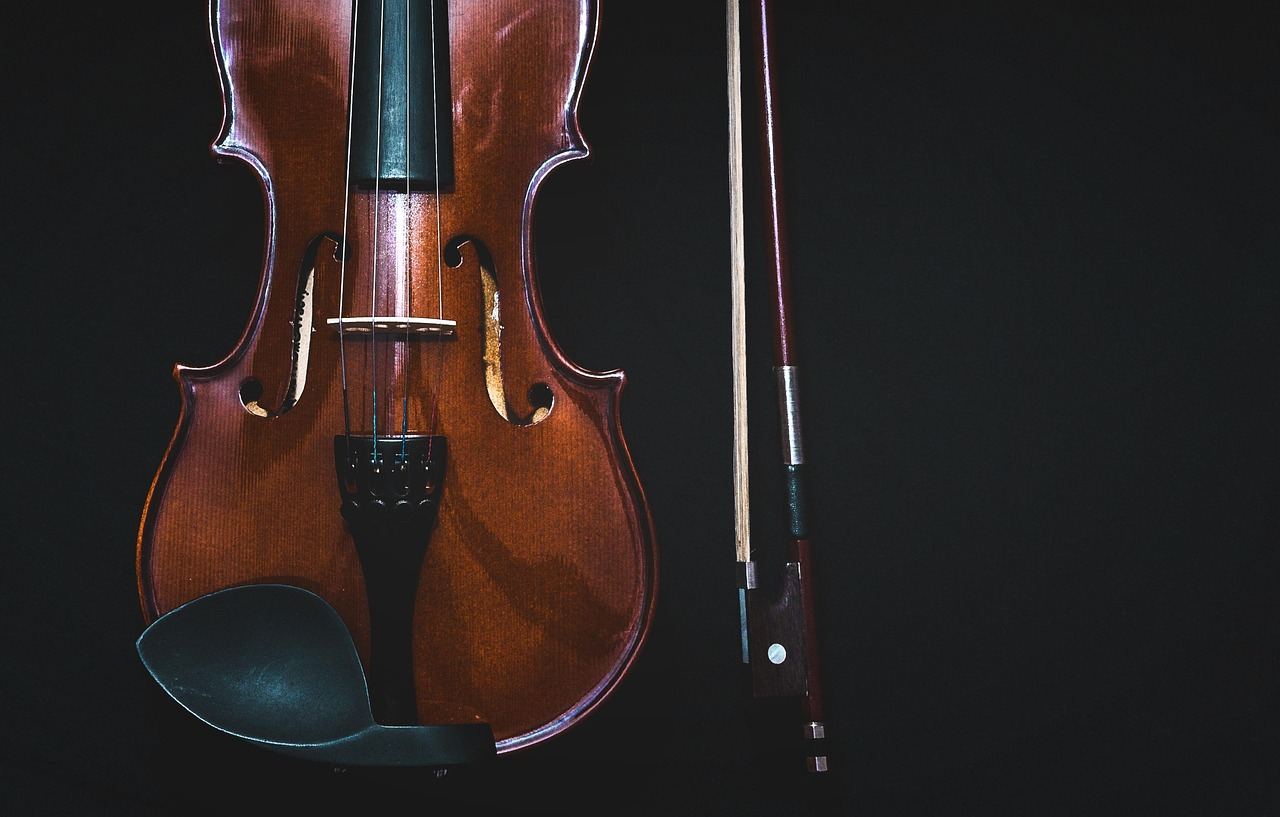
Viola isn't just a bigger violin; it's the heartbeat of an ensemble that transforms how you hear music, revealing depths you didn't know existed.
Learning to play the viola as a beginner involves understanding its unique size and sound, which falls between the violin and cello. The viola is a bowed string instrument – larger than a violin, smaller than a cello – played tucked under the chin.
It produces a deeper, warmer tone than the violin because of its lower tuned strings (C, G, D, A).
What separates it: the viola lives in the middle of the orchestra's harmonic texture, rarely carrying the melody, almost always carrying the soul of the harmony.
In viola practice, hobbyists engage in targeted sessions of physical warm-ups and technical exercises, focusing on body stretches, bow movements, and finger patterns, progressing to isolated piece work that breaks down challenging sections for mastery, all while maintaining a near-silent volume to refine their technique.
Viola practice induces a flow state through precise, immersive physical coordination, offering immediate feedback from the instrument that fosters a sense of accomplishment and creative expression, while providing a structured yet flexible outlet for stress relief.
You think viola is just a bigger violin. A participation-trophy instrument for kids who couldn't hack it on strings.
That assumption is wrong – and it's exactly why viola players are some of the most quietly confident musicians in any room.
Players describe it as more physical, more present.
A violist friend once said she didn't stop hearing music the same way after her first year.
Not because she got better at viola – because she started hearing the harmonic middle of every song she'd ever loved, like a hidden frequency she'd been deaf to before.
The instrument changes how you listen. That's not nothing.
Next up: what your first few months actually look like – and why the learning curve is more forgiving than the violin snobs will tell you.
Watching someone play viola looks like something a person simply is. Then you pick one up and discover it's a negotiation — between your left hand, your right arm, and a wooden box that has no interest in cooperating. The gap between watching and doing is wider than violin players will ever admit.
Your first few sessions are mostly noise management. Open strings screech. Fingers miss. Your bow arm develops opinions of its own, and none of them are helpful. Most beginners expect frustration — they don't expect the frustration to feel so physical. A sore neck, a confused left hand, and genuine uncertainty about where your bow arm is supposed to live are all standard-issue experiences for the first month.
The thing that catches people off guard is the finger spacing. The viola's longer string length pushes your left-hand fingers wider apart than any instrument you've held before — and your hand will resist it. Even players with no violin background find their fingers defaulting to compressed positions. Slow, deliberate placement on open strings before you chase actual notes isn't a warmup. It's how you teach your hand's geography from scratch.
By week four, something shifts. Your C and G strings stop screeching on demand. Your left hand starts landing first-position notes with some consistency. You play eight seconds of something that sounds like actual music — and it's enough. Viola rewards the people who stay past the first month precisely because most don't. The next section covers the mistakes that slow that timeline down — and most of them are avoidable.
When to start: Morning
Duration: 1 hour
Cost to try: $30
Success criteria: If you can play open strings with steady bow contact and cleanly finish D and G major scales, do session 2.
The instinct is to squeeze — it feels more controlled, more secure.
A tight bow hold kills your tone before your bow even touches the string. Drop your thumb so it's bent and relaxed under the stick. Let your fingers curve naturally over the top like they're resting, not gripping.
Most beginners slap on the shoulder rest without adjusting it. It comes pre-assembled and looks ready to go — so they assume it is.
Spend ten minutes fitting it to your actual shoulder-to-chin distance. Craning your neck down or shrugging your shoulder up means the rest is wrong for you — and no amount of practice fixes a setup problem.
The lower half feels awkward and heavy. So beginners quietly avoid it — then wonder why their tone collapses mid-bow.
Run slow, full-bow open string exercises every session. The goal is to make every inch of the stick feel equally usable — not just the part near the tip.
Two specific exercises help here:
Pegs require real technique. Beginners who force them often snap a string or make the tuning worse chasing a quarter-step problem.
Use fine tuners for any adjustment under a half-step. Pegs are for big shifts only — and even then, turn slowly with steady inward pressure.
Viola strings are longer and thicker than violin strings. Pieces written for violin sit in a register that makes the viola sound thin and pinched — you never hear what the instrument actually does well until you play music written for it.
Start with viola-specific method books like Doflein or Barbara Barber's Scales for Strings arranged for viola. You'll hear the instrument in its actual voice from day one.
Viola lives in practice rooms, home studios, and community rehearsal halls – but also in your living room at 7pm with the door shut.
Music practice spaces and community centers are your most accessible starting points.
Walk in and say "I'm returning to viola after a break" or "I'm a beginner looking to play with others when I'm ready."
That sentence gets you two things: a realistic conversation about timelines, and someone pointing you toward a smaller ensemble or sectional where the pressure is lower.
Baroque violas use gut strings and a lighter bow, producing a softer, more nasal tone than the modern instrument.
The sound is genuinely different – not better or worse, but historically closer to what Vivaldi actually heard.
Best for players already comfortable on modern viola who want to explore early music ensembles.
Expect to spend $500–$2,000 more for a period-appropriate setup.
This has six or seven strings – some of them "sympathetic" strings that vibrate without being bowed, adding a natural reverb effect.
It's a curiosity instrument, not a career path.
Best for intermediate-to-advanced players who are already bored with standard repertoire and want a rabbit hole.
Same technique, no acoustic resonance – the tone comes entirely from your amp and effects chain.
Beginners should avoid this.
Without acoustic feedback, you lose the sensory cues that teach you intonation and bow pressure.
Best for gigging players who need stage volume or want to experiment with looping and effects.
Adds a low C string from the cello range, giving you cello-adjacent depth without switching instruments.
It's a practical choice for session players and fiddlers who want range without hauling two cases.
Instruments run $300–$800 more than comparable four-string models.
Rare enough that most teachers have never seen one in person.
It's a larger five-string variant from the Baroque era, briefly championed by Bach.
Only worth knowing about if you're a historical performance nerd – it's not something you'd seek out as a starting point, or probably ever.
Ukulele lives in the same world — different mechanics, similar appeal.
Readers who enjoy this often gravitate toward Sewing next.
Most beginners spend months obsessing over finger placement and bow speed – the stuff you can see in a mirror.
The real ceiling isn't technique. It's that they've never learned to hear their own sound from the inside.
The one skill is proprioceptive bow control – knowing exactly how much weight your arm is transferring into the string at any moment, without looking.
Not bow speed. Not bow placement.
The sensation of arm weight dropping into the string versus pressing with hand tension – and being able to feel the difference in real time.
The viola is physically heavier and acoustically darker than the violin – it needs arm weight to speak, not finger pressure. Players who develop this get a full, resonant tone almost automatically.
Players who don't spend years sounding scratchy or thin and blaming their instrument.
Viola is actually a good fit for you?
Here's how you find out: 8 sessions over 30 days – roughly twice a week.
That frequency matters for viola specifically. The instrument builds muscle memory in your left hand and bow arm simultaneously, and once-a-week sessions don't give your body enough repetition to feel any momentum.
You want to come back.
Your fingers are still sore. The sound is still scratchy. But you caught yourself thinking about the bow grip while waiting for coffee.
That's the signal – the frustration isn't pushing you away, it's pulling you forward. Book a teacher. You're not dabbling.
You're indifferent.
You showed up, you practiced, nothing clicked but nothing repelled you either.
This one's worth extending – but only if you haven't tried acoustic instruments before. Viola takes longer than most hobbies to return anything resembling reward. Six more weeks with a teacher changes the equation.
You actively didn't want to be there.
Not "this is hard." Not "I'm tired today." You felt resistance before you even opened the case.
That's not a motivation problem – that's data. The viola isn't your instrument. Return it, no guilt required.
You keep noticing viola parts in music you've heard a hundred times – the middle layer, the warm undertone underneath the violins.
Most people never consciously hear the viola. If you do, and it's been happening for a while, that's not a coincidence. That low-level pull is worth 30 days of your time.
Shoulder, neck, or wrist injuries are a real structural barrier. The instrument requires sustained tension in positions that aggravate rotator cuff and repetitive strain issues – and it won't get easier with time.
If you live somewhere without a teacher within reasonable distance – and you're a complete beginner – online-only learning on a bowed string instrument is genuinely hard. You won't get the bow arm feedback you need early on. That's not pessimism, that's physics.
Finally, if your schedule can't hold two short sessions per week consistently, the skill won't build. Viola punishes long gaps more than almost any other instrument.
If you've read this and you're still in, the next section covers exactly what to rent, what to download, and who to learn from first.
Most beginners can play simple melodies within 3-6 months of regular practice. Reaching intermediate proficiency (playing in ensembles) typically takes 1-2 years of consistent study. Mastering advanced techniques and complex repertoire requires several more years of dedicated practice.
Violas are larger, have a deeper and mellower sound, and are tuned lower than violins. While they use similar playing techniques, violas read in alto clef rather than treble clef and blend better with cellos in providing harmonic support. If you prefer warmer tones and a less competitive musical role, viola may suit you better than violin.
Entry-level student violas range from $300-$800, while mid-range instruments run $800-$2,500. You'll also need a bow ($100-$300), case, and rosin, adding another $100-$200 initially. Renting is often a budget-friendly option for beginners at $40-$60 per month.
Viola has a steeper initial learning curve because of its larger size and different clef notation, but the fundamental techniques are nearly identical. Most violin players transition to viola relatively quickly, though absolute beginners find the instrument equally challenging to start. The difficulty evens out after the first few months.
Yes, but you'll need to learn to read alto clef early in your training since that's the standard notation for viola. Most beginner method books start with basic clef reading alongside instrumental technique, so learning both simultaneously is the typical approach. Having some music background helps, but it's not required to start.
Viola players are in high demand for orchestras, string quartets, and chamber ensembles—often more so than violinists due to fewer players. You can participate in community orchestras, school ensembles, or start your own chamber group, and there are many solo and contemporary music opportunities as well.