BoredomBusted — Find Your Next Favorite Thing To Do
Discover hobbies, activities, places, and ideas that spark joy. Whether you're looking for something creative, active, social, or relaxing, BoredomBusted helps you find your next favorite thing to do.
Browse our hobby guides, things-to-do collections, and place ideas to never be bored again.
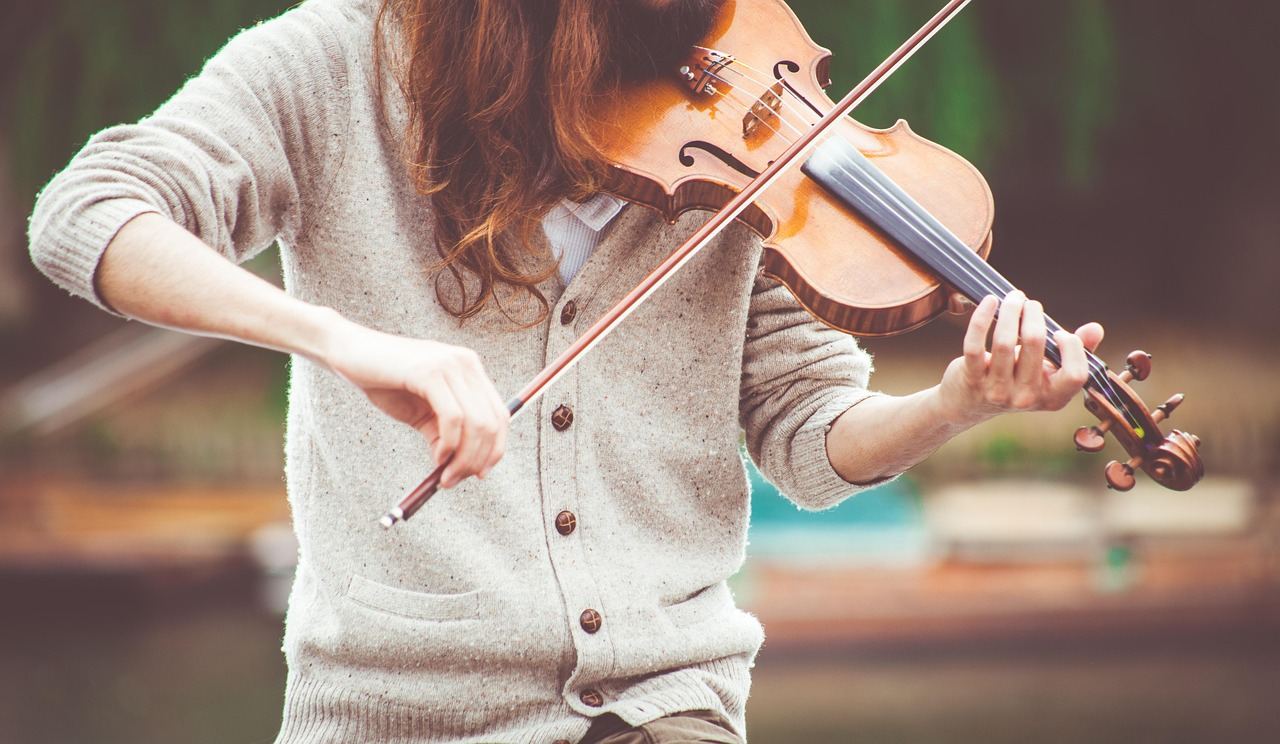
Violin isn't just for prodigies — adults can excel too, with just 20 focused minutes a few times a week and the right mindset.
Learning the violin as a beginner introduces you to a unique world of music that starts with mastering the basics of string playing. You play it with a horsehair bow. Pressing your fingers against the fingerboard changes pitch — the bow does the rest.
Unlike guitar or piano, there are no frets or keys — your fingers alone determine whether the note lands right or a centimeter sharp.
In adult violin practice, you engage in structured physical warm-ups, perform isolated technique exercises like long tones and scales, focus on specific problem passages of pieces, and conclude with cool-down stretches, often dividing this work across shorter sessions to maintain focus.
The practice structure creates skill feedback loops, allowing you to hear immediate improvements in your playing, while focusing on fewer pieces fosters a sense of mastery and progression, keeping you engaged and motivated.
You think violin is for prodigies. Kids who started at four, parents who sacrificed weekends, teachers who rapped knuckles with rulers.
That assumption is keeping a lot of adults away from something genuinely worth their time.
The learning curve is front-loaded, not endless. The first two months are the hardest — and then your intonation steadies, your bow stops bouncing, and the piece you've been stumbling through suddenly sounds like music. Twenty focused minutes three times a week moves you further than a single exhausting daily session.
Adult learners also bring something a seven-year-old doesn't have: patience, intentionality, and the self-awareness to diagnose their own mistakes. You're not competing with conservatory kids — your only competition is the person you were last month.
A retired engineer in an online violin forum described picking it up at 58, expecting to plateau within weeks. He performed a short piece at a community recital inside eighteen months.
No prodigy backstory.
No childhood head start.
Just consistent practice, a decent teacher, and the same instrument you've been talking yourself out of for years.
The actual question isn't whether you can learn it — it's what starting looks like, and what you genuinely need to get there.
Watching a violinist play feels like watching someone conjure something from thin air.
Then you pick up the bow and produce a sound like a cat with a grievance.
The gap between those two experiences is the whole first month.
Week one is mostly fatigue in muscles you didn't know existed. You're holding two objects in ways your hands have never moved. By week two, open strings start sounding less like a scream and more like a note — and that shift is a bigger milestone than it sounds.
Week three is when your first simple melody arrives. Mangled, slow, but yours. It's the first moment the instrument stops feeling like an enemy. By week four, bow control is still shaky — but you're no longer white-knuckling the grip, and that looseness changes everything.
Tighten the bow hair and rosin it every single time, without exception. A dry bow on new strings doesn't sound bad — it sounds broken, and beginners spend weeks blaming their technique for what's just friction chemistry.
No tone. No grip. Nothing working yet — that's day nine for almost everyone. The violin has a longer runway than almost any other beginner instrument, and day twelve is genuinely where it shifts. The next section covers the specific mistakes that stretch that runway into months instead of days.
When to start: Morning
Duration: 1.5 hours
Cost to try: $0 (assuming access to a violin)
Success criteria: If you tune the violin, play 15 clean open-string bows, and record a 30-second piece without stopping, do session 2.
The violin neck feels unstable at first, so beginners grab it like a baseball bat – wrist glued to the wood.
Drop the neck out of your palm entirely and balance it between your thumb and the base of your index finger, with open air visible under your wrist.
More pressure feels like more sound, and beginners are desperate for more sound.
Most beginners lock in a fist grip early, and by the time a teacher corrects it, the habit is load-bearing.
From day one, curve all four fingers over the stick and rest your thumb bent – not straight – opposite your middle finger.
Then check it every single time you pick up the bow.
A squeak feels like failure, so beginners pull the bow away and reset – which teaches nothing.
When it squeaks, freeze and diagnose:
Then fix that one variable and repeat the same passage.
New players spend ten minutes torturing a peg, never land on pitch, and start a frustrated practice already behind.
Use a clip-on chromatic tuner or a free app like GuitarTuna every single time you play – your ear will calibrate over months, but only if you consistently hear what in-tune actually sounds like.
Violin practice happens wherever you can close a door – home practice rooms, music schools, community centers, and rented rehearsal studios are the most common setups.
Once you're ready to play with others, orchestra halls and chamber music venues open up fast.
If those searches come up dry, the American String Teachers Association (ASTA) at astastrings.org has a teacher and group finder that covers the US more completely than most local searches will.
When you contact a group, tell the leader how many months you've been playing and whether you can read music. That two-sentence heads-up gets you placed in the right ensemble tier instead of thrown into something that makes you want to quit after week one.
This is the standard – orchestral technique, formal bow hold, reading sheet music.
It's the foundation every other variant borrows from, which makes it the right starting point for almost everyone.
Gear is the same as any beginner setup: a student violin rental runs $15–$30/month.
Same instrument, completely different approach – looser technique, emphasis on ear training and rhythmic drive over precision.
Fiddle is genuinely friendlier for beginners who care more about playing with people than playing perfectly.
No extra gear, but you'll want a teacher who actually plays folk styles, not a classical purist.
A solid-body violin that runs through an amp or effects pedal – useful if you're practicing in an apartment or want to play in loud bands.
It's not a beginner instrument. Learn on acoustic first, or you'll skip feedback that tells you when your technique is wrong.
Budget $200–$500 for a decent entry-level electric setup.
Adds a low C string below the standard G, bridging violin and viola range.
Best for experienced players who want more range without learning a second instrument – beginners don't need this yet.
Expect to pay more, and expect setup quirks that a standard violin won't have.
An older setup – gut strings, no chin rest, lighter bow – used to play music as it was originally performed.
This is a specialty path, not a starting point.
Come back to it after a few years if historical performance genuinely interests you.
Some of the same instincts show up in Banjo — worth a look if this clicked.
Readers who enjoy this often gravitate toward Ukulele next.
If this resonates, Woodwinds explores a similar direction.
Most beginners obsess over finger placement and memorizing notes.
The real bottleneck is your bow arm — and almost no one addresses it until the damage is done.
The single skill that separates improving players from stuck ones is bow pressure control: knowing exactly how much weight to sink into the string at any point in the stroke, and keeping that weight consistent from frog to tip.
Pressing harder or softer isn't the goal. The goal is a steady, intentional contact point so the string vibrates cleanly instead of scratching, whistling, or collapsing mid-note.
Perfect intonation. Clean shifts. Flawless left hand.
The violin will still sound like a rusty gate if the bow arm isn't doing its job. Tone, dynamics, and musicality all live in the bow hand — not the fingerboard.
Without this skill, you'll keep blaming your instrument, your ear, or your talent. None of those are the problem.
Start with the whole-bow open-string drill. Draw the full bow length on one open string — ten strokes, no fingers, no pitch. Focus only on keeping the tone consistent from frog to tip.
Once that feels steady, work the pressure gradient consciously. Near the frog, the bow's natural balance does most of the work — you need less arm weight. Near the tip, drop your elbow slightly to compensate. Do this in slow motion until the adjustment is automatic.
Set up your phone on the bow side and record your right arm. Watch for the moment the arm tightens or collapses — that exact moment is where your tone is dying, and you'll never catch it by feel alone.
Once bow pressure becomes instinctive, every other technique decision — dynamics, vibrato, phrasing — gets easier to access. The next section covers which practice formats actually build this kind of muscle memory fastest.
Violin has one of the steepest early learning curves of any instrument. That's not a reason to avoid it — but it is a reason to test yourself before buying a $400 setup.
Commit to 12 sessions over 30 days — three per week, 20–30 minutes each. That's enough to get past the shock of the first week and into something that actually resembles feedback.
If you keep picking it up between sessions — mentally replaying passages, noticing violin in music you hear, feeling pulled back before the scheduled time — that's not enthusiasm, that's signal. Book a teacher and treat this seriously.
If you feel nothing either way — you showed up, you practiced, it's fine — that usually means you haven't found the emotional hook yet, not that it doesn't exist. Extend by four weeks with a specific piece you actually want to play as the target. If that doesn't move anything, move on.
If you dreaded every session and felt relief when it ended, that's not a beginner slump. Violin demands patience through a phase where it genuinely sounds bad — if that phase felt like punishment rather than process, this instrument isn't for you right now.
You already know which piece made you want to do this. Not "classical music" generally — a specific recording, a specific moment. If that image keeps surfacing when you're doing something unrelated, you're already attached to an outcome — and that's the signal worth acting on.
Chronic pain or injury in your left hand, wrist, or shoulder is a real structural barrier. The mechanics of violin put consistent strain on exactly those joints. Talk to a physio before you talk to a teacher.
No space where you can make noise is a harder constraint than most people admit upfront. Early violin is loud and unpleasant. Thin walls and noise-sensitive households make daily practice nearly impossible — and consistency is the only thing that gets you through the hard part.
If you need progress to feel measurable within weeks, violin will fight you harder than almost any other beginner-friendly instrument. The gap between starting and sounding acceptable is long here — that's not a flaw, but it is a fact.
If none of that stopped you, the gear section covers exactly what to buy — and what to skip — for a first setup under $400.
Violin is one path among many — browse the full hobbies list to weigh it against the rest.
For ideas that take five minutes instead of five weeks, see things to do when you're bored.
Most beginners can play simple melodies within 3–6 months of consistent practice. Reaching intermediate proficiency typically takes 1–2 years, while mastering classical techniques requires several years of dedicated study. Your progress depends on practice frequency, quality of instruction, and natural aptitude.
A decent beginner violin ranges from $100–$400, including a bow and case. Student-grade instruments in the $200–$300 range offer better sound quality and durability than budget options. Professional-grade violins cost significantly more, but you don't need one when starting out.
Violin has a steep initial learning curve—it's harder than many instruments because producing a quality tone requires precise bow control and finger placement. However, with proper instruction and regular practice, beginners see noticeable improvement within weeks. Patience and consistency matter more than natural talent.
You'll need a violin, bow, rosin, a chin rest, and a shoulder rest. Consider getting a music stand and beginner lesson books or finding a qualified instructor. Many music stores offer starter packages that bundle these essentials at a reasonable price.
While self-teaching is possible, a qualified instructor is highly recommended for beginners to avoid developing poor habits that are hard to break later. A teacher provides personalized feedback, proper technique guidance, and structured progression. Many violinists combine lessons with self-directed practice for faster progress.
Beginners should aim for 20–30 minutes of daily practice to build muscle memory and technique. As you progress, most intermediate players practice 45 minutes to an hour daily. Consistent, focused practice yields better results than sporadic longer sessions.