BoredomBusted — Find Your Next Favorite Thing To Do
Discover hobbies, activities, places, and ideas that spark joy. Whether you're looking for something creative, active, social, or relaxing, BoredomBusted helps you find your next favorite thing to do.
Browse our hobby guides, things-to-do collections, and place ideas to never be bored again.
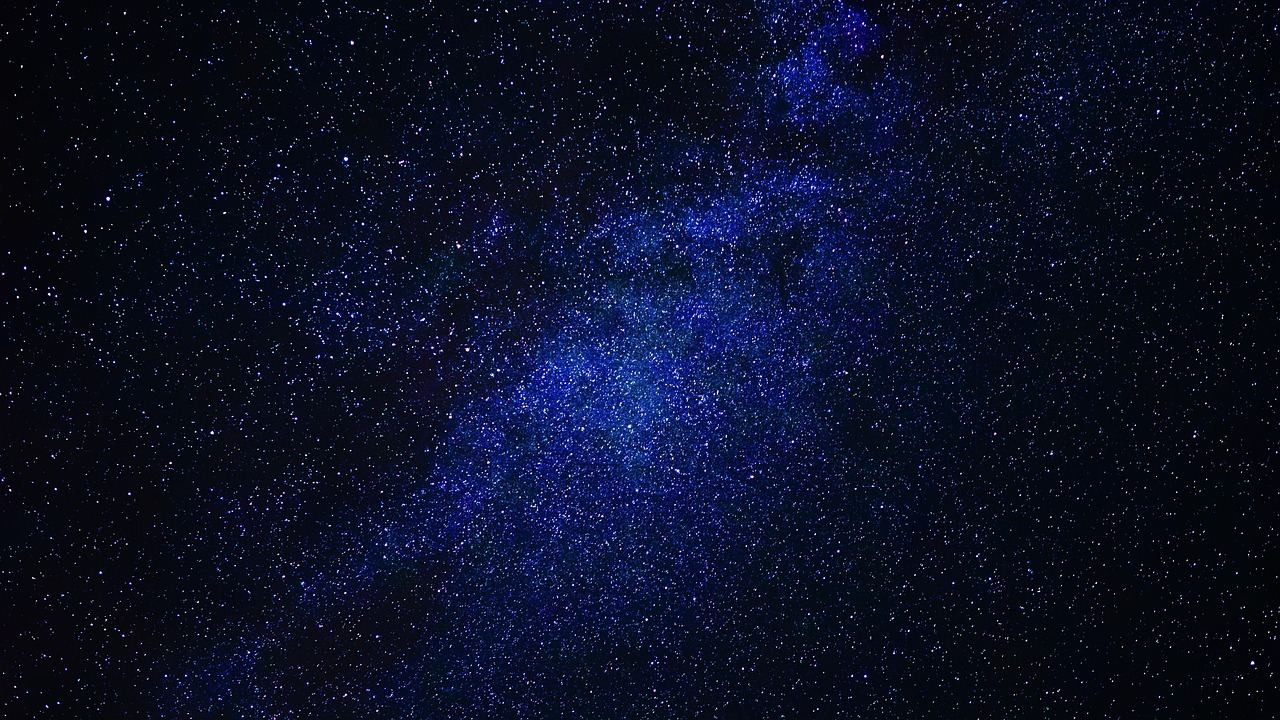
You don't need specialized degrees or fancy telescopes to enrich your understanding of the cosmos — amateur astronomers often help advance real science.
Getting started with astronomy as a beginner allows you to explore the observable universe using just a clear sky and a decent telescope.
With telescopes and star maps, you can track Saturn's rings, watch Jupiter's moons shift position night to night, and trace galaxies millions of light-years away. every clear night surfaces something you've never actually seen with your own eyes before — not in a photo, but live, in real time.
Astronomy involves night sky observation, where you set up telescopes or binoculars to visually scan stars, planets, and galaxies. You also engage in data analysis, mapping constellations, calculating distances via parallax, and plotting positions of celestial objects using tools like NASA's Solar System Simulator. Hands-on activities include building solar system models and observing moon phases…
Astronomy creates a flow state through focused attention on celestial patterns, requiring skill progression to maintain engagement without overwhelming stress. The immediate feedback from observing and calculating astronomical phenomena fosters a sense of accomplishment, while the novelty of unpredictable night-sky events stimulates curiosity and exploration, contributing to a rich cognitive expe…
You probably think astronomy requires a degree and a lab full of expensive equipment.
The observatory image is hard to shake — white coats, massive telescopes, years of training. Casey Honniball dismantled that picture from a backyard. She discovered a water ice signature on the moon using observations that started with consumer-grade equipment and methodical patience, not a research institution's budget.
A star map costs nothing. A entry-level refractor telescope runs $80–$150. The actual barrier to this hobby is knowing where to point — and that's a skill, not a purchase.
No prior experience.
No telescope yet.
No idea what you're looking at.
None of that stops you from having a genuinely productive first night outside with a free app like Stellarium and clear skies.
Most people who stick with astronomy eventually join a local club or upgrade their gear — but that comes later. First, you need to know what to look for on night one.
Your first time out will feel quieter than you expect. You're standing in the dark, eyes slowly adjusting, neck already craning upward. The sky looks busy — stars everywhere — but the hardest part of night one isn't seeing things, it's knowing what you're seeing. A bright point could be Venus, could be a plane, could be a star you've never heard of. Your brain wants pattern recognition and it keeps coming up empty.
The thing beginners don't expect is how much time gets spent just setting up and orienting. You'll spend twenty minutes pointing a telescope at something that turns out to be a rooftop. A telescope magnifies your aiming errors as much as it magnifies the sky — a tiny nudge sends your target completely out of frame. That's normal. It's a motor skill that takes a few sessions to develop, not a sign that you bought the wrong equipment.
The first genuinely satisfying moment tends to come around session two or three. You find a planet — Saturn or Jupiter are the easiest targets — and the image resolves. Seeing Saturn's rings for the first time through your own eyepiece is a different experience than any photograph. It's small, it's faint around the edges, and it's completely real. That's the moment most people stop second-guessing the hobby.
Patience isn't a virtue here — it's literally the mechanism. Dark adaptation takes 20–30 minutes, and rushing it means you're working at half capacity the entire session. Cold air, dew on the eyepiece, and a stiff neck are part of the experience early on — not problems to solve before you start, but conditions to work through. Before you get comfortable with the sky itself, you'll want to know which early mistakes are slowing beginners down the most.
When to start: Early morning
Duration: 1 hour
Cost to try: $0
Success criteria: If you use the app to identify 3 constellations and sketch or note one star pattern for each, do session 2.
New astronomers almost always buy gear first and ask questions second. It feels logical — you need a telescope to do astronomy. But a telescope bought without a target is usually the wrong telescope. Someone who wants to watch planets needs different optics than someone drawn to deep-sky objects like nebulae or galaxies.
Spend your first two or three nights outside with just a free app — Stellarium or SkySafari both work. Figure out what actually holds your attention. Buy the telescope that fits what you're already chasing, not the one with the most impressive specs on the box.
Light pollution is the single most common reason beginners give up early. They set up in the backyard, see a handful of stars, and conclude astronomy just isn't that impressive. It's not a gear problem or a skill problem — it's a location problem.
Even driving 20–30 minutes away from the city center can transform what you see. Use the Light Pollution Map at lightpollutionmap.info before you pick a spot. A darker sky does more for your experience than a telescope upgrade ever will at the beginner stage.
Most beginners walk outside, look up for a few minutes, and decide the sky is underwhelming. Your eyes need roughly 20 minutes to reach full dark adaptation — and a single glance at your phone screen resets that clock completely.
Switch your phone to red-light mode before you go out, and stay off the screen once you're set up. Red light preserves night vision in a way white or blue light doesn't. The sky you see after 20 minutes of true darkness looks nothing like the sky you saw when you first stepped outside.
Beginners often aim straight for the Andromeda Galaxy or distant nebulae because they've seen stunning Hubble images. Then they find a faint grey smudge through their eyepiece and feel like they're doing something wrong. They're not — those objects are genuinely difficult, and the Hubble uses exposure times measured in hours.
Start with the moon, Saturn, and Jupiter — they reward beginners immediately and look dramatic even through a basic telescope. Saturn's rings are visible at 50x magnification. Jupiter's four Galilean moons shift position night to night. These objects build the confidence that keeps you coming back.
Clear skies don't automatically mean good seeing. Atmospheric turbulence — what astronomers call "poor seeing" — makes stars shimmer and blurs planetary detail even when there's not a cloud in sight. Humidity, wind, and temperature swings all affect what you'll actually observe.
Check Clear Outside or Astrospheric before you drag equipment out — both give hourly seeing forecasts, not just cloud cover. A mediocre night with poor seeing will make you doubt your gear or your technique when the real culprit is conditions you could have predicted.
Start with the Astronomical League and your national equivalent. The Astronomical League lists affiliated clubs by U.S. state — most meet monthly at a dark-sky site near you. In the UK, the Society for Popular Astronomy serves the same function. These aren't gatekeeping organizations; they're hobbyists who want more people showing up.
Online, r/Astronomy and r/telescopes on Reddit are active daily. r/Astronomy skews toward observation questions and image sharing; r/telescopes is where gear decisions actually get answered by people who've made the same mistakes. Cloudy Nights (cloudynights.com) is a dedicated astronomy forum that goes deeper than either — searchable archives going back decades, organized by equipment type and observing category.
Search Meetup.com for astronomy groups in your city. Most major metros have active groups that organize star parties at dark-sky preserves, state park observatories, or rural fairgrounds. These events are open to complete beginners — people bring extra telescopes specifically to share them.
Attending a public star party run by a local club is the single most useful first move. You'll see a dozen different setups, get immediate guidance on what you're looking at, and leave knowing exactly what gear actually matters at your level.
Naked-eye and binocular astronomy is exactly what it sounds like. No telescope, no setup, no learning curve. You go outside with a free app and start identifying what's already visible.
This is for anyone who wants a real first night without buying anything. Constellations, bright planets, the Milky Way on a dark night — all of it is available before you spend a dollar.
Visual telescopic observation is where most hobbyists land. You set up a telescope, point it at a target, and see Saturn's rings or Jupiter's cloud bands with your own eyes. The feedback is immediate and genuinely striking.
An $80–$150 refractor gets you to the planets on night one. The skill-building comes from learning to find objects, adjust magnification, and read the sky — not from the price tag on your gear.
Positional astronomy involves mapping constellations, calculating parallax, and plotting the movement of celestial objects over time. Tools like NASA's Solar System Simulator turn this into active problem-solving. It's less about watching and more about understanding the mechanics.
This suits people who prefer working with data alongside observation. You're not just looking at things — you're building a mental model of how everything moves.
Astrophotography pairs a camera with your telescope or uses a standalone wide-angle setup to capture the night sky. Even a smartphone mount on a budget telescope can produce a usable image of the moon. The deeper you go, the more technical it gets — tracking mounts, long exposures, image stacking.
It's a good fit if you want a tangible output from each session — something to show for the night beyond the memory of what you saw.
Lunar and planetary observation focuses on tracking change — moon phases night to night, Jupiter's moons shifting position, seasonal visibility of planets. It builds a long-term relationship with the sky rather than a series of one-off sessions.
The habit of going back repeatedly is what separates casual stargazers from people who actually know the sky. This variant rewards consistency more than any single piece of equipment.
Club and community astronomy means joining a local astronomy group for star parties, shared equipment nights, and guided observation sessions. Most clubs welcome complete beginners and bring gear you can look through before committing to your own.
This is the right entry point if you learn faster with people around than on your own. You'll compress months of solo trial-and-error into a single evening with someone who already knows where to point.
Another variant that pulls from the same roots is Paddleboarding.
If you want a related angle, Night Fishing is the natural next stop.
If this resonates, Birding explores a similar direction.
The skill that separates people who improve from people who plateau is learning to read the sky before they look through a lens. Not using the telescope — orienting yourself without it first.
Most beginners skip straight to the eyepiece. They point at something bright and hope for the best. The result is a blurry smear they can't identify, and a night that feels like failure. The observers who progress fast all do one thing first: they naked-eye the sky for 15–20 minutes before touching their equipment. They find north. They locate a reference constellation. They build a spatial map in their head.
This matters because a telescope has almost no field of view compared to the open sky. If you don't know roughly where Saturn sits relative to a nearby bright star, you'll sweep past it a dozen times and never know. The telescope amplifies what you already know — it can't substitute for knowing it.
This is the exact skill the next section covers: how to read a basic star map on your first night out, so your equipment actually works for you.
Give yourself four sessions over two weeks — two nights observing outside, one session with a star map or app indoors, and one night trying to find a specific object you've never located before.
You found yourself reluctant to go back inside. The 20-minute session stretched to 90 without noticing. That pull toward the eyepiece is the real signal — not how much you learned, but how hard it was to stop. Start building a simple observation log and look into your nearest astronomy club. Both will accelerate everything.
You didn't hate it, but you weren't chasing it either. That usually means the entry point was wrong, not the hobby. Try shifting from wide-sky browsing to a single target — tracking Jupiter's moons across consecutive nights is a different experience than general stargazing. Specificity tends to create engagement where open-ended exploration doesn't.
Some people find the slow pace of observation draining rather than meditative — and that's just honest data. If you wanted to be anywhere else during every session, the night sky probably isn't your format. The same curiosity about space tends to translate well into astrophotography editing or space simulation games, where the pace is entirely in your hands.
If you're checking a weather forecast at 10 p.m. just to see whether the clouds clear by midnight, astronomy already has you. Nobody does that for a hobby they're still deciding about.
When you don't want to commit, things to do when bored is a better starting point.
You can start with just your eyes and a star chart app on your phone—no equipment required. Once you're ready to invest, a beginner telescope (around $100–$300) or a pair of binoculars (often cheaper) will significantly enhance your viewing experience and help you see deep-sky objects like nebulas and star clusters.
Astronomy can be completely free if you start by observing the night sky with your naked eye. Basic equipment like binoculars costs $30–$100, while entry-level telescopes range from $100–$500; serious hobbyists may invest more, but there's no requirement to spend money to enjoy stargazing.
Astronomy is beginner-friendly—you can start identifying constellations and planets with minimal knowledge using free apps and resources. Learning the basics takes just a few nights of observation, though deepening your knowledge of celestial mechanics and galaxies is a rewarding lifelong journey.
Most observing sessions last 1–3 hours, though casual stargazing can be as short as 15–30 minutes. Dedicated amateur astronomers often spend entire evenings (4+ hours) observing when weather permits, especially during meteor showers or special astronomical events.
Spring and fall offer moderate temperatures ideal for beginners, but you can observe year-round in most locations. Winter brings longer nights and clearer skies in many regions, while summer offers comfortable weather—choose based on your local climate and light pollution levels.
Yes, you can observe from urban areas—the Moon, bright planets, and major constellations are visible despite light pollution. For deeper observations of nebulas and galaxies, driving to a darker location outside the city is ideal, but it's not required to enjoy stargazing as a beginner.