BoredomBusted — Find Your Next Favorite Thing To Do
Discover hobbies, activities, places, and ideas that spark joy. Whether you're looking for something creative, active, social, or relaxing, BoredomBusted helps you find your next favorite thing to do.
Browse our hobby guides, things-to-do collections, and place ideas to never be bored again.
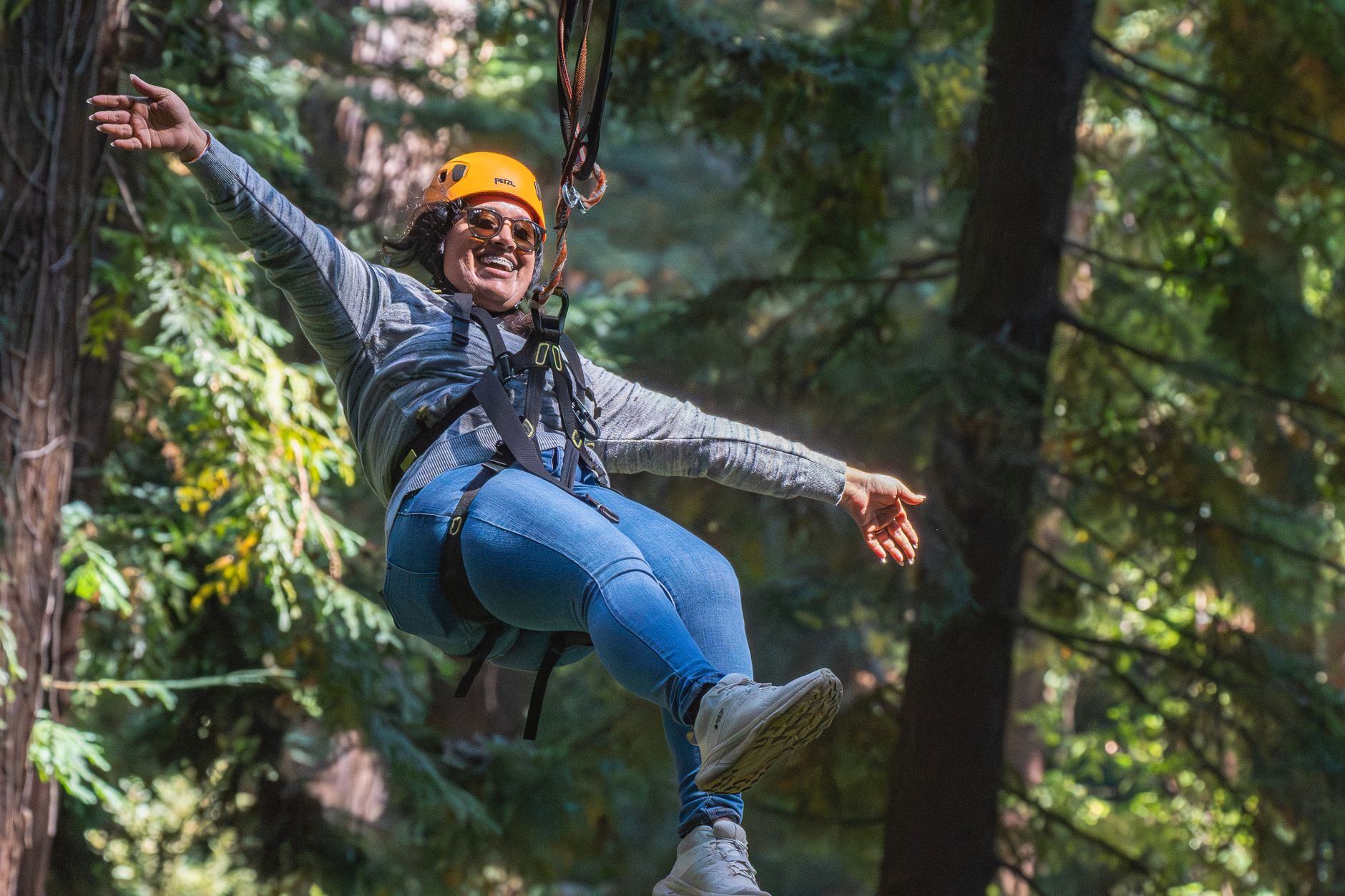
Ziplining isn't a thrill ride you survive. It's a safety system you vet, and the operator, not your nerve, decides whether the day is safe.
Ziplining is a harness, a pulley called a trolley, and a steel cable strung down a slope. You clip in, step off a platform, and gravity carries you to the next one. A canopy tour strings six to ten of these lines together across a forested hillside, with a platform at each end.
A session starts on the ground with a safety briefing and a gear fit. Guides check your harness, helmet, and gloves, then clip you to the first line. A guide at each end runs the pace, so you spend more time looking at the treetops than thinking about technique.
Lines range from short hops between trees to long runs across a valley. Between lines you walk forest trails, cross suspension bridges or climb stairs, and most tours take two to three hours from check-in to the last line.
Ziplining means clipping a harness to a trolley on a steel cable and gliding between platforms. A canopy tour links six to ten lines through a forest, guided by trained staff who check gear, control pacing, and handle brakes. Most tours run two to three hours, and the operator supplies all the safety equipment.
Ziplining hits restlessness and numbness with real height and speed in the first hour. The fear spike resets your attention, the scenery changes every line, and there is no skill to learn before you can start. For people stuck on the couch, that jolt can be a reset.
Ziplining gets filed under theme-park fun. It isn't a ride. It's rope-access equipment hung in living trees, and the people running it matter more than the cable.
In the US, the Association for Challenge Course Technology (ACCT) publishes the industry standards for canopy and zip line tours. Good operators build to them, inspect on a schedule, and train guides on rescue procedures. Following a standard is voluntary in some places, and state rules vary widely.
Two zipline parks can look identical from the parking lot and run completely different safety programs. Same cable, same harness color, different everything else.
You don't need nerve to go ziplining. You need three minutes of homework before you book.
Ask whether the operator builds to ACCT standards and has recent third-party inspections. Ask how guides are trained and whether there is a rescue plan if someone stalls mid-line. A good operator answers all of it without getting defensive.
Ask what the weight and health limits are, and what the cancellation policy is for wind and lightning. Those are the rules that exist because something went wrong somewhere once. They are not there to annoy you.
Nobody warns you about the platform. The gear fit is quick, the line looks fine, and then you are standing on a wooden deck high in the trees with a guide saying "whenever you're ready." The step-off is the whole hard part, and it lasts about two seconds.
The first line is usually short and low on purpose. Your stomach drops, your hands grip the strap, and then you realize the harness is holding you far more firmly than your brain expected. By line three most people are looking around instead of down.
You will probably be sweatier and more tired than you planned. Climbing platform stairs, hauling a helmet, and walking trails in humid air add up. The slide is the rest break.
The second tour is quieter. The fear has been spent, so you notice what is actually fun: the speed on a long line, the view from a good platform, the small trick of keeping yourself from spinning.
Some people find the thrill drops by half and decide that was enough. That is a legitimate result, not a failure.
Do exactly what your guide says, every time. Never unclip yourself, never grab the cable or the trolley, and keep your hands where you were shown. Those are the three mistakes that turn a good day into a bad one.
When to start: A dry weekday morning in late spring through early fall
Duration: 2-3 hours
Cost to try: about $65 to $130 for a standard guided tour
Success criteria: If you finish the tour feeling more curious than relieved, do session 2.
Discount-site tours are not automatically unsafe, but the cheapest option rarely announces what it skipped. Operators spend real money on inspections, replacement gear, and guide training.
Check the operator's website for any mention of ACCT standards or third-party inspections. Call and ask if you can't find it. If nobody can tell you who inspects the course, book somewhere else.
Weight limits exist because cables, trolleys, and brakes are rated for specific loads. A 70 to 250 pound range is common, but limits vary, so check the operator's own numbers. Lying on the waiver does not change the physics.
The same goes for back, neck, heart, and pregnancy restrictions. If your doctor would raise an eyebrow, ask the operator before you pay. A good one will tell you honestly whether it works.
The classic injury is a hand near the trolley or on the cable ahead of it. It happens when people panic and reach for something.
Keep both hands where you were told to keep them. If a moment feels wrong, stay in position and signal the guide. Reaching for the cable is the one reflex to train out of yourself.
Closed-toe shoes are not a suggestion. Long hair gets tied back, loose scarves and dangling necklaces come off, and anything in your pockets that you cannot afford to lose stays in a locker.
Phones sail out of pockets mid-line. Only bring a camera if the operator allows it, and only mounted the way they say. Many parks ban handheld filming.
People are nervous, so they nod at the briefing and think about something else. Then they hit the first brake cue with no idea what it means.
Listen to the whole thing. Ask the question you think is dumb. Guides prefer a three-minute explanation to a two-hour cleanup.
Ziplining has no leagues or clubs. It is a place you go, not a group you join. That changes how you find your people.
Start with a search for "canopy tour near me" and read the operator's safety page. Look for ACCT standards, recent inspections, and clear weight and age limits. The ACCT site (acctinfo.org) is a good place to learn what the standards cover.
Established names give you a baseline to compare against. Go Ape runs treetop courses with ziplines in several US states, and Navitat Canopy Adventures (North Carolina) and Historic Banning Mills (Georgia) run forest tours. Zip World in Wales operates some of the longest lines on the planet, and Selvatura in Monteverde, Costa Rica, shows up on a lot of first-trip itineraries.
Meetup groups for outdoor adventure often organize group bookings, which usually come with a per-person discount. Corporate and birthday group rates exist at most parks. Ask for the group rate even if you are only four people.
Reddit's r/travel and r/CostaRica are useful for honest operator reviews and first-timer questions. Search a park name with the word "review" before booking.
Parks hire seasonal guides, and the good ones train you on rescue and gear inspection. ACCT also offers practitioner certification for people who want to build or inspect courses. It is a real career path, if a small one.
Ziplining is not one activity. The experience changes a lot depending on the style.
This is the default: a guided tour with six to ten lines, a few platforms, and often a bridge or two. It is the best first choice because guides control the pace and the braking. Expect about $65 to $130.
Parks like Go Ape put you on a self-guided course with a continuous safety line and a short briefing. You move at your own pace, which is great if you hate waiting and tough if you hate heights. Ropes and platforms add real physical work.
Operators like Zip World run lines about a mile long, where riders go prone like a superhero. The fastest advertise top speeds over 100 mph. This is a different sport from a canopy tour, with stricter limits and shorter waits.
Some parks run seated, gravity-fed rides on a rail rather than a cable. The ride is smoother and shorter, and the physical demand is minimal. Good for families and anyone who wants the view without the athletics.
Many resorts bundle ziplines with rappels, sky bridges, or climbing walls. You get a half-day of stuff instead of ninety minutes. It costs more, and you'll want your own lunch plan.
Beginners assume the skill is bravery. It is body position. Staying upright, steady, and controlled from launch to landing is what separates a smooth tour from a rough one.
Systems differ by operator, so follow your guide's version over any article. The common version is seated in the harness, leaning back slightly, feet forward. One hand holds the strap you are clipped through, and the other stays where you were shown.
On guide-brake lines, someone at the end stops you for you. On self-brake lines, you press a gloved hand on the cable behind the trolley when the guide cues you. Never put a hand in front of the trolley, and never hold the cable above it.
Ask the guide to walk through the brake sequence on the ground before the first line. Then ask what the cue looks like. Many guides will point or call out distances.
On the first few lines, brake small. Light pressure held longer beats a hard clamp at the last second. Braking too early strands you short of the platform, and braking too late means arriving hot.
Spinning is the other habit to solve. A gentle pull on the strap with your free hand steadies you. If you start spinning, don't flail, and ask a guide to show you the fix on the next platform.
Do it for six lines and your landings will be noticeably smoother. That is the whole curriculum.
Two outings in 30 days. One standard canopy tour, plus one different style, such as a treetop park or a longer line. That is enough to separate "I liked the novelty" from "I want more of this."
Ziplining isn't cheap, so don't commit to a dozen sessions. Two is enough signal. Spend the rest of the month riding along with your own reactions.
You want more height and more speed. Look at mega lines, via ferrata, or a climbing gym. Ziplining may be your gateway into rope sports.
You liked it once and that was enough. That is a fine result. Keep it as a trip add-on and book one whenever you travel somewhere with a good canopy.
You were bored or scared the whole time. Cross it off. There is no prize for forcing a thrill you do not enjoy.
Nervous is normal. Unsafe is different. If the operator rushes your briefing, skips a gear check, or waves off a question, walk away and ask for a refund. That is the operator's problem, not yours.
At a well-run, certified operator, yes. Good parks build to ACCT standards, inspect cables and gear on a schedule, and train guides in rescue procedures. Risk climbs when operators cut corners or riders ignore instructions, so vet the park and follow every cue.
Standard guided canopy tours at US parks typically cost about $65 to $130 per person, and weekday or group rates are often cheaper. Ask whether gear, photos and gloves are included before you book.
It varies by operator, but 70 to 250 pounds is a common range, and some parks lower the maximum on rainy days. Check the park's posted limits and call ahead if you're near the edge, because the limits come from equipment ratings.
Closed-toe shoes with grip, comfortable pants or shorts that sit well under a harness, and a shirt you can sweat in. Tie back long hair and remove loose jewelry. Leave anything dangling at home or in a locker, since gear can snag it.
Many first-timers are. Pick a guided tour with a short, low first line and tell the guide you're nervous. The harness holds more firmly than it feels like, and most people find fear fades by the third line. If panic grows, say so.
Speed depends on the line's length, slope and the rider's weight, and the operator's braking system controls it. Most canopy tours feel brisk rather than extreme, while record-chasing mega lines such as Zip World's Velocity 2 in Wales advertise top speeds over 100 mph.