BoredomBusted — Find Your Next Favorite Thing To Do
Discover hobbies, activities, places, and ideas that spark joy. Whether you're looking for something creative, active, social, or relaxing, BoredomBusted helps you find your next favorite thing to do.
Browse our hobby guides, things-to-do collections, and place ideas to never be bored again.
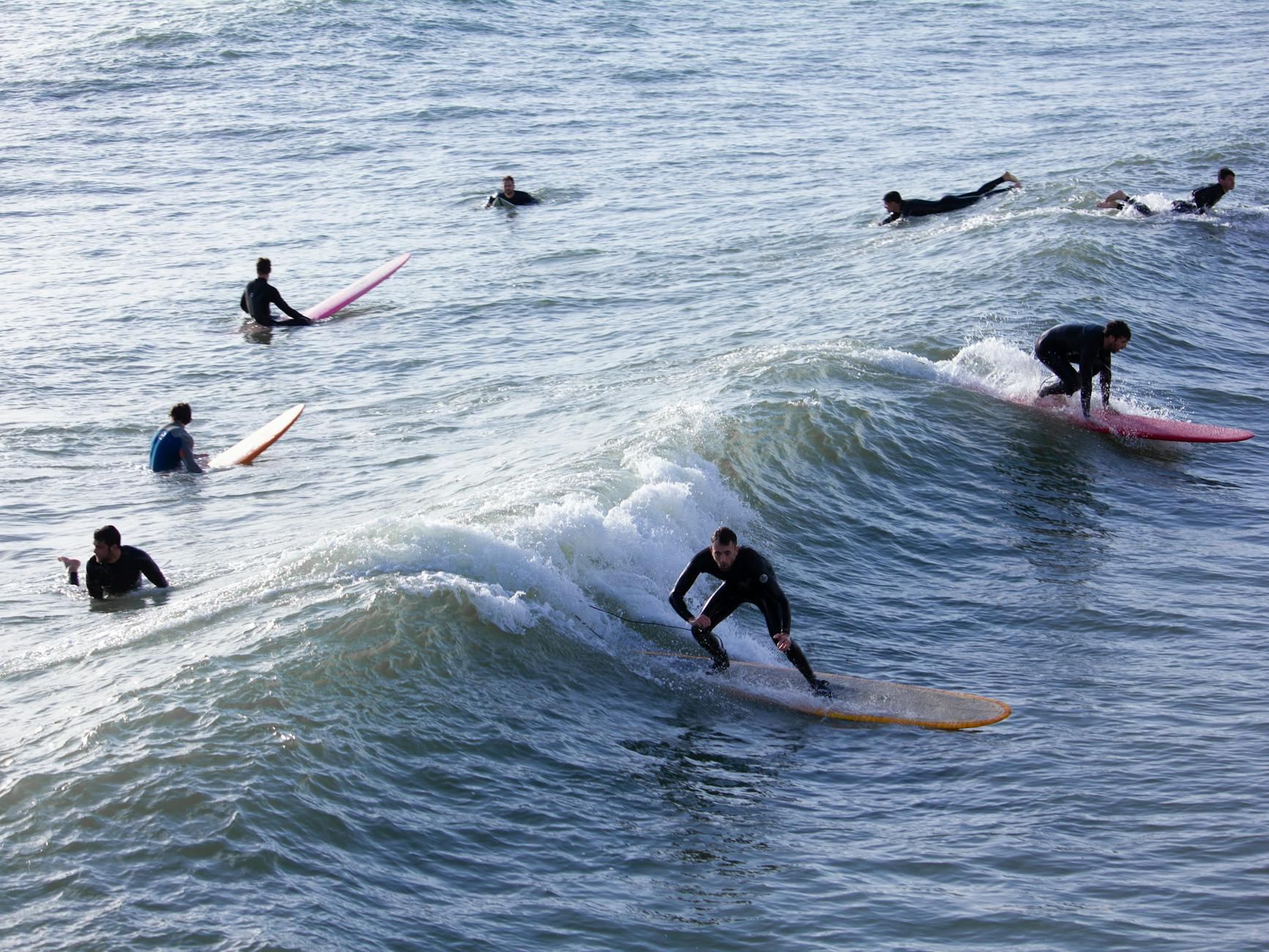
Shortboard surfing isn’t just about catching waves — it's a dance of precision and timing that turns wipeouts into milestones of mastery.
Learning shortboard surfing as a beginner revolves around mastering the basics of balance and control on a compact surfboard designed for dynamic wave riding. Shortboard surfing means riding a short, narrow, pointed surfboard — typically 5'6"–7'0" — to perform sharp turns, aerials, and maneuvers in the critical part of the wave.
Unlike longboarding, which rewards smooth gliding and nose-riding, shortboarding demands steep, powerful waves and an aggressive, high-performance style built around speed and precision.
In shortboard surfing, practitioners paddle out on a low-volume board under 7 feet, positioning themselves to catch breaking waves. They perform quick pop-ups to stand, execute bottom turns for speed, and pump the board to stay ahead of collapsing waves, all while managing fatigue from hard paddling and navigating steep drops.
Shortboard surfing induces a flow state through its demand for precise timing and skill on unstable boards, creating an immersive experience where practitioners receive immediate feedback from successful rides or wipeouts, fostering a sense of accomplishment through mastery of challenging maneuvers.
You think shortboard surfing is the aggressive stuff from YouTube – airs, barrels, pros making it look effortless.
You assume it's not for you, or at least not yet. That assumption hides what shortboarding really is.
Body awareness comes first. Each shift in weight changes course, making surfing a conversation with the wave.
The true challenge is perceptual. Reading waves, predicting breaks, and positioning yourself requires real awareness.
The board gives feedback, not problems. A shortboard punishes lazy moves instantly, which sounds tough but builds technique fast.
A surfer who switched to a shortboard after two years on a longboard likened it to driving manual transmission. Suddenly the car responds precisely, meaning you truly learn to drive.
Shortboards offer a thrill. They give you control, challenge, and an intense feedback loop. That's a big part of why people find them captivating. Up next: what your first session might really be like.
Watching shortboard surfing feels like witnessing controlled chaos. Someone reads the wave, compresses, and releases a snap that sends spray high into the air.
Your first attempt won't mirror that.
You'll hit the water buzzing with excitement, board tucked under your arm. But a wave will send the board crashing into your face. Instead of gliding smoothly, you'll have a leash around your ankle and your footing all wrong.
In the early sessions, chasing your board will take up more time than actually standing on it. Shortboards don't just glide; they challenge you. You'll find that your pop-ups will often result in the board slipping out because your feet miss the exact placement these boards demand.
By the third week, you'll catch and ride a few waves straight. Not quite surfing, but you're finally playing the game.
Around the fourth week, you'll start to feel the rails; weight shifts translate into direction. You'll experience a moment that changes everything.
Shortboards require you to create your own speed by pumping. Simply standing won't keep you moving. The wave will pass you by.
It often feels like the board is the problem. It isn't. The shortboard's transparency in revealing lack of technique makes the success feel earned. Ready for a smoother start? Next, we'll dive into the mistakes you can swiftly avoid.
When to start: Early morning
Duration: 2 hours
Cost to try: $20
Success criteria: if you finished without falling in too many times, do session 2.
Shortboards are designed for surfers who already generate speed and read waves – they don't teach you those things.
Start on a funboard or mid-length (7'0"–8'0") until you're popping up clean and catching unbroken waves consistently.
It feels more stable back there, so your instincts push your weight toward the tail – and then the board stalls or pearls.
Move your chest two inches higher on the board during paddle position so your pop-up lands you centered over the stringer.
Beginners push to their knees first because it feels controlled, but that half-second costs you the wave every time.
Practice the pop-up on land daily – chest to feet, no knees – until the single-motion version is the only one your body knows.
You're excited, the waves are right there – and you spend 80% of your session getting worked instead of surfing.
Sit on the shoulder for ten minutes before paddling out and watch where waves peak, where they close out, and where other surfers are positioning.
It looks like a surf stance from the beach, but a bent-over posture kills your rail-to-rail control and makes turns mechanical and stiff.
Consciously bend your knees until your hips drop below your shoulders – record yourself from the beach once to see what you're actually doing.
Shortboard surfing happens in the ocean \u2013 specifically at beach breaks, reef breaks, and point breaks depending on your region and skill level.
Be upfront when you arrive. Say, "I'm learning, I'm on a shortboard, and I want to know which zones I should stay out of." That line earns you quick advice on lineup etiquette, a tip about where beginners should surf, and often a friendly check-in during your session.
A fish is shorter and wider than a standard shortboard, with a swallow tail and twin or quad fins. It generates speed where a shortboard would just stall. Surfers stuck with small, inconsistent swell will get far more sessions out of this shape than a performance shortboard.
New ones typically run $500–$700 — slightly cheaper than a performance shortboard.
A funboard — usually 7 to 8 feet — sits between a longboard and a shortboard with more volume than either. This is the honest next step off a beginner foam board, not a shortboard, even if that's what you want.
Most intermediate surfers progress faster here than by forcing a short, low-volume board too early.
A step-up follows the same template as your regular shortboard but runs longer and narrower — built for bigger, faster waves. When surf gets overhead-plus, your everyday board feels loose and unpredictable. This is a quiver addition, not a first board — it only makes sense once you're already comfortable on a shortboard.
A hybrid blends a fish's width and paddle power with a shortboard's rocker and tail shape. If you can only own one performance board, a hybrid is a smarter call than a pure shortboard.
It performs better across more conditions than either shape does alone — which is why it's quietly become the most practical daily driver for average surfers.
Two fins instead of three or four makes a twin fin looser and more skatey through turns. It punishes surfers who haven't developed clean technique yet — it's far less forgiving than a thruster setup.
Best for intermediate-to-advanced surfers who want to play with feel, not gain performance.
Some of the same instincts show up in Windsurfing — worth a look if this clicked.
If the texture of this appeals to you, Skimboarding is built on similar bones.
Another variant that pulls from the same roots is Longboard Surfing.
Most beginners are too focused on chasing paddle power or a steeper pop-up. They miss the key. They're standing up before the wave even starts.
It's all about feeling the moment of commitment. The instant when the wave's face steepens and the board accelerates on its own. That's your cue to pop—let the board guide you, not your instincts.
When you feel that energy shift from arms to wave, everything changes. Your pop-up finds a solid landing. Guesswork is replaced by knowing exactly when to act. Timing, positioning, and speed align perfectly behind this skill.
Commit to twelve surfing sessions over 30 days — about three times per week. It sounds like a lot, but shortboarding demands consistency to progress.
The steep learning curve won't flatten with just one session a week. Twelve sessions help you see whether your body adapts or if you're just struggling through each wave.
Soreness, frustration, but thoughts already on the next wave — that's the hook of shortboarding. If this describes you, it's time to upgrade from the beginner rental and find a board that fits your weight and break.
Completed twelve sessions but felt indifferent throughout? Shortboarding might not be for you. Consider extending to eighteen sessions if something clicked recently, or try longboarding or surf coaching to uncover potential technique issues first.
If you dreaded every session, that's your cue. Shortboarding thrives on genuine excitement, and without it, the effort feels unjustified. Recognize this as valuable insight, not a personal failing.
Constantly checking swell forecasts or watching surf clips just for fun? That continuous curiosity signals a genuine interest in shortboarding. It's the most reliable indicator of a budding passion.
Shortboard Surfing is one path among many — browse the full hobbies list to weigh it against the rest.
For ideas that take five minutes instead of five weeks, see things to do when you're bored.
Most beginners can catch waves and ride on a shortboard within 2–4 weeks of consistent practice, though developing solid technique and confidence in varied conditions takes 3–6 months. Progression depends on wave quality, fitness level, and how frequently you practice.
Shortboards (5–6 feet) are designed for speed, quick turns, and aerial tricks on steeper, more powerful waves, while longboards (8–9 feet) prioritize stability and ease of paddling for smaller, gentler waves. Shortboards require more skill and fitness, but reward you with more dynamic, high-performance riding.
A beginner shortboard costs $150–$400, and a wetsuit runs $50–$150, making total startup gear around $200–$550. Quality improves with higher budgets, but you can find solid beginner-friendly boards at entry-level prices.
Shortboard surfing carries inherent risks including wipeouts, collisions, and exposure to ocean conditions, but injuries are typically minor (cuts, bruises) when you use proper technique and respect local conditions. Wearing a helmet, starting in appropriate beginner waves, and gradually building skills significantly reduces risk.
You'll need decent upper body and core strength for paddling, plus leg strength for balance and quick movements, but you don't need to be elite-level fit to start. Regular cardio and bodyweight exercises build the endurance needed, and surfing itself improves fitness over time.
Yes, but most instructors recommend learning on a larger, more forgiving board first to build fundamentals, then transitioning to a shortboard once you're comfortable catching waves. Starting directly on a shortboard is possible but more frustrating and extends the learning curve significantly.