BoredomBusted — Find Your Next Favorite Thing To Do
Discover hobbies, activities, places, and ideas that spark joy. Whether you're looking for something creative, active, social, or relaxing, BoredomBusted helps you find your next favorite thing to do.
Browse our hobby guides, things-to-do collections, and place ideas to never be bored again.
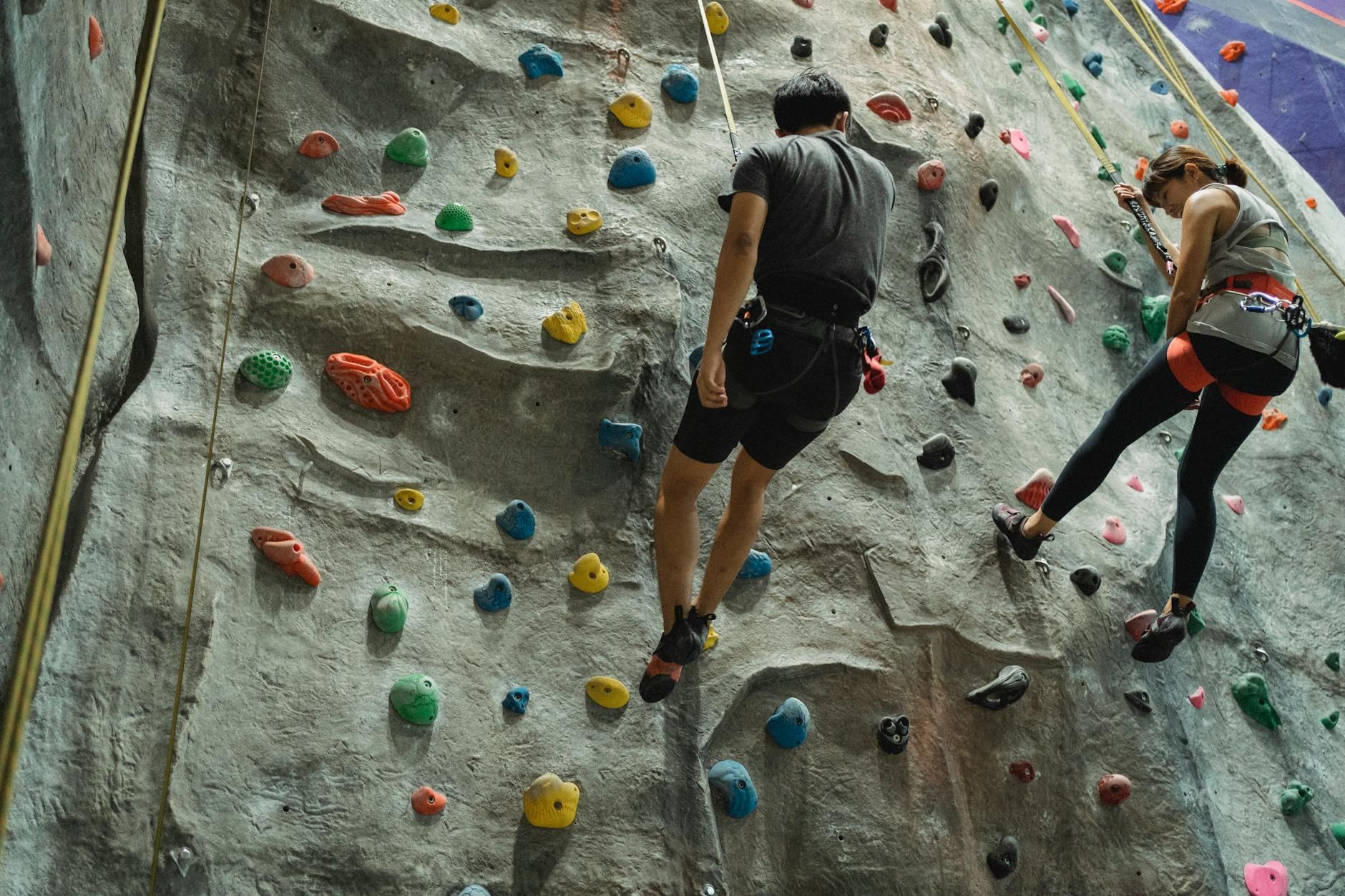
The biggest misconception about climbing is that it demands peak fitness — in reality, technique and problem-solving are just as important.
Getting started with top rope climbing as a beginner involves understanding the basics of safety and gear before you ascend a wall or rock face. A rope runs from your harness up to an anchor at the top, then back down to your partner.
That setup is what makes it the safest form of roped climbing. If you fall, you drop a foot or two — not the full distance to the ground. Your partner, called a belayer, manages the rope and catches you.
The physical side is obvious — you're pulling your bodyweight up a wall. But most climbers hit their ceiling mentally before they hit it physically. Reading the route and committing to a move you're not sure about is the actual skill.
Top rope climbing involves gearing up with a harness and climbing shoes, selecting and planning a climbing route, and then climbing while managing body positioning and movement through holds, all while being belayed by a partner. Climbers must communicate throughout the process, continually solve movement challenges, and engage in physical techniques to ascend the wall safely and efficiently.
Top rope climbing creates a flow state by providing clear goals and immediate feedback through movement and technique, while also fostering social connections through partner-based activities that enhance accountability and collective achievement, mitigating feelings of boredom and isolation.
You probably picture climbers as lean, fearless athletes who've been training since college. That image is keeping a lot of capable people out of gyms they'd actually enjoy.
Climbing is as much about technique and problem-solving as raw strength. Beginners of all fitness levels start climbing in gyms, on routes graded specifically for new bodies and untrained hands. The fitness comes after — not before.
Strength follows. Confidence follows. The route gets easier. Climbing builds both qualities in you — it doesn't ask you to show up already holding them.
Your first session smells like rubber and chalk dust. The shoes feel uncomfortably tight — that's normal, they're supposed to. You'll stand at the base of a beginner route and look up at holds that seem far apart. Your arms will do most of the work on day one, because your feet don't trust the wall yet. That's the universal beginner pattern. Everyone climbs with their arms first.
The thing nobody warns you about is the forearm pump. Halfway up a route you felt good about, your hands stop closing properly. The grip just — goes. Forearm pump is not a fitness failure; it's your tendons and connective tissue catching up to a demand they've never faced before. It fades between sessions over the first few weeks. The first two or three visits you may only get through four or five routes before your hands quit on you.
Mentally, the early sessions feel like a loop of small decisions made slightly too late. You'll be three moves from the top, arms burning, second-guessing a foothold you should have committed to six seconds ago. The frustration you feel in those moments is actually the hobby working — you're solving a physical puzzle under pressure, in real time. That friction is where the flow state lives, once you're just past the beginner wall.
By sessions four or five, something shifts. Your feet start finding holds without you consciously placing them. Routes you couldn't finish start getting topped out. Progress in climbing is fast enough to feel real, but uneven enough to keep you honest. Before that progress compounds though, most beginners slow themselves down with a handful of the same avoidable mistakes — and knowing them in advance changes everything.
When to start: 10:00 AM
Duration: 2 hours
Cost to try: $0 (using gym rental gear)
Success criteria: If you climbed three top-rope routes, reached the top on at least one, and lowered down without a rope tangle, do session 2.
Every new climber does this. You get a few moves up, feel uncertain, and your hands clamp down hard on every hold. It feels safer. It isn't.
Over-gripping burns out your forearms in minutes and makes your footwork sloppy because your upper body is doing all the work. Hold the wall just firmly enough to stay on — your legs should be doing most of the lifting. Focus on pushing through your feet on every move. Your grip relaxes naturally once your legs start carrying the load.
Beginners walk up to a route and start climbing immediately. Experienced climbers stand back and study the wall for a minute before they touch it.
Figuring out your sequence mid-climb — while your forearms are pumping — is how you get stuck. Before you leave the ground, trace the route with your eyes and plan at least three moves ahead. Notice where the rests are, where your body needs to be, and which foot goes where. Climbing is a puzzle — solve as much of it from the floor as you can.
There's a pull toward harder routes early on. You complete a 5.7, feel good, and immediately want to try a 5.10. The gap between those grades is bigger than the numbers suggest.
Climb each grade until it feels boring, not just possible. That boredom means your technique is automatic. If you're muscling through a grade, the next one up will expose every flaw. Easier routes are where footwork, balance, and body positioning actually get trained.
New climbers often want to climb first and learn belaying later. That approach limits you fast. If you can't belay, you depend entirely on others to get on the wall.
Get your belay certification in your first two weeks — most gyms run it in a single session. Once you can belay, you can climb with anyone, show up without a dedicated partner, and actually build a consistent practice. It's also where you learn what the rope system feels like from the other end, which makes you a smarter climber.
Climbing is genuinely fun from day one. That makes it easy to overdo it. Your enthusiasm outpaces what your tendons and finger joints can handle, especially in the first month.
Muscle soreness is one thing — finger and pulley injuries are a different problem entirely and can sideline you for months. Two or three sessions per week with rest days in between is the right starting rhythm. The connective tissue in your hands takes longer to adapt than your muscles do. Give it the time it needs.
Walk into any climbing gym and introduce yourself at the front desk. Staff will tell you about intro classes, belay certification courses, and open climb sessions where you can meet partners. Gyms like Movement, Earth Treks, and Planet Granite have locations across the US — but independent gyms are just as common and often more community-driven.
Most gyms run structured "open climb" nights or beginner meetups. These are the events where belay partners actually form. Showing up once a week consistently matters more than anything else you can do early on.
r/climbharder and r/climbing on Reddit are active daily. One is technique-focused, one is broader — both will answer a beginner question without condescension. For outdoor climbing specifically, Mountain Project lets you browse routes by location and has a partner-finder tool built in.
The app Crags.com serves a similar function internationally. Facebook Groups like "[Your City] Climbing Partners" exist for most mid-size cities and are genuinely used — not dead archives. Search your city name plus "climbing" and something will come up.
The American Alpine Club offers local chapters, subsidized gear, and organized outdoor trips built around exactly this transition. Local climbing coalitions — often searchable through the Access Fund's website — run crag days where experienced climbers bring newer ones outdoors. That's the fastest way to get on real rock without figuring it all out alone.
Indoor gym climbing is where almost everyone starts. Routes are color-coded by difficulty, the holds are obvious, and staff are around to help. It's the version designed to get beginners moving confidently without requiring any prior experience.
The gym environment also makes finding a belay partner easier. Most facilities offer intro classes and belay certifications on-site. You're never far from someone who can help you figure out your next move.
Outdoor top rope climbing trades the controlled gym wall for real rock. The route-reading is harder, the holds are irregular, and conditions change. This is the version where the mental challenge catches up with the physical one.
Most climbers spend several months in a gym before heading outdoors. You'll need anchor knowledge and a competent partner. But the payoff — climbing on actual rock with actual exposure — is the reason many people started in the first place.
Some climbers treat every route like a puzzle. They study the wall before touching it, plan their sequence, and test variations when a move doesn't work. This is climbing as a thinking sport — and it's what keeps analytical people hooked long-term.
Harder-graded routes reward this approach directly. Brute strength stops working around the intermediate level. The climbers progressing past that point are the ones who learned to read movement.
Top rope climbing requires a partner by definition. Someone has to belay you, and you have to belay them back. That mutual dependency makes it one of the few hobbies where showing up for someone else is part of the mechanics, not just the culture.
Climbing gym communities tend to be genuinely welcoming to newcomers. It's common to share beta — tips on how to complete a route — with strangers mid-session. If you want a hobby that builds friendships alongside fitness, this one does it naturally.
Not everyone climbs to socialize. Some people use it as focused, almost meditative time. The belayer is there for safety — but on the wall, it's just you and the route. Climbers who want to be in their own head find that the physical focus of a climb cuts out everything else.
This version of the hobby works well for people who want the structure and accountability of a partner without committing to conversation the whole session. You can climb in near-silence and both parties leave satisfied.
If this resonates, Ice Climbing explores a similar direction.
If this resonates, Bouldering explores a similar direction.
For something adjacent, see Sport Climbing.
The skill that separates improvers from plateau-ers in top rope climbing is route reading — and most beginners skip it entirely.
Most people walk up to the wall and start climbing. They figure out each move as they reach it, improvising from hold to hold. That works on easy routes. The moment the grade steps up, reactive climbing falls apart — because the hard move requires body positioning that started two holds ago.
Route reading is the habit of studying the wall before your hands touch it. You stand back and trace the sequence — where your feet go, where your hips need to face, which holds are footholds and which are handholds. You climb it mentally first.
It feels slow. It feels unnecessary on routes you think you can muscle through. That's exactly why most people never build the habit. Climbers who read routes before every attempt — even the easy ones — train their eye to spot sequences automatically over time. The ones who skip it keep climbing reactively, and reactive climbing has a hard ceiling.
The next section covers how the grading system works — and why understanding it makes route reading even more useful from day one.
Give it four weeks. Aim for five sessions — roughly one or two a week — before you form an opinion.
You leave the gym physically tired but mentally buzzing. You're replaying the move you finally stuck, or the one that beat you. That combination — physical effort plus an unsolved puzzle — is exactly what keeps climbers coming back for years.
At this point, get a belay certification so you're not dependent on gym staff to climb. Then start looking at outdoor crags near you. The transition from plastic holds to real rock changes the experience completely.
Indifference after five sessions usually means the context was wrong, not the sport. Climbing solo — or with a partner who treats it like cardio — flattens the experience. The social layer is half of what makes top rope climbing work.
Try one session at a gym where you don't know anyone and ask a stranger to belay you. The climbing community is genuinely welcoming. A different environment or a more engaged partner can flip the whole thing.
If the problem-solving aspect felt tedious rather than engaging, that's a real signal. Top rope climbing rewards people who genuinely enjoy being stumped — who find a failed attempt interesting rather than frustrating.
If that's not you, the pull toward continuous movement might suit you better. Trail running, mountain biking, or kayaking give you the outdoor physicality without the stop-and-think structure.
After a session, you find yourself pulling up a route-grading chart or watching a stranger's beta video at 11pm for a problem you didn't finish. Unprompted research at odd hours means the hobby already has you — you just haven't admitted it yet.
Top rope climbing is a style where the rope runs from the climber to an anchor at the top of the route and back down, allowing for a safer climb.
No, climbing builds strength over time and is accessible to all fitness levels.
With proper instruction and equipment, climbing is a safe activity, especially indoors.
Join local climbing groups or gyms, where you can meet fellow climbers and find partners.
Wear comfortable athletic clothing that allows for freedom of movement.