BoredomBusted — Find Your Next Favorite Thing To Do
Discover hobbies, activities, places, and ideas that spark joy. Whether you're looking for something creative, active, social, or relaxing, BoredomBusted helps you find your next favorite thing to do.
Browse our hobby guides, things-to-do collections, and place ideas to never be bored again.
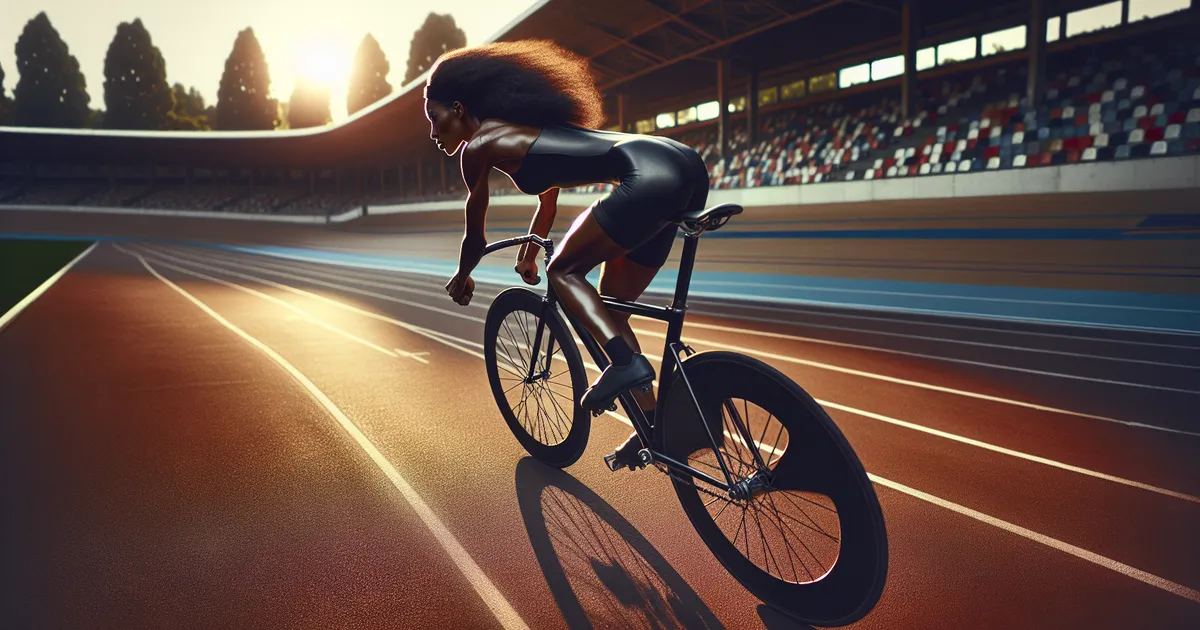
Track cycling isn't just road cycling on a loop — with no brakes and physics-defying turns, it's a full-body negotiation that rewires your riding mindset.
Getting started with track cycling as a beginner involves understanding the unique dynamics of racing fixed-gear bikes on a specialized oval track called a *velodrome* – no brakes, no coasting, just legs and momentum.
Unlike road cycling, every variable is controlled:
That constraint is the whole point – speed becomes the only variable left to manipulate.
Track cycling involves riding fixed-gear bikes on a banked velodrome, where cyclists perform laps while focusing on continuous pedaling, speed management, and bike control. Riders engage in drills like pacelines, sprints triggered by whistles, and interval training, emphasizing precision in handling and rapid acceleration without braking, all while maintaining a steady flow of movement.
Track cycling induces a flow state through continuous pedaling and skill challenges on smooth surfaces, locking in focus and minimizing monotony. It provides immediate feedback on technique with each lap, fostering rapid improvement that combats boredom. Group workouts enhance social belonging, while mastering track skills delivers quick accomplishments, keeping engagement high with varied drills.
You think track cycling is just road cycling on a loop. Fewer distractions, maybe a bit faster — same deal, smaller venue. That assumption is going to get corrected quickly.
A first-time track rider at a beginner session will typically spend 20 minutes just learning how to slow down without grabbing for brakes that aren't there. That single adjustment — trusting your legs to do the work — changes how every subsequent ride feels.
The gear looks simple.
The skill ceiling is not.
Getting started is less complicated than the velodrome makes it appear — and the barriers are lower than most people expect.
Watching track cycling, the riders look fluid — banking carved clean, speed held easy. Then you clip in and the velodrome becomes a wooden wall you're being asked to trust. The gap between spectator and rider is not something you can think your way across. You only find it by being on the bike, mildly terrified, hands white-knuckling the bars.
The first session is almost entirely spent on the flat apron at the bottom — not the banking, just the track floor, getting acquainted with a fixed gear and the unsettling fact that your legs never fully stop. Week two, you creep onto the blue band, the transition strip, and feel the camber start pulling at your front wheel in a way that demands your whole attention. By week three, you hit the banking properly. You'll probably hold a death-grip on the bars the entire time and come off grinning anyway. Week four is when the track stops feeling like a threat and starts feeling like the point.
The gear is the thing nobody warns you about. On a fixed-gear track bike, the venue picks your gear — and it will feel massive, heavier than anything you've pedaled before. Most beginners expect to spin out of turns easily; instead, the resistance catches mid-corner and breaks their line. Ask the track what ratio they're putting you on before you arrive. Your cadence will feel sluggish. That's not a fit problem — it's your legs learning to anticipate the load instead of just reacting to it.
There's a moment in those first few weeks where you'll want to quit and come back next week — same feeling, roughly equal pull. The only real difference is whether you read the discomfort as a reason to stop or a sign your body is actually adapting. Most people who quit in month one do it right before that adaptation kicks in. The next section covers the specific mistakes that keep beginners stuck on the wrong side of that line.
When to start: Early morning
Duration: 1.5 hours
Cost to try: $20
Success criteria: If you complete a full warm-up lap and ride two clean corners while keeping a steady line and continuous pedaling, do session 2.
The velodrome looks like a place for going fast. New riders ignore the slow-speed control work entirely because of it.
Stand on a slight incline or against the rail and hold position for 30 seconds before you touch the banking. That one drill separates riders who survive the first lap from riders who panic on it.
The steep angle looks terrifying. Beginners either crawl up nervously or charge in with no plan. Both kill momentum and confidence.
The fix is simpler than it feels: match your speed to the rail line before you commit, not after. If you're dropping down to the blue band, you should already be at the pace you want to hold — adjusting mid-entry is where things go wrong.
Coming from geared bikes, riders brake with their legs reactively. The fixed gear punishes that — it doesn't respond the way a freewheel does.
Spend your first two sessions doing nothing but controlled deceleration drills. Resist the pedal stroke, don't fight it — feel exactly where the resistance sits in the rotation. That awareness is what smooth fixed-gear riding actually runs on.
A 49×15 sounds serious. It's also going to destroy your knees before you finish your first session.
Start at 46×16 or lower. Only move up once you can spin out that gear cleanly above 100 RPM — not once it starts feeling easy, but once your cadence is genuinely smooth at the top end.
Track bikes are built for aerodynamics. Beginners default to the comfort position from road riding — then can't figure out why everyone else looks faster doing less work.
Drop your stem one spacer at a time over two weeks, not all at once. Your back and hip flexors need time to adapt. Rushing the position change just trades one problem for another.
Track cycling happens at velodromes — purpose-built banked ovals, usually 250m indoors or up to 400m outdoors. There are more of them than most people expect. And most run structured beginner sessions open to the public.
The fastest route in is through the governing bodies — they maintain the club networks that actually control velodrome access. Start there, then use the venue itself as a backup.
Walk in and say: "I've never ridden a track bike — do you run intro sessions?" That gets you into a coached beginner program. You'll get a loaner fixed-gear bike and a coach who won't let you near the banking until you're ready.
USA Cycling is the national governing body in the US. British Cycling is the equivalent in the UK. Both sanction races and maintain the club networks that gate velodrome access — so registering with either opens more doors than searching on your own.
Two riders. A slow tactical crawl, then an explosive 200-meter sprint. Positioning and timing matter more than raw fitness — which surprises most beginners who show up thinking it's a pure power contest.
A motorbike pacer sets the speed, then peels off and the riders go to war. It's physical, unpredictable, and not a beginner event. Watch it live before you write off track cycling entirely — it reads completely differently in person than on a screen. Sprint experience is a prerequisite.
Two riders start on opposite sides of the track and try to catch each other over 4km. Aerodynamics and pacing strategy become your actual opponents — the other rider is almost secondary.
Pursuit riders often run full aero setups — skinsuit, disc wheel, aero helmet — which pushes costs up significantly compared to other track disciplines.
Riders sprint for points at regular intervals over a longer distance. It's the one track event most people can follow without a rulebook — endurance matters more than a specialist sprint, which opens it up to a wider range of riders. If you're coming from road racing, start here.
A team relay where one partner races while the other circles the track, swapping by hand-sling. A mistimed sling at speed goes badly — coordination between partners matters as much as fitness. This is not a beginner variant.
BMX lives in the same world — different mechanics, similar appeal.
A close neighbor worth considering: Mountain Biking.
If the texture of this appeals to you, Cyclocross is built on similar bones.
Beginners spend months grinding bigger gears, chasing raw power. But track cycling doesn't reward strength — it rewards timing your effort to the race's rhythm.
The answer is banking altitude. The higher you ride on the track, the more gravitational potential energy you carry. Drop down the banking at the right moment and you accelerate without touching extra watts.
No extra effort. No burning a match. Just physics. Experienced riders aren't fitter than you in those moments — they're playing a different game entirely, one where the track geometry does the accelerating.
Most beginners ride a flat line and wonder why they keep getting beaten by riders who look relaxed. Without this, you're racing on effort alone while everyone else is racing on strategy and momentum. The next section covers the specific track variants where controlling altitude matters most.
Commit to 8 sessions over 30 days – roughly two per week. That's enough to get past the initial awkwardness of fixed-gear riding and banking turns, but not so many that you've sunk serious money before you know how you feel.
If you're already thinking about the next session before you've showered after this one, that's the signal. Track cycling has a specific pull – the velodrome is a closed loop, which means your brain can actually measure improvement lap by lap.
If you're mentally replaying your line through the banking, you're hooked. Start looking at entry-level track bikes and ask your velodrome about their beginner race programs.
Indifference after eight sessions usually means the fixed-gear learning curve is still eating your attention – you're managing the bike instead of riding it. Extend by four sessions before deciding.
If it's still flat after twelve sessions, it's flat.
If you dreaded going back and went anyway out of stubbornness, that's not commitment – that's ignoring useful information. The velodrome environment is loud, structured, and rule-heavy.
Some people find that energizing. Some find it suffocating. If it was the latter every single time, believe yourself.
You keep watching track sprint or keirin footage – not because you're researching, just because you want to. Specifically, you're noticing the tactics: the cat-and-mouse of the flying 200, the way riders read each other before the final surge.
That low-level tactical obsession is the real tell – it means you're interested in the sport, not just the exercise.
Access is a hard wall. Velodromes are not common. If the nearest one is more than an hour away each way, two sessions a week isn't sustainable.
Track cycling doesn't translate to road or trail riding the way other cycling disciplines do – so a long commute to the velodrome is a real cost with no fallback.
A history of knee injuries matters here specifically. Fixed-gear riding removes your ability to stop pedaling, putting continuous load on the knees through every corner and descent.
That's not a reason to be cautious – it's a reason to talk to a physio before session one.
If structured environments with enforced session times wear on you, the velodrome will feel like that every visit. Every session runs on a schedule, with other riders, under a code you're expected to know before you arrive.
If track cycling sounds close but not quite right, our hobby list might surface something better suited.
Track Cycling is a deeper commitment than most boredom cures — for lighter options, check things to do when bored.
To get started, you'll need a track bike (fixed-gear bicycle built for speed), a helmet, and access to a velodrome or indoor cycling track. Most clubs provide beginner coaching and can recommend affordable entry-level bikes or rental options, so you don't need to invest heavily upfront.
Basic track skills like balance and controlled acceleration can be learned in 4–6 weeks of regular practice. However, mastering techniques like sprinting, pursuit racing, or team relays typically takes 3–6 months of consistent training and coaching.
Track cycling has a learning curve—the fixed-gear bike and banked track feel unfamiliar at first—but it's not inherently harder than road cycling. Most beginners find it manageable within a few sessions once they understand the unique handling and rhythm of riding on a velodrome.
Entry-level track bikes range from $800–$1,500, while quality used bikes can be found for $500–$800. High-performance racing bikes cost $2,000–$5,000+, but you can start with a rental or budget option and upgrade as your skills develop.
Popular events include sprints (short all-out races), pursuits (two riders starting opposite and chasing each other), keirin (motorcycle-paced sprint), and team relays. Most clubs host friendly competitions and training sessions for all skill levels, from beginners to advanced racers.
You don't need to be elite-level fit to start, but track cycling does demand cardiovascular endurance and leg strength that develops over time. Beginners of various fitness levels can start with coaching-focused sessions that build conditioning gradually.