BoredomBusted — Find Your Next Favorite Thing To Do
Discover hobbies, activities, places, and ideas that spark joy. Whether you're looking for something creative, active, social, or relaxing, BoredomBusted helps you find your next favorite thing to do.
Browse our hobby guides, things-to-do collections, and place ideas to never be bored again.
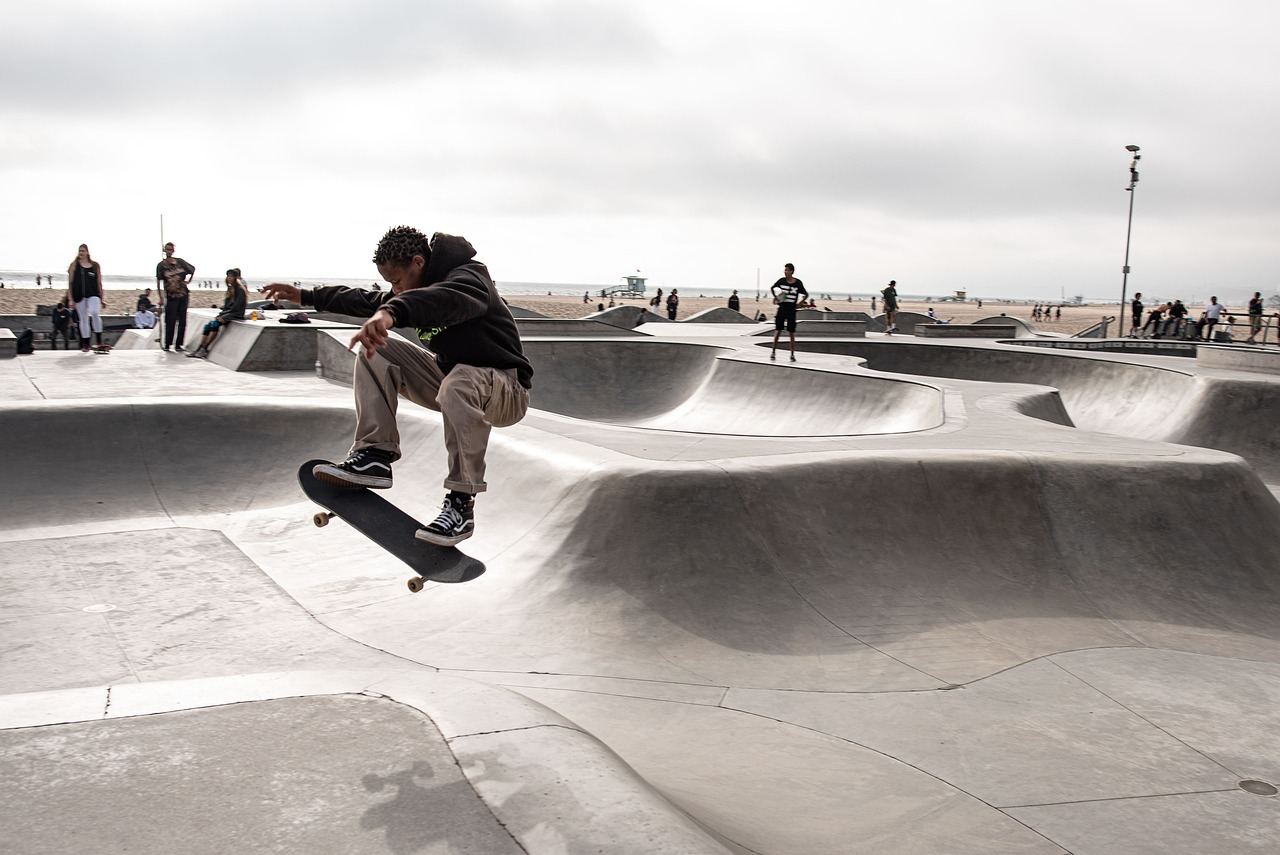
Vert skateboarding isn't just for kids chasing stardom — it's a high-reward skill that builds body awareness and can be learned at any age, with a surprisingly controlled environment.
Getting started with vert skateboarding as a beginner opens up a thrilling world of riding on halfpipes and full pipes – curved ramps that launch you above the lip into open air.
Unlike street skating, which uses urban obstacles, vert is built entirely around generating speed through transitions and performing tricks in the air above the ramp's edge.
In Vert Skateboarding, you pump your skateboard up and down a U-shaped ramp, transitioning from horizontal to vertical motions, executing tricks like stalls and grinds, and launching into the air for complex aerial maneuvers while managing speed and momentum.
This hobby induces a flow state through high-speed transitions and aerial commitments, offering instant feedback from successful tricks and failures, fostering a sense of accomplishment and social belonging in shared ramp spaces.
You think vert is the dangerous extreme sport from 1999 X-Games footage. Big air, bigger crashes, only for people who were basically raised in a halfpipe.
That assumption is keeping you from one of the most technically rewarding skill-building hobbies you can actually progress at as an adult.
Vert builds kinesthetic awareness faster than almost any other board sport. The transition punishes bad body position immediately — no ambiguity, no delayed feedback. You always know exactly what the next skill is, which means you're never just practicing in circles.
The halfpipe is also a more controlled environment than it looks. No traffic, no uneven pavement, no other people — just gravity, and gravity is consistent. That predictability is what makes the learning curve readable, even when it's steep.
Tony Hawk landed the 900 at 31 years old.
Not coasting on youth.
Not a prodigy moment.
That was the payoff of accumulated technique — and accumulated technique doesn't expire the way athletic youth does. Adults who commit to vert aren't fighting their age; they're building something that compounds.
The first real decision you'll face is gear — and it's less obvious than you'd expect.
Watching Tony Hawk's Pro Skater makes vert look like controlled flight. Showing up to an actual halfpipe makes it feel like standing at the edge of a roof. The gap isn't skill — it's gravity, and the fact that nothing about a 10-foot transition feels natural until your body stops arguing with it.
The first session is mostly standing at the lip. You'll talk yourself into the drop, finally go, speed-wobble, and bail. Hesitation is the actual enemy here — not lack of talent, and that takes most people the better part of week one to figure out.
Before your first session, learn to fall up the ramp rather than down the flat bottom. When you bail on vert, throwing yourself back up the transition kills speed and protects your wrists. That one habit will save you more pain than any amount of protective gear.
By week two you'll be pumping transitions consistently — not stylishly, but functionally, which matters more right now. Week three is when your body starts reading the curve without conscious thought. Two seconds per run, everything clicks. By week four the ramp stops feeling hostile, and that shift — ramp-as-enemy to ramp-as-tool — is bigger than landing any trick would be.
Scared. Frustrated. Briefly reconsidering longboarding. That's just what week one looks like for everyone who eventually gets good at this — and the mistakes in the next section are exactly what keep people stuck in that phase longer than necessary.
When to start: Early morning
Duration: 1.5 hours
Cost to try: $10
Success criteria: If you can pump across the half-pipe, tap the coping, and return to the ramp without stopping, do session 2.
The ramp looks like the obvious starting point – it's actually the last thing you want to rush.
Beginners skip pumping because it feels like a warm-up drill, not a real skill. Spend your first sessions only pumping – no drops – until you can generate speed through the transitions without pushing.
Street decks (8" or under) feel normal in a skate shop but they're genuinely unstable at vert speeds and heights.
Deck width under 8.5" gives you far less platform to land on when you're coming down from above the coping. Size up to at least 8.5", ideally 9"+, before you ever try dropping in.
The instinct when you overshoot is to fall back onto the flat – a caught wheel and a destroyed ankle follow fast.
Train yourself to slide your board up the transition and crouch low rather than stepping off. Watch how experienced vert skaters abort a trick: they stay on the board longer than feels safe.
Leaning into the transition feels committed. It actually kills your momentum and throws your weight forward on the way back down.
Stay centered over your trucks the whole way up the wall – your wheels do the work, not your upper body compensating.
Fresh coping with no wax gives you real feedback about where your trucks are actually landing.
Waxing too early just means you slide off before you've locked anything in. Leave the coping dry until you can land a 50-50 three times in a row without sliding out – then wax sparingly.
Vert skateboarding needs a halfpipe or full vert ramp — and those are rarer than street plazas. Location matters more here than in almost any other skate discipline.
Some indoor sports centers and private ramp setups run dedicated vert sessions. Search indoor facilities in your region — not just public skate parks.
Once you show up, one sentence does most of the work: "I'm learning vert — who should I talk to about session etiquette?" That signals you won't drop in blind on someone's run — and it almost always earns you a five-minute orientation from whoever's been skating there longest.
Halfpipe and mini ramp skating is vert scaled down — smaller transitions, lower height, same fundamental skills. Ramps top out around 4–6 feet instead of 11+, so speed and consequence are both more forgiving.
Mini ramps are cheaper to access and more commonly found at local skate parks. The obvious starting point if full vert feels like jumping straight to the deep end — because it is.
Bowl skating uses curved concrete that wraps around you in all directions instead of a flat ramp. You generate speed through carving, not pumping — the lines are more creative and the transitions come at you from every angle.
No meaningful gear difference from vert, though softer wheels in the 97a range handle concrete transitions better. Good fit for skaters who want vert's physicality but a more freeform environment.
Mega ramp is vert at a scale most people will only ever watch. Launches exceed 70 feet, airs push 25+ feet above the coping, and the infrastructure costs six figures minimum to build.
This isn't a variant you work up to — it's a career destination. Mentioned here so you know what you're looking at when X Games airs.
Some street skaters train vert specifically for the air awareness and body control it builds. Those skills transfer back to gaps and stairs in ways that pure street practice doesn't replicate.
No extra gear needed if you already skate street. The only requirement is ramp access — the crossover benefit kicks in faster than most street skaters expect.
Street Skateboarding lives in the same world — different mechanics, similar appeal.
If this resonates, Freestyle Skiing explores a similar direction.
Most beginners spend months trying to go higher – pumping harder, pushing faster, chasing more speed. The ramp doesn't reward effort. It rewards timing.
The one skill is transition read – the ability to feel exactly where you are in the curve and adjust your compression and extension to match it, not fight it. It's not about strength or pop. It's about knowing, without looking down, whether you're a foot before the lip, at it, or past it – and letting your knees respond automatically.
Without it, you're guessing at the top of every run, which means you're either late on your pump or early on your extension – and both kill your height and your control. With it, the ramp starts to feel like a rhythm you're inside of, not a wall you're reacting to. Tricks don't get easier because you got braver. They get easier because you stopped fighting your own timing.
Commit to 8 sessions over 30 days — roughly twice a week. That's enough repetition to feel the learning curve start to bend, but not so much that a rough first week poisons the whole experiment.
Vert skating specifically needs that volume because the first two or three sessions are almost entirely fear management. You won't know if you like the hobby until you've pushed through the part where everything feels wrong.
If you're showing up early and staying late, that's not enthusiasm — that's your nervous system telling you it found something. Buy better gear, find a local skate community, and start treating sessions as practice with intention rather than just showing up.
If you don't mind the sessions but you're not chasing the next one, that's a signal you like the idea of vert skating more than the actual experience. Extend by four sessions only if you haven't yet dropped in from the full coping — that moment changes things for some people. If it doesn't, you have your answer.
If you dreaded going — not nerves, but actual resistance where you're inventing reasons to skip — that's data, not weakness. Vert skating has a high discomfort ceiling and a slow reward curve. Some people are wired for that. Some genuinely aren't.
You've watched the same run — maybe Tony Hawk at the 1999 X Games, maybe a modern bowl session on YouTube — more than once, not for research but just because something about it pulls at you. That low-level magnetism toward the movement specifically, not the culture or the aesthetic, is worth taking seriously. Most hobbies people stick with started as exactly that quiet, slightly embarrassing pull.
Existing knee, ankle, or wrist injuries are a genuine disqualifier. Falls aren't occasional in vert skating — they're structural to the learning process, and concrete transitions don't negotiate.
Access is a real wall too. Without a skate park nearby that has an actual vert ramp or deep bowl, you're doing flat-ground skating and hoping — not vert.
Finally, sporadic once-a-month sessions will reset your progress repeatedly. This hobby punishes inconsistency harder than most. If your schedule can't support twice-weekly sessions for the first few months, the timing isn't right.
Still looking for something to do? Browse things to do when bored for more ideas.
Vert skating takes place on curved ramps like half-pipes, while street skating uses flat ground and urban obstacles. Vert focuses on gaining air and performing aerial tricks, whereas street skating emphasizes technical maneuvers on stairs, rails, and ledges. Both require different skill sets and equipment.
Most beginners can expect to drop in and gain basic air within 2–4 weeks of consistent practice. Landing clean aerials like ollies and kickflips typically takes 2–6 months depending on your natural balance and prior skateboarding experience. Progressing to more advanced tricks like 540s or McTwists requires months to years of dedicated training.
You'll need a helmet, wrist guards, elbow pads, and knee pads at minimum—vert impacts are more severe than street skating due to higher speeds and falls from height. Many riders also wear padded shorts and gloves for extra protection. Quality gear significantly reduces injury risk and gives you confidence to progress.
A decent vert skateboard costs $100–$300, while a full protective gear set runs $80–$200. Beyond that, you'll need access to a skate park with a half-pipe, which is often free or very affordable. Total initial investment is typically $200–$500, making it accessible compared to many other action sports.
Some street or cruising experience helps with board control and balance, but it's not strictly necessary if you're willing to start with basics like dropping in and carving. Many people transition from street to vert, though vert requires mastering different physics and committing to taller structures. If you're completely new to skateboarding, expect a steeper learning curve.
You should be comfortable dropping in, maintaining speed on the ramp, carving tight turns, and popping basic ollies before attempting aerial tricks. Building core strength, balance, and board awareness is essential for controlling yourself in the air. Once you can consistently stay on the ramp without fear, you're ready to focus on height and trick execution.