BoredomBusted — Find Your Next Favorite Thing To Do
Discover hobbies, activities, places, and ideas that spark joy. Whether you're looking for something creative, active, social, or relaxing, BoredomBusted helps you find your next favorite thing to do.
Browse our hobby guides, things-to-do collections, and place ideas to never be bored again.
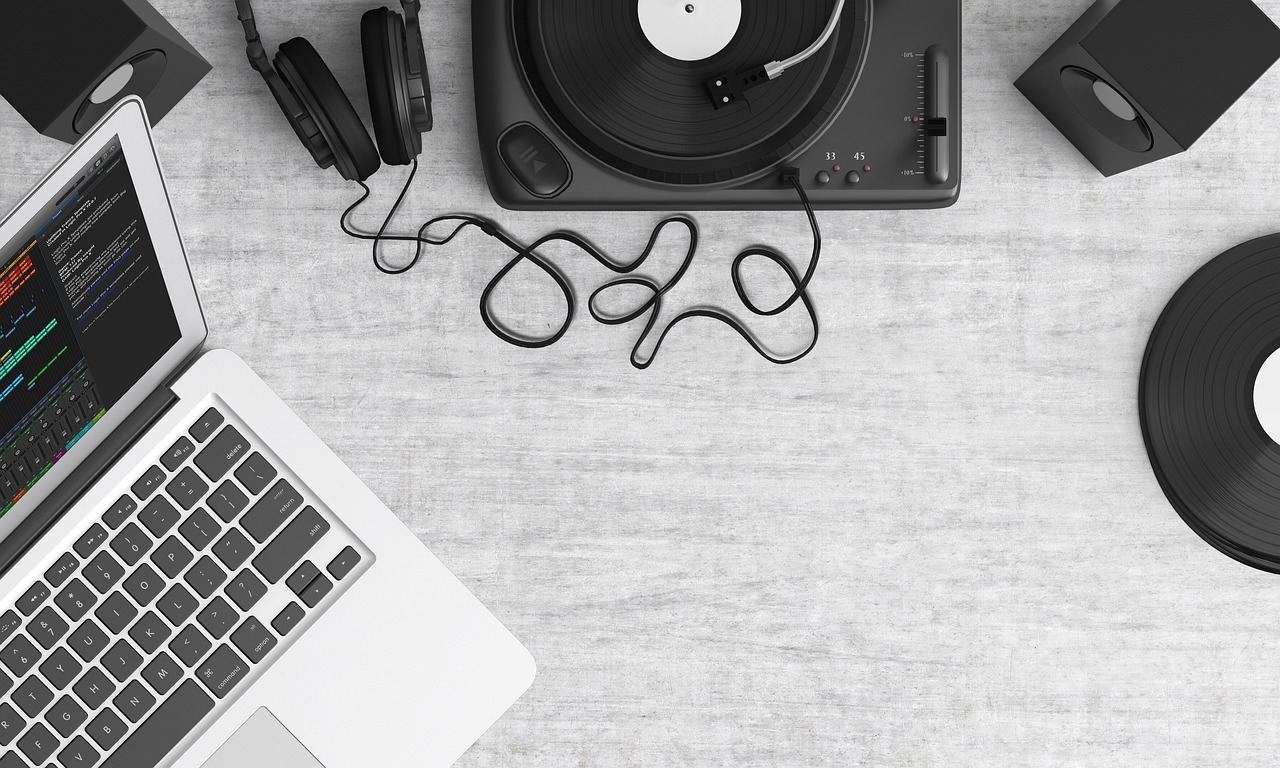
Turntablism isn't just DJing — it's an instrument requiring a decade of practice to master techniques like scratches and transforms, shaping sound like a musician.
Getting started with turntablism as a beginner involves learning how to use vinyl records and a DJ mixer to create unique sounds and rhythms. — manipulating playback speed, direction, and crossfader cuts to create original sounds and rhythms in real time.
Unlike casual DJing, which blends tracks for a crowd, turntablism treats the turntable itself as the instrument, not a delivery system.
In turntablism, hobbyists manipulate vinyl records on turntables, using techniques like scratching and beat juggling to create unique soundscapes. They practice physical techniques, cue records, and create routines by arranging audio samples into cohesive performances, all while focusing on rhythm and flow. This involves repetitive drills and mental visualization to execute complex sequences, enh…
Turntablism fosters a flow state through escalating skill challenges, where immediate auditory feedback and muscle memory build precision and confidence. The creative expression involved in composing routines and experimenting with sound samples offers a satisfying outlet for artistic drive. Additionally, the sense of accomplishment from mastering complex techniques and engaging in playful experi…
You think turntablism is DJing. Playing songs at a party, fading between tracks, maybe a crossfader move if you're feeling bold. That's the assumption – and it misses the point by about a mile.
Turntablism is an instrument discipline – the vinyl record becomes a sound source you play, not a medium you play from. Scratches, transforms, flares – these are named techniques with muscle memory requirements and years of mastery ahead of them. Reading rhythm at a molecular level comes with the territory.
The culture has a canon. There are grandmasters, competitions, and a 40-year lineage running from the Bronx through to world championships held today – none of which involves a laptop playlist.
DJ QBert can make a record sound like a human voice having a conversation. Not metaphorically – phoneme by phoneme, syllable by syllable, using nothing but vinyl and a crossfader.
That's an instrument.
Played at a level that takes a decade to approach.
Which means the ceiling on this hobby is so far above where you'll start that the gear question is the only sensible place to begin.
The entry setup is more accessible than the skill ceiling suggests – and that gap is exactly what the next section covers.
Watching a DJ scratch makes it look like instinct – hands moving, music bending, crowd reacting in real time. Sitting down at actual decks for the first time, you realize you have no idea which hand is supposed to do what. The gap between watching and doing is wider here than almost any other hobby – because the skill you're watching looks like feel, but it's actually a hundred small mechanics stacked on top of each other.
Week one is mostly grip. You'll spend it learning to hold the record without killing your cue point every time you let go. Week two, the baby scratch starts clicking – one direction feels natural, the other still fights you. By week three, you'll try a transformer scratch too early, get frustrated, and go back to basics – which is exactly the right move, even though it feels like failure.
Week four is when something shifts. Your first mix that lands on beat will feel accidental, because it mostly is – but your hands are starting to remember. The awkward phase in turntablism lasts longer than it looks from the outside. Every week you push through it, the gap between what you hear in your head and what comes out of the speakers closes a little.
Before you play your first record, check your slipmat. It sits between the vinyl and the platter so you can hold the record still while the platter spins underneath. If it's gripping instead of slipping, every scratch sounds like a dying engine – and you'll blame your technique for a hardware problem.
The next section covers the mistakes that keep people stuck in that frustrating half longer than they need to be.
When to start: Morning
Duration: 1 hour
Cost to try: $0
Success criteria: If you can beat-match two tracks for 16 bars and make a clean crossfader transition with no audible drift, do session 2.
New scratchers death-grip the vinyl trying to control the sound, which kills the fluid motion that makes scratches actually sound musical.
Place two or three fingers flat on the label and let your wrist – not your fingers – do the directional work.
Most entry-level mixers ship with a smooth, gradual crossfader curve built for blending, not cutting – so beginners practice baby scratch technique on hardware that's actively fighting them.
Open your mixer's utility menu or curve dial and push it to the sharpest setting so the fader opens and closes almost instantly.
It feels productive to just move the record back and forth until the sound feels right, but scratching without a beat playing trains your hands to be rhythmically useless.
Pull up a drum break at 80–90 BPM and land every forward push on the one or the three – tempo first, technique second.
Beginners crank the counterweight to maximum pressure thinking it prevents skipping, but excessive downforce chews through needles fast and dulls your control feedback.
Set your cartridge to the manufacturer's recommended tracking force – usually 3–4 grams for a Shure M44-7 – and let the headshell weight do its job.
DVS software is genuinely useful, but starting on timecode vinyl means you're learning scratching and troubleshooting latency at the same time.
Spend the first month on real records so your hands learn resistance and rebound without a laptop variable thrown into the mix.
Turntablism doesn't need a venue – it starts in your bedroom, your garage, or anywhere you can set up a mixer and two decks without a noise complaint.
When you're ready to play with others, look for record stores, music studios, and underground music venues – these are where the real sessions happen.
Tell whoever runs the session that you're learning scratch fundamentals and looking to watch or get feedback – not that you "want to DJ."
That distinction matters – it signals you're there to grow, not perform, and experienced heads will actually spend time with you instead of nodding politely and walking away.
Battle DJing strips turntablism down to scratch routines, speed, and showmanship — judged head-to-head against another competitor. No crowd, no mixing, no beatmatching.
This is the variant for people who train hardest when there's something to win — a clear goal and competitive pressure are built into the format.
Club and party DJing overlaps with turntablism, but the priority flips. Keeping the floor moving matters more than technical precision. Scratching shows up as seasoning, not the main dish.
Best for people who care about performing for a crowd more than mastering technique. Budget higher — you'll likely need a bigger setup and possibly a PA system on top of standard gear.
Beat juggling means two copies of the same record, manipulated in real time to reconstruct the beat from scratch. It's closer to live percussion than DJing — you're not playing music, you're building it.
Gear costs are identical to standard turntablism. Best for people with a rhythmic background who find straight scratching too linear.
Controllerism uses the same techniques as turntablism — just on a MIDI controller instead of a turntable. The ceiling is lower, but a decent controller runs $100–$300 versus $600+ for a proper turntable setup.
Best for total beginners who want to test whether the skill holds their interest before committing to vinyl and hardware.
Phonographic experimentalism leaves hip-hop behind entirely. Artists like Christian Marclay treat the turntable as a sound-art instrument — destroying records, playing them backwards, building noise and texture.
If you got into turntablism for the music theory, this isn't that. Best for people with an art or sound-design background who find technical scratching too rigid.
Readers who enjoy this often gravitate toward DJ Mixing next.
If this resonates, Band Performance explores a similar direction.
For something adjacent, see Concert-Going.
Most beginners spend months perfecting their scratch patterns — the shapes, the sounds, the techniques they've seen on YouTube.
The real ceiling isn't your hands. It's your ears.
The one skill is beat-matching by feel, not by sight. Specifically, training yourself to hear the phase relationship between two records and correct it before the drift becomes audible to the crowd.
Not counting beats.
Not watching a waveform.
Hearing the tiny flamming tension between two kick drums and knowing which platter to nudge — and by how much — before the crowd notices anything is wrong.
Once your ears lead, your scratch patterns stop sounding pasted on top of a mix — they become part of it. You're never scrambling to save a train wreck while also trying to perform.
Without it, every transition becomes a controlled emergency, and the crowd feels that tension even when they can't name it.
Eight sessions in 30 days — roughly two per week, each one 45 minutes minimum.
Less than that and you're not learning turntablism. You're just touching equipment occasionally and wondering why nothing clicks. Eight sessions is enough to feel your first real scratch land and still have room to hate it if it's not for you.
If you're hunting for any excuse to get back to the decks, that's not enthusiasm — that's the hobby. Turntablism rewards people who get fixated on small mechanical things, because the whole craft is small mechanical things stacked on top of each other. Start buying your own records and start studying specific DJs.
That neutrality is usually a technique problem, not a you problem. If you never landed a clean scratch, you were likely fighting bad setup the whole time. Extend by four sessions, but fix the setup first.
If you were watching the clock every session, read that honestly. Turntablism demands repetitive physical drilling during a phase where it sounds genuinely bad. If that loop felt unbearable at session three, it doesn't get easier until session fifteen.
You've watched a scratch routine on YouTube three times this week and each time you moved your hand like you were doing it. That's not casual interest. Your brain is already rehearsing the motor patterns before your hands ever touch a record.
If that's been happening for months, you've already been circling this. Eight sessions will confirm it fast.
Apartment living with thin walls and no headphone-only practice option will stall your progress fast. "I can only practice when nobody's home" breaks the feedback loop that makes motor skills stick.
If you have an existing RSI, tendinitis, or carpal tunnel issue, the scratching motion will aggravate it — this isn't a push-through situation.
If you need visible output to stay motivated, the first three months of turntablism produce almost nothing worth showing anyone. It's a craft that pays you in private skill before it pays you publicly.
Sometimes you just need something for the next ten minutes — that's what things to do when bored is for.
You'll need two turntables, a DJ mixer, a preamp (if using vintage turntables), headphones, and vinyl records. Many beginners start with entry-level all-in-one DJ systems or controller setups that bundle these components together, costing $200–$500 for basic gear. As you improve, you can invest in higher-quality turntables and mixers.
Most people can learn fundamental scratching and beat-mixing techniques within 3–6 months of consistent practice (30+ minutes daily). Developing smooth mixing skills and creating original scratch routines typically takes 1–2 years, while true mastery requires years of dedicated training. Your progress depends heavily on how frequently you practice.
Turntablism has a moderate learning curve—the basics are accessible, but developing precision and speed requires patience and repetition. Most beginners find scratching techniques challenging at first, but online tutorials and practice make them achievable. Your musical background and hand coordination help, but aren't essential.
Turntablism focuses on creative manipulation of vinyl records—scratching, beat-juggling, and live remixing—treating the turntable as a musical instrument. Regular DJing typically emphasizes track selection and beat-matching to create smooth transitions between songs. Turntablism is more technical and performance-oriented, often seen at competitions and live shows.
Vinyl records are traditional for authentic turntablism, but many modern DJs use digital controllers and software to practice the same techniques. If you prefer the classic vinyl experience, expect to spend $5–$15 per record, though you can find used records cheaper. Controllers offer flexibility and lower costs, making them popular for beginners.
Yes, skilled turntablists earn income through DJing at clubs and events, selling beats or remixes, teaching lessons, or competing in DJ battles. Entry-level club gigs typically pay $50–$200, while established DJs command higher rates. It takes time to build a reputation and booking list, but turntablism can evolve into a viable side income or full-time career.