BoredomBusted — Find Your Next Favorite Thing To Do
Discover hobbies, activities, places, and ideas that spark joy. Whether you're looking for something creative, active, social, or relaxing, BoredomBusted helps you find your next favorite thing to do.
Browse our hobby guides, things-to-do collections, and place ideas to never be bored again.
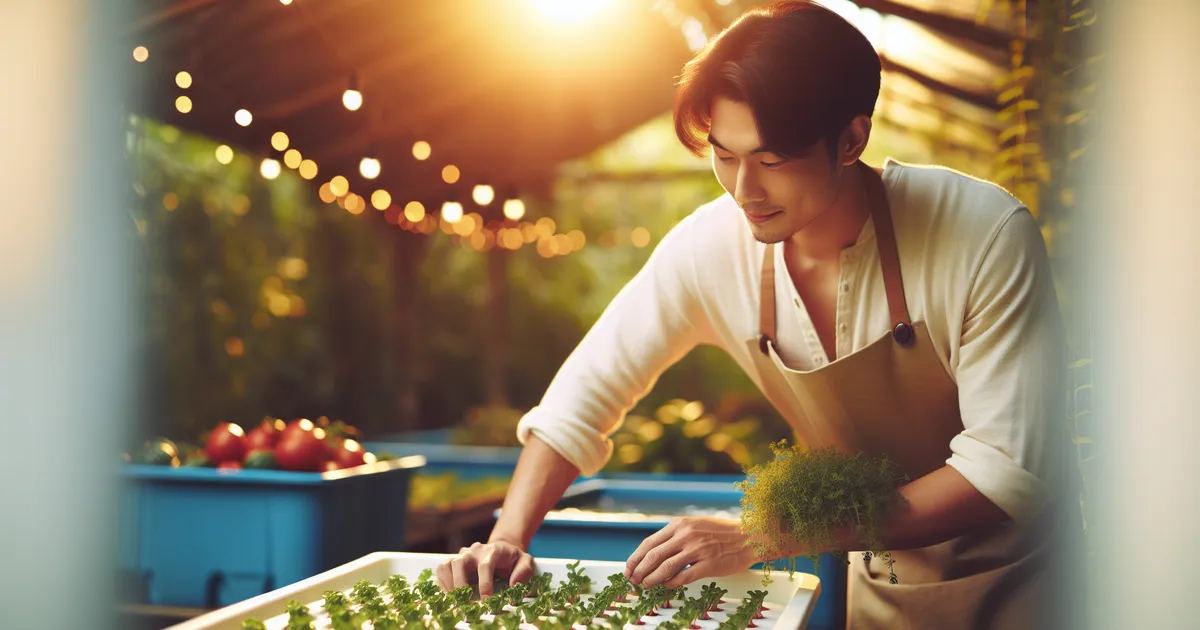
Aquaponics isn't just a fish tank with floating lettuce; it’s a complex ecosystem that teaches you the chemistry, biology, and engineering of life without burning the midnight oil.
Getting started with aquaponics as a beginner presents an innovative approach to combining fish farming and soil-free plant cultivation in a sustainable closed-loop system.
Fish waste feeds the plants; the plants clean the water for the fish.
Unlike hydroponics, you're not buying nutrients – the fish produce them.
Unlike a regular aquarium, something edible comes out the other end.
In aquaponics, you maintain a closed-loop system by feeding fish, checking water parameters, inspecting plant health, and harvesting produce, all while performing physical tasks like scooping feed, pruning plants, and cleaning filters.
Aquaponics creates skill feedback loops through immediate visual cues of progress, fostering a flow state as you engage in routine tasks and problem-solving, which leads to a tangible sense of accomplishment from harvesting your own food.
You think aquaponics is a fish tank with some lettuce floating on top. A science fair project. Something a guy with too much time and a YouTube channel does in his garage.
That assumption is going to make you dramatically underestimate what you're actually getting into – and that's the reason most people who start this hobby can't stop.
Aquaponics is a closed-loop ecosystem – fish waste becomes plant fertilizer, plants clean the water, and the whole system regulates itself once it's balanced. You're not maintaining two things. You're maintaining the relationship between them.
The skill ceiling is genuinely high. You're reading water chemistry, managing biological cycles, and making decisions that affect living things on multiple levels – it pulls in biology, engineering, and systems thinking without feeling like any of them.
Most hobbyists report that the system teaches you things you didn't go looking for – why pH swings happen, how nitrogen moves through an ecosystem, what fish behavior actually signals. You don't study it. It just starts making sense.
A home system running tilapia and basil in a 100-gallon setup can produce enough herbs to supply a household year-round. The same water cycles through for months with minimal top-offs.
That's infrastructure.
Not a hobby project you tinker with on weekends.
Not something you outgrow.
A living system you design once and then learn from indefinitely – without a science degree anywhere in the requirement.
The setup decisions you make in week one determine whether it stays that way. That's exactly where most beginners lose the thread.
Your first aquaponics setup looks like nothing is happening. The water is clear, the grow bed is dry, and the fish — if you've added them — are just sort of hovering. That stillness is the system working, not failing — you just don't know how to read it yet.
The odd spikes and sluggish fish in week one are signals, not emergencies. Around week three, your test kit starts showing nitrites — that's bacteria colonizing your system, doing exactly what they're supposed to do. Most beginners panic at nitrite spikes right when the system is actually on track.
Before adding fish, check your pH and chloramine levels. Run the system fishless for a few days, then test again. Skipping that window is where most early stalls come from — not from anything complex, just from moving too fast.
The frustrating phase is shorter than it feels in the middle of it. The next section covers the specific mistakes that stretch that phase out longer than it needs to be.
When to start: Early morning
Duration: 1-2 hours
Cost to try: $30
Success criteria: if you finished without needing to redo any steps, do session 2.
Filling an empty aquarium with fish is tempting because they seem like the main event. It's why many beginners rush and add fish immediately.
Run a fishless cycle first: dose ammonia to 2–4 ppm daily for 4–6 weeks until your water tests show zero ammonia and zero nitrite within 24 hours.
Many go for tilapia because they're popular online. However, they need temperatures of 75–85°F to thrive, making them tricky in a temperate climate without heated facilities.
Select fish that suit your local climate: trout or perch for cooler setups, and tilapia only if you can maintain the right warmth all year.
Overfeeding seems like a shortcut to grow fish faster. In reality, leftover food decomposes, spikes ammonia levels, and destabilizes your system quickly.
Feed only what your fish consume in five minutes, once or twice daily, and remove uneaten food immediately.
Tomatoes and peppers are tempting but nutrient-hungry. New systems aren't mature enough to support them.
Start with leafy greens like lettuce or basil for the first season. Introduce fruiting plants once your fish load and bacterial colony are established.
pH determines whether plants can absorb nutrients and whether bacteria can process waste. Overlooking it quietly sabotages your setup.
Test pH every two days in your first month. Keep it between 6.8 and 7.2 using small amounts of potassium hydroxide to raise it or phosphoric acid to lower it.
Never chase a big swing with a large correction — small adjustments every 24 hours prevent the overcorrection cycle that crashes systems.
Aquaponics happens almost entirely at home – in backyard setups, garages and sheds, or spare rooms. A small number of community gardens and urban farms run shared systems you can get hands-on time with before building your own.
There's no formal governing body with certified clubs the way tennis or archery has. The community is unusually open, though – showing up as a beginner gets you something genuinely useful.
Tell people you're starting from scratch and want to avoid losing fish in month one. That framing gets you system recommendations, stocking ratios, and someone willing to troubleshoot your first ammonia spike before it kills everything.
Media bed aquaponics uses gravel or expanded clay pellets as the grow medium. The media acts as a biological buffer — water quality swings that would crash other systems just get absorbed here.
Upfront costs are higher because of the grow media. But that stability is exactly why beginners default to this setup.
Nutrient film technique (NFT) runs a thin stream of water along channels, using significantly less water than media beds. The tradeoff is zero tolerance for pump failure — roots dry out fast with no media holding moisture in reserve.
A strong fit if you're already comfortable reading system balance and want to push leafy green volume.
Deep water culture (DWC) floats plants on rafts with roots suspended directly in the water. It scales efficiently, but water quality problems have nowhere to hide — issues surface fast and affect everything at once.
Commercial growers love it for throughput. Hobbyists should treat it as a second system, not a first.
Vertical aquaponics stacks grow channels upward instead of spreading out. The only real advantage is spatial — the biology doesn't change, just the footprint.
Apartment balconies and tight urban setups are where this makes sense. Expect the same learning curve as any other layout.
Hybrid aquaponics pairs a media bed with a DWC raft in a single loop. You get the media bed's buffering stability alongside DWC's higher plant output — but only if you already understand both systems independently.
Run one system clean for a full cycle before adding the second. Combining two setups you haven't mastered individually is how both fail at once.
If you want a related angle, Herb Gardening is the natural next stop.
A close neighbor worth considering: Vegetable Gardening.
Understanding your nitrogen cycle in real time is what changes your success. Not obsessing over pH or fish health, but grasping the relationship between ammonia spikes, nitrite conversion, and nitrate stabilization.
A single test result tells you almost nothing. The pattern across days tells you everything.
Without understanding this process, you'll end up crashing systems you could have saved — not because something went wrong, but because you reacted to a number instead of reading the sequence.
Test ammonia, nitrite, and nitrate every day and write it down. A spreadsheet works. So does a notebook. The point is building a wave pattern you can actually see, not just a snapshot from this morning.
Track the gap between your ammonia peak and your nitrite peak. In most tanks, that window runs somewhere between one and three days — but your tank will have its own rhythm, and logging is the only way to find it.
Something looks off?
Test all three.
Before you touch anything.
The spiking number tells you exactly where in the cycle the problem lives — and that determines whether you wait, do a water change, or pull a fish. The common setbacks that derail beginners almost always trace back to skipping this step.
Commit to 12 check-ins over 30 days — every 2–3 days, matching a beginner system's real maintenance rhythm. You'll experience the actual cost of daily biological responsibility without doing full sessions each time.
If you're eager to return and you've noticed details like water clarity or fish behavior without being prompted, that's the shift. Pattern recognition without being prompted is the sign — not general enthusiasm. Start planning a larger system.
If the sessions felt unremarkable, it's usually a scale issue. Try adding another fish species or growing crops you'll actually eat before writing it off.
If you resented the fish and the check-ins felt like an obligation you wanted to skip, that's a clean answer. The responsibility load doesn't shrink as the hobby grows — it compounds.
If you're watching grow bed timelapses or pondering nitrogen cycles unprompted, that kind of quiet, unsolicited fascination is not something people fake. That's your signal.
If aquaponics feels like too much to commit to right now, browse what to do when you're bored for lower-stakes ideas.
You can start aquaponics in as little as 10–20 square feet with a small tabletop system, or expand to hundreds of square feet for commercial production. Most beginners use a 4x8 ft grow bed paired with a 40–100 gallon fish tank, which fits in a garage, basement, or outdoor space. The size you choose depends on how much produce you want to grow and how many fish you can maintain.
Aquaponics has a learning curve but is manageable for beginners with patience and basic research. The main challenge is establishing the nitrogen cycle and balancing water chemistry; however, once the system stabilizes (typically 4–8 weeks), daily maintenance is straightforward. Starting with a simple system design and monitoring water parameters regularly helps prevent costly mistakes.
A basic DIY aquaponics setup costs $300–$800, while pre-assembled kits range from $500–$2,000+. Costs include a fish tank, grow bed, pump, media, fish, seeds, and testing equipment. Operating costs are minimal after setup—mainly electricity for the pump and occasional fish feed—making it cost-effective long-term.
Popular fish choices are tilapia, catfish, and trout, while lettuce, spinach, basil, and other leafy greens thrive best in most systems. Fruiting plants like tomatoes and peppers can grow but require more nutrients and larger systems. Research your climate and local regulations, as some fish species have restrictions in certain areas.
You can typically harvest leafy greens in 4–8 weeks, while fruiting plants take 8–12 weeks. Fish take 6–9 months to reach harvest size, but you can sell or consume smaller fish earlier. Your first full harvest cycle usually takes 3–4 months, after which production becomes continuous.
Yes, indoor aquaponics systems work well with grow lights and proper ventilation to prevent humidity buildup. Indoor systems give you year-round control over temperature and lighting, making them ideal for leafy greens and herbs. You'll need to manage electricity costs and ensure adequate drainage to avoid water damage.