BoredomBusted — Find Your Next Favorite Thing To Do
Discover hobbies, activities, places, and ideas that spark joy. Whether you're looking for something creative, active, social, or relaxing, BoredomBusted helps you find your next favorite thing to do.
Browse our hobby guides, things-to-do collections, and place ideas to never be bored again.
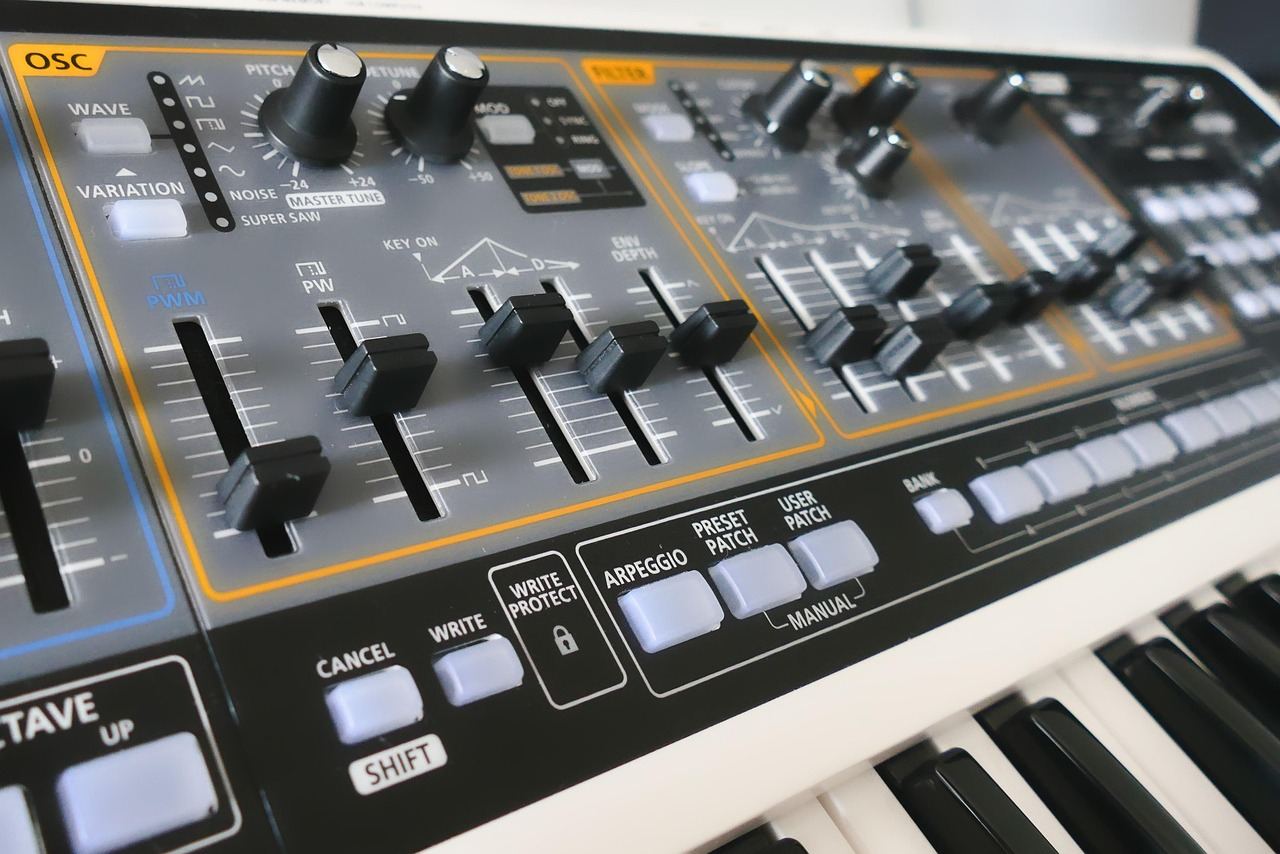
Audio synthesis is about crafting unique sounds from scratch, not just music production—anyone can create something original in 20 minutes with basic tools.
Getting started with audio synthesis as a beginner involves understanding how to build sounds from scratch using electronic signals – shaping raw waveforms through pitch, filter, and modulation controls until something musical (or deeply strange) comes out.
Unlike recording or mixing, you're not capturing sound – you're inventing it, which means the starting point is math, not a microphone.
In audio synthesis, you create sound by manipulating synthesizer controls, experimenting with parameters like oscillators and filters, crafting unique audio textures through hands-on tweaking, routing signals in modular setups, and sequencing sounds in software like a DAW.
Audio synthesis fosters a flow state through precise parameter adjustments that demand focused attention, while skill feedback loops from immediate auditory changes enhance your proficiency and reveal new sound possibilities, keeping the experience engaging and rewarding.
You think audio synthesis is for producers. A guy with headphones, a wall of gear, and a Spotify deal in the works.
That assumption is costing you one of the most satisfying creative hobbies available right now.
Synthesis isn't music production. It's learning how sound itself is constructed, like how drawing teaches you to see before creating art.
Most hobbyists don't get into serious DAW use. They patch cables, twist knobs, and make textures. The goal is the process, not the track.
The so-called complexity people fear is mostly visual. A synthesizer with 40 knobs is still doing four or five things — you just need to know which knobs do which thing.
A cheap software synth, headphones, and twenty minutes.
That's it.
Enough to make a sound no one has ever made before.
Not a song. Not a beat. Just a sound — yours, built from scratch. That's the whole reason people stay: the entry point is that immediate, and the fundamentals reward you before you've mastered anything.
The next section is about the tools that make that first twenty minutes actually work.
When you first sit down with a synthesizer, it doesn't feel like a creative event. It's just you and a panel of knobs, each one promising chaos instead of control. You twist one, then another, and nothing flows the way the tutorial did.
As you fumble, you'll knock the system into making sounds you didn't plan for. Those unplanned sounds are the actual curriculum — not the tutorial, not the manual. The jumbled exploration is where synthesis starts making sense.
By the third session, familiarity starts creeping in. Your hands remember the spot on the panel that produces that strange, pleasant tone. The more you experiment, the more intentional noise becomes musical discovery.
Voltage stops feeling like an obstacle and starts feeling like a tool. That shift — from guessing to directing — is closer than most beginners expect. The next section covers the mistakes that stall that shift and keep you stuck in the noise longer than necessary.
When to start: Morning
Duration: 1.5 hours
Cost to try: $10
Success criteria: If you create and save a 10-second synth clip with at least three distinct timbres from different oscillator and effect settings, do session 2.
Synthesis tutorials make patching look like the fun part — so beginners start there, before knowing where the signal actually goes.
Trace one complete path — oscillator to filter to amplifier to output — before you touch anything else, even if the result sounds boring. That single path is the whole grammar. Everything else is just sentences built from it.
Extremes give instant feedback, so that's where new hands go. But most of the interesting sound design happens in the middle third of every parameter.
Start with cutoff, resonance, and envelope amounts all sitting around 50%. Then move in increments of 5–10% and actually stop and listen between each adjustment — that pause is where you start hearing what each parameter actually does.
Layering textures feels like progress. Usually it's just hiding an oscillator that isn't tuned or shaped right.
Solo your main oscillator and make it sound intentional on its own before you add a single layer. If it can't stand alone, more layers won't fix it.
Beginners reach for cutoff the way they'd reach for EQ — a one-time adjustment, then leave it. That's treating a moving instrument like a static switch.
The filter is meant to move. Automate it, run it through an envelope, or modulate it with an LFO. A static cutoff means you're using about 20% of what the filter can actually do.
The patch sounds interesting for ten seconds. Then you keep tweaking, lose it, and can't find your way back.
Save or record a short audio capture the moment something surprises you — before you try to improve it. Most good patches get tweaked into nothing.
Audio synthesis happens wherever you and a pair of headphones are — your bedroom is a legitimate studio. Makerspaces and recording studios often host open sessions that welcome the public.
Search Meetup.com for "modular synth," "synthesizer club," or "electronic music production" plus your city. Facebook Groups are worth checking too — try "[your city] + synthesizers" or "[your city] + electronic music makers." These groups are often tied to local buy/sell communities that organize casual meetups.
NAMM-affiliated music stores regularly host workshops, and their staff usually know who runs the local synthesis scene. The Modular Grid forum and the Lines community (llllllll.co) both have location-tagged threads for patch sessions and listening nights. There's no governing body in audio synthesis, so these forums are more useful than any official directory.
Walk into any session and say you're just getting started and don't have your own gear yet. That one line gets you hands-on time with equipment you'd otherwise never touch — and usually someone thrilled to walk you through their whole setup.
Start with a harmonically rich waveform and carve it down with filters. The signal flow is linear and predictable — oscillator, filter, amplifier.
This is how classic synths like the Minimoog work, and every other synthesis method makes more sense once you've learned this one first.
One oscillator modulates another's frequency, producing metallic, bell-like, and digital tones you can't get from subtractive methods. The results feel unpredictable until you understand the relationships between operators.
The free Dexed plugin replicates the Yamaha DX7 faithfully. Try Dexed before spending anything — FM has a steep learning curve and isn't for everyone.
Wavetable synthesis cycles through stored waveform snapshots, morphing the sound as it moves between them.
Xfer Serum built its reputation here. You get sounds that visibly shift and breathe — without needing to understand why they work at a technical level.
Granular synthesis slices audio into tiny grains and reassembles them — stretched, scattered, pitch-shifted. The output is more atmosphere than melody.
This is not a starting point. Granular rewards people who already understand synthesis and want to stop playing notes and start sculpting space.
Eurorack modular lets you build a synth from individual modules — oscillators, filters, envelopes — patched together with cables. No two systems are the same.
A starter system runs $500–$1,500 before you've produced a single finished sound. The appeal is total signal-chain ownership. The risk is spending months building instead of playing.
If you want a related angle, Song Lyric Writing is the natural next stop.
Most beginners spend months tweaking presets, hoping to find better sounds.
But the answer isn't in the presets.
It's hearing what a signal is doing, not just what you want it to sound like.
Critical listening with intent is the skill to master. It means isolating which frequency range, envelope stage, or modulation parameter you're hearing. Then you move the knob — not before.
Isolating cause and effect makes every patch understandable. No more guessing — just informed decisions.
Spend an hour fiddling with a filter cutoff. Realize the problem was the amp envelope's attack time. Without critical listening, you'll chase the wrong parameter every single time — and never know why the patch felt wrong.
The synthesizer becomes less of a mystery. More like a language you're actually starting to speak.
Three drills build this fast. Each one forces a prediction before you get feedback.
Once this clicks, every other technique in the next section lands faster — because you'll actually hear what it's doing.
Commit to 8 sessions over 30 days — roughly two per week. That's enough time for the initial confusion to lift and for something real to either click or not.
If you keep opening the software or adjusting knobs before the session officially starts, you're hooked. That's not enthusiasm about music in general — that's synthesis specifically. Pick one synthesis type, subtractive, FM, or wavetable, and spend the next month going deep on just that one.
If you finished every session fine but felt indifferent, synthesis rewards patience in a way most hobbies don't — vague "giving it more time" rarely changes the outcome. Extend by four sessions only if there's a specific sound or patch you're genuinely curious about.
If you went through the motions and felt relieved when it was over, that's a clean answer. Some people find sound design satisfying; others find it abstract and joyless. Those are just different people.
The sign that it's working: you hear an unusual sound in a song and immediately want to know how it was built. If that's happened more than once, you're already past the "maybe" stage.
Audio Synthesis is a deeper commitment than most boredom cures — for lighter options, check things to do when bored.
You can start with free or affordable software synthesizers on your computer—no hardware required initially. Popular beginner-friendly options include free DAWs like Reaper's trial or Cakewalk, paired with free synth plugins like Vital or Helm. As you progress, you might invest in a hardware synthesizer or MIDI controller, but these aren't necessary to learn the fundamentals.
Basic concepts like oscillators, filters, and envelopes can be grasped in a few weeks of practice. Creating professional-sounding patches typically takes a few months of consistent experimentation and study. Mastery is an ongoing journey—sound design rewards both beginners and seasoned producers with constant discovery.
Not at all—synthesis is more about understanding how sound works than reading music. Visual interfaces and preset banks make it accessible to complete beginners, and you can create interesting sounds within hours. Most synths include tutorials and learning resources specifically designed for non-musicians.
Subtractive synthesis starts with a rich waveform and removes frequencies using filters—this is the most common approach for beginners and hardware synths. Additive synthesis builds sounds by layering multiple sine waves together, offering more control but requiring more complexity. Most synth learning starts with subtractive because it's more intuitive.
Yes—modern synthesizers and software are powerful enough to produce professional results regardless of your experience level. However, your first sounds might feel clumsy; quality improves rapidly with experimentation and understanding of synthesis principles. Many successful producers started with basic tools and free software.
You can start completely free using open-source DAWs and free synth plugins with zero upfront cost. Most musicians spend $0–$200 initially on a basic MIDI controller if they want hands-on control, though it's optional. Professional-grade hardware or software can range widely, but isn't necessary to learn and enjoy synthesis.