BoredomBusted — Find Your Next Favorite Thing To Do
Discover hobbies, activities, places, and ideas that spark joy. Whether you're looking for something creative, active, social, or relaxing, BoredomBusted helps you find your next favorite thing to do.
Browse our hobby guides, things-to-do collections, and place ideas to never be bored again.
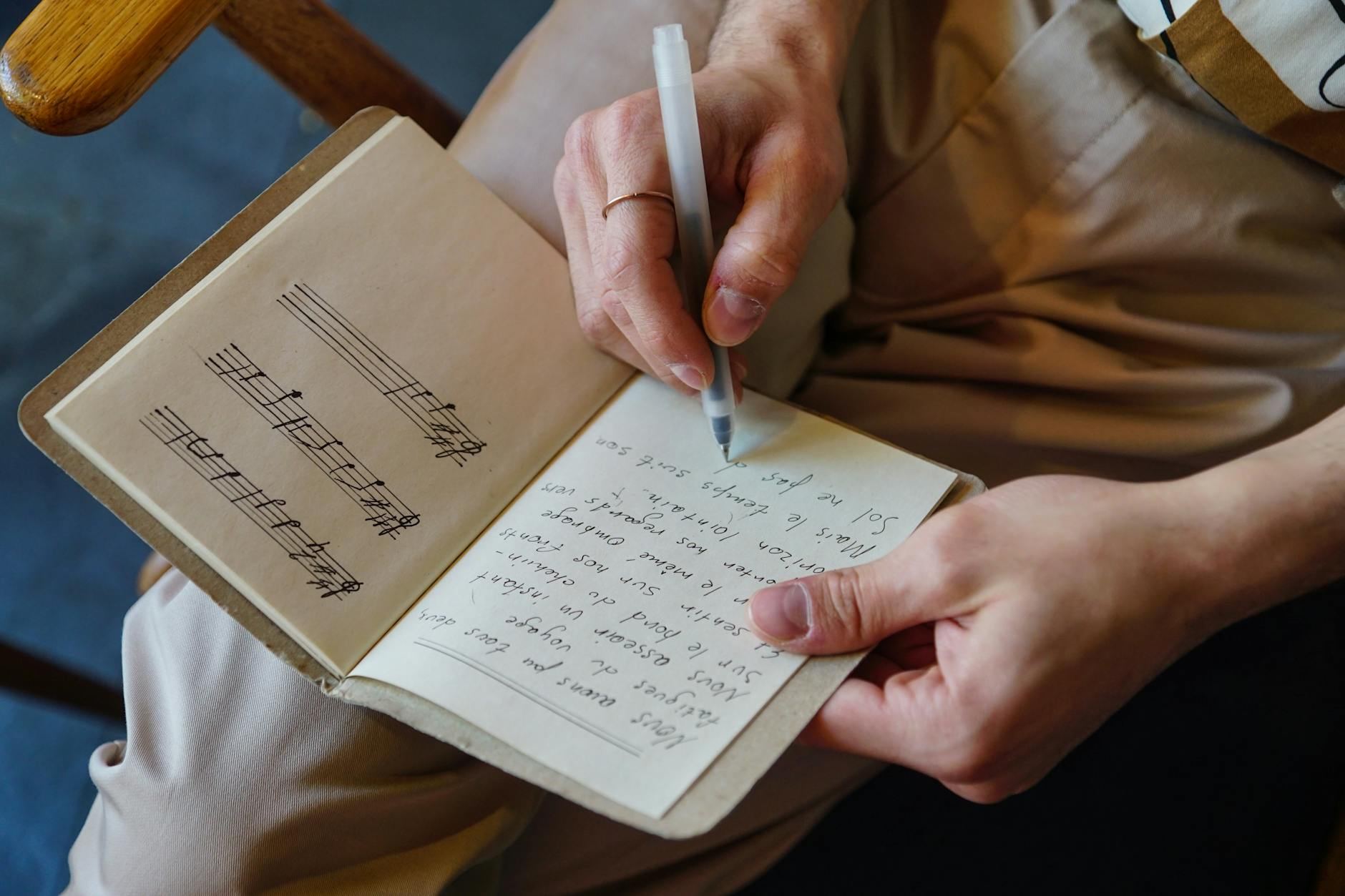
Most people think songwriting is about expressing feelings; it's really about crafting lyrics to fit a specific rhythm, forcing interesting ideas from constraints.
Learning song lyric writing as a beginner is an exciting way to express your thoughts and feelings through music that’s meant to be heard. It's meant to be sung, not just read.
Lyrics rely on music for emotional impact. Unlike poetry, they don't have to convey everything alone.
Unlike journaling, lyrics need a structure. Verses, choruses, hooks — they're built to connect.
In song lyric writing, you start with a word or phrase and engage in solitary sessions where you jot down ideas, iterate on verses and choruses, and refine your lyrics. This involves considering rhythm, rhyme, and sound quality while allowing ideas to develop over time, often returning to unfinished work to tweak and improve. Sessions typically last 1-3 hours, with breaks to let ideas simmer befo…
Song lyric writing fosters a flow state through tight deadlines and iterative refinement, allowing for rapid skill feedback as you explore novel wordplay and sound. This process of crafting lyrics creates a sense of accomplishment upon completion, while the creative expression involved combats boredom by continually reviving familiar words in unexpected ways.
You think this is about rhyming. You think someone either has "a way with words" or they don't – and you're quietly sure you don't.
That assumption is what keeps most people from ever starting.
That last point is the one most people resist hardest – and it's exactly what Kendrick Lamar described when talking about his own process.
He's talked about writing to the rhythm of the beat first, letting the cadence dictate the phrase before the meaning does. The words follow the groove – not the other way around.
Blank page.
Waiting to feel something.
Nothing comes.
That's not a talent problem – it's a starting-point problem, and the fix is more mechanical than you'd think.
The next section gets into exactly where to put the first word down.
Blank page in front of you. The ideas don't flow just because you want them to. Inspiration takes its time and many give up before actually starting.
Ugly first drafts are how this starts. At first, words and rhymes feel clunky and forced.
By week two, you finish a piece. It's not great, but finishing teaches more than giving up.
As weeks progress, you'll notice patterns emerging. Taste builds before skill, and that's a good sign.
Consider starting with a constraint, like a specific emotion or scene. Too much freedom stalls many new writers.
Constraints turn chaos into creation. Let's look at common mistakes next.
When to start: Morning
Duration: 1 hour
Cost to try: $0
Success criteria: If you wrote a 4-line stanza with at least one vivid image and a clear rhyme you can read aloud smoothly, do session 2.
New lyricists often lock every syllable onto the beat. They think this creates structure, but it makes everything feel flat. <span class="s-003">Prosody plays with tension against the beat – not with it. Speak your lyrics out loud without music. Notice where the natural stress falls.
Many new writers fill every beat, starting every line at the same point. This makes for a monotonous sound. <span class="s-007">Try delaying your line by a beat or two for a dynamic effect. It builds momentum and prevents your song from sounding like a checklist.
Chasing rhymes often leads to empty words. You end up choosing words that rhyme but lack depth. <span class="s-011">Start with the emotion you're conveying and use placeholders. Then find words that truly fit the feeling.
Beginners often cram too much into the chorus. This buries memorable lines. <span class="s-015">Limit your hook to twelve words or fewer based on choruses from songs you love. Trim the excess.
Titling a song last is common, but it limits cohesion. <span class="s-019">Write your title first and ensure every line relates back to it. This approach will keep your verses focused, eliminating vague sections.
Song lyric writing happens mostly alone – a home studio, a coffee shop, a parked car at 11pm. When you're ready to share work, open mics and songwriting circles at local music venues are where it gets real.
When you show up, tell the host or room organizer you're new and want honest feedback. That signals you're there to improve, not just to be heard. Most rooms will pair you with someone experienced who genuinely enjoys that conversation.
You're not looking for a fan club yet. You're looking for a room that makes you write better next week.
Standard lyric writing starts with structure – a hook, verses, a concept. This skips all of that and just dumps whatever's in your head onto the page, unfiltered. It's best for people who freeze up the moment they try to "write a song."
Most serious lyricists use this as a warm-up, not a finished product – but beginners often find their best lines this way.
You write lyrics and melody over an existing beat or instrumental – no blank page, no chord decisions. The music is already setting the emotional temperature; your job is just to respond to it.
This is how most commercial pop songwriting actually works, and it's probably the easiest entry point if you've been staring at a cursor for an hour. Free beats are everywhere on YouTube and SoundCloud.
You take existing poems – yours or public domain – and reshape them to fit a song structure. The difference is you're solving a conversion problem, not a creation problem, which is a genuinely different skill.
Best for people who already write poetry and want to see if the jump to lyrics feels natural. It usually does – until the syllable count fights you.
Two people, one song. One person typically handles melody or concept, the other handles wordsmithing or structure – though roles blur fast.
Best for anyone who gets stuck mid-song and abandons it, because a partner creates accountability. Most professional songs are co-written. Working alone is the exception, not the standard.
You impose a rule before you start – every line must rhyme in a specific scheme, the song must tell a story in exactly three scenes, no word can repeat.
It sounds like homework. It's actually one of the fastest ways to break creative paralysis, because the constraint makes the decision for you.
A close neighbor worth considering: Audio Synthesis.
Another variant that pulls from the same roots is Poetry Writing.
Another variant that pulls from the same roots is Memoir Writing.
Most beginners chase rhyme schemes, believing the perfect word is all they need to nail the beat. But that misses the point entirely.
True lyricism involves writing to a specific emotional snapshot, not just a vague feeling. It's not about "I miss you," but capturing the exact moment their jacket remained by the door.
Grounding your lyrics in tangible images lets listeners project their own experiences onto your words. Instead of hearing just another story, your lyrics evoke personal memories. Abstract verses sound like lyrics; specific ones become emotional echoes.
Commit to 8 sessions over 30 days – roughly twice a week. That's enough to get past the awkward first drafts without burning out before anything clicks.
Eight sessions is the threshold where the difference between "this isn't for me" and "I just haven't found my angle yet" becomes readable.
You keep coming back to it between sessions – humming half-lines in the shower, noting phrases on your phone. That's not random. That's your brain treating this as unfinished business, which means something real is happening. Start learning basic song structure.
You finished the sessions, felt fine, but haven't thought about it since. Indifference usually means the craft is interesting but the output doesn't feel like yours yet. Try 4 more sessions with one constraint: write only about things that actually happened to you last week.
You dreaded sitting down. Every session felt like homework you didn't assign yourself. That's not a slump – that's the hobby telling you it's the wrong fit right now. Read that honestly and move on without guilt.
You hear a song with a clunky lyric and think I would've written that differently. Not "I like this song" – specifically, you're rewriting other people's lines in your head. That instinct is the baseline signal that lyric writing has a grip on you.
Lyrics don't reward you quickly. A good line can take an hour to land, and you won't know if the line lands until you hear it sung. If you need fast feedback loops to stay motivated, this craft will feel like running uphill.
If you process emotions better through conversation than solitude, the long stretches of sitting alone with a blank page will feel punishing – not productive. And if you hate the idea of your words being measured against rhythm, meter, and syllable count, prose or poetry will give you more freedom with less friction.
Still interested? The next section covers exactly where to start – tools, reference tracks, and the first exercise that actually teaches you something.
Not ready to pick a hobby yet? The boredom busters page has smaller things to try first.
You don't need musical training to write lyrics—focus on storytelling, emotions, and rhythm first. Start by writing about personal experiences or emotions, read lyrics from artists you admire to understand structure, and experiment with rhyme schemes and patterns to develop your ear.
Most songs follow a verse-chorus-verse-chorus-bridge structure, with verses telling the story and choruses delivering the main message or hook. Verses are typically 8–16 lines, while choruses are shorter and more memorable, designed to stick with listeners.
A finished song typically takes anywhere from 30 minutes to several hours, depending on your experience and how perfectionist you are. Beginners might spend longer refining melodies and rhymes, while experienced writers often work faster once they find their creative flow.
No—rhyming is traditional but not required. Many modern songs use partial rhymes, slant rhymes, or no rhyme at all, focusing instead on storytelling and emotional authenticity. The most important thing is that your lyrics fit the melody and convey genuine emotion.
Write from genuine personal experience rather than trying to imitate what you think sounds good. Use specific details, honest emotions, and conversational language instead of clichés—listeners connect with truth and vulnerability more than polished perfectionism.
Simple tools like Google Docs, Genius, or dedicated apps like RhymeZone and BandLab work well for beginners. You can also use AI tools like ChatGPT for brainstorming rhymes or structure ideas, but the best tool is ultimately pen and paper if that's what helps you think creatively.