BoredomBusted — Find Your Next Favorite Thing To Do
Discover hobbies, activities, places, and ideas that spark joy. Whether you're looking for something creative, active, social, or relaxing, BoredomBusted helps you find your next favorite thing to do.
Browse our hobby guides, things-to-do collections, and place ideas to never be bored again.
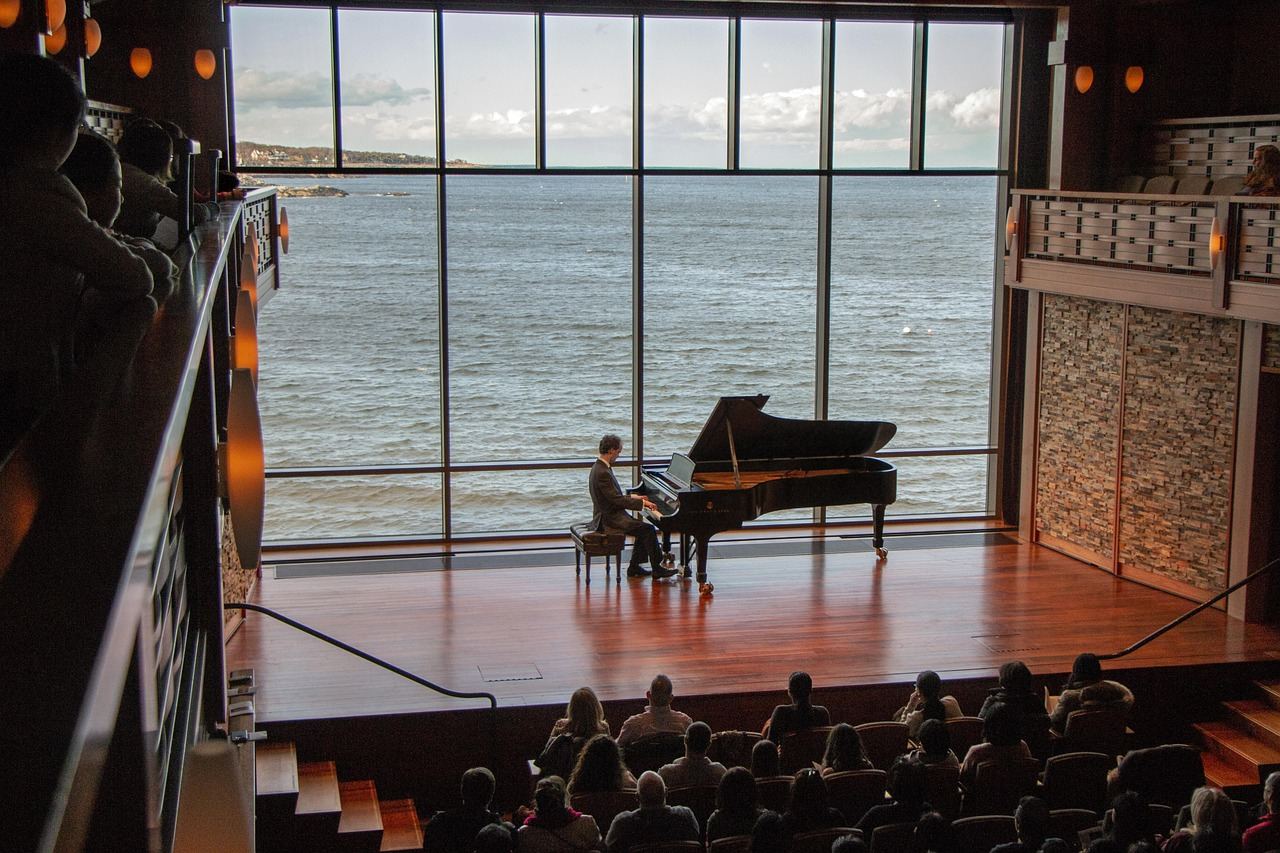
Classical piano isn't just for prodigies; it rapidly develops your mental complexity and transforms your music listening into skilled analysis in just months.
Learning classical piano as a beginner focuses on developing essential skills to perform masterpieces from Bach, Beethoven, and Ravel with time-honored technique. The precision required comes from a rich tradition of disciplined practice.
You read sheet music, train both hands to move independently, and gradually build repertoire.
Here, the notation, discipline, and physical technique are the culmination of years of study, not just tools for creating music.
In classical piano, you engage in daily practice sessions where you perform technical warm-ups, execute finger dexterity exercises, and work on classical repertoire. This includes playing scales, arpeggios, and chord progressions, while mentally analyzing scores and counting rhythms aloud. You focus on mastering 1-2 pieces per week, using tools like a metronome to improve accuracy and gradually i…
Classical piano fosters a flow state through intense concentration on intricate finger coordination and musical phrasing, keeping your mind actively engaged. Daily repetition creates skill feedback loops, where noticeable progress reinforces motivation, while milestones like completing a piece provide a sense of accomplishment. The creative aspect of interpreting scores allows for personal expres…
You think classical piano is for prodigies and retirees. You picture a ten-year-old crying through scales, or someone's grandmother playing hymns at Christmas.
Assuming this means you're missing out on a deeply rewarding challenge.
Classical music is about patterns. Learn one Mozart sonata and you've decoded the skeleton of fifty others. Your hands move independently, sharpening your brain's ability to handle complexity. Immediate feedback shows you when you're right and why.
Meet a 34-year-old logistics manager who started piano at 32. He can now hear the architecture inside music he's always listened to. Not just enjoying it – reading it like you read a room. That shift took around eight months.
The real issue isn't difficulty. It's thinking that hard means slow, and that deserves a fresh look.
Playing the piano is a lot like speaking a new language. At first, your hands feel unconnected to the keys, and the music seems distant. Those initial sessions make you realize just how wide the gap is between knowing and playing.
Expect your hands to rebel at first. The right hand may start to understand simple movements, but the left hand feels lost and disconnected. Progress is uneven, and a simple melody might take countless attempts to sound right.
In the first weeks, you'll painstakingly work on hand positions and basic scales. Everything feels slow when learning separate hand motions. Your achievements will be small. Yet by week four, you might finally play a short passage that resembles music.
Your brain is creating motor programs and learning to coordinate them for the first time, which doesn't come easily. This stage is where most give up. It can feel chaotic and frustrating when your practice doesn't sound like the polished recordings you've heard.
Practice each hand separately until it becomes mundane. Prematurely combining them can halt progress when the parts aren't individually mastered. In the next section, we'll explore the mistakes that often keep learners stuck in this frustrating phase.
When to start: Early morning
Duration: 1 hour
Cost to try: $10
Success criteria: If you can play one chosen piece hands separately at a slow, steady tempo with clean notes through the first 8 bars, do session 2.
Focusing on the melody can trick you into thinking both hands are in sync. They're not. Drilling them together prematurely just ingrains bad timing.
Work on each hand separately first. Break down pieces into left-hand-only and right-hand-only sessions until each hand can independently play without faltering.
Starting from the beginning feels productive but isn't. Each time you hit the problematic spot, you just practice the error.
Stop immediately and extract the tricky bars. Repeat them slowly until clean, then reintegrate into the piece.
Using any comfortable fingering leads to disaster at speed. Your hand ends up in the wrong position for the next passage.
Follow the printed fingering right from the start. Despite awkwardness, it's there to prepare your hand for future passages.
Sitting incorrectly feels minor, but it causes stiffness and pain. Collapsed wrists and locked elbows tire you out quickly.
Ensure your bench height allows proper posture. Your forearms should be parallel to the floor, and elbows just ahead of your torso.
Recording tempos seem like the target, leading beginners to rush. But speed means nothing if the fundamentals aren't solid.
Keep your metronome at 60–70% of target speed early on. Only increase it when three consecutive rounds are flawless, not just passable.
Classical piano can be found at various locations such as homes, music schools, and community centers.
Conservatories often offer practice room rentals by the hour, open to everyone.
Introduce yourself as an adult beginner interested in classical repertoire. This tells instructors you're serious about developing technique.
Not every path into classical piano looks the same. Find the approach that matches your current skills and goals.
Picture one person at a piano, tackling composed pieces solo. This path combines technique and interpretation, making it the best entry point for beginners.
Join forces with other instruments like violin or cello, or team up with another pianist. Your focus shifts from solo achievements to listening, timing, and blending.
Best for intermediate players looking to make music sociable. Search for ensemble partners through a local group or a teacher.
Support a soloist, like a singer or violinist, instead of taking the lead. Though it shares elements with solo play, it requires quicker sight-reading and real-time adaptability.
Ideal for those who prefer supporting roles and managing the tempo while collaborating.
Use instruments that came before modern pianos, like harpsichords for Baroque music. With a unique touch response and dynamics, it's meant for intermediate-to-advanced players attracted to historical fidelity.
Expect to invest, since quality harpsichords start around $3,000.
Post-1900 music from composers like Bartók and Prokofiev challenges norms with its techniques. This style appeals to those interested in dissonant, rhythmically complex works.
Readers who enjoy this often gravitate toward Jazz Piano next.
Most beginners work on playing pieces faster, cleaner, louder. They rarely ask why the music moves the way it does.
Improving isn't about optimizing performance; it's about understanding the music.
The crucial skill is harmonic hearing: knowing where you are in a chord progression and anticipating the next move – even before your fingers do.
Harmonic hearing isn't theoretical; it's a physical intuition. Your hands sense the pull toward resolution because your ear and body feel the music's tension.
With harmonic hearing, memorization becomes intuitive. Fingers follow the music's flow instead of memorized positions.
Without it, new pieces are like starting from scratch. One lapse, and you lose your place entirely in a performance.
Those who recover gracefully when they lose their place?
They're not memorizing better.
They simply know where the music is heading, allowing them to recover.
Sing the bass line while playing the right hand. Actually sing root notes to track harmonic movement separately.
Pause at each chord change to describe the feeling: "home" or "question." Build a feel for the chord before knowing the theory.
Start learning a new piece away from the piano. Clap rhythms, sing melodies, and sense tension to understand emotional flow ahead of time.
Developing this skill reshapes how you approach any new musical piece.
Twelve sessions over 30 days. Three times a week, roughly every other day, gives you a realistic chance to experience what classical piano is about.
Classical piano rewards consistency over intensity. Twelve sessions will show you the transformation from simply pressing keys to actually connecting with the music.
If you're eager to sit at the piano earlier than planned or find yourself lingering after a session, dive deeper. This enthusiasm means you're connecting with the hobby. At this point, signing up for beginner lessons and committing seriously will propel your journey.
If you finish each session without any sense of progress, pause before deciding. See if you're really playing or just going through the motions. Try switching your method. Passive practice won't bring satisfaction, so shake up your approach once before moving on.
If you feel relieved when a session ends, consider why. It's more likely that the solitary, gradual nature of classical piano isn't sparking joy, not the interest in music itself. Accept this and look for other musical activities that align better with your preferences.
The one sign you shouldn't ignore is when you hear a piano piece anywhere and it makes you curious about its composition or whether you could play it. This curiosity means the piano might be the instrument for you.
Classical Piano is a deeper commitment than most boredom cures — for lighter options, check things to do when bored.
Most Chopin nocturnes range from 3 to 8 minutes in performance length, but reaching the technical and interpretive level to play them well typically requires 2–4 years of consistent practice. The time investment depends on your starting skill level and practice frequency.
No, you can begin learning music notation as part of your classical piano training. Most beginners start with basic sight-reading fundamentals and gradually build proficiency as they work through beginner repertoire. A qualified teacher will guide you through this process from day one.
A beginner acoustic piano costs $3,000–$10,000+, though you can start with a quality weighted 88-key digital piano for $500–$2,000. Add lesson costs of $40–$100 per hour, and most beginners budget $100–$150 monthly for lessons and materials.
Classical piano is moderately challenging—you develop two-hand independence and must coordinate complex finger work immediately, but the logical keyboard layout makes music theory intuitive. Most people can play simple pieces within months and intermediate pieces within 1–2 years of regular practice.
Beginners should aim for 30 minutes to 1 hour daily (3.5–7 hours weekly) to progress steadily through classical repertoire. Advanced students training for performance often practice 2–4 hours daily, but even 20 minutes of focused daily practice yields measurable improvement.
Yes, adults learn classical piano successfully at any age—progress may be slightly slower than children due to established neural patterns, but adult learners often bring discipline, musical maturity, and clear motivation. Many adult beginners reach intermediate proficiency within 2–3 years of consistent practice.