BoredomBusted — Find Your Next Favorite Thing To Do
Discover hobbies, activities, places, and ideas that spark joy. Whether you're looking for something creative, active, social, or relaxing, BoredomBusted helps you find your next favorite thing to do.
Browse our hobby guides, things-to-do collections, and place ideas to never be bored again.
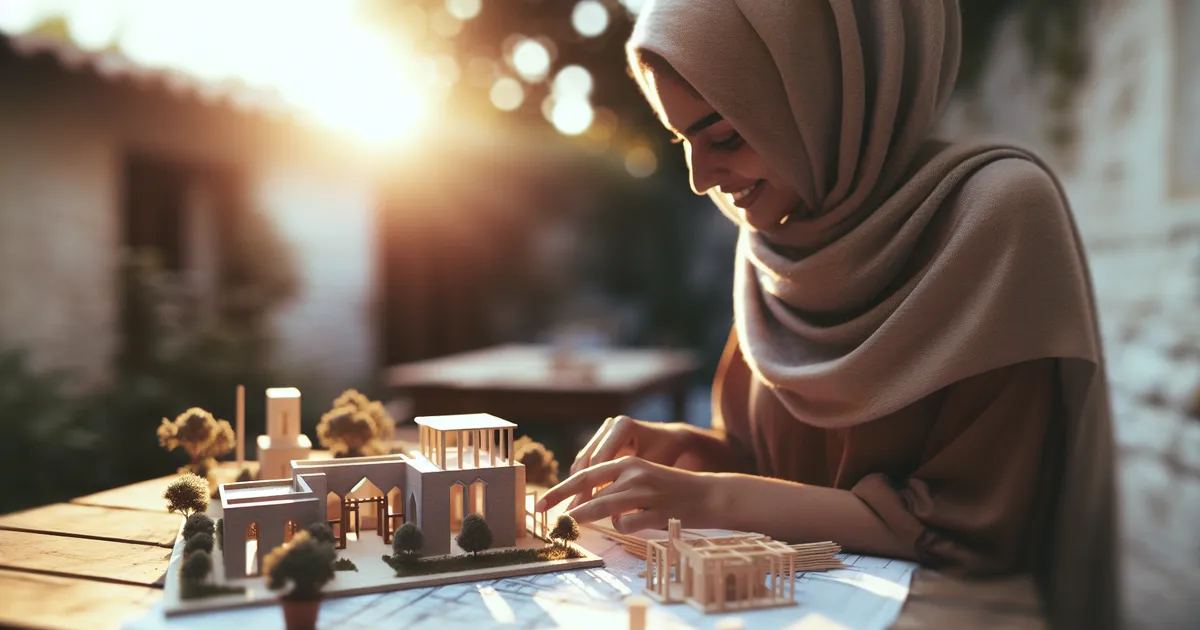
Architectural model making isn't just for students — it sharpens your spatial awareness and problem-solving skills, transforming how you perceive light and form in everyday spaces.
Getting started with architectural model making as a beginner involves understanding the basics of creating small-scale representations with easily accessible materials. Architectural model making is the craft of building small-scale physical representations of buildings, spaces, or structures – using materials like cardboard, foam, balsa wood, or acrylic.
You design, cut, and assemble by hand.
What separates it from general model kits is that you're not following a set playbook – you're translating a concept or real structure into three dimensions yourself.
In architectural model making, you design and construct scale models of buildings, selecting materials like chipboard or basswood, cutting and shaping them, then fabricating and assembling components such as walls and roofs. You add layers for depth, incorporate details like landscape elements and scale figures, and iterate designs to explore spatial compositions, engaging in a tactile process th…
This hobby engages the embodied cognition mechanism, where the hands-on construction process creates a feedback loop between motor activity and cognitive understanding, allowing for creative inspiration. The tactile manipulation of materials fosters flow states through rapid design iteration, providing a sense of accomplishment and reducing perfectionism by encouraging experimentation.
You think this is something architecture students do. Balsa wood, X-Acto knives, a project due Monday – not a hobby a normal person picks up on a weekend.
That assumption is costing you one of the most satisfying things you can build with your hands.
Model making trains your eye to read space differently. After one build, you'll never walk into a room without noticing how light moves across a surface or why a corner feels wrong.
Most people assume precision is the hard part. It's not – proportion is the real skill, and your brain already understands it instinctively from a lifetime inside buildings.
This hobby rewards people who don't consider themselves "artistic" more than it rewards people who do. It sits at the intersection of sculpture, problem-solving, and design thinking – none of which require a fine arts background.
Take a furniture designer in Portland who started by modeling his apartment renovations before committing to any real changes. A practical tool, nothing more.
Six months later, he was building scale neighborhoods from scratch – not for clients, just because the problem-solving was addictive and the results sat on his shelf like something real.
That's the pattern.
Utility first.
Then obsession.
The entry point is cheaper and lower-stakes than you're picturing – and that's exactly what the gear breakdown covers next.
Building your first model is loud in the worst way — not sound, but chaos. Your workspace fills with warped cardboard, glue strings, and at least one finger that got too close to the gun. **Nothing about the early sessions looks like the clean, precise work you had in mind.**
The foam core doesn't cut clean. The walls won't stand. The roof you planned doesn't fit the footprint you built. Scale problems don't announce themselves until you're already committed to the wrong dimension — and that's the part nobody warns you about.
You'll spend more time correcting than constructing. Blades go dull faster than expected. Cuts don't score properly, and the results show in every edge.
A dull blade on a bare table isn't a technique problem — it's a setup problem. A self-healing cutting mat and a metal straight edge will immediately change the quality of your cuts. Cutting against a plastic ruler over a bare surface produces chewed edges, not clean lines.
Once the setup is right, the gap between frustrating and satisfying closes fast. Mitre joints start coming out clean. Walls align. The floor plan stops being a drawing and starts being a structure. Most people who quit do it before this shift happens — which makes the mistakes in the next section worth knowing before you hit them.
When to start: Morning
Duration: 2 hours
Cost to try: $15
Success criteria: if you finished without needing professional tools, do session 2.
Using a plastic ruler causes flex, leading to cuts that aren't straight. Your walls end up bowed and uneven.
Choose a steel straightedge and always cut against it. Never cut freehand, regardless of the cut length.
Choosing a nice-looking scale on paper often backfires. Your walls might be impossibly thin, or the structure might overwhelm your workspace.
Start with a 1:50 scale. It's detailed yet forgiving for newcomers.
Walls go up, but the roof resists — small misalignments compound when your straight edges aren't perfect.
Assemble the model dry and use pins or tape to hold it. Glue after ensuring everything fits.
Excessive PVA causes foam board to warp. Beginners think more glue equals stronger joints and end up with warped façades.
Apply PVA with a coffee stirrer and press for 60 seconds. Cure it flat under a heavy book.
A flimsy base leads to flexing and joint issues, even after hours of careful work.
Start by cutting your base from 5mm foam board or MDF. Build everything on a stable foundation.
Most architectural model making takes place at home. A dedicated table corner is all you need to begin.
For more space and community, try makerspaces or community workshops. They often provide cutting mats, better lighting, and no judgment for using a craft knife.
Introduce yourself by saying, "I'm just starting out – I can cut reasonably straight lines and that's about it."
Being honest often results in a materials tour, a peek at someone's build, and tool-buying advice.
Foam board and cardboard massing models are where most people begin. You're studying form and proportion, not fine detail.
Materials run $10–$30. Mistakes are cheap and results come fast — which makes this the right starting point for anyone exploring architectural ideas without a tool budget.
Laser cutting handles repetitive cuts precisely. The output looks far cleaner than hand-cut work — but without machine access, this path is closed.
Best for hobbyists with a makerspace nearby or students already using fabrication labs. Expect $10–$25/hour in makerspace fees.
This is presentation-grade work — furniture, landscaping, lighting, figures. Visual impact matters more than design process here, which puts it closer to diorama and scale modeling territory.
Built for people drawn to model trains, miniatures, or anything that rewards patience and fine motor control.
You design in SketchUp or Rhino, then print or fabricate the result. Model making becomes a downstream step, not the core skill — the design work happens on screen.
Right for people already comfortable with 3D software, or those who want a reason to learn it.
White card models strip everything back — no color, no texture, no distraction. Architects use them to think, not to impress, and that same logic works for hobbyists studying real buildings or inventing fictional ones.
Best for those who prioritize spatial ideas over polished presentation.
A close neighbor worth considering: Relief Carving.
Readers who enjoy this often gravitate toward Tanning Leather next.
A close neighbor worth considering: Crochet.
Most beginners focus on perfect edges and the best glue. But that's the wrong focus.
The one skill that matters is reading scale intuitively, not with a calculator.
Think of a 1:100 door. Does it feel like a thumbnail-width opening without calculating each time? When scale is in your hands, you stop seeing numbers and start feeling real spaces.
Your intuition flags mistakes like low ceilings before they're permanent. You're building spaces, not constantly fixing them.
Does your model invite others to imagine stepping inside? Or do they simply nod and move on?
Six sessions over 30 days — roughly one and a half per week. That's enough time to finish at least one small model, practice basic cuts, and get an honest read on whether this sticks.
If you're sketching or planning the next build before the current one is finished, that's not just enthusiasm — that's the hobby selecting you. Buy materials in small quantities, move to a more complex structure, and start learning scale conventions.
If you finish all six sessions feeling indifferent, the issue is probably the medium or the build type, not the hobby itself. Try one session with a different material — balsa instead of cardboard, for example — or pick a structure you actually care about before writing it off.
If you were dreading each session before it started, that's a clean answer. Model making is slow, solitary, and precision-heavy by design — if that felt like a burden rather than a draw, this hobby isn't the one. Some hobbies reward fast, visible progress, and this isn't one of them.
The sign that it's already working: you're noticing how buildings are assembled as you walk past them, without trying to.
If nothing here clicks, our guide to what to do when bored covers shorter, lower-commitment options.
Beginners typically need a craft knife or hobby knife, cutting mat, metal ruler, glue (hot glue or white glue), and basic materials like foam board, cardboard, or plastic sheets. As you progress, you can invest in specialized tools like foam cutters, airbrushes, and professional-grade modeling materials, but starting with a basic toolkit under $50 is entirely feasible.
Simple models can be completed in 2–4 hours, while intermediate projects typically take 1–2 weeks of occasional work. Complex, detailed models may require several weeks or months depending on scale, intricacy, and your experience level. Time investment depends largely on the design complexity and level of detail you want to achieve.
No — beginners can start with simple models using basic materials like foam board and cardboard. The learning curve is manageable if you begin with smaller projects and progress to more complex designs as your skills develop. Understanding scale and using precise measurements are more important than artistic talent.
Architectural models are built to specific scales (like 1:100 or 1:50) to accurately represent building designs for visualization and planning purposes. Miniature models, while also scaled, are often created more for display or hobby enjoyment without the engineering precision required for architectural projects. Architectural models prioritize accuracy and spatial relationship, while miniatures emphasize aesthetics and detail.
A small desk or table with about 2–3 square feet of space is sufficient for most hobby projects. You'll need room for a cutting mat, materials, tools, and your model in progress, though larger or collaborative projects may require more. Good lighting and ventilation are more important than sheer space.
Yes — 3D printing is increasingly popular for architectural model making, allowing you to create precise, complex geometries quickly. Many architects combine 3D-printed components with traditional hand-crafted elements for hybrid models. However, 3D printing requires equipment investment, so hand-crafting remains the most accessible entry point for most beginners.