BoredomBusted — Find Your Next Favorite Thing To Do
Discover hobbies, activities, places, and ideas that spark joy. Whether you're looking for something creative, active, social, or relaxing, BoredomBusted helps you find your next favorite thing to do.
Browse our hobby guides, things-to-do collections, and place ideas to never be bored again.
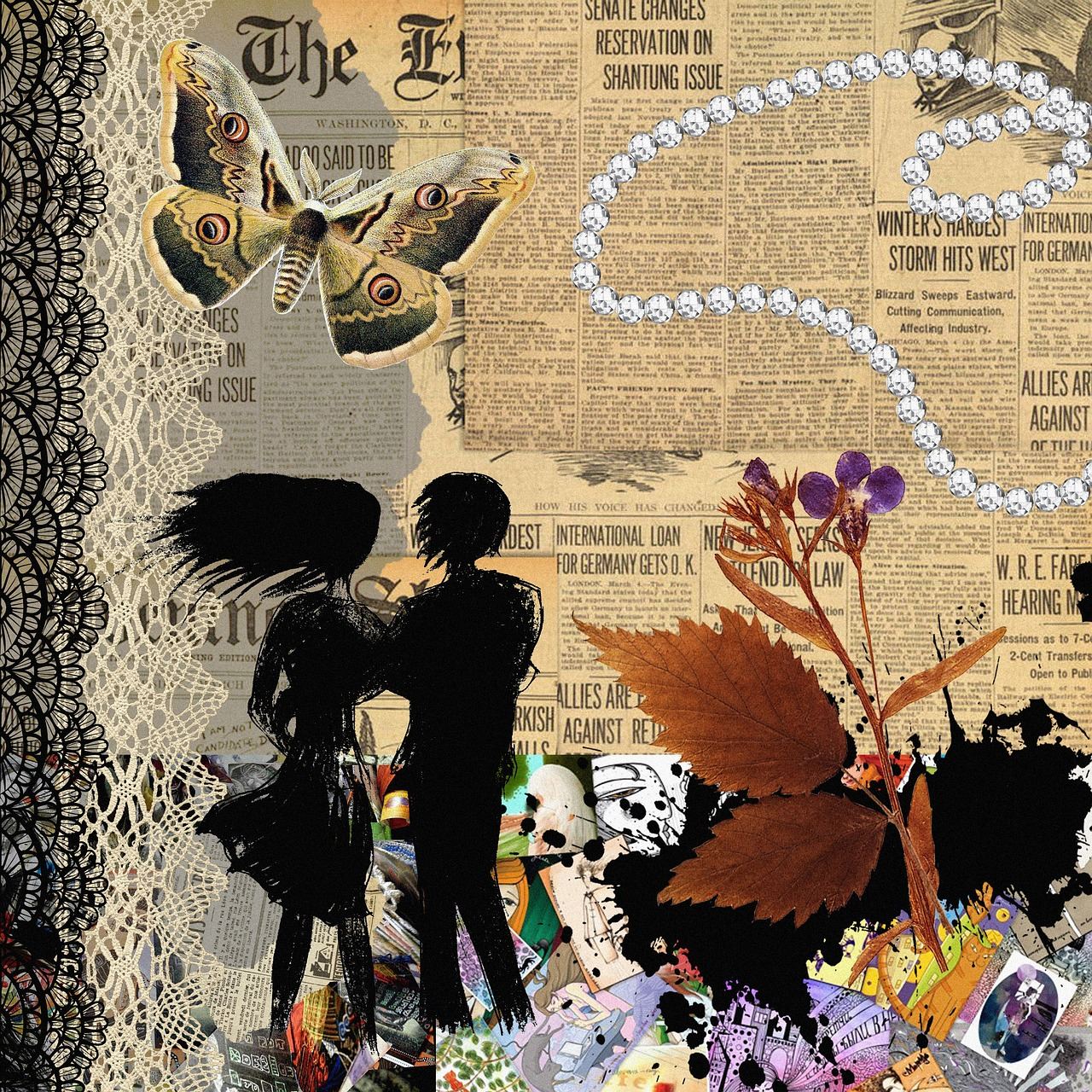
Assemblage isn't just art from trash—it's a demanding dialogue with existing objects, pushing you to make deliberate choices from the start.
Getting started with assemblage as a beginner involves transforming old junk into unique art pieces. Dig through thrift stores and estate sales for discarded pieces — a rusted hinge, a broken watch face, a stripped gear.
Glue, wire, and bolt those pieces together and you get something that didn't exist before — part sculpture, part collage, entirely yours.
Skip the plan. The objects tell you what they want to become — follow that.
In assemblage, you hunt for discarded objects—like old toys or broken jewelry—then arrange and rearrange these found items into cohesive artworks, ultimately attaching them together to create a three-dimensional piece on a flat surface.
Assemblage satisfies a creative drive by allowing you to physically create something tangible, fostering a sense of accomplishment as you explore artistic expression and form connections with others through shared creativity.
Most people assume assemblage is just a polished word for making art from trash. That assumption undersells what this medium actually asks of you.
You're making the same deliberate decisions as any painter or sculptor — balance, negative space, color dialogue. Working with existing objects forces those decisions earlier, before you can hide behind technique.
No blank canvas. No neutral starting point. Every object arrives with history, shape, and visual pull already baked in — and your job is to make all of that work together deliberately, not accidentally.
In your first hour, it's all about touch. Old watch parts, broken jewelry, driftwood, and ceramic shards scatter the table. You'll be surprised by how much texture matters. Every object feels different in your hands.
Gluing feels like a commitment. You'll place something down, regret it, and realize it's stuck there. Your hands will get sticky, and you'll second-guess your every move.
The real reward comes not from planning but from surprise. Step back, and you'll see unrelated objects speaking to each other, creating unexpected meaning. This is what draws people to assemblage—it's art you can't just buy.
When to start: Early morning
Duration: 1 hour
Cost to try: $0
Success criteria: If you finished without overthinking your design, do session 2.
Most people crack open a flat-pack box and start matching pieces by shape. The manual sits off to one side, glanced at only when something stops making sense. By then, you've got three steps to undo.
Read the whole thing before you touch a single piece. One full read-through catches the non-obvious steps — the ones where you realize a panel needs to be face-down before you attach the hardware, not after. Five minutes upfront saves you a full disassembly later.
Furniture dimensions on product pages are technically accurate. They're also easy to misread. A wardrobe that's 198cm tall sounds fine until you remember your ceiling is 200cm and the top needs clearance to open.
Measure the space, the doorway it needs to pass through, and the ceiling height before you open the box. Re-boxing a fully assembled unit because it doesn't fit through the hallway is a very specific kind of bad afternoon.
Mid-build is the worst time to realize the screwdriver is in another room. Or that you need more floor space than you have. Getting up and hunting for tools breaks your focus and introduces mistakes.
Before the first bolt goes in, lay out every part in sequence and gather every tool the manual lists. A clear workspace with everything in reach isn't about being tidy — it's the single biggest factor in whether the job takes 45 minutes or two hours.
Assembly time estimates on packaging assume ideal conditions: open floor, correct tools, no interruptions, and someone who's built this exact piece before. That's almost never you on the first attempt.
Double whatever time the box suggests, especially if it's your first build of this type. Rushing the final steps — usually the wall fixings or alignment adjustments — is where structural problems get introduced. The piece that wobbles forever was almost always finished in a hurry.
Damaged or missing hardware is more common than the packaging implies. Most manufacturers will send replacements — but only if you catch it before you've already worked around the problem with the wrong bolt.
Open every bag and check every part against the parts list before assembly begins. A missing cam lock or a stripped dowel found at step one is a five-minute fix. Found at step twelve, it's a full rebuild.
The Reddit entry point is r/assemblage — post a photo of your work and you'll get feedback fast. For mixed media overlap, r/mixedmedia and r/ArtistLounge both have active threads on found-object work. r/assemblage is the single fastest way to go from isolated to connected.
For in-person work, look for community art studios and makerspace open nights — not galleries. Makerspaces like TechShop-style venues and local art co-ops regularly host found-object and sculptural assemblage nights. Search "assemblage workshop" on Meetup.com filtered to your city.
Facebook Groups still run strong for this niche. Search "assemblage art" and filter to Groups — several have tens of thousands of members and daily posts. Instagram's #assemblage and #assemblageartist tags function more like a rolling portfolio feed than a forum, but they're useful for finding artists to follow and DM directly.
Robert Rauschenberg and Jasper Johns pioneered an anti-aesthetic style built on unexpected materials and found objects. Rauschenberg's "combines" fused painting with three-dimensional junk — tyres, stuffed animals, newsprint.
This is the approach for someone who finds conventional art-making too limiting. The whole point is that nothing is off-limits as a material.
Kurt Schwitters coined the term Merz in 1918. He built collages and assemblages entirely from discarded scraps — ticket stubs, wire, broken wood.
His immersive environment Merzbau anticipated installation art by decades. If your instinct is to save things other people throw away, Merz is where that habit becomes a practice.
Surrealist found-object sculpture draws on Freud — combining unlikely objects to disrupt rational perception. Think fur-lined teacups and melting clocks made physical.
The goal isn't beauty — it's a reaction. This direction suits anyone drawn to the strange and the psychologically loaded.
Arte Povera, championed by Mario Merz and other Italian artists, uses soil, rags, and twigs as deliberate provocations. Choosing cheap, natural materials is the political statement — a direct critique of commercial gallery culture.
This one resonates if you're skeptical of the art world's gatekeeping and want the work itself to push back.
Arman's Nouveau Réalisme Accumulations mean exactly what they sound like: collecting multiples of the same object and organizing them into a composition. Broken violin bows. Crushed tubes of paint. Rows of identical tools.
Arman expanded the approach into large-scale installations and public works. Anyone who already collects obsessively will feel immediately at home here.
Seeing potential where others see waste. Most beginners view found objects as fixed: a bottle cap remains just that.
Assemblage masters see differently. They look past original functions. They focus on shape, color, texture, weight. How an object catches light. This makes all the difference.
Recognize a rusted hinge as art, not hardware, and your creative world expands. Your sourcing becomes intentional. You stop waiting for 'the perfect piece' and start using what's in front of you.
This hobby is for you if you: - You have a junk drawer mentality and genuinely enjoy digging through thrift stores, estate sales, and nature walks to collect "materials" - You're comfortable with ambiguity and don't need your finished pieces to "mean" something specific or be immediately recognizable - You prefer making things with your hands over planning them patiently—you'd rather start with materials and see what emerges It's probably not for you if: - You get frustrated when a project doesn't look like the reference image or match your original vision - You need your creative output to have a clear function or be displayable in a conventional way (on a wall, on a shelf) - You live in a small space and don't have room to store oddball materials and works-in-progress indefinitely
For quicker fixes, see our roundup of things to do when you're bored.
Assemblage art is the practice of combining found objects and everyday items to create unique art pieces—think mixed media sculpture rather than painting. To start, collect interesting objects around your home (buttons, wood scraps, metal pieces), grab a hot glue gun or strong adhesive, and begin combining them on a base like canvas or wood. No special training needed; it's entirely about your creative vision.
Assemblage can be nearly free if you're resourceful—use items you already have at home or collect discarded materials from thrift stores, nature, or construction sites. You'll only need basic supplies: a strong adhesive (hot glue gun ~$10–15), and a workspace. Many artists spend under $20 to start, making it one of the most budget-friendly creative hobbies.
Not at all—assemblage is one of the most accessible art forms because there's no "right way" to do it. Unlike drawing or painting, you don't need prior artistic skill; you just need an eye for interesting objects and a willingness to experiment. Even children can create beautiful pieces, so it's truly suitable for all skill levels.
Projects can range from 30 minutes to a few hours depending on complexity and size. A simple piece might take one session, while more elaborate sculptures with multiple layers can take several hours spread across multiple days. The beauty is that you can work at your own pace without time pressure.
Look for anything visually interesting: old hardware, vintage buttons, broken jewelry, wood pieces, metal scraps, glass, driftwood, and plastic items. Natural materials like stones, shells, and branches work beautifully too. The key is collecting items with varied textures, colors, and shapes—your local thrift store or nature walk is a treasure trove.
Yes, assemblage pieces are durable wall art or sculptures designed for display. Once your adhesive fully cures (usually 24 hours), they're ready to hang or place on shelves. To preserve them, keep them away from high humidity and direct sunlight, and occasionally dust with a soft cloth to maintain their appearance.