BoredomBusted — Find Your Next Favorite Thing To Do
Discover hobbies, activities, places, and ideas that spark joy. Whether you're looking for something creative, active, social, or relaxing, BoredomBusted helps you find your next favorite thing to do.
Browse our hobby guides, things-to-do collections, and place ideas to never be bored again.
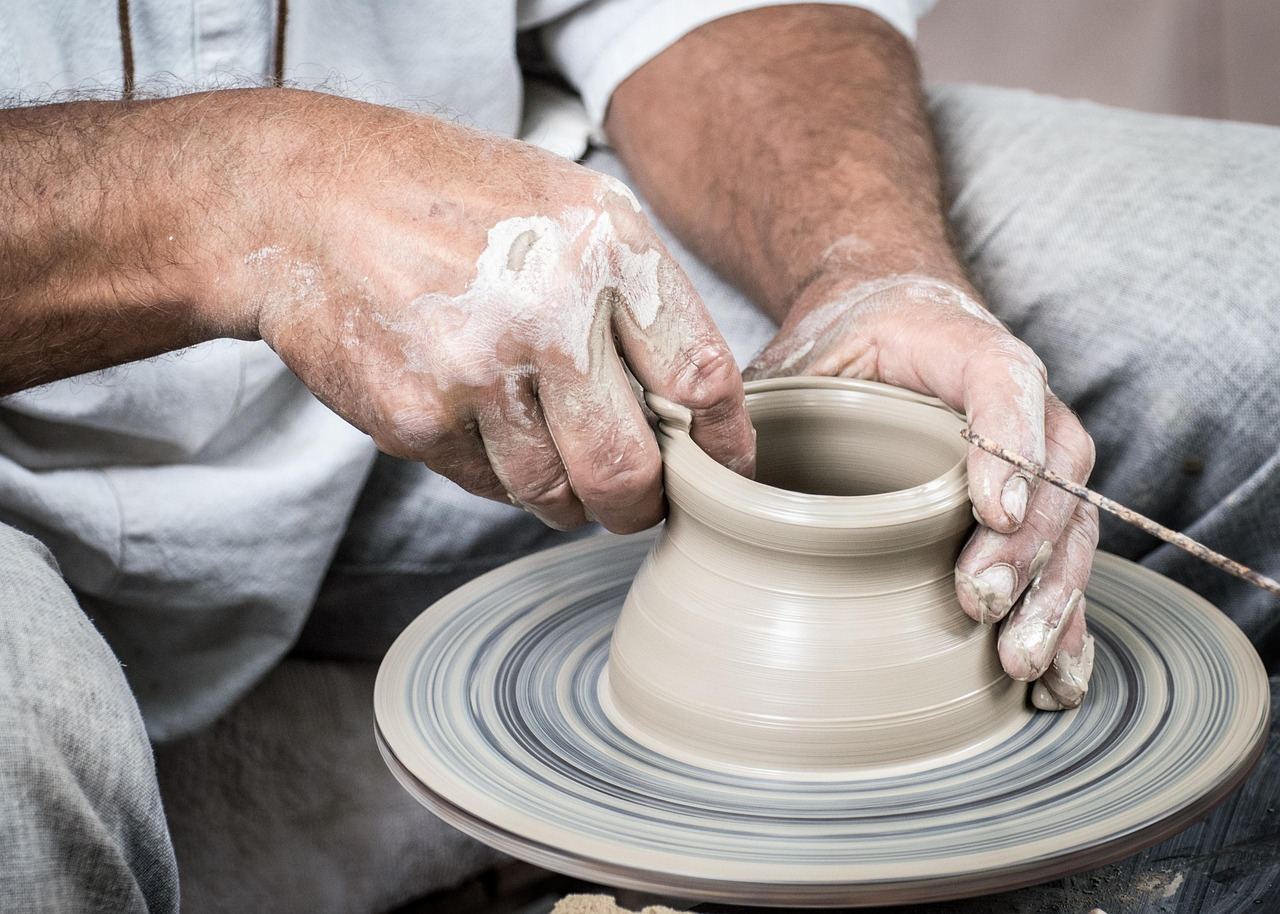
Material crafts can surprisingly combat boredom by creating a flow state, turning repetitive actions into immersive experiences with instant feedback on your progress.
Getting started with material crafts as a beginner allows you to transform everyday items from your home into unique creations you can be proud of. **The gap between
The work is physical and immediate. You're cutting, rolling, gluing, painting — your hands are always doing something, and the results show up in real time. That feedback loop is rare. Most hobbies make you wait weeks before you feel like you're getting anywhere.
There's also a quiet focus that kicks in once you get going. The repetitive actions — tearing strips, shaping beads, sealing surfaces — pull your attention fully into the task. That's not a side effect. That's the whole point.
And when you finish, you have an actual object. Not a score, not a level, not a saved file. Something you can hold, display, or give away — which turns out to matter more than it sounds.
In Material Crafts, you manipulate everyday items like paper, fabric, or clay into functional or decorative pieces through hands-on techniques such as cutting, gluing, painting, or assembling. You might tear magazine pages into strips, roll them into beads, or paint and seal rocks for home decor, engaging in repetitive actions that culminate in tangible creations.
Material Crafts induce a flow state through the tactile manipulation of materials, offering rapid skill feedback from visible progress in your projects. The repetitive yet engaging actions create a sense of immersion, while producing completed objects fosters a feeling of accomplishment and satisfaction, effectively combating feelings of boredom.
You picture material crafts and immediately think: "I can't draw, so this isn't for me." You assume the end result is the point — that the goal is producing something beautiful enough to show people.
Consider someone like Marcus, a warehouse worker with zero art background. He started rolling torn magazine strips into beads one evening — not to make jewelry, but because he had a stack of old magazines and nothing to do. He wasn't following a vision. He was just responding to what his hands were doing. Within an hour he had a small bowl of beads and felt more focused than he had all week.
No vision. No talent. No plan.
The craft teaches you what to do next — the material itself gives you feedback in real time. When paper tears wrong, you adjust. When paint bleeds, you work around it. Artistic instinct is a byproduct of handling materials, not a prerequisite.
That shift — from "I need skill to start" to "starting is how skill appears" — changes everything about how you approach your first project. And your first project is a lot simpler to set up than you'd expect.
Your hands will feel clumsy at first. The paper tears wrong, the glue strings everywhere, and the clay cracks before you even finish shaping it. The physical awkwardness of the first session is completely normal — your hands haven't learned the material yet. You're building muscle memory that doesn't exist yet, and that gap between what you picture and what ends up on the table is a real part of the process.
The thing most beginners don't expect is how much the material pushes back. Fabric bunches when you cut it. Magazine strips roll unevenly. Paint bleeds past the edges of a rock's surface. Every material has its own behavior, and learning that behavior is actually the craft itself — not some obstacle in front of it. Your first few pieces won't look the way you planned. That's not failure; that's data.
Somewhere in the middle of a session — usually when the repetitive part kicks in, rolling beads or sealing rocks or tearing strips — something shifts. The mental noise quiets. That absorption happens faster than you'd expect, often within the first twenty minutes. It's not relaxation exactly — it's focus without pressure, which is a different and rarer thing.
By the end of your first real session, you'll have something tangible — imperfect, maybe lopsided, but real. That object in your hand is proof of progress in a way a screen can't replicate. Before you get to that moment consistently though, there are a handful of specific mistakes that slow most beginners down — and they're worth knowing before your next session.
When to start: Morning
Duration: 30 min
Cost to try: $10
Success criteria: If you cut and glue at least 3 distinct paper shapes plus 1 magazine design into a balanced collage, do session 2.
It feels productive to stock up on supplies. But most beginners end up with a drawer full of clay, fabric scraps, and paint tubes they never touch. Pick one specific project first, then buy only what that project needs.
A single finished rock painting teaches you more than a haul of unused materials ever will. Start with what you can complete in one sitting.
Cutting, gluing, and assembling get all the attention. The sealing, varnishing, or hemming at the end gets skipped because it feels optional. It is not. The finishing step is what separates something that looks handmade from something that looks crafted.
A coat of Mod Podge on paper beads. A sealed edge on fabric. These small actions protect your work and give it a polished, intentional appearance.
Clay feels tricky, so you try fabric. Fabric frustrates you, so you try paper. The problem is that difficulty with a material is usually a skill gap, not a compatibility problem. Staying with one material long enough to finish three projects is how you actually build the feel for it.
The tactile instincts you develop — how hard to press, how wet to keep clay, how much tension fabric needs — only come from repetition. Switching resets that learning every time.
An ambitious project looks inspiring in a photo. But when you are still learning how to cut cleanly or glue without bleed, a 12-step project becomes discouraging fast. Your first project should be completable in under two hours with materials from one category.
The visible progress from a finished piece — even a simple one — is what pulls you back to the craft. A half-finished complex project does the opposite.
A torn edge or uneven cut feels like failure. But in material crafts, most mistakes are just the material behaving differently than expected. That is technique, not talent. When something goes wrong, the useful question is what the material was doing, not what you did wrong.
Paper tears along grain. Clay cracks when it dries too fast. Knowing this turns a frustrating moment into useful information for the next attempt.
Start with r/crafts and r/DIY on Reddit — both are active, welcoming, and full of people showing finished projects. For more specific work, r/papercraft, r/Pottery, and r/sewing each serve their own niche with real feedback.
Facebook Groups are surprisingly strong for material crafts. Search for terms like "paper bead crafters" or "rock painting community" and you'll find thousands of members posting daily. "The Rock Painting Community" group alone has millions of members worldwide.
Local craft stores like Michaels and JOANN regularly host in-store workshops — these are free or low cost and double as a way to meet regulars. Search Meetup.com for "crafting" or "DIY" in your city to find recurring in-person groups that meet at libraries, community centers, or coffee shops.
Paper crafts — origami, collage, quilling — are the fastest path from "I'm bored" to "I made something." All you need is paper, scissors, and maybe some glue.
This is the right starting point if you want visible results within a single sitting and zero commitment to buying supplies.
Clay and sculpting crafts give you something to push, press, and shape. Air-dry clay needs no kiln, and polymer clay bakes in a regular oven. The physical resistance of the material makes it especially satisfying.
The tactile feedback is what separates clay from every other craft format. If you want to feel the work happening, this is it.
Rock painting and found-object crafts use whatever is already around you. Stones from the yard, jars from recycling, leftover paint — all fair game. You're not acquiring materials, you're reclassifying them.
This variant suits people who find shopping for supplies as tedious as boredom itself.
Fabric and textile crafts — hand-sewing, no-knit weaving, fabric collage — produce objects with a function. A pouch, a wall hanging, a patched-up jacket. The craft has a job when it's done.
This is the right fit if decorative-only outcomes feel like a waste of effort to you.
Bead-making, quilling, and collage all involve repeating one small action dozens of times — rolling, tearing, stringing. The repetition is the point. It's meditative without requiring you to sit still and think about meditating.
The flow state hits fast when the motion is simple and the material keeps changing under your hands.
Mixed-media assembly — combining paint, paper, fabric, found objects, and texture in a single piece — has no ceiling. Beginners can make something decent on day one. Experienced crafters can spend weeks on a single panel.
It works because the complexity is entirely self-determined — you stop when it looks done to you.
Visible Mending lives in the same world — different mechanics, similar appeal.
The skill that separates people who keep improving from people who stall is learning to read material resistance. Not technique. Not tools. The ability to feel when a material is fighting you — and adjust before it breaks, tears, or sets wrong.
Every material has a threshold. Paper wants to fold along its grain. Clay tells you when it's too dry to smooth. Fabric shifts if you pull it at the wrong angle. Beginners push through that resistance — and ruin the piece. They blame the materials. Experienced crafters treat that friction as information, not failure.
This is why repetitive actions matter so much in material crafts. Rolling paper strips, pressing clay, cutting fabric — you're not just building a project. You're building a physical vocabulary. Each pass through the same motion sharpens your ability to notice what the material needs next. That feedback loop is fast and honest.
Once you start trusting that feedback, your projects stop feeling like a fight. The next section covers which materials give you the clearest signals to start training that instinct from your first session.
Do four sessions over two weeks — one every three or four days, each around 30 to 45 minutes. Keep the projects small: torn paper beads, painted rocks, a simple fabric piece.
You sat down to do 30 minutes and looked up to find two hours had passed. That absorption is the clearest signal this hobby has real pull for you. Start expanding your materials — try clay if you've only used paper, or move into fabric work. The skill ceiling here is as high as you want it to be.
Neutral isn't a dead end — it often means the specific material hasn't clicked yet. Switch the medium before you write it off. If paper felt flat, try air-dry clay or fabric scraps. The tactile difference between materials is dramatic, and the right one can flip the whole experience.
The repetitive, hands-on nature of material crafts is the whole point — and if that actively grated on you, the problem isn't execution, it's fit. Your boredom-busting sweet spot is probably somewhere faster-paced or more cerebral — something like sketching, puzzle-building, or photography might land better.
You catch yourself eyeing bottles, scraps, or packaging and thinking "I could do something with that" before a session is even scheduled. When everyday objects start looking like raw materials, the hobby has already taken hold.
Essential supplies depend on your chosen craft, but common basics include scissors, glue, paint, brushes, paper, fabric, beads, or wood—depending on whether you're interested in painting, sewing, jewelry-making, or woodworking. Most beginners start with affordable starter kits available at craft stores to explore what interests them most before investing in specialty tools.
You can begin with as little as $20–50 for basic supplies like paper, paint, and glue, or invest $100–300 for a more comprehensive beginner kit. Costs scale up only when you pursue specific crafts or want higher-quality materials, so it's an accessible hobby regardless of your budget.
Material crafts are beginner-friendly—most projects require no prior experience, just basic hand-eye coordination and creativity. Starting with simpler projects like collage, painting, or basic sewing builds confidence before tackling more complex techniques.
Project timelines vary widely: simple crafts like painted ornaments or beaded bracelets take 30 minutes to an hour, while quilting or detailed woodwork can span weeks or months. Beginners should start with shorter projects to build momentum and see results quickly.
Material crafting develops fine motor skills, creativity, problem-solving, and patience as you learn color theory, design principles, and craft-specific techniques. Many people also gain therapeutic benefits from the meditative, hands-on nature of the hobby.
A dedicated craft space is helpful but not required—you can start on a kitchen table, desk, or even a portable craft caddy if space is limited. As you advance, you may want a designated area to keep materials organized and avoid cleanup interruptions.