BoredomBusted — Find Your Next Favorite Thing To Do
Discover hobbies, activities, places, and ideas that spark joy. Whether you're looking for something creative, active, social, or relaxing, BoredomBusted helps you find your next favorite thing to do.
Browse our hobby guides, things-to-do collections, and place ideas to never be bored again.
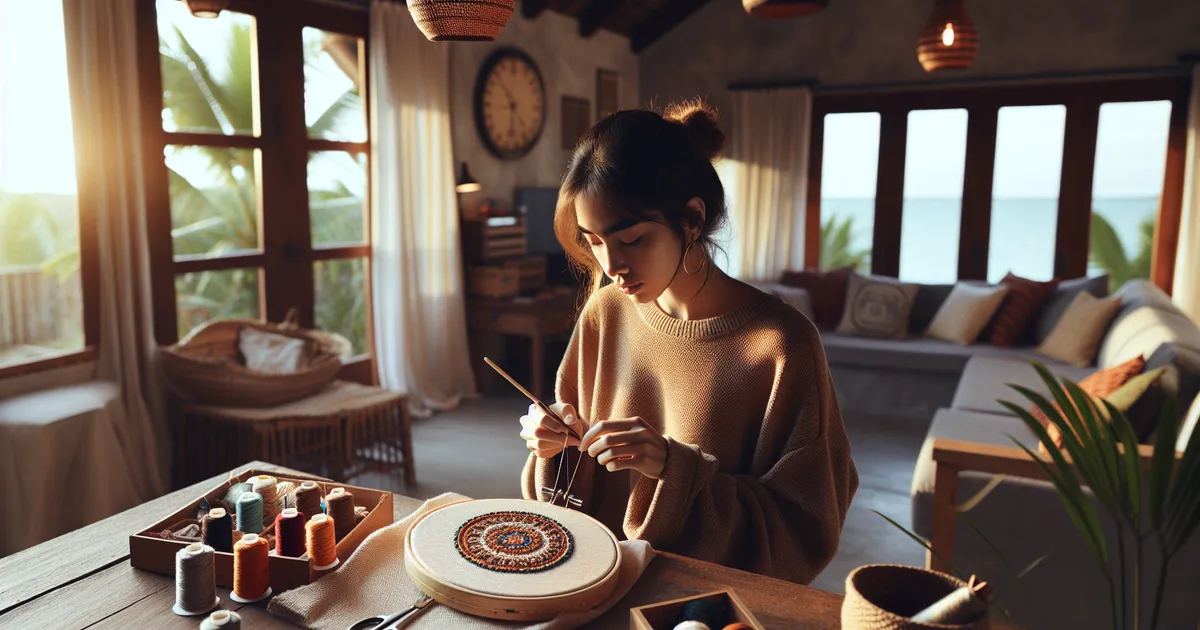
Punch needle isn’t just about crafting; its repetitive action creates a meditative flow that calms anxiety and sparks creativity simultaneously.
Learning punch needle as a beginner opens up a world of creative possibilities through the simple act of creating loops with a specialized needle.
Each punch adds texture by building loops on the fabric's underside.
Loops stay put without knots by using fabric friction to hold them in place.
In punch needle, you use a specialized tool to punch yarn into fabric stretched over a frame or hoop, creating textured loops by moving the needle in rhythmic patterns, all while seated comfortably. This hands-on process allows you to focus on following a design, as you fill areas without worrying about mistakes—simply pulling out the yarn to correct errors as you go.
Punch needle promotes a flow state through its repetitive punching motion, which quiets racing thoughts and allows you to enter a meditative zone focused solely on the tactile experience of yarn and the rhythm of the tool. The instant visible progress with each punch provides a sense of accomplishment, while the forgiving nature of the craft reduces anxiety and encourages creative expression with…
You think punch needle is a grandma craft. A rainy afternoon activity for people who own too many throw pillows.
That assumption is costing you a genuinely interesting skill.
Punch needle is a spatial and tactile problem. You work from the back of the fabric while designing for the front. You're constantly translating between two planes at once — which is exactly the kind of challenge that builds real craft intuition fast.
The rhythm of the tool is deceptively precise. Tension, angle, and loop height all interact. Beginner projects are forgiving — but advanced work involves shading, pile sculpting, and freehand design that takes months to get right and feels earned when you do.
Textile artist Molly Mahon moved from block printing into punch needle specifically because it let her translate painterly ideas into texture. Not a hobby upgrade. A different language for the same creative instinct.
Depth. Texture. Control. The same qualities that make punch needle look simple are exactly what make it genuinely hard to master — and that gap is where the real interest lives.
The next question is what you actually need to get started — and the answer is simpler than you'd expect.
Punch needle looks mesmerizing when someone else does it. The design seems to reveal itself in a soothing rhythm.
Then you try it. The needle skips, the yarn catches, and you're unsure if you even have the right grip.
Your hands will get it after a session or two. You're probably holding it right, even if it doesn't feel like it.
In the beginning, loops disappear as quickly as they form. Your needle drags awkwardly through the fabric rather than gliding. The pattern looks wonky compared to the reference.
Soon, the rhythm emerges. Loops stay down, sections come together, and suddenly, you're motivated to continue.
Punch needle isn't intimidating, but the first few hours seem faulty.
Keep the needle flat against the cloth. If you find loops unraveling, it's likely due to an incorrect angle. Fix the angle, and everything else follows.
When to start: Morning
Duration: 1 hour
Cost to try: $20
Success criteria: If you punched a clear outline and filled one small section with evenly spaced loops that hold in the hoop, do session 2.
Beginners often grab any available needle, unsure why loops fall apart. The secret's in the match.
Match your needle to the thread size. Fine thread fits a #10–14 needle. Chunky wool needs a larger needle, with loops sliding with light resistance.
It seems right to hold the needle like a pencil, but that tilt makes loops slip.
Keep the needle completely upright. Drag it along the surface instead of lifting it high.
Keeping gaps too wide between punches makes loops unravel when touched.
Keep the gap as narrow as the needle's width. Snug loops on the back indicate good spacing.
Loose fabric means loose loops, with pop-out problems as soon as the frame's gone.
Tighten until the fabric sounds like a drum. Re-tighten every 10–15 minutes as it relaxes.
Beginners often punch right to the edge, only to see borders collapse.
Leave at least 1.5 inches from the hoop edge. Plan first to avoid cornering yourself.
Punch needle work often happens at home. Whether that's your kitchen table, a dedicated craft room, or a cozy chair with good lighting.
Seek out punch needle workshops. Local yarn shops and craft studios often offer them. It's the fastest way to meet others in the hobby.
Meetup.com is a key resource. Search for
Ravelry has a directory for fiber arts communities. Punch needle enthusiasts often overlap with rug hooking groups.
Ask your local yarn store about punch needle nights. They exist but aren't always advertised online.
There's no national body for punch needle like with knitting. However,
The Oxford Punch Needle and Rug Hooking Guild is a key resource in the US. They have a list of chapters and regional teachers to explore.
Walk into a workshop with confidence. Say you're new, and you'll often land right next to someone experienced, picking up tips and possibly a loaner frame.
Fine-Gauge Punch Needle uses a thin needle and fine yarn to create small, detailed loops. The result looks almost like a painting of floral or portrait designs. Spend more on materials, though the needle is cheaper than larger types.
Rug-Weight Punch Needle is bulkier with a thicker needle and chunky yarn. Mistakes are easy to correct, making it ideal for coasters or small mats. A starter kit costs $20–$40.
Oxford Punch Needle is known for adjustable loop height, offering control over depth and shading. Great for intermediate crafters aiming to add texture through loop height. The tool itself runs $30–$60.
Tufting involves motorized guns to create loops quickly, perfect for large rugs. A big investment in gear at $150–$300+, it's for those ready to commit to larger creations.
Thread-Count Embroidery Punch Needle uses a fine needle for tiny, detailed jewelry-sized hoop art. Perfect for embroiderers wanting faster color fill options. Easy to learn with an embroidery background.
If the texture of this appeals to you, Visible Mending is built on similar bones.
Another variant that pulls from the same roots is Cross Stitch.
Most beginners focus on adjusting loop height and tension endlessly, starting over each time.
The real problem is they're fighting the fabric, not reading it.
The key skill is learning to feel the monk's cloth grain and move with it, not against it.
Your needle likes a certain direction. Work with the grain of the fabric – angling your strokes along the warp or weft threads.
When you do this, loops set cleanly, tension adjusts naturally. The backing holds steady.
Once you get the feel of the grain, loops stop pulling out when repositioning the needle.
That one change eliminates 80% of beginner frustration.
Perfect loop height and flawless tension alone won't help if the surface looks uneven and won't hold.
Schedule 6 sessions across 30 days, about once every five days. This lets you tackle the two learning curves: threading the needle and trusting the backing fabric. You'll need these sessions to get past basic mechanical frustration and feel the craft's real rhythm.
If you find yourself thinking about upcoming sessions outside of session time, that's a strong sign.You're drawn to crafting with your hands. Invest in better wool and a proper gripper frame—this hobby is for you.
If you only think about punch needle when prompted, you're likely indifferent to it.The projects might be too small to engage you. Try one more session with a personally meaningful design—a place you love or your own drawing—before deciding.
If you're watching the clock and relieved to finish, that's a clear signal.Don't force enthusiasm. Some people find the repetitive motion grating, not meditative. Accept that feedback.
Spotting punch needle work in everyday settings and flipping it over to see the back reveals genuine interest. Curiosity about the craft's mechanics is essential, as the technique focuses heavily on what's happening on the reverse side.
For quicker fixes, see our roundup of things to do when you're bored.
To begin punch needling, you'll need a punch needle tool, embroidery floss or yarn, fabric (typically linen or monk's cloth), a hoop or frame to hold the fabric taut, and a pattern or design. Most starter kits include these essentials, though you can also purchase items individually once you understand what works best for your style.
A small punch needle project, like a coaster or simple wall hanging, typically takes 2–5 hours, while larger pieces can take 10–20+ hours depending on design complexity and density. The repetitive, rhythmic nature of the technique means progress feels meditative rather than rushed.
Punch needle has a gentle learning curve—most beginners grasp the basic technique within the first 15–30 minutes of practice. Once you understand the rhythm of pushing the needle in and pulling it out, consistency improves quickly, and mistakes are easy to fix by simply unpicking stitches.
A beginner punch needle kit typically costs $15–$40 and includes a needle, thread, fabric, and pattern. If you're sourcing materials separately, plan for $30–$60 to get quality tools, though costs increase if you want premium threads or specialty fabrics.
Punch needle works beautifully for wall hangings, framed artwork, coasters, patches, pillows, and even small clothing embellishments. The textured, dimensional quality makes it ideal for decorative pieces that showcase texture and color variation.
While embroidery floss can work for fine detail, punch needle typically performs better with thicker yarns like wool, acrylic, or embroidery thread designed for the tool. Thicker fibers fill fabric faster, create better texture, and are more forgiving for beginners.