BoredomBusted — Find Your Next Favorite Thing To Do
Discover hobbies, activities, places, and ideas that spark joy. Whether you're looking for something creative, active, social, or relaxing, BoredomBusted helps you find your next favorite thing to do.
Browse our hobby guides, things-to-do collections, and place ideas to never be bored again.
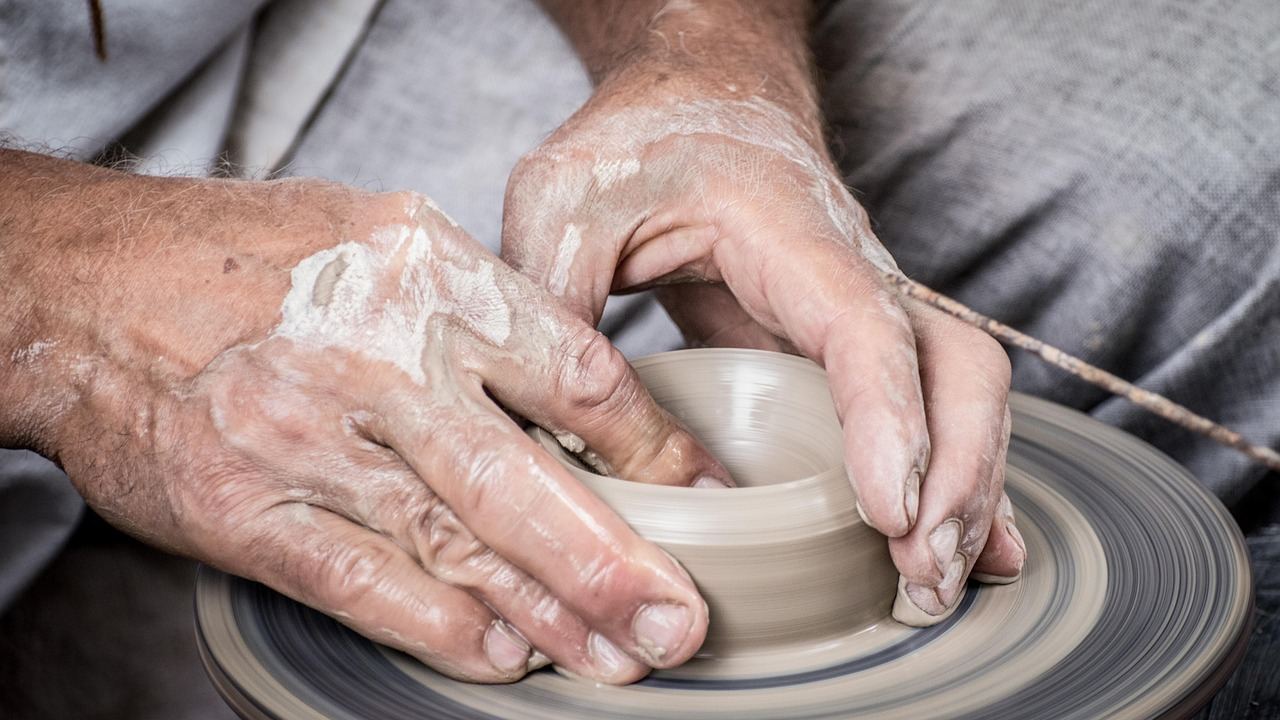
Sculpture isn't just about creativity—it's a tactile experience that transforms your skill into a flow state where progress feels inevitable.
Getting started with sculpture as a beginner involves understanding how to shape three-dimensional objects from various raw materials like clay, stone, and wood.
Unlike drawing or painting, you're not representing space – you're occupying it, which changes how you problem-solve at every stage.
In sculpture, you manipulate materials like clay or polymer clay using hands and tools to create three-dimensional objects, engaging in actions like kneading, rolling, and carving to form items such as figurines or bowls, followed by baking or air-drying to finalize your pieces.
Sculpture induces a flow state through tactile engagement, where the physical feedback of shaping materials aligns with your skill level, creating immersive focus and achieving tangible progress through iterative creation and self-expression.
You think sculpture means a studio, a kiln, and three years of art school. Maybe a beret.
You're picturing Michelangelo, and quietly assuming this isn't for you.
That assumption is costing you one of the most tactile, immediately satisfying hobbies you can start this week.
Sculpture forces you to think in three dimensions from day one – your brain rewires in ways that flat media simply don't demand, and most people find that shift happens faster than expected.
The feedback loop is brutally honest and weirdly motivating – the clay tells you when you're wrong, and you fix it with your hands, not an undo button.
Entry-level materials like air-dry clay cost under $15 – you don't need a wheel, a kiln, or a single class to make something real on your kitchen table tonight.
A hobbyist with no art background spent two weekends making small animal figures from air-dry clay. By the third weekend, she was texturing fur with a fork and had already sold two pieces to a coworker. No school. No wheel. Just repetition and cheap clay.
What kind of sculptor do you actually want to be – that's the real question here.
That's what the next section is for.
Clay looks easy when others do it. Almost meditative, even. But when your own hands touch the stuff, it either sticks to all the wrong places or refuses to budge.
Reality hits by hour two. It's not as simple as the videos made it look. Your hands cramp up, your pot is uneven, and somehow it's both too sticky and too dry at the same time.
In the first week, you'll realize pressure is tricky. It's more than you expect, but less than you're using. By week two, your designs have a plan, but the clay chooses differently, and it usually wins. Around week three, something finally holds shape longer than a minute. This is often a turning point—some stay, some walk away.
Catching mistakes while making them becomes normal in week four. This isn't a small achievement—it's your hands beginning to listen to your eyes.
Quitting feels tempting by week two. Your pieces look worse than they did starting out. But this isn't failure. It's when your eye sees what your hands can't yet do. Keep going. More sessions build the skill, not better tools.
Always score and slip every joint. Scratch surfaces with a needle tool, then add watered-down clay before joining. Miss this step, and your work could crack apart during drying.
When to start: Morning
Duration: 1 hour
Cost to try: $20
Success criteria: If you shaped a clay sphere that stands on its own and shows clear tool marks or a defined surface texture, do session 2.
Most beginners grab air-dry clay from a craft store because it's cheap and available. But air-dry shrinks, cracks, and punishes every mistake without warning.
Switch to polymer clay or water-based pottery clay for your first three months. Both stay workable long enough to actually learn from.
The instinct is to grow your sculpture vertically, stacking upward like you're adding floors to a building. This is exactly how armatures collapse and figures topple mid-session.
Build your mass outward from a central core first, establishing the widest proportions before adding any height.
You're adding texture and expression to a face that's still the wrong shape. Now you've locked in the problem with an hour of surface work on top of it.
Fix proportions at thumbnail scale using a mirror check: hold the piece up, look away, then look back. This reveals errors your hands have missed.
Fingertips are for detail. Beginners use them for everything, which creates uneven pressure, fingerprints, and surfaces that look pinched rather than formed.
Use the flat of your thumb and the heel of your palm to push and compress large masses. Tools come third, not first.
A six-inch figure looks like it'll hold itself up until one thin ankle decides it won't. The whole sculpture folds at the joint you forgot to reinforce.
Sculpture happens in art studios, community centers, and maker spaces – sometimes in someone's garage with a tarp on the floor, which is honestly fine.
Walk in and say "I've never done this before – what material do you suggest I start with?"
That one question gets you a material recommendation, a tool list, and usually a 10-minute orientation from whoever runs the space – because sculptors love converting beginners.
Clay is soft, forgiving, and cheap to fix when you mess up. Mistakes here cost you minutes, not materials. Perfect for experimenting and getting hands-on experience without pressure.
Air-dry clay and polymer clay are available for under $20
Stone carving is permanent, with no room for error. Ideal if you appreciate craftsmanship and want to create something enduring. Great for those who enjoy working deliberately and detailedly.
Expect to spend $50–$150 on tools for alabaster or soapstone.
Wire sculpting is about shaping metal by hand, not dealing with mess. Ideal if you're more about lines and shapes than mass. Start here if 3D work intrigues you but traditional sculpting intimidates you.
Get a spool of wire and basic pliers for less than $15
Woodcarving provides a middle ground, slower than clay but easier than stone carving. Learn control quickly due to grain resistance. Ideal for those who enjoy hands-on work and don't mind a learning curve with tools.
A basic whittling kit costs $25–$40
Assemblage art uses found objects, asking more of your creativity than technical skill. Great for those focused on concept and composition rather than mastery of materials.
If this resonates, Lacemaking explores a similar direction.
Readers who enjoy this often gravitate toward Bowl Carving next.
Some of the same instincts show up in Wood Carving — worth a look if this clicked.
Most beginners focus on surface detail—smoothing, refining, adding texture. But these aren't the main issues.The true challenge lies in proportion. They miss it because they don't take the time to notice.
It all comes down to reading negative space. This means learning to see the shapes around your sculpture, not just the sculpture itself.
By focusing on the space around the clay, you detect distortions your mind overlooks.
Your eye can identify a malformed silhouette instantly, like the curve of a bent arm or the lean of a head.
Failing to see this means wasting time perfecting features that are misplaced.Fixing these issues in the first five minutes benefits the entire piece.
Start every session with a two-minute timer.
Study the shadows and voids, refrain from touching the clay in that time.
Carve out time for six sessions over 30 days, roughly one every five days.
This period lets you move beyond initial awkwardness and start experiencing what creating in three dimensions feels like.
If those six sessions leave you eager for more, you're in. You're constantly thinking about your current piece. Mistakes frustrate you instead of crushing your spirit. That's the drive specific to this hobby.
If you feel neutral about it, that's your signal to reassess. The experience didn't excite you, nor did it haunt you. Trying another medium within sculpture or changing your approach might shift that perspective before deciding it's not for you.
If it felt like a drag, that's your exit clue. An ongoing sense of reluctance to engage with the process tells you this isn't your match. Stepping back here might lead you to something more aligned with your interests.
Notice if you're turning objects over in your hands absentmindedly. Whether it's a rock or a bottle, this unconscious action shows a natural sensitivity to form and texture.
For ideas that take five minutes instead of five weeks, see things to do when you're bored.
Beginners typically start with clay, stone, or wood since they're forgiving and widely available. Clay is the most popular choice because it's inexpensive, requires minimal tools, and allows you to practice both hand-building and wheel-throwing techniques. Stone and wood offer different skill challenges but produce more permanent results.
You can begin for under $50 with basic clay and hand tools, making it one of the most affordable art forms. A complete beginner setup with quality materials, sculpting tools, and a work surface typically costs $100–$300. Studio access or classes may add $15–$50 per session, depending on your location.
Most beginners develop foundational hand-building and shaping skills within 4–8 weeks of regular practice. Achieving confidence with more advanced techniques like casting or stone carving typically takes several months to a year of consistent effort. Progress depends largely on how frequently you practice and the specific techniques you focus on.
No—you can start sculpting in a small corner of your kitchen, bedroom, or garage with just a work table and a damp cloth. If you plan to work with stone or large-scale pieces, a dedicated studio or workshop access becomes helpful. Many communities offer shared studio spaces affordably, which is ideal if you lack space at home.
Carving is a subtractive technique where you remove material (stone, wood) to reveal your form, while sculpting typically refers to additive methods like building with clay. Both are sculpting in the broad sense, but carving requires more planning since you can't add material back, whereas clay allows for constant revision and experimentation.
Yes—sculptures are functional art pieces that age beautifully and can be displayed in homes, galleries, or gardens indefinitely. Once fired or cured, clay and stone sculptures are extremely durable and valuable, making them suitable for selling locally, online, or through galleries if you develop your skills.