BoredomBusted — Find Your Next Favorite Thing To Do
Discover hobbies, activities, places, and ideas that spark joy. Whether you're looking for something creative, active, social, or relaxing, BoredomBusted helps you find your next favorite thing to do.
Browse our hobby guides, things-to-do collections, and place ideas to never be bored again.
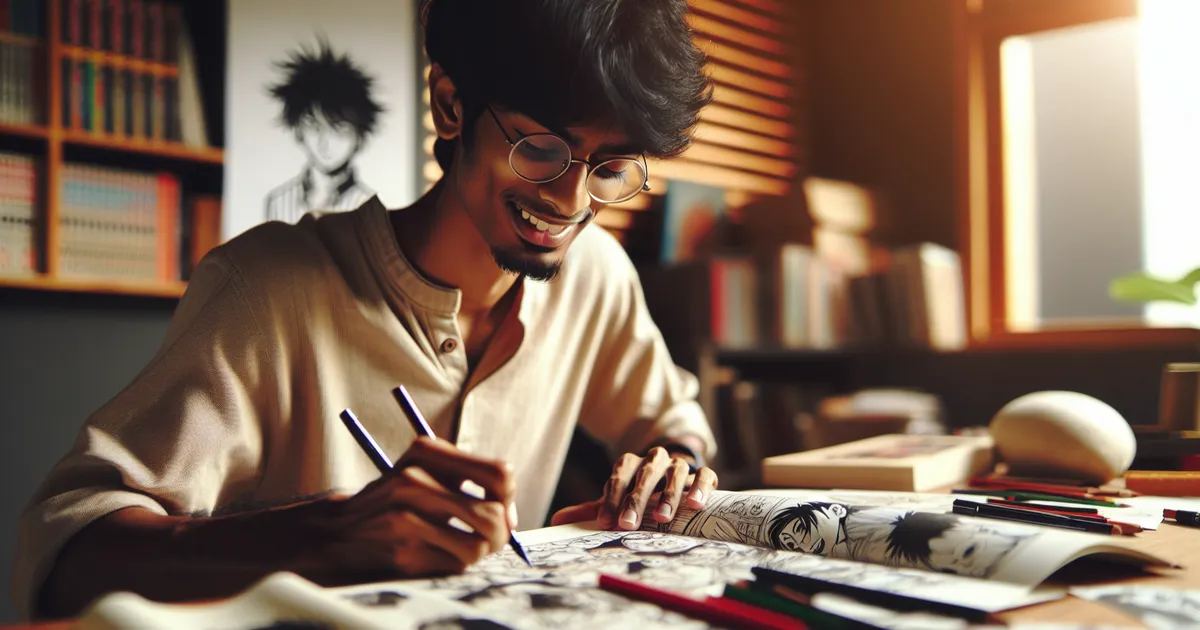
Manga drawing isn’t just about copying; it rewires your visual storytelling and trains your brain in anatomy through consistent character practice.
Learning manga drawing as a beginner offers a unique opportunity to express your creativity and storytelling skills in a distinct Japanese style. You build characters and scenes through ink, pencil, or digital tools.
Manga isn't just drawing stories; it's about capturing a unique energy. Exaggerated expressions, speed lines, and panel flow craft a visual grammar readers recognize immediately.
Manga drawing involves solitary sessions where hobbyists create character sketches through iterative processes of gesture drawing, inking, and refining elements using tools like G-pen or digital equivalents, focusing on anatomy, proportions, and detailed expressions.
It induces a flow state through focused gesture drawing, provides incremental skill feedback via the 'Saitama Method', fosters a sense of accomplishment with daily practice, and satisfies creative expression through character design and storytelling.
You think manga drawing is just copying anime faces until you get the eyes right. Maybe tracing Naruto as a kid counts as experience. It doesn't – and that assumption is exactly what keeps people dabbling instead of actually improving.
Manga features a unique visual grammar with elements like panel flow and expression coding that change how you perceive stories, not just how you draw them.
Most people focus on style replication, yet mastering manga involves a broader skill set: proportion, weight, silhouette, and perspective. The anime look is a veneer, not the core of the craft.
Consistency is the toughest part. It means drawing the same character from different angles, in motion, with varied expressions. That's a humbling task no matter your skill level.
Repetition builds real understanding. A beginner dedicating two months to sketching one original character across various emotions and lighting will learn facial anatomy far beyond what casual sketching offers.
The quality of the character doesn't matter. What matters is that you're consistently practicing.
After understanding this, you might wonder what's actually necessary to begin your manga journey. Surprisingly, it's a shorter list than you think.
Watching someone draw manga can seem magical. The pen flows, creating flawless eyes and hair. Your first session feels different. Instead of fluidity, lines wobble and eyes miss the mark.
Your eraser gets more use than the pencil. It's normal for nothing to look quite right at first.
Early on, expect unsettling faces and a lot of erasing. By week two, you'll discover that manga eyes need construction, not freehand guesses. This changes everything about how you practice. Hair and expressions might click by the third week, but combining them? That's trickier. Eventually, in week four, you create something satisfying.
Begin with the cross-line method to correctly place facial features. Lightly sketching a vertical center line and a horizontal eye line ensures faces don't look guessed.This simple habit sets skilled artists apart from struggling ones.
You'll sketch something wonky, close the book, and question everything.Improvement hinges on returning, viewing a bad drawing not as failure, but as feedback.
When to start: Morning
Duration: 1 hour
Cost to try: $10
Success criteria: If you finish one inked manga character drawing with a clear face, full pose, and at least 3 visible expression details, do session 2.
Published panels are polished and posed. They hide the skeleton underneath, making you absorb the surface without understanding the structure.
Look for construction breakdowns on YouTube or in How to Draw Manga books. Artists show circles, cylinders, and gesture lines before finalizing their work.
Manga eyes are distinctive, so beginners often start with them. This leads to collapsing proportions that feel off.
Begin with head shape and guidelines first. Place eyes only after marking where they belong.
The sketch feels complete, but once inked, wobbly lines become permanent.
Only ink when your pencil draft could pass as a clear photocopy. Ink won't correct uncertain construction.
Front-facing figures feel safe, leading beginners to stick with them. Then a three-quarter turn feels like a daunting challenge.
Dedicate a session each week to 3/4 views or dynamic angles. Use free references from Line of Action or SenshiStock on DeviantArt.
Beginners often chase a specific artist's style without learning the basics. Then they can't create anything beyond what's in those styles.
Choose a foundational resource like Mastering Manga by Mark Crilley. Work through it before exploring stylistic variations.
Manga drawing is often a solo journey. Your bedroom desk can be your studio.
Find community at art studio spaces or comic book stores. These venues host regular figure-drawing and anime art nights.
Tell the group you're a beginner as soon as you join. Members will share reference sheets and free brush packs. You'll avoid common mistakes and improve faster by skipping weeks of trial and error.
Shōnen art is where you find big expressions and dramatic poses. It's the backbone of series like Naruto, Dragon Ball, and My Hero Academia. Exaggeration lets beginners experiment freely. Ideal for those who prefer drawing dynamic scenes over static portraits.
Shōjo focuses on faces and emotions with detailed eyes and softer lines. Precision in facial anatomy is key. Great for those interested in portraits and character-driven stories.
Chibi art shrinks characters to 2–3 head-tall proportions. Cuteness is amplified. Perfect as a confidence booster for beginners.
Seinen art leans toward realistic anatomy and darker tones. Series like Berserk or Vagabond are key examples. Not for beginners, requires solid drawing experience.
Webtoon style shapes both pacing and layout through vertical panel stacks. **Ideal for digital artists with a tablet, estimated budget is $50–$80. Offers a path to reach readers directly through self-publishing.
If you want a related angle, Pencil Drawing is the natural next stop.
If the texture of this appeals to you, Botanical Drawing is built on similar bones.
Copying finished manga panels won't improve your skills. Many beginners trace lines or try to match the look without success.
They're focused on the output, not understanding the system behind it. To excel, you need construction thinking. This means seeing every manga figure as simple 3D shapes like spheres, cylinders, and boxes before adding any stylized detail. It's not just about drawing a circle for the head. It is about truly understanding how a tilted head is a sphere rotating in space and how the eyes, nose, and jawline follow that rotation, regardless of guideline visibility.
Visualize the 3D form beneath the surface.This lets you draw characters from any angle, not just the poses you've memorized. Without construction thinking, drawing new poses feels like guesswork, and your characters will remain flat.
From here, we'll explore how this skill applies across different styles and contexts.
Commit to 8 sessions over 30 days – roughly twice a week.
That number matters because manga drawing has a specific learning curve: the first 2–3 sessions feel awkward, sessions 4–6 is where most people either click with the style or realize they're fighting it, and by session 8 you have enough real experience to make an honest call.
If you want to come back, pay attention to what pulls you back – the character design, the paneling, the storytelling through expression. That specificity tells you exactly which skills to chase next.
If you're indifferent, that's usually not boredom – it's a materials or subject problem. Try drawing a character you actually care about before you walk away. Indifference after 8 sessions with a character you chose yourself? That's a real signal.
If you actively didn't enjoy being there, that's an honest reading, not just a difficulty issue. Early manga drawing should feel challenging, but if it felt like an unwelcome chore, that's a clear sign this isn't your thing.
The sign you shouldn't ignore: you've been screenshotting manga panels for years – not to share, just to study them. You pause on a character's eyes or the way an action scene flows across a page and you actually think about how it was drawn. That low-level forensic curiosity is the signal. Most people look at manga. People who draw it were already quietly analyzing it before they picked up a pen.
Curious what else is out there? Skim our list of hobbies for ideas that go in a different direction.
No, manga drawing is learnable regardless of your current skill level. Most manga artists start as beginners and improve through practice and study of fundamental techniques like line work, proportions, and perspective. Many online tutorials and books are specifically designed to teach manga from scratch.
At minimum, you need paper, pencils, erasers, and black ink pens or markers for inking. As you progress, you might invest in specialized manga tools like G-pens, brush pens, screentones, and drawing tablets. Most beginners start with basic supplies under $30 and upgrade as they develop their skills.
A single manga page typically takes 4–8 hours depending on detail level, panel complexity, and your experience. Professional manga artists work under tight deadlines and develop speed through repetition, while beginners should expect longer times as they learn composition and technique.
Manga has distinctive features including large expressive eyes, exaggerated emotions, dynamic action lines, and specific panel layouts unique to Japanese comics. The emphasis is often on character emotion and movement rather than photorealistic detail, with a visual language developed over decades of Japanese storytelling tradition.
Manga drawing has its own challenges—it requires mastering character consistency, dynamic poses, and sequential storytelling rather than single images. It's not inherently harder, just different; you're trading some technical realism for expressive style, speed, and narrative flow.
Consistent practice for 3–6 months can give you solid fundamental skills, though developing your unique style and speed typically takes 1–2 years. The timeline depends heavily on how frequently you practice and study reference material, anatomy, and storytelling techniques.