BoredomBusted — Find Your Next Favorite Thing To Do
Discover hobbies, activities, places, and ideas that spark joy. Whether you're looking for something creative, active, social, or relaxing, BoredomBusted helps you find your next favorite thing to do.
Browse our hobby guides, things-to-do collections, and place ideas to never be bored again.
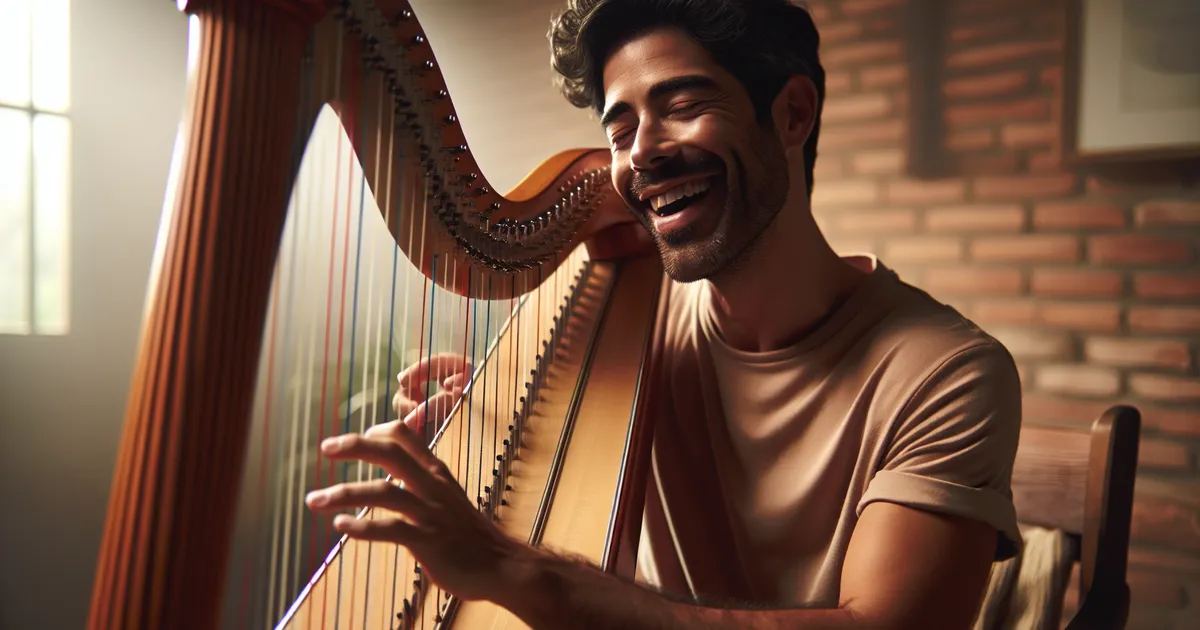
Harp isn't just for weddings or concerts—it's an affordable, satisfying instrument where you can play recognizable music in just weeks.
Learning to play the harp as a beginner opens up a world of musical expression through its unique stringed design and enchanting sound. Harp is a stringed instrument you play by plucking strings stretched across a triangular frame, with pedals (on concert harps) that change pitch mid-song.
Unlike guitar or piano, both hands work independently across 47 strings at once – no chord shapes, no keys, just precise finger placement on open strings.
In harp practice, you sit at the instrument and begin with physical warm-ups to prepare your fingers, followed by technical drills like scales, arpeggios, and chords, often without sheet music. You engage in finger-specific exercises to improve dexterity, create sound colors through dynamic control, and experiment with personal pieces, all while tuning the harp for optimal resonance.
Harp practice induces flow states through precise finger coordination, providing immediate auditory feedback and a tight feedback loop of skill development, which enhances focus and engagement. This immersive experience, combined with the sense of mastery from overcoming technical challenges, fosters creativity and personal expression, effectively countering feelings of boredom.
You think harp is for concert halls, wedding receptions, and people named Celestine. It looks expensive, impractical, and about as relevant to your life as a lute.
This assumption overlooks how approachable this instrument really is. Lever harps cost less than a decent guitar setup and fit easily in a standard car.
Beginners don't need a concert grand—just 22 to 34 strings and a bit of floor space. The harp is mechanically closer to a piano than a violin. No embouchure, no bow, no reeds; just fingers finding strings, creating sound immediately. Early playing of the harp sounds musical due to its default diatonic tuning, making even beginner songs sound mature.
In three weeks, a student can play something genuinely recognizable, the kind of piece where someone walking by would pause to listen.
Getting started doesn't mean spending thousands. Options exist that will surprise you.
At first glance, playing the harp looks effortless, like water moving. But sitting down at one, it's like handling a map you can't read.
The color-coded strings are your only guides. Without them, spatial awareness is a mystery, and your hands will remind you of this instantly.
Strings buzz unexpectedly, notes mute randomly, and hands struggle to find their rhythm. You'll notice your left hand wandering while your right tries to manage both melody and rhythm. And those initial shoulder strains are inevitable.
In the first week, you'll rely on string colors to guess. Each note feels like a leap of faith. By week two, your fingertips will ache, not like guitar callouses, but from muscles waking up. As your hand becomes more familiar, it's time to bring both into the mix. That's when it gets tricky.
Expect moments of clarity followed by confusion. Play a perfect phrase once, then struggle to repeat it. Returning to videos of seasoned players, you'll understand their months of practice hid behind clean grace. They started where you are now—they just pushed through the uncertainty.
Before you even pick up the harp, start with one tip: keep your thumb above the string, not below. Most beginners instinctively grab downwards, but proper harp technique pulls toward the palm. Skipping this step will add weeks to your learning curve.
When to start: Morning
Duration: 1.5 hours
Cost to try: $0
Success criteria: If you tune all strings and play one simple melody cleanly from start to finish, do session 2.
A 47-string pedal harp seems like the obvious choice for beginners because of its iconic presence. However, it is a professional tool with a price tag as high as a car.
Rent or buy a 22–34 string lever harp first; it covers most of the beginner pieces and spares your finances if you decide not to continue.
Beginners often pluck randomly, thinking technique will come naturally over time. In reality, harp technique relies on maintaining a closed-hand position, with fingers curling back to the palm after each note.
Practice the "bubble hand" position – fingers curved, thumb pointing up – for a few minutes before starting any practice, even scales.
Gut and nylon strings frequently go out of tune, especially when new. Beginners may think their harp is defective when the sound turns muddy.
Tune before every single practice session with a clip-on chromatic tuner. This regular tuning helps you train your ear.
Lever harps use levers at the top of each string to change keys. If beginners ignore them or set them wrong, every tune sounds off.
Check your piece's key signature and adjust the levers accordingly. Beginner sheet music usually specifies which levers to use.
The left hand on harp is not just for rhythm; it creates independent melodic and bass lines. Forcing both hands together prematurely creates bad habits.
Focus on mastering the bass line alone first until you can play it without looking. Then add the melody; it seems slower but saves endless unlearning.
Harp practice happens in various spaces. Living rooms and church rehearsal areas are common.
Community arts centers and music schools are also popular for carving out practice time.
Introduce yourself confidently at any gathering. Say, "I've just started and I'm still getting comfortable with the instrument."
This helps you access beginner-friendly ensemble pieces and meet a section leader who can guide you. Most societies offer teacher referral lists for newcomers.
The lever harp is a beginner's dream – compact, lightweight, and much cheaper than a concert pedal harp. Levers on each string let you change keys manually, so no foot pedals are needed. Cost ranges from $500 to $2,000 for a new one.
The pedal harp is your gateway to orchestral music – 47 strings and seven foot pedals offer clean complex key changes. Expect a learning curve, both in terms of skill and cost. A used student model still costs several thousand dollars.
The troubadour harp strikes a balance between size and capability. It's mid-sized, fitting well between a lap harp and a full folk harp. Ideal for adults seeking a serious instrument that's still manageable.
Lap harps are tiny and affordable, usually costing $100 to $300. Perfect for young children or tentative beginners. Great for exploring technique, but you'll need more soon if you're serious.
An electric harp adds pickups to a standard lever or pedal harp for amplified performances. This is for gigging musicians needing to project in a live mix, not casual hobbyists.
Another variant that pulls from the same roots is Melody Composition.
Some of the same instincts show up in Music Composition — worth a look if this clicked.
Songwriting is a sibling pursuit and often surfaces the same kind of curiosity.
Most beginners focus on finger placement and pedal changes. But they rarely address the root of their mistakes: left-right hand independence. That's what actually influences their progress.
The key is mastering different rhythmic roles for each hand. It's not just about notes. **It's about feeling a separate pulse in each hand at once.
On harp, this means the left hand often holds a bass line, while the right plays melody. Using one rhythmic "track" for both hands spells disaster on complex pieces.
With solid hand independence, pedal changes won't break your flow. Your hands stay stable, even when a foot moves. Without it, complexity overwhelms you. One hand drags the other down, and everything collapses.
Start slow. Isolate each hand at 60 BPM until its part becomes second nature. When your left hand's arpeggio runs effortlessly, add a quarter-note beat with one foot. This transition stops the left hand role from being mere accompaniment.
Practice transitioning between hands independently. Play four bars, halt the left hand mid-way, let the right finish. Switch roles, ensuring each hand continues without the other as a crutch.
Commit to 8 sessions over 30 days, roughly twice a week. Building harp technique requires this frequency to develop muscle memory effectively. Your fingers need breaks in between to absorb new movements.
Finding yourself working out fingering patterns during the day? Maybe humming tunes when you least expect it? That's more than interest – that's commitment. Look for a teacher and consider renting a lever harp if you haven't already.
If those eight sessions came and went without much impact, don't quit just yet. Try adding four more sessions with different music. Sometimes, a slow start turns into a strong finish.
Dreading practice is a real signal to stop. Harp requires patience, strength, and consistent effort. If these sessions felt like an uphill battle without any joy, it's okay to let go and redirect your energy elsewhere.
Noticing the sound of a harp wherever you go? That curiosity is crucial. It can be the motivation that pulls you through challenging moments.
Purchasing a beginner lever harp requires a budget of $1,000–$2,500, and rental opportunities aren't ubiquitous. If budget constraints or lack of rental options are obstacles, this isn't the time to start.
Chronic hand or wrist issues make harp playing a tough challenge. Unlike the guitar, you can't easily support the harp against your body to reduce strain, complicating technique for those with tendon problems.
Regular practice is non-negotiable. Sporadic sessions mean skill gaps and frustration. If scheduling consistent sessions is impossible, that mismatch could sap your enthusiasm quickly.
If harp sounds close but not quite right, our hobby list might surface something better suited.
If nothing here clicks, our guide to what to do when bored covers shorter, lower-commitment options.
Most beginners can play simple melodies within 2–3 months of consistent practice, while developing intermediate skills typically takes 1–2 years. Mastery and proficiency with complex pieces requires several years of dedicated study, but foundational enjoyment comes relatively quickly compared to many instruments.
Entry-level harps range from $300–$1,000, while mid-range student harps cost $1,500–$5,000. Professional-grade harps can exceed $10,000, but you don't need an expensive instrument to start—a quality beginner harp under $1,000 will serve you well as you learn.
Harp is generally easier than guitar for beginners because there are no finger-pressing techniques and the learning curve for basic melodies is gentler. However, harp requires more initial investment in the instrument and more space, making the barriers different rather than the difficulty steeper.
Most beginners start with a lever harp or Celtic harp in the 22–26 string range, which weighs 15–30 pounds and sits comfortably on your lap. These smaller harps are affordable, portable, and perfect for learning while sounding beautiful—you can upgrade to larger concert harps later if you progress.
Self-teaching is possible with online tutorials and books, though many beginners benefit from a few lessons with an instructor to learn proper posture and technique early on. Even a few guided sessions can prevent bad habits and accelerate progress before switching to self-directed learning.
Beginners typically need 20–30 minutes of daily practice to see steady progress, while intermediate players benefit from 45–60 minutes daily. Even short, consistent practice sessions are more effective than occasional long sessions for building skill and muscle memory.