BoredomBusted — Find Your Next Favorite Thing To Do
Discover hobbies, activities, places, and ideas that spark joy. Whether you're looking for something creative, active, social, or relaxing, BoredomBusted helps you find your next favorite thing to do.
Browse our hobby guides, things-to-do collections, and place ideas to never be bored again.
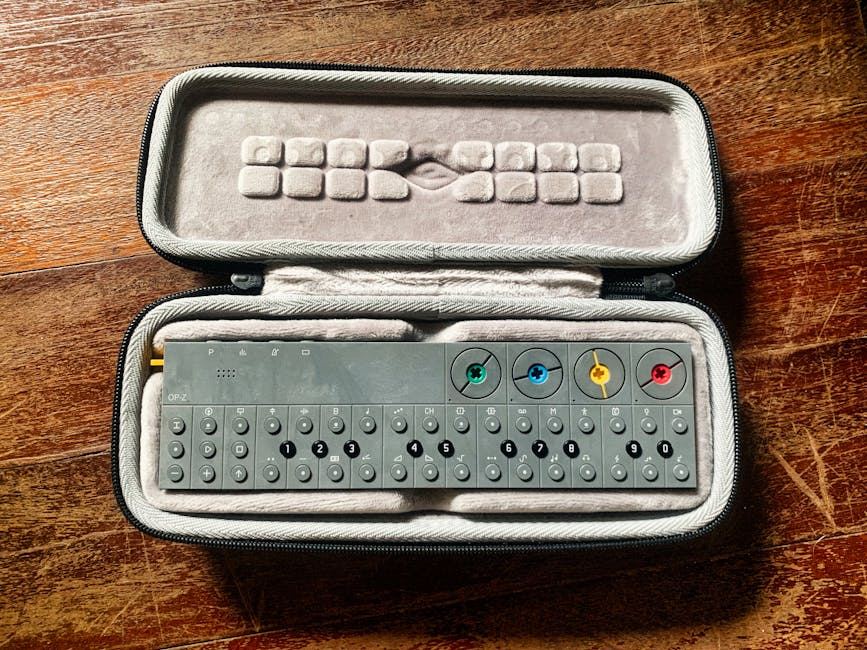
Think synthesizers are only for EDM? They're actually hands-on tools for instant sound sculpting — no music theory required to create unique tones.
Learning to use a synthesizer as a beginner opens up a world of sound creation, allowing you to manipulate oscillators, filters, and envelopes to craft unique music.
Unlike playing guitar or piano, you're not reproducing acoustic sound — you're designing it, which makes synthesis less about performance and more about sonic architecture.
In synthesizer practice, you manipulate sound using hardware or DIY-built instruments, adjusting knobs and sliders to shape unique audio textures. You connect synthesizers to computers or sound cards, tweak parameters like oscillators and filters, and record live performances to capture your evolving sound creations. Many hobbyists also build their own circuits or modify existing devices to explo…
Synthesizer practice fosters a flow state through deep immersion in sound manipulation, providing immediate auditory feedback that keeps you engaged. This hands-on experimentation leads to a sense of accomplishment, as each successful tweak enhances your skills and creates novel sounds. The creative freedom to design unique instruments and the community aspect of sharing insights further combat f…
You think synthesizers are for bedroom producers and people who wear too much black. Maybe you picture someone hunched over a laptop, layering weird sounds nobody asked for.
That assumption is costing you one of the most tactile, hands-on creative hobbies available right now.
A synthesizer is a sound-shaping tool you play in real time — knobs, keys, and sliders responding to your hands the same way a guitar responds to a pick.
Most people assume you need music theory. You can make genuinely compelling sounds within an hour by turning a filter cutoff and adjusting an envelope — no sheet music required.
The rabbit hole isn't about making EDM beats. It's about understanding how sound itself works — why a violin sounds warm, why a piano note decays, and how to sculpt those same qualities from scratch.
That distinction matters. Synthesis is sound design as a physical act — not composition, not production, not performance theory.
A Korg Minilogue sitting on a desk isn't a production studio. You patch a cable, turn a knob, and something you've never heard before comes out of the speaker.
That moment of "wait, I made that?" Immediate. Physical. Yours. It lands differently than almost any other creative hobby because the feedback loop between your hands and the sound is measured in milliseconds, not months.
The next question isn't what gear you need. It's what kind of player you actually want to be — and there are more paths in than most people realize.
Watching a synth performance feels like watching someone speak a language fluently. Then you sit down at one and realize you don't even know the alphabet yet. That gap is real — and it's exactly where the interesting part starts.
Your first session is mostly spent figuring out why there's no sound — not making sound. Week two, you accidentally create something interesting, can't recreate it, and learn what an oscillator actually does. By week three, filter cutoff starts to make intuitive sense. That's the moment the instrument stops feeling hostile.
Week four, you build one simple patch from scratch — on purpose. It sounds thin. But it's yours, and that matters more than it sounds.
The thing most beginners skip: learn what signal flow means before your first session, not after. Sound travels a fixed path on a synthesizer — oscillator to filter to amplifier — and without that mental model, every knob feels random.
Random.
Frustrating.
Pointless.
Ten minutes with a signal flow diagram fixes most of what would otherwise kill your first month. The next section covers the mistakes that keep people stuck — most of them trace back to skipping exactly this.
When to start: Morning
Duration: 1 hour
Cost to try: $0
Success criteria: If you saved one patch with a steady waveform, an audible filter sweep, and a second timbre you can recall later, do session 2.
Every beginner wants the instrument first – but without understanding oscillator → filter → amplifier, the knobs are just decoration.
Set a timer for 90 minutes and patch a virtual modular in VCV Rack (free) before spending a dollar on hardware.
Twisting everything simultaneously feels productive – but you'll never know which parameter actually changed the sound, and you'll never recreate it.
Pick one knob per session, move it through its full range, and listen to only that before touching anything else.
Beginners skip presets out of pride. Then they spend six months recreating sounds that already exist on page one of the factory bank.
Load a preset you like and reverse-engineer it: trace what each section is doing, then modify one element at a time.
Oscillators sound interesting for about five minutes. The filter is where synthesizers actually get their character – and most beginners barely touch it.
Automate the cutoff with a slow LFO on a basic patch and just listen to what that single movement does to a held note.
Making music feels more motivating than studying synthesis – so beginners route everything into a DAW immediately and never develop ears for synthesis itself.
Spend your first month with no DAW open: just a synth, headphones, and a notebook where you write down what you changed and what happened.
Synthesizer is almost entirely practiced at home — your bedroom, studio corner, or spare room is the venue. Dedicated music studio spaces and music schools sometimes offer open sessions or rental time on gear you don't own yet.
There's no national governing body for synthesizer as a hobby. The community self-organizes — which means the real entry points are scattered, but they're active.
Start with Meetup.com — search "synthesizer," "modular synth," or "electronic music production" plus your city. These groups run patch sessions, listening nights, and swap meets, and they're more active than you'd expect.
Facebook Groups are worth a separate search — try "[your city] synth" or "modular synthesizer [region]." Then check r/synthesizers and r/modular on Reddit and search your city name. Pinned threads and comment threads often surface local guilds that never bothered building a website.
Your nearest independent music shop is worth a direct call. Retailers like Sweetwater run demo nights, and smaller local shops often do too — they just don't advertise it widely.
When you show up somewhere new, just say: "I'm new to synthesis and still learning signal flow." That line gets you a patient explanation instead of assumed knowledge — and usually someone pulling out a patch cable to show you directly.
There's no single way to play with synthesis. These are the approaches that actually matter.
Analog synths generate sound through physical electrical circuits – the signal is continuous, which gives it a warmth that digital gear still chases.
Best for anyone who wants hands-on, tactile control and doesn't mind spending more for it.
Entry-level analog (Arturia MiniBrute, Behringer Neutron) starts around $200–$300.
Digital synths model analog behavior in software or firmware – close enough that most listeners can't tell the difference, and your wallet won't either.
Best for beginners who want more features, more presets, and fewer maintenance headaches.
You can start here for under $150, or go pure software for free.
You build a custom signal chain by connecting individual modules with patch cables.
There's no "correct" signal flow – which is either the point or the nightmare, depending on your personality.
Best for people who find conventional synths too limiting and genuinely enjoy the process of building things.
Modular is expensive to start properly – budget $500 minimum just to get a functional small system.
These run entirely on your computer as plugins or standalone apps.
Best for beginners – this is the lowest-friction way to actually learn synthesis without buying anything.
Free options like VCV Rack (modular) and Vital (wavetable) are legitimately powerful, not consolation prizes.
Semi-modular synths work out of the box like a normal synth but have patch points so you can rewire the signal flow.
It's the clearest on-ramp to modular thinking without committing to the full rabbit hole.
The Behringer Neutron and Moog Grandmother live here – both are strong starting points if you want room to grow.
Readers who enjoy this often gravitate toward Music Performance next.
If the texture of this appeals to you, Saxophone is built on similar bones.
If you want a related angle, Opera Singing is the natural next stop.
Most beginners spend months collecting patches and presets, chasing sounds they heard on a track.
The sound is never the problem – understanding why it sounds that way is.
The one skill that separates people who improve from people who plateau is reading a signal chain by ear. That means listening to a sound and identifying which stage – oscillator, filter, envelope, LFO – is responsible for each characteristic. Not just knowing what the knobs do in theory. Knowing which knob did this specific thing to this specific sound, without looking.
Once you can hear the filter cutoff dropping instead of the volume envelope, you stop getting lost on unfamiliar synths. Every synthesizer is speaking the same structural language. Without this skill, you'll keep turning knobs hopefully – stumbling onto sounds you can't recreate and don't understand.
Every patch becomes a puzzle you can actually solve. That shift – from guessing to diagnosing – is where real progress starts. The next section covers the specific listening drills that build this fast.
Eight sessions over 30 days — roughly twice a week. That's enough time to clear the confusion phase without wasting a season of your life.
Synthesizers have a steep initial curve that flattens fast. Eight sessions gets you to the other side of it, where you can feel what this hobby actually is — not what the setup process is like.
If you're tweaking a patch in your head on the commute home and watching YouTube videos nobody asked you to watch, the sound-design brain is already switched on — and that's the whole game. Move to a structured learning path and set a first project goal.
If you finished every session but felt nothing either way, you're probably chasing the concept rather than the sound. Synthesis without an emotional pull toward the noise it makes is just homework. One extension is fair — try changing what you're making before you walk away.
If you actively dreaded opening the software, that's not boredom — that's resistance, and it's clean data. Synthesis rewards people who find the tweaking itself satisfying, not just the idea of making music. If the process feels like admin, no amount of gear will fix that.
You're listening to a song and you stop caring about the melody — you're trying to figure out how that sound was built. That specific curiosity, unprompted, is the clearest signal this hobby has its hooks in you.
Headphones help, but deep synthesis work — especially with hardware — involves real sound, neighbors, and shared walls. If your living situation makes extended audio sessions genuinely difficult, that friction will kill momentum before the hobby can take hold.
Synthesis and songwriting overlap, but they're not the same thing. If you want to write songs and don't care how the sounds are made, a DAW with presets will serve you better and faster.
Synthesis is almost entirely solitary. There are communities online, but the act itself is you, a room, and a machine. If you need people in the room to stay engaged, this will feel isolating within a month.
Entry-level synthesizers range from $100–$500, making the hobby accessible to beginners. If you already have a computer and audio interface, you can start with free or affordable software synthesizers. High-end hardware synthesizers can cost $1,000+, but you don't need to spend that much to learn and create.
Hardware synthesizers are standalone physical instruments that produce sound independently, while software synthesizers run on your computer and require a DAW (digital audio workstation). Hardware offers tactile knobs and immediate feedback, while software is more affordable and portable. Most producers use both for different creative workflows.
You can grasp fundamental concepts like oscillators, filters, and envelopes within 2–4 weeks of consistent practice. Creating simple sounds takes just a few hours, but mastering sound design and modulation techniques takes months or years. The learning curve depends on your musical background and practice frequency.
No prior experience is required to start making sounds and exploring synthesis. Basic music theory helps you compose melodies and understand pitch, but many synthesizer beginners learn by experimenting. Tutorials and hands-on exploration can teach you as you go.
For hardware synthesizers, you'll need speakers or headphones, and ideally an audio interface to connect to your computer. For software synthesizers, a DAW (like Ableton Live, FL Studio, or free options like Reaper) is essential. A MIDI keyboard makes playing easier, though it's not strictly necessary at first.
Absolutely—synthesizers are used in pop, hip-hop, rock, film scoring, and ambient music. They're tools for creating textures and sounds that enhance any genre. Many modern producers across all music styles use synthesizers to add unique elements to their work.