BoredomBusted — Find Your Next Favorite Thing To Do
Discover hobbies, activities, places, and ideas that spark joy. Whether you're looking for something creative, active, social, or relaxing, BoredomBusted helps you find your next favorite thing to do.
Browse our hobby guides, things-to-do collections, and place ideas to never be bored again.
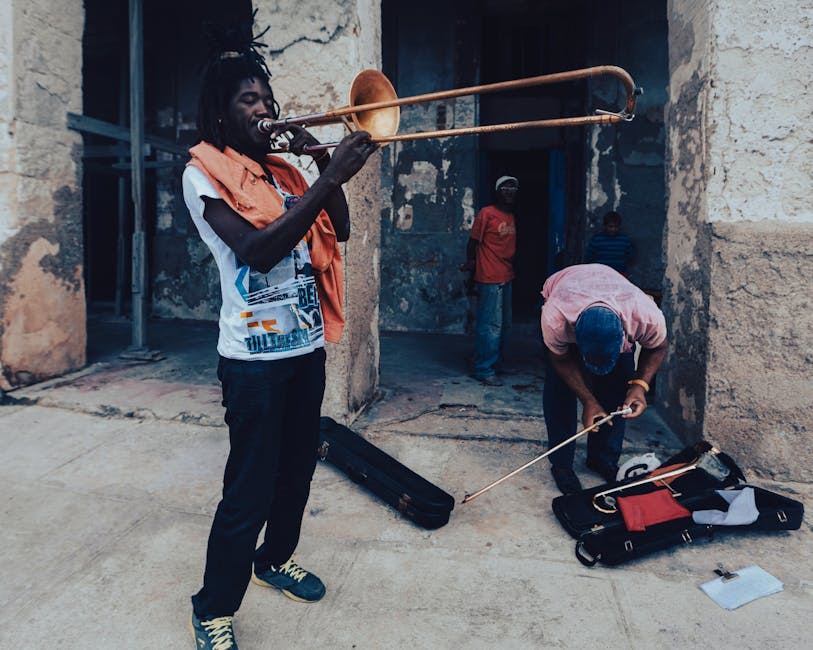
Trombone's slide system demands real-time pitch recognition, making it a pitch-locating challenge — far from the easy-playing stereotype it’s given.
Learning the trombone as a beginner involves mastering the art of buzzing your lips into the mouthpiece while skillfully shifting the slide to create different pitches.
Unlike valved brass instruments like trumpet or euphonium, the slide means every note is physically shaped by you – no keys, no shortcuts, just ear and muscle memory working together.
In trombone practice, you engage in focused routines involving buzzing the mouthpiece, playing long tones, executing lip slurs, and performing articulation drills, all while adjusting slide positions for pitch and tone, culminating in a structured session that develops your technical skills and sound quality.
This hobby fosters a flow state through the precise coordination of air speed and slide motion, providing immediate feedback as you hear your skill improve, while the structured practice creates a sense of accomplishment through measurable progress in tone and range.
Trombone is often perceived as the loud, obnoxious instrument in the back of the orchestra that anyone can play. It's literally just a tube you push and pull — how much skill could that possibly take? That assumption is exactly why most people never find out what trombone actually is.
The trombone has no frets, no keys, no fixed positions. Your ear has to locate every single note in real-time, which means you're training pitch recognition most musicians never develop.
It plays across three-and-a-half octaves, covering bass lines, melody, and harmony. A good trombonist doesn't fill space — they anchor the entire ensemble. The physical technique, breath control, embouchure, slide precision, is closer to playing cello than trumpet because nothing is automatic and nothing is mechanical.
Miles Davis famously said the hardest thing in music is playing slowly and in tune. Trombonists live in that problem on every single note, with no keys or frets to bail them out. The slide doesn't simplify pitch — it makes intonation entirely your responsibility, and that's what separates trombone from nearly every other beginner-friendly instrument.
Once you understand what trombone actually demands, the next question is whether a beginner can get there — and how fast.
Watching a trombonist slide through a jazz phrase looks effortless — the slide barely moves, the sound just pours out. Your first session will not look like that. It will look like you're trying to blow up a very stubborn balloon attached to a pipe.
The first thing that catches people off guard is the sound — or the lack of it. Week one is mostly mouthpiece buzzing with no slide attached. Week two, you add the horn and discover that slide positions aren't fixed points: they're zones, and your ear has to finish what your arm starts. That's the trombone's defining demand — no frets, no valves, no built-in correction.
Sing the note before you play it, every single time, from session one. This feels strange at first. But your ear has to lead the slide, not follow it — and the singers who pick up trombone almost always progress faster than the guitarists, for exactly this reason.
By week three, you'll land one or two notes that actually sound like trombone, and you'll play them on repeat because they feel earned. Week four, switching between three or four notes starts to feel almost normal — and almost normal is a genuine milestone. The stretch between rough and controlled is shorter than it looks from outside it, but most people quit inside that gap, right before the instrument starts paying back. The next section covers the specific mistakes that keep beginners stuck there longest.
When to start: Early morning
Duration: 1 hour
Cost to try: $0
Success criteria: If you play a clean 8-note scale with steady slide changes and match at least one long tone and one melody note on your tuner, do session 2.
The slide needs to move fast — beginners treat it like a handle, not a glide point.
It feels like it's helping, but it's actually collapsing your air column before it ever reaches the mouthpiece.
Beginners anticipate the position change and slide early, which smears every note into the next one.
Pressing harder seems like the path to louder, but it kills your vibration and bruises your embouchure faster than almost anything else.
Beginners stay comfortable in the middle of the slide and quietly avoid the extended positions because they feel awkward.
Trombone lives wherever sound is tolerated — home practice spaces, rehearsal studios, school band rooms, and community music centers are the most realistic starting points.
If you're serious, a soundproofed studio rental buys you the volume freedom you won't get in an apartment.
Tell whoever's running the session that you're a beginner working on fundamentals. That one sentence usually gets you a sight-reading packet and a section lead who'll answer questions.
Experienced players want sections filled. They're not auditioning you — they're relieved you showed up.
Not all trombones are the same instrument. The slide you picture is just the starting point.
This is the standard – what every beginner starts on, what most orchestras and bands use.
It's the right choice unless someone has actively told you otherwise.
Bigger bore, lower range, and a thumb-operated valve that extends into the depths of the orchestra.
Best for players who've been on tenor for a few years and want to move into low brass ensemble roles.
Expect to pay $1,500–$4,000+ for a decent one – this is not a starter instrument.
Smaller and higher-pitched than tenor, historically common in classical and early music.
It suits advanced players who want to play baroque or classical repertoire more idiomatically.
The range change throws off muscle memory – don't come here first.
Replaces the slide with rotary or piston valves, making it more fingered like a trumpet.
Popular in jazz in certain countries (Brazil especially) and easier for players switching from other brass.
The tradeoff is real – you lose the slide's expressive glissando, which is half the reason people love trombone.
Contrabass is a niche instrument – enormous, rare, and used almost exclusively in large orchestras.
Unless a conductor has specifically asked for one, this is trivia, not a purchase decision.
If this resonates, Saxophone explores a similar direction.
If the texture of this appeals to you, Opera Singing is built on similar bones.
If the texture of this appeals to you, Bagpipes is built on similar bones.
Most beginners obsess over hitting the right slide position. That's not what's holding them back – it's that they're using their slide to find the note instead of their ear.
The skill is audiation – hearing the exact pitch in your head a full beat before you play it. Not humming along, not hoping the position gets you close. You mentally sing the note first, then your slide, air, and embouchure align to match what your brain already knows.
Without it, you're steering by guesswork on an instrument with no frets, no keys, no safety net – and your intonation will drift every time. With it, your slide stops being a crutch and starts being a confirmation. Tone cleans up, pitch locks in, and sight-reading gets genuinely faster because you're processing sound, not slide numbers.
Eight sessions over 30 days. That's the number – roughly twice a week, 20–30 minutes each.
Less than that and you're not learning the instrument. You're just repeatedly meeting it for the first time.
Trombone has a real physical learning curve: lip buzzing, slide positions, breath control.
Eight sessions is the minimum to feel whether your body is actually starting to adapt – or whether you're fighting it every single time.
You hear a trombone in a song, a film score, or a jazz record – and you actually stop to notice it. Not just "oh, that's a trombone." You listen to what it's doing.
That low-level, background attention is specific. It means the instrument is already pulling at you before you've even started.
Don't talk yourself out of it because you think you started too late.
If you're still in after reading that, the resources section has exactly what you need to start without wasting money or time on the wrong gear.
When you're ready to compare options, the hobbies list lays out every direction we cover.
If trombone feels like too much to commit to right now, browse what to do when you're bored for lower-stakes ideas.
Most beginners can produce their first clear notes within 2–4 weeks with consistent practice. Playing simple melodies typically takes 2–3 months, though developing proper slide technique and tone quality requires several months of dedicated effort. Progress depends heavily on practice frequency and quality instruction.
A decent beginner trombone ranges from $300–$800, with used instruments available for less. You'll also need a mouthpiece, valve oil, and a slide cream, adding another $50–$100. Consider budgeting for lessons with an instructor, which typically cost $25–$60 per session.
Trombone has a steeper initial learning curve than trumpet because slide positioning requires more precision and muscle memory. However, once you develop slide technique, many players find it easier to produce a warm tone compared to other brass instruments. The main challenge is coordinating your slide hand with your breathing and embouchure.
You need minimal space—just enough room to extend the slide fully, roughly 3–4 feet in any direction. The bigger concern is sound management, as trombones project loudly; consider using a practice mute, soundproofing a room, or finding a community space if volume is an issue.
Jazz trombone emphasizes improvisation, rhythmic flexibility, and expressive slides or "growls," while orchestral trombone focuses on reading parts precisely, blending with other instruments, and using clean, controlled technique. Jazz allows more personal interpretation, whereas orchestral playing demands consistency and adherence to the conductor's vision.
Reading music isn't required to start, but it becomes essential if you want to play in ensembles or advance beyond basic ear-trained playing. Most trombone instruction includes music theory and reading, so you'll develop these skills naturally as you learn. You can learn to read at any age, so it's never too late to start.