BoredomBusted — Find Your Next Favorite Thing To Do
Discover hobbies, activities, places, and ideas that spark joy. Whether you're looking for something creative, active, social, or relaxing, BoredomBusted helps you find your next favorite thing to do.
Browse our hobby guides, things-to-do collections, and place ideas to never be bored again.
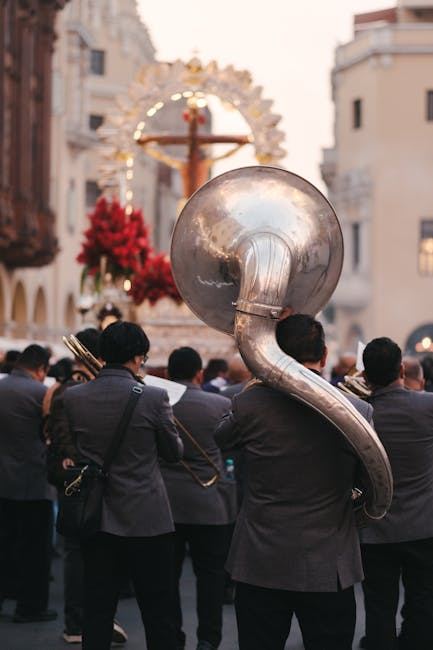
The tuba isn't just background noise; it anchors harmony and demands pitch precision, with a surprising depth of solo repertoire that rivals any concert soloist.
Learning to play the tuba as a beginner opens the door to producing rich, deep sounds in orchestral music, played by buzzing your lips into a large mouthpiece and pressing valves to change notes.
Unlike other brass instruments, it anchors the entire ensemble's harmonic foundation – you're not carrying the melody, you're carrying the room.
Playing the tuba involves producing sound by buzzing your lips into a mouthpiece, mastering various techniques like long tones, lip slurs, and articulation exercises, while learning to read sheet music and coordinate breath control to perform in ensembles and orchestras.
Tuba playing engages the flow state through the combination of skill development and collaborative music-making, providing immediate feedback on progress while fostering a sense of belonging in group settings.
You think tuba is the instrument they hand to the kid who couldn't cut it on trumpet. The big, loud, background instrument. The one nobody solos on, nobody notices, and nobody chooses on purpose.
You're wrong – and the people who know, really know.
At the 2023 Leonard Falcone International Tuba Festival, competitors performed pieces that would challenge any concert soloist – technically demanding, musically nuanced, nothing remotely resembling a punchline.
The next question is whether you can actually make a sound on this thing as a beginner – and the answer is more encouraging than the instrument's size suggests.
Watching a tuba player looks effortless in the way that icebergs look small. What you see is breath turned into sound. What you don't see is how many weeks it takes before your body understands that relationship.
The first few sessions are a negotiation between you and a 25-pound horn that has no interest in cooperating. Lips that do whatever they want. Breath you've never once had to consciously control. Sound that honks, stops, then honks again — until one low Bb finally resonates and you understand, for the first time, what "support" actually means.
Week one, you're producing sound about 60% of the time. The other 40% is a sad, airy wheeze you will come to recognize intimately. Week two, the sound comes more consistently, but your lips fatigue in under 10 minutes — annoying, but completely normal.
Week three, you land your first full scale and immediately try to play it too fast. That's how you learn that tuba does not reward rushing. Week four, something shifts with your air column — the horn starts to feel like it's working with you, and you can't fully explain why. You just feel it.
Frustrating. Then quiet. Then one note that actually sounds like music.
Your body agrees to cooperate — and then you have to convince it again tomorrow. That cycle is the whole first month.
Before session one, know this: tuba buzzing starts with a firm, flat lip — over-puckering is the single mistake that costs beginners weeks of unlearning. Most beginners over-pucker because every other blowing instinct in life points that direction. Fight it early.
The next section covers the mistakes that keep people stuck in the frustrating half of that cycle far longer than necessary.
When to start: Early morning
Duration: 60 minutes
Cost to try: $0
Success criteria: If you can tune the tuba, hold 5-minute long tones in low, middle, and high registers, and play 4 clean measures of a simple tune, do session 2.
New players default to facial pressure because it feels like it's doing something. It isn't — it just tires your face and kills your tone.
Put one hand on your stomach when you play. If it isn't pushing outward on every attack, you're compensating with your face for air support you're not actually providing. Inflated cheeks are the symptom, not the cause.
BBb tubas are everywhere, so they become the default first purchase. But a 3⁄4-size or CC tuba is dramatically easier to manage while your embouchure is still forming.
Rent before you buy. Ask your rental shop specifically for a CC or EEb — your first six months will sound better and hurt less.
The low register feels like it needs more push, so beginners press the mouthpiece harder into their lips. That cuts off airflow — exactly backwards from what works.
Drop your jaw slightly and increase air speed instead of increasing pressure. The note will center itself if you give it enough column of air.
Tuba has notoriously vague intonation in the low register. Beginners assume the valve combination is the whole fix — it's only half of one.
Learn which partials on your specific horn run sharp or flat, then build a personal fingering chart with alternate combinations. Using 1-3 instead of 4 is a fix you'll reach for every single rehearsal.
Tuba is a big instrument, so beginners assume it wants big volume. Practicing loud the whole session builds tension and masks every technical problem you have.
Run your long tones and scales at mezzo-piano. If you can't control a note quietly, you don't actually own that note yet.
Tuba practice happens wherever neighbors can't hear you — basements, garages, practice rooms, and community band halls are the real workhorses. Dedicated players also book time at music schools and rehearsal studios that rent by the hour.
Walk in and say: "I'm an adult returning player" or "I just started — I'm looking for a low-pressure group to play alongside." That sentence gets you a music stand, a folder, and someone genuinely glad you showed up.
Tuba chairs are chronically empty and every group knows it. You won't be auditioning — you'll be rescuing them.
The BBb tuba is what you've seen in every concert hall and marching pit. It's the default for beginners — and the default for a reason.
Most teachers teach it, most rental programs stock it, and most ensemble music is written for it. Rentals run $50–$100/month; used student horns land around $1,500–$4,000.
The CC tuba sits a step higher in pitch and is the preferred choice in professional U.S. orchestral settings. It responds slightly faster and projects differently — but those differences are meaningless until you're well past the beginner stage.
Don't start here. Rent a BBb and come back to this later.
The Eb tuba is smaller, higher in pitch, and noticeably easier to carry. It's common in British brass bands and European concert settings.
It's a legitimate path if brass band culture is your world. Outside that world, your repertoire options shrink fast — this isn't the right solo starting point.
The sousaphone is the same fundamental instrument, wrapped around your body for marching. The tone is brasher and the tuning less precise. It was built for outdoor projection, not concert hall nuance.
If marching band is your entry point, this is what you'll actually play. Otherwise, skip it for now.
The euphonium is smaller and higher-pitched, and it's sometimes mistaken for a tuba. It occupies its own lane entirely.
It's not a beginner shortcut to tuba. They share some technique, but switching later means relearning embouchure and airflow from scratch.
If you want a related angle, Oboe is the natural next stop.
If this resonates, Music Production explores a similar direction.
Music Performance lives in the same world — different mechanics, similar appeal.
Most beginners spend months obsessing over finger technique and valve speed. The valves aren't the problem – the air is.
The one skill is air column control: the ability to move a large, steady, pressurized stream of air through the instrument without collapsing it mid-phrase. Not breathing deeply – breathing industrially, then releasing that air like you're filling a room, not blowing out a candle.
Without air column control, your tone is thin on low notes and your intonation drifts sharp under pressure. You're also gassed out by the third page of any real piece.
Pitch. Tone. Endurance. All three trace back to the same root. Fix the column, and the horn starts to cooperate in a way that no amount of valve practice ever produced.
Start with the tissue drill. Hold a tissue six inches from the bell while sustaining a low Bb. It should flutter continuously – not pulse. Pulsing means your air is stopping and restarting between breaths.
Before you even pick up the horn, spend five minutes with a Breath Builder resistance tool – or a straw in a water bottle. You're training the diaphragm to maintain pressure, not just push air once.
Then add one long tone per session recorded on your phone. Play it back and listen for where the pitch sags – that's exactly where your air column collapsed. Mark the timestamp and run it again.
Once this feels automatic, the next question is which style of playing you're actually training it for – and the answer changes how you practice everything else.
Most people never find out because they quit before the answer arrives.
The fix is simple: don't decide based on vibes. Decide based on data you actually collect.
Commit to 8 sessions in 30 days — roughly twice a week. Tuba has a steep embouchure curve in the first two weeks, and spacing sessions a week apart just resets you — your lips and lungs need close-together repetition to build muscle memory.
Eight sessions isn't mastery. It's enough to feel whether the instrument is pulling you or repelling you.
If you want to come back — not because you were good, but because you're curious what comes next — that's the hobby talking. Start tracking your sessions in a notebook and ask your teacher about ensemble options before you feel ready.
If you're indifferent — you didn't dread it, but you weren't thinking about it between sessions — try committing to four more before you call it. Indifference at week two is common on tuba specifically because the physical awkwardness hasn't cleared yet.
If you actively didn't want to be there, that's not a discipline problem — that's a clear answer. Not every instrument suits every person, and tuba in particular has a specific physical and social profile that either clicks or doesn't.
You keep stopping to listen when you hear low brass — in a movie score, a marching band passing by, a concert recording. That specific pull toward the low end of the sound spectrum is more predictive than almost anything else.
If tuba frequencies make you feel something before you even play one, pay attention to that.
Three situations where the instrument itself works against you — not skill, not patience, just hard facts about the instrument.
If tuba still has your attention after sitting with all of that, the next section covers exactly where to find a rental, a teacher, and a beginner ensemble — without wasting money on the wrong version of any of them.
For quicker fixes, see our roundup of things to do when you're bored.
Most beginners can play basic notes within 2–3 months with consistent practice. Developing proper technique and playing intermediate pieces typically takes 1–2 years, while mastering advanced repertoire requires several years of dedicated study.
Tuba has a moderately steep learning curve due to its large size and the breath control required, but it's not inherently harder than other brass instruments. Once you develop the physical technique and embouchure, progress often accelerates faster than many people expect.
Student tubas range from $800–$2,500, while intermediate instruments cost $2,500–$5,000. Professional-grade tubas can exceed $10,000, but many schools provide rental options or loaner instruments for beginners starting out.
You'll learn proper posture, breathing techniques, and how to produce your first notes—don't expect polished melodies on day one. Your instructor will assess your goals and physical fit with the instrument, then create a personalized learning path.
Yes, tubas are essential to orchestral music, providing bass support and harmonic foundation across classical, contemporary, and film scores. Many orchestras feature tuba parts prominently, giving players rewarding performance opportunities.
Beginners should aim for 30–45 minutes of daily practice to build solid fundamentals, while intermediate players benefit from 1–2 hours daily. Consistency matters more than marathon sessions, so regular daily practice outweighs sporadic longer workouts.