BoredomBusted — Find Your Next Favorite Thing To Do
Discover hobbies, activities, places, and ideas that spark joy. Whether you're looking for something creative, active, social, or relaxing, BoredomBusted helps you find your next favorite thing to do.
Browse our hobby guides, things-to-do collections, and place ideas to never be bored again.
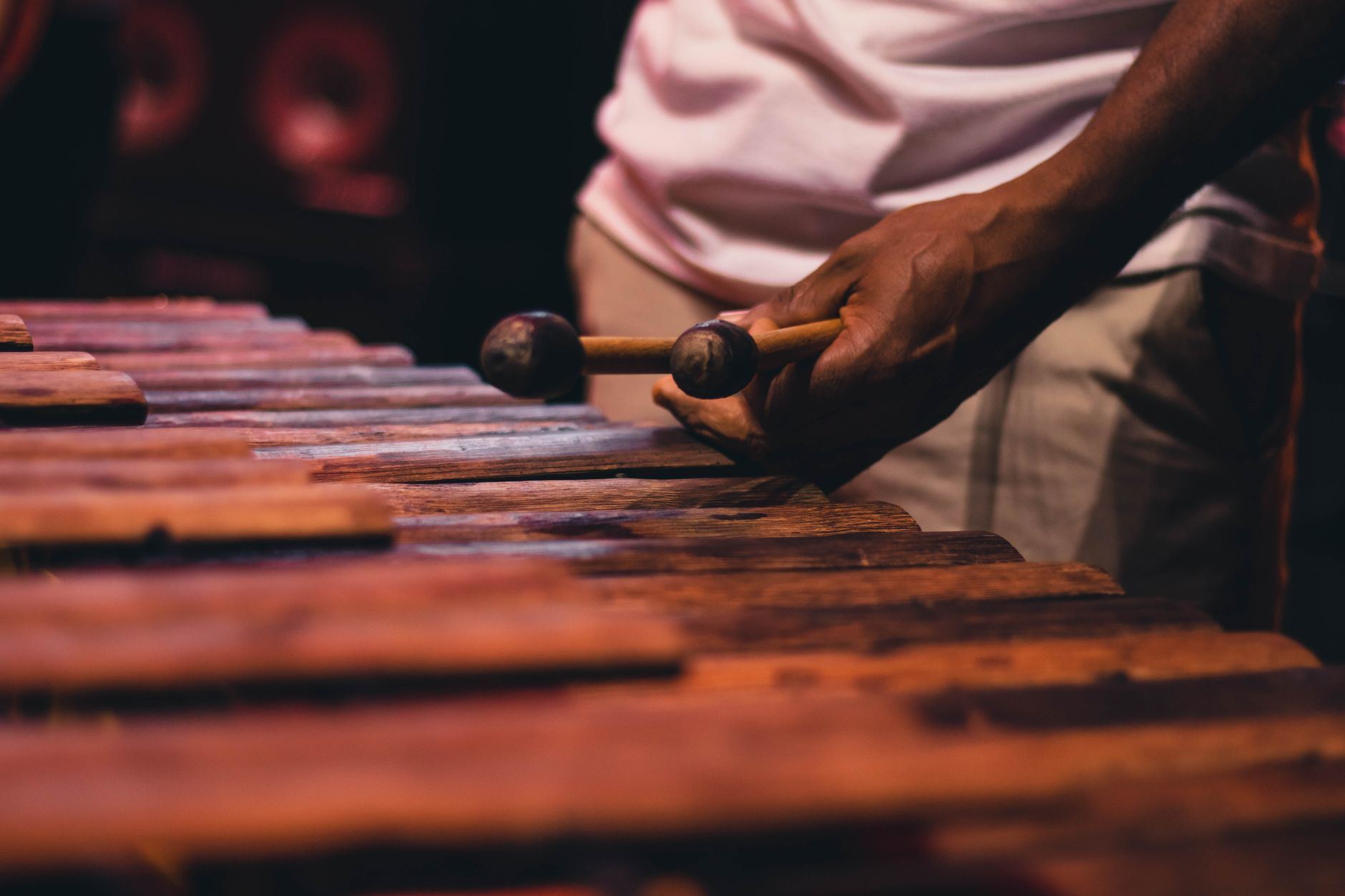
The hard part of xylophone isn't the notes. It's hitting the center of the bar and letting the mallet bounce, which most beginners get wrong for weeks.
A xylophone is a row of tuned wooden bars, laid out like a piano keyboard, that you hit with mallets. Each bar gives one note, and the note fades fast. That short, dry, woody pop is what makes a xylophone a xylophone.
The family is confusing, so here is the sorting rule. Marimba bars are also wood, but wider, with tuned tubes underneath, so the sound is deeper, warmer, and lasts longer across a much lower range. Glockenspiel bars are steel with no tubes, which makes the sound bright, bell-like, and ringing.
A real session is simple. You set the instrument at waist height, hold one mallet in each hand, and play scales and short tunes, usually from notes on a page. Most beginners start on a glockenspiel or a student xylophone because both are cheap and easy to carry, while the vibraphone, a metal instrument with tubes, a motor, and a damper pedal, comes later.
You set a row of tuned bars at waist height and strike them with a mallet in each hand. Sessions run 15 to 30 minutes of scales, short tunes, and slow rhythm drills. Each bar plays one note, so you build melodies one clean strike at a time, usually while reading notes or following a chart.
It gives restless hands a clear job and an instant sound. You get a reward on the first strike, then a long list of small fixes: tone, evenness, speed. Reading notes while your hands move keeps your brain too busy to wander, and a clean scale feels like a small win.
Most people met a xylophone in a school music room. It was probably a rainbow toy with bars that were slightly out of tune. That memory is why a serious instrument family gets filed under kids' stuff.
The xylophone is the rattling-bones sound in Saint-Saëns's Danse macabre. Marimba has a concert solo tradition built by players like Keiko Abe, and school marching bands run a whole mallet section on the sideline called the front ensemble. Professional percussionists spend years on this family.
You read notes like a pianist, but you cannot hold a note down. Every sound is one strike, so timing, tone, and which hand goes next all happen at once. The ceiling is four-mallet marimba, where each hand holds two mallets and plays melody and chords together.
The first scale is easy. The second year is where the toy reputation stops being funny.
Strike a bar and it sounds like music. That is not true of violin or trumpet. You can play a recognizable tune within 20 minutes.
You will stare at the bars and still hit the wrong one. The mallets double-bounce, the tone turns clacky, and your weaker hand feels borrowed. This is the point where tone, not note names, becomes the actual problem.
By now a short scale works, and your forearm is tired from gripping too hard. Shake it out whenever your grip tightens, and stop for the day if your wrist hurts. Tension builds quietly and shows up as a sore forearm, not a sore ear.
Ears matter too. A glockenspiel in a small room is piercing, so play in a bigger room or use earplugs for longer sessions. Check your stand height as well: the bars should sit near your waist so your elbows stay loose.
When to start: Afternoon or early evening, when a bright glockenspiel won't annoy anyone
Duration: 20-30 min
Cost to try: $0–$95
Success criteria: If you can play the C major scale up and down with every note ringing and the volume even, do session 2.
Beginners aim near the edge because it feels safer. The sound is weak and the bar barely rings.
Aim for the center line, every time. If the bars are small, slow down until you can hit that spot without looking at your mallets.
Holding the mallet against the bar after the strike kills the tone. It also teaches your arm the wrong habit.
Let the mallet bounce off. Think of the bar as a hot stove you touch for one instant.
A white-knuckle grip and big arm swings make you loud, tired, and sore. Over weeks this strains your wrist and forearm.
Keep the grip loose and the stroke small. Warm up with a few slow strokes, and stop when you feel pain rather than playing through it.
Watching your mallets slows your reading, because your eyes cannot follow the page and the bars at once. Most missed notes come from that tug of war.
Learn the layout by feel. Natural notes sit in the lower row and sharps in the upper row, so the bars work as landmarks.
Hard plastic or rubber heads suit xylophone and glockenspiel. Soft yarn heads suit marimba and sound dull on a xylophone.
Never use metal-headed mallets on wooden bars. They dent the wood and can crack it.
Mallet percussion is a small world, which makes it easy to find your people once you know where to look. Start with school programs, not music stores.
The Percussive Arts Society runs chapters, events, and a huge member resource library. The American Orff-Schulwerk Association links classroom and community teachers who work with xylophones and metallophones. Community colleges and university percussion studios sometimes offer lessons to adults.
Ask a drum-set teacher this exact question: "Do you teach mallet keyboard?" Many do not. A percussion teacher, not a general music teacher, will fix your grip early, and a few online lessons can do the same job if nobody local does.
Community bands and school ensembles sometimes have openings for adult percussionists, and it costs nothing to ask. Browse Meetup for local percussion or Orff groups. On Reddit, r/percussion is active and friendly to beginner questions.
Spend 20 minutes this week: search your area for percussion teachers, message two, and ask about adult beginners and an instrument to borrow. A teacher who lets you try a real marimba is worth ten reviews.
Pick the style by what you want to hear, not by which looks cooler on a shelf. The wrong first instrument is the most common reason people quit.
A student bell kit is small, light, and loud. It is the fastest way to find out whether you like hitting bars.
Orff instruments have removable bars, so a group can play only the notes that sound good together. They are made for ensembles and make instant, forgiving music.
Orchestral xylophone is fast, dry, and exposed. It pairs with glockenspiel in band and orchestra and rewards clean two-mallet technique.
Marimba is warmer, lower, and bigger, and four-mallet solos are the main attraction. It is also the most expensive and hardest to store.
Vibraphone has metal bars, tubes, a motor for vibrato, and a pedal that controls sustain. It is a jazz instrument first, and a later step.
The one skill is simple to say and takes months to own: hit the center of the bar and let the mallet bounce back up. Everything else, from speed to dynamics, builds on it.
Each bar rings best when struck at its middle. Near the ends, where the bar rests on its supports, the note turns thin and clipped. If a note sounds weak, check where you hit it before you blame the instrument.
Hold the mallet loosely between thumb and a bent index finger, with the other fingers curled lightly around it. Drop it from a few inches, then let it rebound instead of pushing it into the bar. Pressing down chokes the sound.
Play one note 20 times with each hand and match the volume. Then play a C major scale up and down, hands alternating, one note per metronome click at 60 beats per minute. Record it on your phone, because your ears catch uneven strokes better than your hands do.
Do not decide in week one. Commit to 12 sessions of 15 minutes across 30 days, three a week, on a borrowed or cheap student instrument.
Keep each session boring on purpose: scales, one tune, a metronome. Fun that depends on novelty does not tell you much about month six.
Outcome 1: you play a simple tune evenly and want more. Book a teacher, start reading music, and save for a better instrument.
Outcome 2: you play fine but you are bored. Single-line melodies run out of surprises fast, so try piano, a drum pad, or a group with other players.
Outcome 3: you dread sessions. Shelve it, no guilt. A $20–$95 instrument you tried honestly is a cheap answer, and a glockenspiel resells easily.
Pain in your wrist or forearm, or ringing in your ears, means stop and change something. Loosen the grip, lower the stand, or play in a bigger room. Nobody improves faster by playing through pain.
A xylophone has wooden bars and a short, dry sound. A marimba also has wooden bars, but they're wider, with tuned tubes underneath, so the tone is warmer, longer, and lower. A glockenspiel has steel bars and no tubes, giving a bright, bell-like ring.
Playing a first tune is easy because every bar is in tune and sounds musical. The hard part is tone and technique: hitting the center, letting the mallet bounce, and keeping hands relaxed. Most people can play simple songs in a few weeks, while four-mallet marimba takes years.
A 25-note student glockenspiel, sold as a bell kit, runs about $20 to $95. A real-wood Orff xylophone is roughly $465 to $545, and the 2.5-octave student xylophone kits that band programs buy cost $1,600 to $1,800. New concert marimbas start around $3,200, so most beginners rent or borrow one. Skip the cheap toy models, because many are out of tune with themselves.
Yes, for the basics. Free note charts, apps, and video lessons cover scales and simple tunes. A teacher helps most with grip and stroke, because bad habits hide in your hands. Even a few lessons early on can save months of tension and weak tone.
Use hard rubber, plastic, or polyball mallets on xylophone and glockenspiel, because they give a clear attack. Soft yarn mallets suit marimba and sound dull on a xylophone. Never use metal-headed mallets on wooden bars, since they dent and can crack the wood.
Start with a student glockenspiel or a small xylophone. They're cheap, light, and easy to store, and the layout and stroke carry over to marimba later. Buy a marimba only after a few months of practice, a teacher, and space for a large instrument.