BoredomBusted — Find Your Next Favorite Thing To Do
Discover hobbies, activities, places, and ideas that spark joy. Whether you're looking for something creative, active, social, or relaxing, BoredomBusted helps you find your next favorite thing to do.
Browse our hobby guides, things-to-do collections, and place ideas to never be bored again.
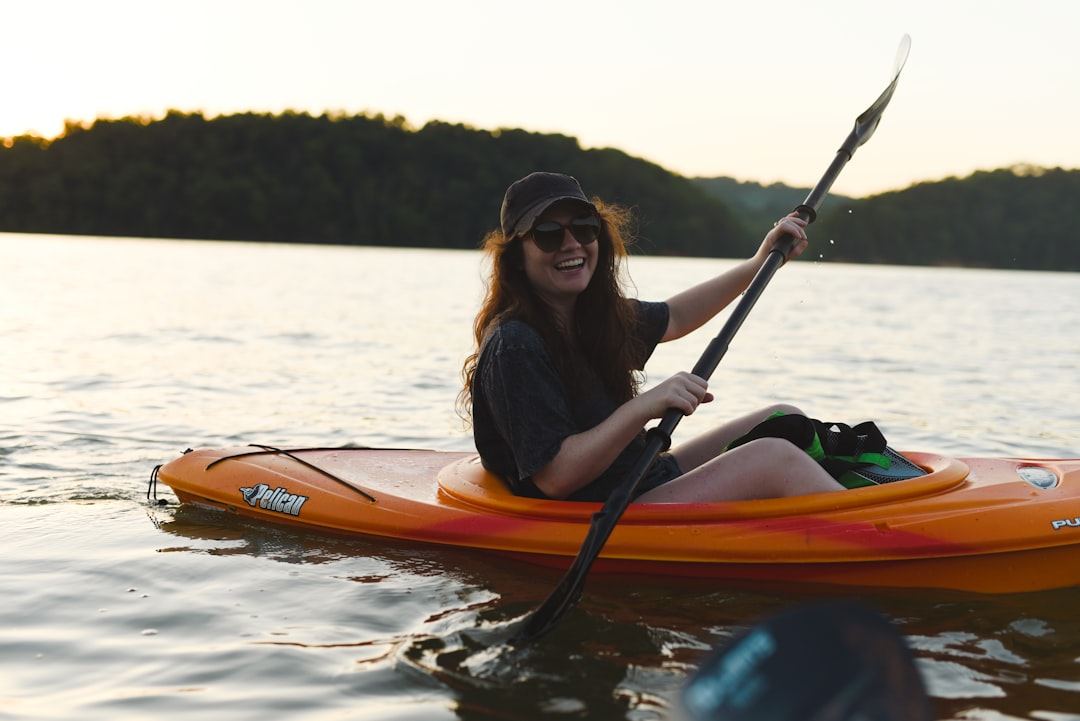
Recreational kayaking isn't just about paddling — it's a unique rhythm that can warp your sense of time while honing your skills in real-time.
Learning recreational kayaking as a beginner involves mastering the fundamentals of paddling a small boat across serene waters like lakes and slow rivers – using a double-bladed paddle.
Unlike touring or whitewater kayaking, the recreational version prioritizes accessibility over performance:
In recreational kayaking, you sit in a small kayak and paddle using a double-bladed paddle across calm waters, focusing on maintaining balance while propelling yourself forward, turning, and maneuvering around obstacles by engaging core and leg muscles. You execute rhythmic strokes, alternating sides, while scanning for optimal paths and adjusting your power to navigate the water's subtle current…
Recreational kayaking induces a flow state through the rhythmic paddling that demands focus and coordination, leading to an immersive experience where time seems to distort as paddlers engage with water challenges. The immediate feedback from paddle strokes enhances skill development and provides a sense of accomplishment as you overcome tangible milestones, while the novelty of changing environm…
You think kayaking is a vacation activity. Once at a lake resort, get sunburned, never think of it again.
That assumption is costing you one of the most genuinely absorbing hobbies you can pick up without a team, a gym, or a $500 entry fee.
Recreational kayaking is about skill. Reading water, managing momentum, controlling a hull – skills that grow every single time you paddle.
The gear barrier is far lower than you think. A solid beginner kayak costs less than a weekend of golf, and many start with rentals.
This hobby scales with your mood. Flat lake on a Tuesday. River current on Saturday. No identity crisis needed.
A paddler named Chris once thought kayaking was "just floating around."
Then he mastered the forward stroke and covered twice the distance in half the time. In a straight line. Without screaming arms. Same water, completely different experience.
The equipment side is where most beginners either get it right fast or waste money. That's exactly what we're exploring next.
From the shore, kayaking looks like floating on air — gliding smoothly over glassy water.
Your reality shifts once you're in the boat. It has its own ideas. The first hour will bridge the gap between the illusion of ease and the paddling reality. Graceful strokes and gliding are harder than they seem. Instead, expect wet sleeves, zig-zagging, and burning arms. Yet, somehow, the grin stays.
The skill isn't in moving forward; it's in correction. By the end of the first week, you'll focus more on direction than distance. In week two, you'll notice your paddle's angle starts to stabilize. Straight-line tracking becomes natural, almost automatic. This newfound control spreads to your body by week three. You relax your grip, and your shoulders ease up.
Week four is a milestone. You effortlessly aim for a point across the water and glide to it with precision.The satisfaction is disproportionate to the effort. Kayaking humbles you at first, not because it's hard, but because merging with the paddle takes time.
Choose your paddling style before you begin. High-angle paddling gives control but tires you. Low-angle is slower but saves energy. Many default to a mixed style that's inefficient. Make a conscious decision before pushing off.
When to start: Early morning
Duration: 1 hour
Cost to try: $20
Success criteria: if you finished without capsizing, do session 2.
Kayaks might look similar online but feel completely different in the water. Hull shape, width, and length dictate handling. A boat that looks perfect might not suit your style at all. Rent a few kayaks before purchasing. Pay attention to which one you forget you're sitting in.
Death-gripping your paddle drains your stamina fast and strains your wrists. A loose grip isn't just okay, it's necessary. Hold the paddle shaft loosely. Power should come from your torso, not your fingers.
Reclining into the backrest feels restful but costs you power and efficiency. It turns your strokes into weak arm paddling. Sit slightly forward and engage your core. Think of it like balancing on a stool.
New kayakers often skip checking wind conditions, focusing only on rain. A headwind over 10–12 mph can wear you out quickly. Plan to paddle into the wind first, using it for an easier return trip.
Currents, wakes, and wind on rivers and bays challenge new paddlers who haven't built muscle memory yet. Start on a calm lake or a gentle river. Do this until basic skills like bracing become reflexive.
Kayaking is best enjoyed on lakes, rivers, reservoirs, and coastal bays with calm waters.
Most paddlers start on flatwater. It's a safe introduction. Gradually they move to more challenging waters.
Meetup.com is your first stop. Search "kayak club near me" for weekend outings open to drop-ins.
Check out the American Canoe Association (ACA) at americancanoe.org. Their club finder connects you to local clubs across the US.
Look for "[your city] paddling club" on Facebook Groups. Many organize informal flat-water paddles.
Call a local outfitter or paddle shop. They know which groups run nearby paddles.
Introduce yourself with this: "I'm new, I've paddled maybe once or twice – what do I need to know before today?" You'll get a gear check and safety tips without asking.
With an open cockpit, you're sitting on top of the kayak. Getting on and off is easy, no feeling of confinement, and it's self-draining if flipped. Perfect for warm-weather outings, beginners, or the claustrophobic. While gear costs are similar, entry-level options tend to be slightly cheaper.
Designed for open water adventures, these kayaks are longer and narrower. Ideal for paddlers who are ready to cover longer distances and leave lake loops behind. A quality sea kayak starts at around $1,200–2,000+, reflecting their capability.
Short and maneuverable, these kayaks handle moving water and rapids well. This is for those seeking adrenaline, not just an advanced level of paddling. Prepare to get wet, and prior lessons are crucial. Gear is important but secondary.
These kayaks are made for anglers, featuring rod holders and tackle storage. They transform into a fishing platform that's slow, quiet, and ready to access spots motorboats can't reach. Costing between $600–1,500, they're a smart choice for serious fishing enthusiasts.
Inflatable kayaks pack up small enough to fit in a closet but are real kayaks. While they lack the speed and precise tracking of hardshell models, they're perfect for those with limited storage or no car rack. Entry-level models start around $150, with better options at $400–600.
Some of the same instincts show up in Kayak Fishing — worth a look if this clicked.
Sea Kayaking is a sibling pursuit and often surfaces the same kind of curiosity.
Navigate efficiently by reading the water before you enter it.
Many beginners make the mistake of focusing on paddling harder. They think more strokes will get them farther. It doesn't.
Instead, watch how the water flows. Spot current lines, eddies, and wind chop patterns before you launch. This habit transforms your paddling. It's not vague awareness.
Literally take a moment at your put-in. Watch how the water moves and plan your course based on that, not on personal intentions.
When you harness water's flow, your strokes take you further with less effort.Missing this skill leads to constant exhaustion, making simple loops feel strenuous.
Unexpected challenges aren't your fault—it's about missing what the water already told you.
Understanding the water's fingerprint will help you anticipate conditions before starting out.
Four sessions over 30 days. That's the test.
Why four? It takes one session to stop panicking about tipping, one to get comfortable with basic strokes, and two more to feel what the hobby actually is – not what the anxiety of being new makes it feel like.
Skip this and you're rating the hobby based on your first day, which tells you almost nothing.
If you keep finding reasons to go back, planning your route the night before and checking water conditions just for fun, then this hobby might be tailor-made for you. The thing to do next is start looking at a starter paddle of your own and explore moving water or longer day trips.
If you feel nothing either way, extend to six sessions before deciding. Kayaking is one of those hobbies that compounds slowly.
Some people need a quieter morning or a better location to feel the pull.
If you were clock-watching from the cockpit and dreading the next session, that's real information. Don't override it.
Not every outdoor hobby fits every person, and forcing kayaking when you'd rather be somewhere else just means you'll resent the water instead of enjoying it.
If you're daydreaming about kayaking, that's the sign.
You're watching river conditions online or slowing down near a lake to see if anyone's out on the water.
That low-level pull means the hobby is already interesting to you. The only thing left is showing up.
If you have chronic shoulder, rotator cuff, or wrist injuries, paddling for any real distance will make them worse – not better. This isn't a warm-up problem; it's a biomechanical one.
If you live more than 45 minutes from calm, accessible water and don't own a vehicle that can transport a kayak, the logistics will quietly kill the habit. Access isn't optional here.
If you need immediate feedback to stay engaged, kayaking's early progress curve is slow and subtle, and the environment doesn't reward impatience.
Recreational Kayaking is a deeper commitment than most boredom cures — for lighter options, check things to do when bored.
Entry costs typically range from $300–$800 for a basic kayak, paddle, and life jacket, though you can rent equipment for $30–$60 per day to test the hobby first. Many lakes and coastal areas offer affordable rentals, making it easy to start without a major upfront investment.
No prior kayaking experience is required, but basic swimming ability and comfort in water are important for safety. Most beginners pick up paddling techniques quickly through practice, and wearing a properly fitted life jacket significantly reduces risk.
Most people gain confidence and control within 1–3 outings, though mastering technique and navigating different water conditions takes several weeks of regular practice. A guided lesson or two can accelerate your learning curve and build proper paddling habits.
Start on calm, flat water like lakes, ponds, or protected bays with minimal current and wind. Avoid areas with strong currents, rough waves, or heavy boat traffic until you've developed solid paddle control and water awareness.
Most recreational kayaks are designed for 1–3 hour outings, though you can extend trips to 4–6 hours with proper conditioning and breaks. Your physical endurance, kayak comfort, and water conditions all affect how long you can paddle safely.
The essentials are a kayak, paddle, and U.S. Coast Guard-approved life jacket—these are non-negotiable for safety. Adding a dry bag for personal items, water, and sunscreen will enhance your comfort and preparation.