BoredomBusted — Find Your Next Favorite Thing To Do
Discover hobbies, activities, places, and ideas that spark joy. Whether you're looking for something creative, active, social, or relaxing, BoredomBusted helps you find your next favorite thing to do.
Browse our hobby guides, things-to-do collections, and place ideas to never be bored again.
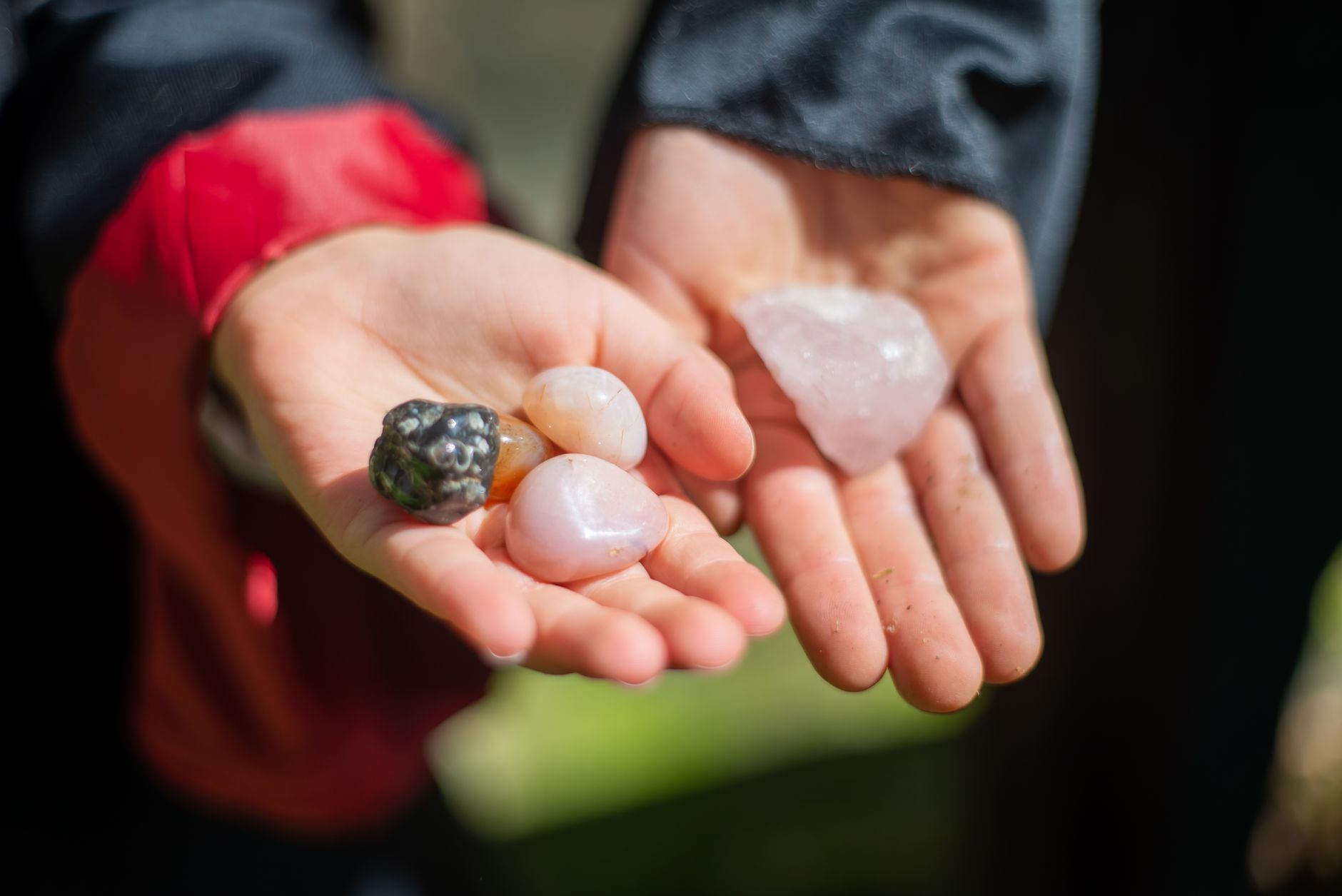
Rockhounding is less about finding rare gems and more about achieving flow through the thrill of discovery and community connection.
Getting started with rockhounding as a beginner involves learning how to search for, collect, and identify various rocks, minerals, fossils, and gemstones in natural settings.
You scout locations, dig or surface-collect, then clean and identify what you find.
Unlike mineral collecting, which often means buying specimens, rockhounding is field-first – the hunt is the point, not just the shelf.
In rockhounding, you physically explore natural sites like rivers or public lands to locate and collect rocks, minerals, fossils, or crystals. You use tools such as chisels, hammers, and sifting screens to extract specimens from the earth, followed by meticulous cleaning and research to identify and prepare your finds at home.
Rockhounding fosters a flow state through focused concentration on geological identification, providing instant feedback from successful discoveries, which leads to a sense of accomplishment and novelty. Engaging with nature and the thrill of the hunt combats boredom by promoting skill-building, social belonging through community connections, and creative expression in curating collections.
You think rockhounding is just for retirees in sun hats, idly collecting pebbles. Maybe it's for those with too much time and not enough Netflix. That assumption keeps you from one of the most engaging outdoor skills out there.
Marcus started exploring the Mojave with a $12 field guide, no real plan. Six months later, he was reading satellite maps to identify formations before even arriving, planning routes where volcanic meets sedimentary layers.
He didn't become a geologist—he shifted his perception. Every time he steps outside, he sees the world differently.
Now, what's crucial are the basics you need to start—and it's not a long list.
Rockhounding videos can be misleading. They make it seem like rocks are just waiting to be picked up. In reality, they are, but spotting them isn't as easy as it looks. It's not just about seeing, it's about training your eyes.
Beginners often find themselves staring at the ground, feeling unsure. You might expect colorful rocks and obvious finds. Instead, all the rocks look the same. Everything seems to blend together, and wet rocks can be deceiving.
Your first few trips are about carrying everything. Twelve pounds of mostly concrete chips presenting your untrained eye. By the next week, you might start leaving some behind but without a clear idea of what's truly valuable.
Eventually, you'll find that one interesting rock. That's when you realize that the experience revolves around those moments of discovery. Soon, you won't see the ground the same way again, ever.
Always bring a spray bottle. Dry rocks hide what matters: their color, shine, and see-through qualities. Water reveals in seconds what could save you from a disappointing find. That quartz chunk might secretly be chalcedony, or just plain trash.
Don't quit because it's boring or confusing.Every pro started from the same spot, facing piles of identical-looking rocks. It's about persistence and knowing when to lean into your curiosity.
When to start: Early morning
Duration: 1.5 hours
Cost to try: $10
Success criteria: If you bring home 5 labeled finds from an exposed rock or riverbank and correctly identify at least 2 with your guidebook, do session 2.
Everywhere you look, there's something that could be interesting. But without a plan, you'll end up with a heavy load of common rocks.
Focus on one rock type per trip. Decide on granite, quartz, or fossils before heading out, and only collect those.
Rockhounds often assume any open area is good for collecting, only to face access issues on private or protected lands.
Check legality before you set out. Use the USGS Mineral Resources Data System and your state's BLM maps to ensure you're legal.
Don't assume softer rocks are worthless. Calcite might not be hard, but it can still be valuable.
Bring more than just a hardness kit. Include a streak plate to evaluate both hardness and color.
The speed of acids might tempt you, but they can ruin sensitive specimens if used incorrectly.
Start cleaning with gentle methods. Use warm water and a soft brush first, then assess what chemicals might be safe.
It's tempting to stick to the easy paths, but that's not where the best finds are.
Head to where rock types meet. These edges, pinpointed on geological maps, often yield the richest discoveries.
Rockhounding thrives in places where the earth is exposed: road cuts, dry creek beds, abandoned mines, national forests, and BLM land offer potential discoveries.
Our venue guides give detailed breakdowns for desert locations, riverbeds, and more on public land.
Mention you're a beginner at these meetings, and you'll likely receive an invitation to join a field trip and expert guidance.
This is the classic rockhound experience. You're on the hunt for minerals like quartz, calcite, and feldspar based on their crystal structure and chemistry. Beginner-friendly and cheap — a field guide and a hand lens get you started.
Targets include garnets, sapphires, tourmaline, and topaz. Discoveries are rare, but finding a cuttable gem offers a unique reward.
More than just rocks, this involves understanding sedimentary rocks where fossils are found. Great for those intrigued by history and paleontology.
It involves a pan and a creek with placer deposits. Similar in mindset to rockhounding, but offers a meditative experience that digging doesn't. Ensure legal access to rivers before traveling.
Requires a metal detector on dry lake beds to find rare meteorites. Ideal for those with mineralogy skills seeking a difficult, out-of-this-world puzzle.
Technical Diving lives in the same world — different mechanics, similar appeal.
A close neighbor worth considering: Shelter Building.
Some of the same instincts show up in Mushroom Foraging — worth a look if this clicked.
Lithological pattern recognition is what actually elevates your prospecting game. It's the ability to look at exposed rock faces, streambeds, and tailings and instantly grasp why minerals form in specific places—not just where they've been found before.
Reading the location is key. Know that quartz veins cross-cut host rock predictably. Understand jasper gathers in alluvial benches above waterlines. Avoid chasing others' tips; develop your own insights.
"Played-out" sites become solvable puzzles when you understand lithological patterns. Others may have cleaned out the obvious materials, but you can see the crucial structural logic they overlooked.
Without this skill, you're stuck relying on other people's directions. Every new site is a fresh start until you learn to see the patterns yourself. Master it, and every site adds to your growing knowledge.
Four sessions in a month. Two half-day field outings and two hours at home sorting and researching your finds in between.
Rockhounding isn't one thing. The outdoor hunt differs entirely from the quiet work at home identifying your finds. Disliking one doesn't mean you'll dislike the other.
When you're distracted by what else could be out there, even outside your sessions, you've caught the bug. Build a local site list and invest in a field guide for the region. This is the hobby that captivates you.
If sessions felt okay but didn't linger in your mind, try two different locations next. The thrill is in the variety. A dull gravel bar doesn't predict your interest in a volcanic ash deposit just a bit further away.
Watching the clock while out there means something. Rockhounding thrives on a natural curiosity. There are no trophies to push you through days when conditions are tough and rewards come slow.
When you unconsciously pick up rocks during regular walks, that's the sign. It's not obsession—it's attention. This reflex keeps the hobby alive when conditions are tough and treasures scarce.
For ideas that take five minutes instead of five weeks, see things to do when you're bored.
You'll need basic tools like a geologist's hammer, chisel, magnifying glass, and a backpack to carry specimens. Many beginners start with just a hammer and field guide to rocks and minerals. Protective eyewear and gloves are also recommended to stay safe while breaking rocks.
Most beginners find their first specimen within 1–2 hours of searching at a productive site. Success depends on location and your knowledge of what to look for—popular rockhounding areas are usually rich with finds. Patience and persistence matter more than time spent.
No, rockhounding is accessible to beginners, though identifying specimens takes practice. Start at well-documented sites with guides that show you what to expect, and consider joining local rock clubs to learn identification techniques. Most people develop competence within a few outings.
Basic startup costs range from $30–$100 for essential tools like a hammer, chisel, and field guide. If you want higher-quality tools or specialty equipment, you can spend more, but you don't need to invest heavily to begin. Many areas offer free or low-cost rockhounding sites.
Rockhounding is the active process of searching for and extracting rocks and minerals from nature, while rock collecting is gathering and displaying specimens. Rockhounding emphasizes the outdoor exploration and discovery experience, whereas collecting focuses on cataloging and preservation.
Public lands like national forests, Bureau of Land Management areas, and designated rockhounding sites typically allow collecting. State and national parks usually prohibit removal of rocks without permits, so always check local regulations before heading out. Many rock clubs maintain lists of legal collecting sites in your area.