BoredomBusted — Find Your Next Favorite Thing To Do
Discover hobbies, activities, places, and ideas that spark joy. Whether you're looking for something creative, active, social, or relaxing, BoredomBusted helps you find your next favorite thing to do.
Browse our hobby guides, things-to-do collections, and place ideas to never be bored again.
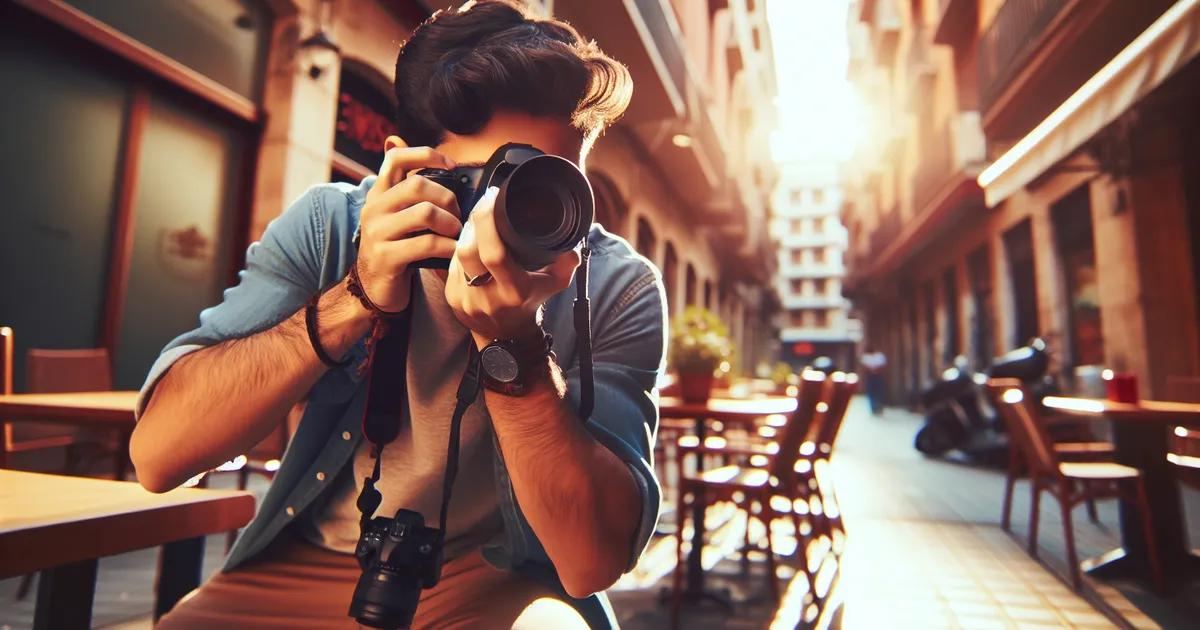
Street photography isn't about capturing strangers but about seizing fleeting moments that vanish in seconds; your anonymity is key to seeing what others miss.
Getting started with street photography as a beginner involves embracing spontaneity and the art of capturing unfiltered moments in everyday life – no staging, no permission, no setups.
You walk, observe, and shoot what's actually happening.
Unlike travel photography, the subject isn't the place.
Unlike portrait photography, the subject rarely knows you're there – and that tension is exactly the point.
Street photography involves carrying a camera while walking through urban spaces, capturing candid moments and everyday scenes without staging or directing subjects. Practitioners maintain visual awareness, making rapid decisions about framing and composition as they encounter spontaneous events. This practice integrates photography into daily routines, turning commutes and errands into opportuni…
Street photography induces a flow state through consistent routines and spontaneity, immersing practitioners in the moment and reducing decision fatigue. The novelty of each walk offers continuous engagement, while high-volume practice facilitates skill development and immediate feedback. This approach encourages curiosity about familiar environments, transforming the mundane into a source of per…
You think street photography is about sneaking photos of strangers. Maybe you picture some guy in a trench coat lurking near a café, hoping nobody notices him. That assumption keeps most people from trying this — and misses the essence of the craft.
Street photography isn\u0027t about people – it\u0027s about moments that won\u0027t exist in five seconds. A shadow cutting across a wet sidewalk. A kid mid-laugh before they see you looking. The "stranger danger" anxiety disappears fast, because the best shots are rarely close-ups of faces. Geometry, light, coincidence – that's the real subject.
It\u0027s one of the few hobbies where being a nobody in a crowd is actually your advantage. The less you stand out, the more you see. A photographer named Vivian Maier shot over 100,000 images across Chicago and New York – mostly while working as a nanny. She wasn\u0027t hunting people. She was paying attention to a world everyone else was walking past without seeing.
That shift – from "taking photos of strangers" to "noticing what everyone else ignores" – changes how you hold the camera. And it changes what gear you actually need to get started.
Street photography often appears effortless in videos. Raise the camera, capture a perfect moment, and done.
Your first shoot is different. Heart pounding. Camera aimed at strangers. You hover on a corner, capturing pavement. Eighty photos later, nothing holds meaning.
About a month in, sessions begin to change. Initially, you'll wander for an hour and snap hardly at all, feeling certain you need new gear.
By the second week, shots come from too far away, and they appear as timid as you feel. In week three, a photo unexpectedly works, but you don't know why.
Entering the fourth week, you notice compositions before lifting the camera. This shift stays.
You'll feel the urge to quit by week two. No keepers. Strangers notice you. Your camera feels enormous. This isn't failing—it's when most people stop, leaving space for those who push forward to gain rapidly.
Next, let's talk about common mistakes that can keep you in that frustrating early stage longer than necessary.
When to start: Early morning
Duration: 1 hour
Cost to try: $0
Success criteria: If you capture 5 candid photos with at least 1 clear decisive moment and note what drew you to each shot, do session 2.
Beginners often choose telephoto lenses to stay unnoticed. This turns every photo into something that feels more like surveillance than art.
Get within 10 feet of your subject and shoot quickly. Don't let hesitation make your images less genuine.
The hunt for the perfect shot drives many to constantly change locations. This never gives a scene enough time to reveal itself.
Stay put in one spot for at least 20 minutes. Let the scene evolve naturally as light and people change.
Dramatic effects like high-contrast black and white might seem appealing. But they often lead to gritty noise rather than the desired texture.
Dial back the contrast until it looks flat on your phone. It will appear balanced and clear on most other screens.
Asking permission changes candid moments into staged ones, often resulting in posed smiles rather than natural interactions.
Capture first in legal public areas. Approach later if you wish to share or converse.
While attractive settings can lure photographers, they often result in lifeless photos. Vibrant street photography comes from people, not backgrounds.
Shoot where people pause or gather, like markets or bus stops. These places naturally create unplanned moments.
Street photography thrives wherever people gather. Markets, transit hubs, protests, and festivals are all rich with opportunities. Even the quietest corner can suddenly become a scene.
Consider urban exploration, travel photography, and documentary photography for similar environments.
Meetup.com is often where street photography groups organize their walks. Search for "street photography" and your city to find active groups.
Flickr groups can be useful too. Look for groups with your city name and "street photography" to see what local photographers are capturing.
Instagram can be a goldmine. Try searching for #YourCityStreetPhotography. Sending a DM to an active poster can quickly cut through the noise.
The Photographic Society of America's directory at psa-photo.org lists collectives. Check for clubs running street photography activities in your area.
National licensing or rankings don't exist, as community drives street photography. Locals often have the best insights into etiquette and approaches.
With no color to rely on, shadows, contrast, and texture take center stage. This format demands strong compositions.
Ideal for those new to street photography who want to master light and composition.
Most cameras let you convert from color to black and white with no extra expense.
Low-light scenes featuring neon signs or streetlights present a unique challenge and mood. This is different from daytime storytelling.
For photographers ready to experiment with exposure and create a cinematic aesthetic.
Invest in a lens with a wide aperture (f/1.8 or faster); expect to spend $150–300.
Ask strangers for permission to capture them, allowing for more intimate shots than candids provide.
Perfect for those who prefer to engage with their subjects rather than shooting unnoticed.
Focus on a community or location over time, building a full photographic narrative.
Great for storytellers interested in chronicling change or capturing culture.
Use negative space and clean lines. Wait for perfect alignment of one subject against a sparse scene.
Suited for patient artists who value quality over quantity, favoring strong individual images.
Another variant that pulls from the same roots is Spatial Design.
Some of the same instincts show up in Memoir Writing — worth a look if this clicked.
Some of the same instincts show up in Poetry Writing — worth a look if this clicked.
Most beginners focus on gear and timing. They try to get as close as possible. But they're tackling the wrong issue.
The real hurdle is learning to see the scene before you raise the camera. This skill is called pre-visualization: imagining the final shot—the light, background, human element—before anything unfolds before you. Choose your spot, set your exposure, and patiently wait for the action to fill your frame.
Anticipation changes everything. You'll stop appearing as if you're chasing moments, which influences how strangers interact with you. Without this skill, you'll capture sharp but flawed images: like a great expression next to a garbage bin, or a decisive moment intersected by a telephone pole.
One method to sharpen your pre-visualization skills is to remain still for 20 minutes without taking a photo. This exercise forces you to observe light, backgrounds, and traffic patterns. Only raise the camera once you have a clear idea in mind. Select your backdrop first, such as a wall, doorway, or pool of light, and frame it empty. Then wait for a subject to complement it.
Study one photo from Vivian Maier or Saul Leiter each day. Reverse-engineer their process to understand their vantage points and what they anticipated before capturing the moment.
Eight sessions over 30 days. That's about twice a week — just enough to ease past the initial nerves.
Street photography demands practice in quick succession. Facing the anxiety of approaching strangers and the awkwardness of using a camera publicly gets easier with frequency. But it fades if sessions are too spread out.
If you find yourself spontaneously grabbing your camera because the light catches your eye, that's your signal. Something about street photography is drawing you in even when it wasn't the plan. That pull means it's time to start refining your technique.
If the sessions left you feeling neutral and you didn't feel any special thrill, maybe the broader world of photography, not specifically street, is your calling. Consider exploring different styles or environments before putting down the camera.
If it felt like you forced yourself out there each time, that's valuable information. It's a clear sign that this hobby doesn't align with your interests. Focus your energy elsewhere where it feels right.
You're walking to work and notice compositions everywhere. A coat against a wall, a conversation at a bus stop — if you're subconsciously framing shots, you're thinking like a street photographer.
Living in a sparsely populated area means less constant visual stimulation. The feedback loop breaks here, making spontaneous street photography difficult.
Frequent driving to locations undermines the immediate captures that street photography thrives on.
Distress from public exposure isn't just first-timer nerves. If it's genuinely overwhelming, street photography might not suit you.
Looking for something lighter? Our boredom-busters guide is built for exactly that.
You can start with any camera—a smartphone, point-and-shoot, or DSLR all work equally well. Street photography is about timing and composition, not gear; focus on mastering observation and framing before upgrading equipment.
In most countries, photographing in public spaces is legal, but laws vary by location. Always research your local regulations, and be respectful of people's comfort; if someone objects, respect their wishes and move on.
You'll start capturing compelling moments within weeks of regular practice, but developing a strong eye typically takes 6–12 months. Consistency matters more than duration—shooting frequently builds instinct faster than sporadic attempts.
Golden hour (early morning or late afternoon) provides the most flattering light, but great street photography happens anytime. Overcast days offer soft, shadowless light, while harsh midday sun creates dramatic contrast—experiment to find what suits your style.
Blend in by dressing casually, keeping your camera ready but unobtrusive, and shooting from a natural distance. Develop spatial awareness to anticipate moments before they happen; most candid subjects never notice because you capture authentic moments, not posed ones.
Basic editing skills help—learning to adjust exposure, contrast, and cropping will improve your final images significantly. You don't need advanced techniques; focus on clean, minimal edits that enhance the moment without overwhelming it.