BoredomBusted — Find Your Next Favorite Thing To Do
Discover hobbies, activities, places, and ideas that spark joy. Whether you're looking for something creative, active, social, or relaxing, BoredomBusted helps you find your next favorite thing to do.
Browse our hobby guides, things-to-do collections, and place ideas to never be bored again.
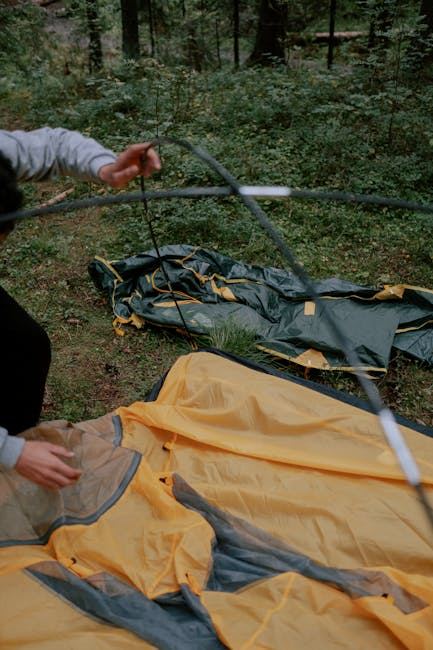
Tent camping isn’t the struggle you think — it’s actually the quickest reset for your overstimulated brain and a chance to master outdoor skills.
Getting started with tent camping as a beginner is an enriching way to connect with nature and experience the outdoors. You pick a site, pitch a tent, and live outside for a night or a few days.
Unlike car camping with a rooftop setup or backpacking with a 40-lb pack, tent camping sits right in the middle: accessible enough for beginners, but real enough to feel like an actual break from everything.
Tent camping involves selecting a campsite, unpacking gear, and physically setting up a tent by staking it and extending poles. You arrange your sleeping area, gather firewood or set up a stove, and engage in activities like cooking over a fire, slacklining, or whittling wood. Evenings are spent around a campfire roasting marshmallows, playing games, and exploring nearby trails, culminating in sl…
Tent camping combats boredom by introducing novelty through unpredictable elements in nature, fostering a flow state via skill-intensive tasks that provide immediate feedback, and creating a sense of accomplishment from mastering practical skills like tent setup or foraging. It also enhances social belonging through collaborative campfire activities that promote connection and shared experiences.
You think tent camping is roughing it. Sleeping on the ground, eating bad food, swatting bugs until you give up and drive home – that's the version most people are picturing when they say "not for me."
That assumption is doing a lot of work. And it's wrong in a specific way.
A friend who'd never camped once went out for a single weekend in October with a borrowed sleeping bag rated to 20°F. She came back and bought her own kit within a week – not because it was comfortable the whole time, but because nothing else had made her feel that awake in years.
No signal.
No inbox.
Just cold air and a sleeping bag that actually worked.
That feeling doesn't happen by accident – the gear, the site, and the first night are all easier to get right than you'd expect, and that's exactly what the next section covers.
Camping looks peaceful in every photo you've ever seen. Nobody posts the 2am realization that their sleeping pad is slowly deflating, or the way a rainfly improperly staked sounds like a snare drum for six hours straight. The gap between watching someone's campfire reel and lying awake in a 40-degree tent wondering where it went wrong is significant.
The fantasy runs something like this: romantic fire, starry silence, deep sleep under the trees, waking up refreshed. The reality of the first trip usually runs closer to smoke in your eyes, every twig audible through a thin pad, hip bones on hard ground, and leaving earlier than planned. Neither version is the whole story — but only one of them shows up in the gear ads.
The first night is mostly a cataloguing exercise — every item you forgot announces itself by 9pm. The second trip sleeps better, but the camp kitchen is still a chaotic disaster you didn't see coming. By the third or fourth outing, the setup routine stops feeling like a problem to solve and starts feeling like a place to settle into.
Cold. Uncomfortable. Slightly miserable at 4am. None of that makes you want to stop — it makes you want to figure it out. That's the entire reason people are still doing this decades in.
Stake your rainfly taut and angled away from the tent body, even if the sky looks completely clear. If the fly sags inward and touches the inner tent wall, condensation will soak your sleeping bag by morning — and no forecast warns you about that one. The next section covers the mistakes that keep people stuck in the frustrating half longer than they need to be.
When to start: Early morning
Duration: 2 hours
Cost to try: $0
Success criteria: If you set up your tent, sleep bag, light, water, and snacks, then sit inside for 20 minutes with everything reachable, do session 2.
You're tired, it's getting dark, and the instructions are suddenly a foreign language – this is not when you want to discover you're missing a pole sleeve.
Set up your tent in the backyard before you go, at least once, in daylight.
A sleeping pad isn't just cushioning – it's insulation, and most beginners underestimate how much cold the ground pulls from your body overnight.
Add an R-value rated foam pad underneath your inflatable, even in summer, to block ground chill.
Proximity to a stream or lake sounds idyllic until you're dealing with condensation-soaked gear and mosquitoes by the thousand.
Choose a site elevated slightly above water sources, with natural windbreak but open enough for airflow.
Beginners bring five shirts and forget that temperatures can drop 20°F after sunset – a full outfit change won't fix being cold at 2 a.m.
Pack a dedicated sleep layer – thermal base bottoms and a dry mid-layer – that never gets worn during the day.
It feels fine until it isn't. Wildlife doesn't announce itself.
Keep all food, trash, and scented items – including toothpaste – in a hard cooler or bear canister stored at least 100 feet from your sleeping area.
Tent camping happens anywhere you can legally pitch a stake — national forests, state parks, BLM land, private campgrounds, and designated backcountry sites. Each land type runs its own permit system, so knowing which one you're on before you go saves real headaches.
Going out with a group your first few times closes the learning curve fast. You get a tent setup partner, a spot near the group fire, and someone checking your sleep system before dark — just by showing up and saying you're new. These are the places to find those people.
There's no single governing body for tent camping the way a sport has one. The Leave No Trace Center for Outdoor Ethics (lnt.org) is the closest thing — every group you join will borrow their standards, so reading lnt.org once puts you ahead of half the people on any group outing.
You drive to the site. You unload. Done. No mileage limits on what you bring, no weight penalties for cheap gear.
Car camping is the right starting point if you're still deciding whether you actually like sleeping outside — heavier, cheaper gear works fine, and nothing about the experience requires committing to the hobby long-term.
Backpacking means carrying everything in on your back. Every pound matters, and that pressure pushes gear costs up fast.
A functional setup runs $300–600 minimum. Don't start here if you're still testing whether you like camping — do a few car camping trips first.
Hammock camping swaps the tent for a hammock and tarp system. It's lighter, faster to set up, and genuinely more comfortable if you sleep on your back.
The catch is you need two solid trees close enough to the right distance apart. This works well for solo campers in forested areas who already have the basics down — it's not a first-timer setup.
Winter camping is the same concept with brutally different execution. Cold-weather gear — sleeping bags rated below freezing, insulated pads, full layering systems — costs significantly more.
The margin for error also shrinks considerably. This is where camping stops being uncomfortable and starts being genuinely risky if you underprepare — come in with real experience, not just enthusiasm.
Festival and group camping is less about wilderness and more about a shared base camp — with friends, at an event, or both. Comfort and convenience take priority over backcountry discipline.
It's also one of the lowest-pressure ways to try sleeping in a tent for the first time — there's almost always someone nearby who knows what they're doing.
If this resonates, RV Camping explores a similar direction.
Backcountry Camping is a sibling pursuit and often surfaces the same kind of curiosity.
Beginners obsess over gear – better sleeping bags, lighter tents, fancier headlamps. The gear is almost never the problem. The campsite selection is.
The one skill is reading a campsite before you pitch. Not just "is it flat?" – but scanning for drainage paths, wind direction, morning sun angle, and ground composition before you pull a single stake.
Get this right and you sleep warm, dry, and quiet even in mediocre conditions. Get it wrong and no amount of expensive gear saves you from a 3am puddle under your tent floor or a wind that rattles your rainfly for six hours straight.
Without this skill, every bad trip teaches you the wrong lesson – you blame the weather, blame the gear, and buy more stuff that won't fix it.
Do two overnight trips in 30 days.
Not day hikes. Not car camping with a cabin backup. Actual nights in a tent, with whatever weather shows up.
Two trips is enough because camping's discomfort curve is steep and fast – the second night tells you almost everything the tenth night would.
You keep pausing on campsite photos – not glamping setups, but someone's muddy boots outside a rain-fly in the middle of nowhere.
That specific pull toward the unglamorous version is a stronger signal than you'd think.
If tent camping is still on the table after that honest look, the next section covers exactly what to buy, what to skip, and where to actually go for your first real trip.
If nothing here clicks, our guide to what to do when bored covers shorter, lower-commitment options.
You'll need a tent, sleeping bag, sleeping pad, backpack, and basic cooking supplies like a camp stove and cookware. For beginners, a three-season tent and a rated sleeping bag matching your climate are essential; additional items like a headlamp, water bottle, and first aid kit will make your trip safer and more comfortable.
A basic setup costs $200–$500 for starter gear including a budget tent, sleeping bag, and sleeping pad. If you already own some equipment or borrow from friends, you can start with under $100. Popular camping spots typically charge $15–$40 per night for a campsite.
You can learn essential skills like pitching a tent, building a campfire, and basic camp cooking in a single day. Most beginners feel confident on their first overnight trip, though comfort and efficiency improve significantly after a few outings.
Tent camping is beginner-friendly and doesn't require special skills or extreme fitness. Start with car camping at established campgrounds where amenities are nearby, then gradually progress to more remote or backcountry trips as you build confidence.
Spring and fall offer mild temperatures and fewer insects, making them ideal for most beginners. Summer is popular but can be crowded and hot; winter camping requires specialized gear and experience.
Always tell someone where you're going, bring a fully charged phone and first aid kit, and follow campground rules about food storage to avoid attracting wildlife. Choose well-established campgrounds your first few times, and check weather forecasts before heading out.