BoredomBusted — Find Your Next Favorite Thing To Do
Discover hobbies, activities, places, and ideas that spark joy. Whether you're looking for something creative, active, social, or relaxing, BoredomBusted helps you find your next favorite thing to do.
Browse our hobby guides, things-to-do collections, and place ideas to never be bored again.
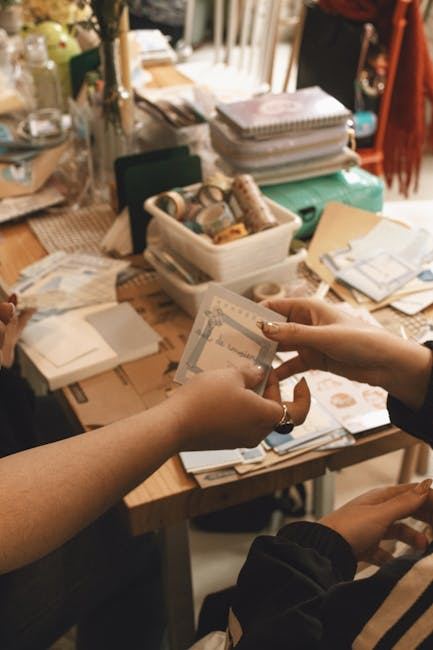
Scrapbooking isn't just about memories; it's a hands-on therapy that brings instant gratification and deep social connections.
Getting started with scrapbooking as a beginner involves learning how to creatively preserve personal photos and memories in beautiful album layouts.
You arrange materials on pages, then layer in backgrounds, stickers, and journaling to build a visual story.
Unlike journaling or photo albums, it combines memory-keeping with hands-on design – every page is a small creative project, not just a place to store pictures.
In scrapbooking, you gather personal photos and memorabilia, select a theme, and arrange these elements on acid-free pages using adhesives and embellishments to create artistic layouts that tell your story.
Scrapbooking promotes creative expression and induces a flow state through immersive, hands-on activities, providing immediate visual feedback, a sense of accomplishment, and social belonging during collaborative sessions.
You think scrapbooking is something your aunt does with floral scissors and a hot glue gun. Decorative. Nostalgic. Harmless.
You're here because you're bored – not because you want a craft cabinet that smells like rubber stamps.
Scrapbooking changes how you see space and time. Every layout is a design decision about hierarchy and contrast, guiding the eye with intent. It's a way to compress memories, turning moments into distilled stories that define their meaning, not just their occurrence. The ones who keep scrapbooking aren't just into paper; they find themselves telling stories with intention.
A photographer unexpectedly transforms through scrapbooking. Instead of succumbing to sentimentality, she sees photography differently. Laying out a page teaches her that negative space isn't emptiness—it's emphasis. In just two months, her camera work evolves with this newfound understanding.
The real question isn't whether this hobby is "for you." It's what skill you're willing to build inside it – and that's exactly where most beginners go wrong on day one.
Scrapbooking videos make it look easy. Clean paper trims, perfect photo placement, and pages coming together in minutes.
Your first session is not like that. Expect a table littered with scraps, a few layouts you've scrapped, and a paper cutter you're unsure how to handle. It's all part of the process.
The gap between inspiration and creation is real. You'll end with a page that might be crooked and overstuffed, but it's yours.
Too many supplies, unclear vision, and mismatched pages are typical. This phase is universal for scrapbookers. It's not about more tools — it's about making more pages.
Avoid rookie mistakes.** Start with one 12x12 paper pad in a cohesive color palette. This limits clash and cuts down on frustration.
When to start: Morning
Duration: 1 hour
Cost to try: $20
Success criteria: If you finished without worrying about perfection, do session 2.
The craft store can overwhelm you with options. Many beginners feel like they need everything. Start slower.Buy just one pack of 12x12 cardstock, patterned paper, and photo adhesive. Create your first three pages before adding anything else.
Centered photos look tidy but lack excitement. Without movement, your eye just stalls.
Position your main photo off-center. Try letting one edge bleed toward the page border, then balance it with an embellishment on the opposite side.
New stickers beg to be used all at once, as if leaving some out is wasteful.
Limit yourself to three embellishments per page. Treat empty space as part of the design, not just something to fill.
It seems cheaper to print photos on copy paper, but it doesn't last.Cheap paper warps under adhesive and ink fades quickly.
Invest in matte or glossy photo paper at least 60 lb weight. Don't cut corners here.
Photos seem enough by themselves, and handwriting can feel too informal.
Add one sentence about the emotion of the moment, not just the event. In ten years, feelings are what you'll want to remember.
Scrapbooking comes to life at craft studios, community centers, and in people's living rooms. Sometimes, all in the same week.
Michael's and JOANN stores host crop nights. People gather to spread out and create pages together.
Start by searching Facebook Groups for "scrapbooking crop [your city]" or "memory keeping [your state]." Active groups regularly post crop dates.
Check Meetup.com using "scrapbooking" or "paper crafting." In smaller cities, search under the craft umbrella.
Use Cricut and Stampin' Up demonstrator locators on their sites. Demonstrators often host or know about local crops.
Visit the Scrapbook & Cards Today site. Their community forum lists regional groups you won't find in a general search.
Scrapbooking doesn't have a national governing body. The community runs through local stores and Facebook. Walk into a crop and say: "I've never cropped before – I have basic supplies, but I don't really know what I'm doing yet."
That line will get you chatty seatmates, handy tips on necessary tools, and maybe a few sample adhesives before the night ends.
Create pages using Photoshop or Canva. Everything's undoable, resizable, shareable. Ideal for those avoiding clutter.
No cost if you have a computer.
Slide photos into pocket pages. Don't worry about layouts or adhesives. It's a quick start, perfect for beginners.
Begin with a $20–$40 starter kit, no decision fatigue.
Junk journaling favors collage with book pages, envelopes, and magazine scraps. Best for art lovers, not memory keepers.
Mini albums are like standard scrapbooking but smaller. Scope is focused on one event or trip. Great for those who struggle to finish a 12×12 layout.
Traveler's notebooks combine a journal, scrapbook, and daily carry. For those documenting life now, not reconstructing it later.
More like journaling than scrapbooking.
A close neighbor worth considering: Candle Making.
Visual Novel Writing is a sibling pursuit and often surfaces the same kind of curiosity.
Readers who enjoy this often gravitate toward Screenwriting next.
Most beginners get lost in picking paper colors and sticker sets, thinking better supplies are the answer.
They're optimizing for shopping, not the actual craft.
Visual anchoring is the real skill. Choose one dominant element per page and intentionally downplay everything else.
Every decision becomes simple: does it enhance the anchor?
Pages without a visual anchor feel cluttered, leaving you clueless and shopping for solutions.
With an anchor, even minimal elements can look polished.
Choose your anchor before grabbing supplies. It could be a photo or a title.
Write it on a sticky note as a constant reminder while building.
Review past layouts; check what your eye focuses on first. Multiple visual points? No anchor.
Limit yourself to one patterned paper per layout to practice "one loud, everything else quiet."
Commit to 6 scrapbooking sessions over 30 days. Spread these out to roughly one and a half sessions per week to see if the hands-on pace truly suits you.
If you're constantly planning your next layout—thinking about photos and arrangements—it's not forced enthusiasm. You're genuinely invested. Start creating a small toolkit and choose a real project to dive into, like documenting a trip or a specific year.
If each session ends with no urge to return, the idea excites more than the practice. Try two additional sessions focused on a topic you care about. If things remain unchanged, it's okay to let it go.
If cutting and arranging felt like a chore, trust that feeling. A need for faster feedback, more physical activity, or a more interactive process indicates scrapbooking isn't your match.
Feeling a subtle sense of guilt over disorganized keepsakes? That's a clear sign scrapbooking might relieve that tension and feel rewarding.
You can begin with basic supplies for $20–$50, including a scrapbook, glue, scissors, and cardstock. As you progress, you might invest in specialty papers, embellishments, and tools, but starting simple keeps costs low and lets you build your collection gradually.
Essential supplies include a scrapbook or cardstock, adhesive (glue stick or double-sided tape), scissors, a pen, and your photos or memorabilia. Optional but popular additions are decorative paper, stickers, stamps, and markers to personalize your pages.
A basic page typically takes 30 minutes to 2 hours, depending on complexity and how many embellishments you add. Once you develop a style and workflow, you'll work faster, though creative pages with intricate designs may take longer.
Scrapbooking is very beginner-friendly—there's no right or wrong way to arrange photos and memories. Start with simple layouts and gradually experiment with different techniques, styles, and decorative elements as you gain confidence.
Traditional scrapbooking involves physical photos, papers, and adhesive on printed pages, while digital scrapbooking uses software to create pages on a computer. Both preserve memories, but traditional scrapbooking offers a tactile, hands-on experience, whereas digital is easier to edit and share.
Use acid-free paper, adhesives, and storage materials to prevent photo fading and deterioration. Store your completed scrapbooks in a cool, dry place away from direct sunlight, and handle pages with clean hands to avoid oils and fingerprints damaging your work.