BoredomBusted — Find Your Next Favorite Thing To Do
Discover hobbies, activities, places, and ideas that spark joy. Whether you're looking for something creative, active, social, or relaxing, BoredomBusted helps you find your next favorite thing to do.
Browse our hobby guides, things-to-do collections, and place ideas to never be bored again.
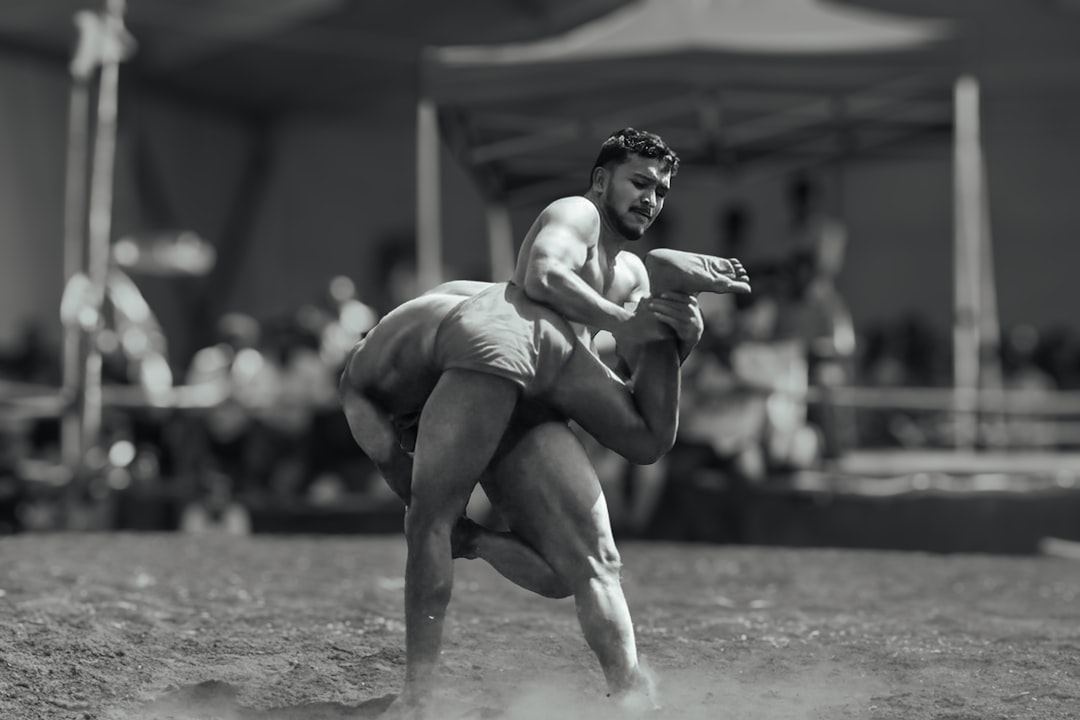
Many think wrestling is purely aggressive, but it actually emphasizes discipline, control, and community support for beginners.
Learning wrestling as a beginner can be an incredibly rewarding experience that combines strategy with physical skill, focusing on throws, pins, and takedowns — and it rewards chess-level thinking as much as raw strength.
You read your opponent, set traps, and control position. The physical conditioning is real, but the athlete who wins is almost always the one who reacts faster mentally.
That combination — body and brain working together under pressure — is what keeps wrestlers coming back. No two matches ever play out the same way.
In wrestling, you engage in a mix of drilling techniques, live resistance training, and conditioning. Typical activities include practicing stances and movements, executing takedowns, engaging in hand-fighting, and performing mat wrestling techniques. Sessions often feature situational sparring and partner drills that focus on specific skills and body mechanics, allowing for continuous movement a…
Wrestling induces a flow state by providing clear goals, immediate feedback on performance, and a challenge-skill balance tailored to your level, keeping you fully engaged and present. The constant need to adapt to different partners and situations fosters creativity and problem-solving, while rapid skill feedback helps maintain motivation and a sense of competence.
You picture wrestling as two people trying to hurt each other. So you assume it selects for aggression — that the sport rewards whoever wants it more violently.
That assumption gets the sport exactly backwards. Aggression without technique gets you pinned in thirty seconds — every wrestling coach will tell you this on day one. Kyle Dake, four-time NCAA champion at Cornell, is known for a style built almost entirely on timing and leverage, not power. He routinely outworked bigger, stronger opponents by being technically cleaner.
What wrestling actually trains from the start:
Beginner rooms reflect this. Coaches scale drilling to skill level, and most clubs pair new wrestlers with training partners instructed to go slow and correct form — not to win. The environment is deliberately controlled because sloppy, aggressive wrestling produces injuries, not better wrestlers.
No gear.
No experience.
No prior athleticism required.
The only thing you actually need on day one is the willingness to be uncomfortable while you learn — which is true of every physical skill worth having. That brings us to what the first few sessions realistically look like.
Your first session will feel like your brain and your body are running different software. You're trying to remember where your feet go while someone is actively disrupting your balance. Your hips won't move the way the coach demonstrates. Your stance collapses the moment you feel resistance. The coordination gap between watching a technique and executing it under even light pressure is genuinely shocking to most beginners.
The part nobody warns you about is the hand-fighting. Before any takedown happens, wrestlers battle for grip and position — wrists slapping, arms framing, constant small adjustments. It looks minor from the outside. Beginners almost always skip past it mentally and get frustrated when their takedowns fail, not realizing the entry was already lost in the hand-fight. That invisible layer of the sport takes weeks just to notice, let alone address.
Conditioning will also catch you off guard — even if you consider yourself fit. Wrestling uses muscles in sustained, unfamiliar ways. Five minutes of live drilling will gas people who run regularly. Your cardiovascular system adapts faster than your technique does, so the exhaustion is temporary — but the technique gap lingers much longer. Expect to feel genuinely tired and genuinely lost at the same time for the first few weeks.
None of that means you're doing it wrong. Drilling the same stance and movement patterns until they stop requiring conscious thought is the whole job early on. Small repetitions compound fast in wrestling. Most beginners start feeling the first real click — where a technique lands cleanly without thinking — somewhere between sessions four and eight. Getting there without burning out first comes down to avoiding a handful of specific mistakes that almost every new wrestler makes.
When to start: 8am
Duration: 1 hour
Cost to try: $0
Success criteria: If you can hold a balanced wrestling stance, shoot cleanly on command, and circle 30 seconds without crossing your feet, do session 2.
Most beginners spend weeks researching wrestling before they ever show up to a room. They watch highlight reels, read technique breakdowns, and convince themselves they need a foundation first. Wrestling cannot be learned off the mat — the sport lives entirely in physical feedback you only get from a real partner.
Show up to your first open practice before you feel prepared. Tell the coach it's your first day. Every wrestling room expects raw beginners — walk-ins are normal, not an imposition.
New wrestlers instinctively resist during partner drills. Someone shoots a takedown on you and your body tenses up to stop it. That reflex feels productive — it doesn't feel like quitting. But fighting your partner during drills is exactly how you slow your own progress down.
Drills exist to build muscle memory, not to simulate competition. Let the technique happen, feel how it works on your body, and ask questions after.
Beginners want to learn takedowns. So when a coach spends twenty minutes on stance and movement, it reads as filler. Every failed takedown in wrestling traces back to a broken stance — it's where all technique starts and collapses.
Treat footwork practice as the most important part of any session. If your club offers movement-only drilling time, prioritize it over sparring. The wrestlers who move well early progress faster than anyone who just collected more moves.
Wrestling is physically intense in a way that surprises most people. A 60-minute session can leave you feeling wrecked for two days. So beginners show up six days a week to accelerate progress — and quit by week three from exhaustion. Your connective tissue and conditioning need time to adapt that your motivation doesn't account for.
Two to three sessions a week is the right starting cadence. Consistency over six months beats intensity over six weeks — every time, in every grappling sport.
You get thrown or taken down repeatedly in live sparring. The person doing it has four years of training on you. That gap reads as failure, even though it's just a gap in experience. Comparing your month-one performance to a seasoned training partner is the fastest way to talk yourself out of a sport you haven't actually tried yet.
Track your own baseline instead. Notice when a stance feels more natural, when you shoot without thinking, when you survive a position longer than last week. Those are the real signals that you're progressing — not whether you can hang with someone who's been doing this for years.
Start with Reddit — r/wrestling and r/amateur_wrestling are both active and genuinely helpful for beginners asking where to train locally.
USA Wrestling maintains a club finder at usawrestling.org that lists sanctioned clubs by zip code. Most clubs listed there welcome adult beginners — not just youth or scholastic competitors.
Dedicated wrestling clubs are the best environment. MMA gyms are a close second — most run a separate wrestling program several nights a week. Brazilian jiu-jitsu academies sometimes carry wrestling-specific classes too, especially on weekday evenings.
Community centers and YMCA locations occasionally host open mat sessions, particularly in regions with active high school programs. Call ahead — these aren't always advertised online.
USA Wrestling hosts folkstyle, freestyle, and Greco-Roman tournaments at the local and regional level throughout the year. Attending even one as a spectator first puts you in direct contact with coaches and club reps. Show up, introduce yourself, and ask which local clubs run open mats — that single conversation usually gets you a training room faster than any search engine will.
Folkstyle and freestyle wrestling are the competitive formats most people encounter first — through high school teams, college clubs, or local tournaments. The ruleset is structured, there are weight classes, and progress has clear external markers.
This path suits you if you want a scoreboard to measure yourself against, not just personal progress. Competition timelines and bracket results give you feedback that drilling alone never quite replicates.
Plenty of clubs run open mat sessions and technique classes with no tournament track. You show up, drill, spar situationally, and get better — without ever cutting weight or registering for an event.
The skill development is identical to the competitive path — you still learn takedowns, positions, and transitions. The difference is that your only benchmark is how you feel on the mat compared to last month.
Many gyms teach wrestling specifically as a base for mixed martial arts. The focus shifts toward takedown defense, cage work, and transitioning into dominant ground positions — skills that translate directly into a fight context.
This version suits someone who wants grappling proficiency as part of a broader combat sports education rather than wrestling as a standalone pursuit. The conditioning crossover is enormous.
Wrestling conditioning sessions — sprawls, level changes, explosive shooting drills — are brutal cardio in disguise. Some athletes come from other sports specifically for this, using wrestling rooms as their off-season training environment.
You get the physical output of an elite conditioning program and pick up functional movement skills along the way. The wrestling technique is a bonus rather than the primary goal.
Wrestling has a deep youth and scholastic infrastructure. Adults with some mat experience regularly transition into assistant coaching roles at middle schools, high school clubs, or youth programs — often without any formal certification required to start.
This path works well for someone whose interest is less about their own athletic development and more about passing the sport on. It also keeps you technically sharp — teaching forces you to understand what you know.
Readers who enjoy this often gravitate toward Krav Maga next.
If the texture of this appeals to you, Kabaddi is built on similar bones.
Kendo lives in the same world — different mechanics, similar appeal.
The skill that separates improving wrestlers from plateauing ones is drilling with intent — repeating a move slowly enough that your body learns the mechanics, not just the motion.
Most beginners drill to finish the rep. They go through the takedown, reset, go again — and wonder why the move never works in live sparring. The issue isn't effort. It's that fast, sloppy reps train your nervous system to do the wrong thing faster.
When you slow a double-leg down, you feel exactly where your hips are lagging or your head is out of position. That feedback only exists below a certain speed — once you rush, you stop feeling and start guessing.
The wrestlers who improve fastest aren't drilling more — they're drilling with a specific body cue in mind on every single rep. One rep focused on hip penetration beats ten reps focused on nothing. That's the actual difference between someone who gets better every week and someone who just accumulates mat time.
Once that habit clicks, live sparring starts making sense in a way it didn't before — and that's exactly where things get interesting.
Give it four sessions over two weeks — roughly every three to four days, so your body has time to adapt between them. That's enough exposure to get past the initial shock and start feeling what the sport actually is.
You finished a session exhausted, possibly bruised, and your brain is already replaying that one takedown attempt that almost worked. That loop — the mental replay, the urge to fix what went wrong — is the clearest sign wrestling has its hooks in you. Start looking at local clubs or school programs for consistent weekly training. The gains in those first three months are steep, and you want structured coaching while your technique is still being built.
You showed up, you worked hard, and you left feeling like you'd exercised — but the puzzle element didn't pull you in. Indifference after four sessions usually means the close-contact format isn't clicking, not that grappling itself is wrong for you. Try one session of judo or Brazilian jiu-jitsu before writing off the whole category — same body-and-brain demand, different rhythm and culture.
Sustained physical contact with a resisting partner is genuinely not for everyone, and dreading the close-quarters aspect every session is a clear signal to redirect, not push through. The strategic and conditioning elements you were after exist in other sports — boxing scratches the tactical itch with far less clinch time, and rock climbing delivers the same problem-solving flow with zero partner contact.
You catch yourself watching match footage at midnight — not to learn anything specific, just because you can't stop. That involuntary pull toward the sport outside of training is the only signal that actually matters.
If wrestling sounds close but not quite right, our hobby list might surface something better suited.
If nothing here clicks, our guide to what to do when bored covers shorter, lower-commitment options.
No, beginners can start at any fitness level and improve over time.
Wrestling is suitable for all ages, with programs available for kids to adults.
Wrestling is generally safe with proper training and equipment, though injuries can occur.
Beginners should aim for 2-3 times a week, increasing frequency as skills develop.
Yes, many clubs offer beginner-friendly competitions to gain experience.