BoredomBusted — Find Your Next Favorite Thing To Do
Discover hobbies, activities, places, and ideas that spark joy. Whether you're looking for something creative, active, social, or relaxing, BoredomBusted helps you find your next favorite thing to do.
Browse our hobby guides, things-to-do collections, and place ideas to never be bored again.
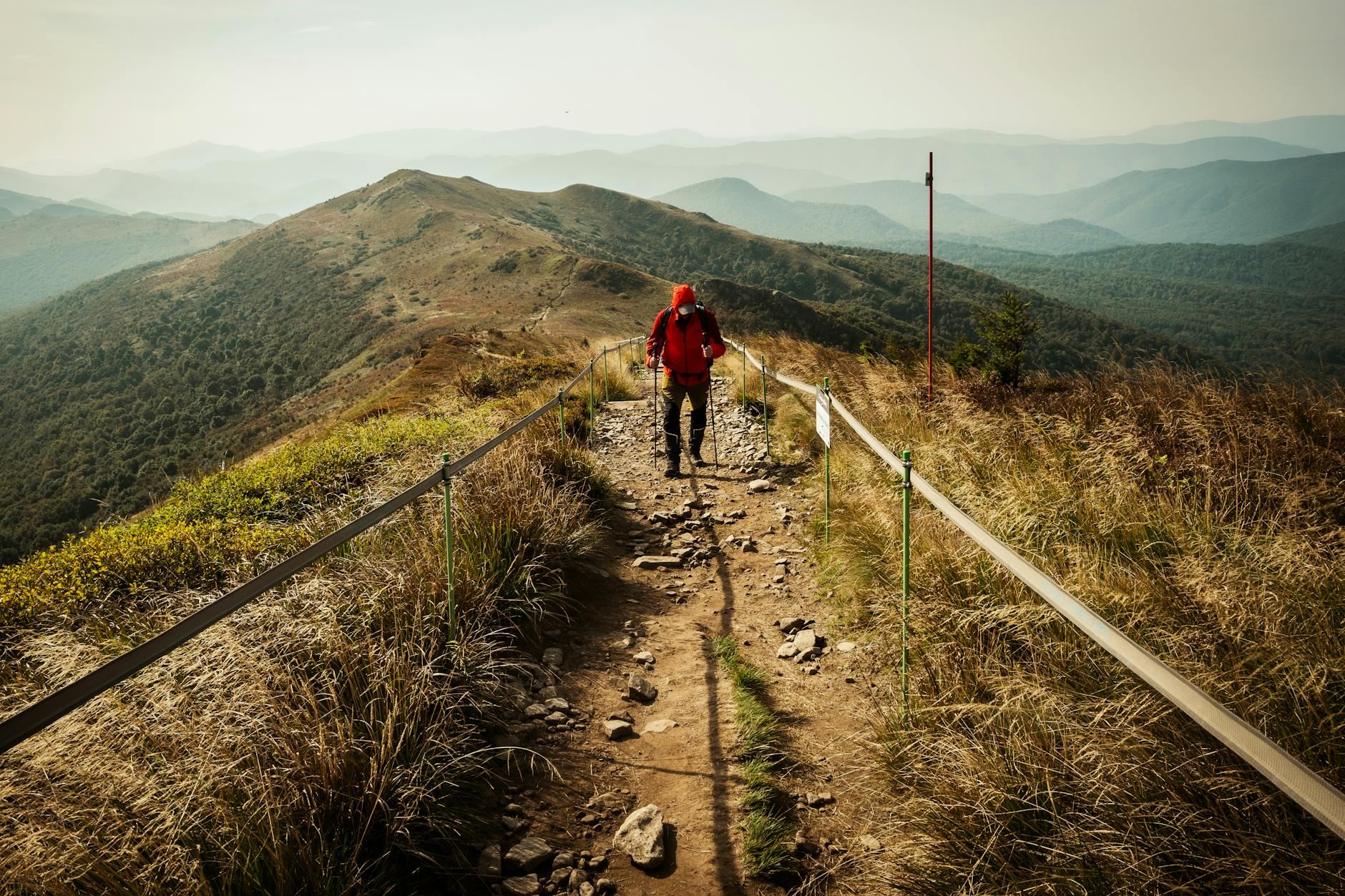
Thru hiking isn't just about mileage but the daily decision to push through discomfort that transforms your relationship with life’s distractions and complexity.
Getting started with thru hiking as a beginner involves understanding the commitment of walking a long-distance trail end-to-end in a single continuous journey, typically over weeks or months.
You carry everything you need and resupply at towns along the way.
Unlike weekend backpacking, there's no basecamp to return to – the trail becomes your actual life until you finish.
Thru-hiking involves trekking long-distance trails like the Appalachian or Pacific Crest Trail for weeks or months, covering 20-30 miles daily while living outdoors. Hikers wake early, pack their gear, trek continuously with planned breaks, and set up camp in the evenings, preparing meals and journaling to reflect on their day.
Thru-hiking induces a flow state through sustained physical challenges that match skill levels, allowing hikers to enter a focused trance amidst nature's variability. The immediate feedback from physical exertion, social interactions within transient communities, and a strong sense of accomplishment from reaching milestones combat feelings of boredom and monotony.
Thru hiking is just... a really long hike. Longer trail, more days, bigger backpack. That's the assumption – and it's almost completely wrong.
A first-time thru hiker named Dana set out to clear her head after a rough year. By mile 200 on the PCT, she wasn't clear – she was uncomfortable in ways she hadn't planned for.
By mile 800, she stopped waiting for clarity and started trusting the next step. That's not a metaphor. That's just what happens when you walk long enough.
The gear, the routes, the resupply strategy – those matter, and we're getting there. But first you need to know what you're actually signing up for.
Watching a thru-hike documentary feels like joining someone mid-stride on a sun-drenched ridge. Your first week feels like you joined mid-stride through wet concrete.
The trail looks cinematic. Your legs feel ready. The pack seems manageable. Then you meet the hip flexors you didn't know existed, blisters in places you didn't expect, and views so beautiful you were too wrecked to photograph them.
Week one, everything hurts more than expected and your mileage is half what you planned. Both things are completely normal — your body is recalibrating, not failing. By week two, your feet start negotiating with you and the pack feels slightly less like punishment.
Week three is where the rhythm clicks. You read terrain better, your morning routine tightens, and you stop dreading the first mile. Week four, you start planning the next trail before this one ends — your brain has accepted that this is just what you do now.
Quit. Rest. Try again.
The hikers who build real trail legs treat rest days as part of training, not a failure of it.
One thing worth knowing before you lace up for session one: hotspots beat blisters. The moment you feel a warm rub — not a blister yet, just heat — stop and tape it. Most new hikers push through it. That's how a Tuesday annoyance becomes a Thursday evacuation.
The next section covers the mistakes that keep people in the frustrating half of that curve longer than they need to be.
When to start: Early morning
Duration: 2 hours
Cost to try: $0
Success criteria: If you finish a 2-4 mile trail with your boots and pack, record one page of trail notes, do session 2.
New hikers study elevation profiles and pack for every scenario — which sounds smart until your base weight hits 35 pounds before food and water.
Check a trail's average conditions by section, not the extremes. Mail cold-weather gear to a resupply point instead of carrying it from mile one.
Trail shoes feel perfect in the store. After sustained daily mileage, your feet can swell a full size. Blisters from a tight toe box will end your hike faster than any weather will.
Buy a half to full size up from your normal fit. Test them on a loaded 10-mile day hike before committing to a 2,000-mile trail.
The trail is exciting, the legs feel fresh, and everyone else seems to be moving fast — so beginners blow past 20-mile days before their tendons have adapted to anything.
Cap your first week at 10–12 miles per day regardless of how good you feel — because tendinitis doesn't announce itself until it's already wrecked your next two weeks.
Beginners calculate total calories correctly but miss the practical reality. You won't want to cook a complex meal at mile 18 when you're wrecked.
Plan resupply boxes around foods with a two-minute prep ceiling. Include at least one item per day you'd actually eat with zero motivation — not just what passes a macros check.
Taking a short or full rest day feels like smart strategy. But hikers who take unplanned zeros early almost always lose their rhythm and burn through budget faster than projected.
Schedule rest days in advance around actual resupply towns with services. Stopping should feel deliberate — not like the trail is already winning.
Thru hiking happens on long-distance trail systems. Think national parks, state forests, and backcountry wilderness areas strung together into multi-day or multi-week routes.
The big three in the US — the Appalachian Trail, Pacific Crest Trail, and Continental Divide Trail — are where most people start planning obsessively.
Every resource below connects you to people already doing what you want to do — not just information about it.
Tell the group you're targeting your first thru hike and ask which training hikes they'd recommend for building up to multi-night carries. That one sentence typically gets you a shakedown hike invitation and a gear check from someone who's already made the mistakes. You'll also walk away with a realistic timeline built on actual trail experience.
You don't hike a trail end-to-end in one shot – you complete it in chunks over months or years.
Best for people with jobs, families, or a 6-month window that simply doesn't exist.
No real gear difference, but you'll pay for more shuttles and trailhead logistics over time.
You start in the middle of a trail, hike one direction to an end, then return to the middle and hike the other way.
It's not a shortcut – it's a crowd and weather management tool that serious hikers use deliberately.
Best for thru-hikers who want to avoid the bubble of 500 people who all started the same week you did.
Same trail, stripped-down kit – base pack weight under 10 lbs, sometimes under 7.
The savings in body fatigue are real.
The upfront gear cost is punishing – expect to spend 2–3x more for significantly less weight.
Best for people who've already done one thru hike and know exactly what they actually use.
Running or run-hiking a thru route with minimal gear and aggressive daily mileage.
This is not a beginner variant – it's a different sport that happens to use the same trails.
Best for trail runners who want multi-day objectives, not hikers looking to speed things up.
Some organizations let you hike while maintaining trail – building, clearing, rerouting.
You move slower and cover less distance, but your food and sometimes shelter costs get covered.
Best for people who want an extended outdoor experience without the full financial commitment of a traditional thru hike.
Some of the same instincts show up in Day Hiking — worth a look if this clicked.
A close neighbor worth considering: Peak Bagging.
For something adjacent, see RV Camping.
Most beginners obsess over gear weight and daily mileage — optimizing the metrics that feel productive while ignoring the one thing that ends trips early. The real lever isn't how light your pack is. It's how well you read your body's energy before it crashes.
The skill is proactive pacing — specifically, the ability to throttle your effort based on what's coming in the next two hours, not how you feel right now.
It means slowing down on mile three of a flat stretch because you can see a 1,200-foot climb on the map at mile six. Most hikers run hot when the trail is easy, then suffer — or quit — on the hard sections that follow.
Without this skill, you're always recovering instead of moving. That debt compounds across days until your body makes the decision your ego won't.
Develop it and your big-mileage days stop destroying what follows — you arrive tired, not broken.
Complete 8 overnight or multi-day hikes over 30 days — roughly two per week. That's enough sessions to get past the first-time high and into the real texture: sleeping on the ground, managing pack weight, waking up sore with miles still ahead.
Thru hiking asks you to walk 8 to 25 miles a day for weeks or months, carrying everything you need. Eight sessions is the minimum needed to know if your body and mind will tolerate that — not just romanticize it.
If you're already planning the next hike before the current one is finished, that's not enthusiasm about the outdoors — that's the hobby selecting you. Start looking at a 50–100 mile section hike on the PCT or AT as your next step.
If you finished all 8 sessions but nothing pulled you back, that's real information. More sessions won't change the structure of the experience — neutral after eight is neutral after eighty.
If you dreaded leaving the car — not first-trip nerves, but actual resistance to being out there — that's a clean answer. Thru hiking has hard days designed into it from the start. A five-month trail won't fix a baseline that already feels like a grind.
You keep finishing a normal hike thinking I don't want to turn around yet — not because the scenery is pretty, but because stopping feels wrong. That low-level resistance to going back to normal life is harder to fake than excitement.
A chronic lower-body injury that flares under sustained load won't improve with more miles. Thru hiking is cumulative stress across months — not a few hard days with recovery built in.
A schedule that can't absorb 2 to 6 months away is a structural barrier. Most thru hikers need remote work flexibility, a sabbatical, a gap year, or retirement — not motivation, an actual window.
If solitude drains you rather than restores you, the trail will feel like punishment by week two. Town stops exist, but 90% of the miles are just you, your pack, and whatever's in your head.
Most thru hikes take 4–6 months, depending on the trail length and your pace. The Appalachian Trail typically takes 5–7 months, while shorter routes like sections of the Pacific Crest Trail can be completed in 3–4 months. Your fitness level, daily mileage, and rest days will all affect your timeline.
You don't need prior thru hiking experience, but multi-day backpacking trips beforehand help build endurance and identify gear preferences. Most successful thru hikers recommend getting comfortable on 2–5 day backpacking trips first to understand your body's demands and refine your setup.
Budget $3,000–$8,000+ depending on the trail, gear quality, and resupply choices. This covers gear, permits, lodging breaks, food, and occasional comfort stops. Many hikers spend less by reusing existing gear and camping instead of hotel stays.
Most thru hikers average 15–25 miles per day, with 20 miles being a common sustainable pace. Your daily distance depends on terrain difficulty, fitness level, and whether you're taking breaks—mountain sections may drop to 10–15 miles, while flat terrain might allow 25+ miles.
Foot pain, blisters, shin splints, and knee strain are common physical issues, while weather exposure, altitude sickness, and dehydration pose serious risks. Mental fatigue and loneliness often prove as challenging as physical pain—proper training, gear, and mental preparation help mitigate these challenges.
Focus on lightweight, multi-purpose gear: a quality tent, sleeping bag rated for expected temperatures, a pack 50–60L, water filtration, and layered clothing. Leave home luxury items and extra weight—every ounce matters over 2,000+ miles. Many beginners benefit from testing their full pack on shorter trips first.