BoredomBusted — Find Your Next Favorite Thing To Do
Discover hobbies, activities, places, and ideas that spark joy. Whether you're looking for something creative, active, social, or relaxing, BoredomBusted helps you find your next favorite thing to do.
Browse our hobby guides, things-to-do collections, and place ideas to never be bored again.
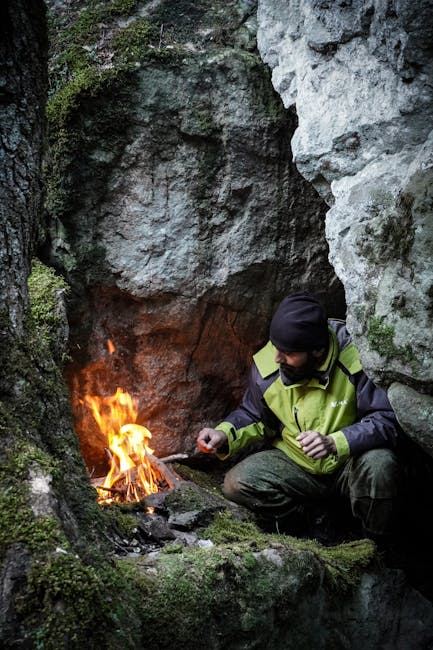
Wilderness survival isn't just berry-picking or fire-building—it's a critical thinking system under pressure that redefines how you assess your environment in everyday life.
Learning wilderness survival as a beginner involves understanding how to stay alive in the outdoors with minimal or improvised resources – shelter, fire, water, and food, in that order of priority.
Unlike bushcraft or hiking, it's built around worst-case scenarios: the skill only matters when everything else has gone wrong.
In wilderness survival, you engage in hands-on activities like building shelters from natural materials, starting fires with primitive techniques, foraging for edible plants, and navigating using maps and natural cues, all while honing essential outdoor skills in a self-directed manner.
Wilderness survival fosters flow states through its high-stakes challenges, providing immediate feedback as you master skills like fire-making and navigation, which enhances self-efficacy and offers a sense of accomplishment, while the unpredictability of nature keeps each outing fresh and engaging.
Wilderness survival is about knowing what berries won't kill you. Maybe building a fire without a lighter. Essentially: a checklist of outdoorsy tricks you'd need if a helicopter dropped you in the wrong forest.
That's the assumption. And it's exactly why most people who try this hobby quit within a month – they came for the tricks and missed the whole point.
Wilderness survival is a decision-making system under stress – the skills are just the interface. What you're really building is the ability to think clearly when your body is telling you to panic.
Situational awareness transfers everywhere. People who train seriously start noticing exits, weather shifts, and terrain changes in ways they never did before – not because they're paranoid, but because their brain finally has a framework for it.
The physical skills – fire, shelter, water, navigation – are less than half of it. Most survival failures are psychological, not technical.
People die knowing exactly what to do and being too overwhelmed to do it.
A wilderness medicine instructor once described it this way: his students who struggled most weren't the ones who couldn't tie a knot. They were the ones who froze when two problems happened simultaneously – a sprained ankle and incoming weather.
Training survival without training that mental layer, he said, is like learning to drive only in parking lots.
The question worth sitting with: what does actually starting look like – and how much time does it take before any of this clicks?
Watching someone build a debris hut in twelve minutes on YouTube is genuinely misleading.
In real life, your hands are cold, the bark is wet, and you've already snapped two branches trying to do the thing that looked effortless on screen.
The gap between knowing what to do and your body knowing how to do it is where the first month lives.
Frustrating. Slow. Weirdly quiet out there.
It's not about toughness – it's that survival skills are muscle memory, and muscle memory has a tuition you pay in repetition, not enthusiasm.
One thing to know before session one: bring your tinder from home the first time.
The point of early sessions is learning ignition technique – not hunting for dry material in a wet forest before you know what you're looking for.
When to start: Early morning
Duration: 1.5 hours
Cost to try: $15
Success criteria: if you finished without successfully starting a fire, do session 2.
Beginners load their pack with sleep gear and snacks first, then wedge survival tools into whatever space is left. It feels logical — comfort items are bulky, so you start there.
Pack your fire-starting kit, navigation tools, and emergency shelter in the top or outer pocket. The stuff you need when things go wrong shouldn't require unpacking everything first.
There are hundreds of knots. Beginners waste weeks on decorative or situational ones that won't help when it counts.
Master the bowline, cleat hitch, and taut-line hitch before touching anything else. Those three cover shelter rigging, rescue, and load securing in almost every real scenario.
Most beginners set up camp, gather wood, and eat before even locating a water source. A bad day becomes a dangerous one fast when that's your order of operations.
Identify your water source within the first 30 minutes of entering any area — before fatigue or darkness takes that decision out of your hands.
A lighter works until it gets wet, runs out of fuel, or malfunctions at altitude. Beginners treat it like a guarantee — it isn't.
Carry a ferro rod and practice building a fire with it at home, in the rain, until the motion is automatic.
Navigation feels optional until it isn't. A panicked person staring at a topo map for the first time is already behind.
Before every outing, spend five minutes with your topo map identifying two landmarks and one bailout route. That way the map is a confirmation tool, not a rescue tool.
Wilderness survival is practiced anywhere wild land exists — forests, deserts, mountains, and coastal scrubland all count. Most people start at state and national parks, national forests, or Bureau of Land Management land, where dispersed camping and day use are often free.
There's no single national governing body here — unlike archery has USA Archery, the survival community self-organizes around schools, gatherings, and instructors. That actually makes it easier to find your people, because the entry points are specific and practical.
Start with Meetup.com — search "wilderness survival skills meetup [your city]". Bushcraft and survival groups are one of the more active niches on the platform. From there, broaden your search in a few directions:
Once you find a group, how you introduce yourself matters. Tell them you're brand new and have never spent a night outside without a tent. That declaration usually gets you a mentor for the day, a gear rundown, and someone watching your fire-starting technique — instead of letting you quietly fail for two hours.
Not every version of wilderness survival looks the same. Pick the one that matches what you're actually trying to learn.
Primitive survival means no modern tools, no lighters, no synthetic gear. You're learning fire-by-friction, debris shelters, and wild plant ID the way humans did it before REI existed.
Best for people who want the deepest possible skill foundation, not just a weekend confidence boost. Most practice happens in your backyard before you ever enter the woods — expect to spend more time than money.
Bushcraft sits between primitive survival and modern camping — you use some tools, but you build almost everything else from the land. Carving, foraging, and camp craft get equal weight alongside emergency skills.
This is the best starting point for most beginners — the learning curve feels rewarding, not punishing. A decent fixed-blade knife ($40–$100) is the one gear investment that actually matters here.
Urban survival applies the same core logic — shelter, water, food, navigation — to a city or disaster scenario instead of a forest. It trades plant ID for infrastructure knowledge and crowd dynamics.
Best for people who want skills that are immediately relevant to the environment they actually live in.
Survival fishing and trapping is a focused subset covering how to source protein when you can't carry food in. Snares, primitive traps, and improvised fishing rigs are the whole curriculum.
Best pursued as a second skill layer once you've covered fire and shelter — trying to learn trapping before you can reliably make fire is skipping the foundation. Minimal gear cost, but check local regulations before practicing anywhere outside your property.
Cold-weather survival isn't harder wilderness survival — it's a different discipline entirely. Hypothermia management, snow shelter construction, and layering systems replace most of the warm-weather playbook.
Best pursued after you have solid three-season fundamentals. The stakes are higher, the margin for error is thinner, and quality insulating layers plus a cold-rated sleeping bag aren't optional — gear costs climb here in ways they don't in other variants.
If the texture of this appeals to you, Shelter Building is built on similar bones.
Some of the same instincts show up in Scuba Diving — worth a look if this clicked.
If this resonates, Bottle Digging explores a similar direction.
Most beginners stockpile gear lists and memorize knot types. They're optimizing for preparation when survival hinges on reading what's already in front of you.
The one skill is situational awareness through environmental pattern recognition — the ability to look at terrain, vegetation, and weather cues and extract usable information before you need it. Not scanning for danger. Actively interpreting.
That willow stand means water within 20 feet. That cracked bark means wind consistently hits from the north. That animal trail runs downhill toward shelter or a water source.
When you develop this, every landscape starts handing you answers — water location, wind direction, natural shelter, edible zones — without you having to search. Without it, you're moving through information and mistaking it for scenery.
The survivalist who lasts isn't the one with the best kit. It's the one who noticed the terrain was telling them something three hours before the situation got serious.
The honest test isn't "do I like the idea of this." It's whether you'll still show up when it's cold, or muddy, or nothing went the way you practiced.
Commit to 4 sessions over 30 days – roughly one per week. That's enough time to try fire-starting, shelter-building, navigation, and basic foraging separately. One skill per session. You won't master any of them, but you'll know which ones pulled you in and which ones felt like homework.
If the environment itself felt wrong, believe that.
You've watched a storm roll in and immediately started thinking about shelter angles, water runoff, and wind direction – not because you were scared, but because your brain went there automatically. That's the low-level pull that separates people who dabble from people who go deep.
Short sessions teach you the motion, not the judgment.
If you're still in after that – the resources section below has the exact gear list, courses, and communities worth your time.
Start with the core survival priorities: fire-making, water sourcing, shelter-building, and basic first aid. These fundamentals form the foundation for more advanced techniques and can literally save your life in emergencies. Master one skill at a time before layering in knowledge like foraging, navigation, and signaling.
You need no prior experience—wilderness survival is designed for complete beginners. Start with short overnight trips in safe, managed environments like established campsites, then gradually progress to more remote areas as your confidence and skills grow. Many people begin in their backyard or local parks.
Start with essentials: a reliable knife, fire-starter (matches, lighter, flint), a water container, basic shelter materials, and a first aid kit. You don't need expensive equipment initially—many survival experts recommend learning with minimal gear first so you understand true self-reliance before investing in specialized tools.
Basic competency takes 3–6 months of regular practice and training, but mastery is an ongoing journey that takes years. Your timeline depends on how frequently you practice and whether you seek formal instruction or learn through hands-on experience in the field.
It's safe if you start smart: practice in controlled environments, take certified courses, never venture alone, and know your limits. Most risks come from overconfidence or lack of preparation, not the activity itself. Structured learning and gradual progression eliminate nearly all real dangers.
Yes—you can practice fundamental skills at home, in your yard, or at local parks before ever venturing into true wilderness. Many people start with backyard shelter-building, fire-making in safe spaces, and research-based learning before progressing to overnight trips and remote experiences.