BoredomBusted — Find Your Next Favorite Thing To Do
Discover hobbies, activities, places, and ideas that spark joy. Whether you're looking for something creative, active, social, or relaxing, BoredomBusted helps you find your next favorite thing to do.
Browse our hobby guides, things-to-do collections, and place ideas to never be bored again.
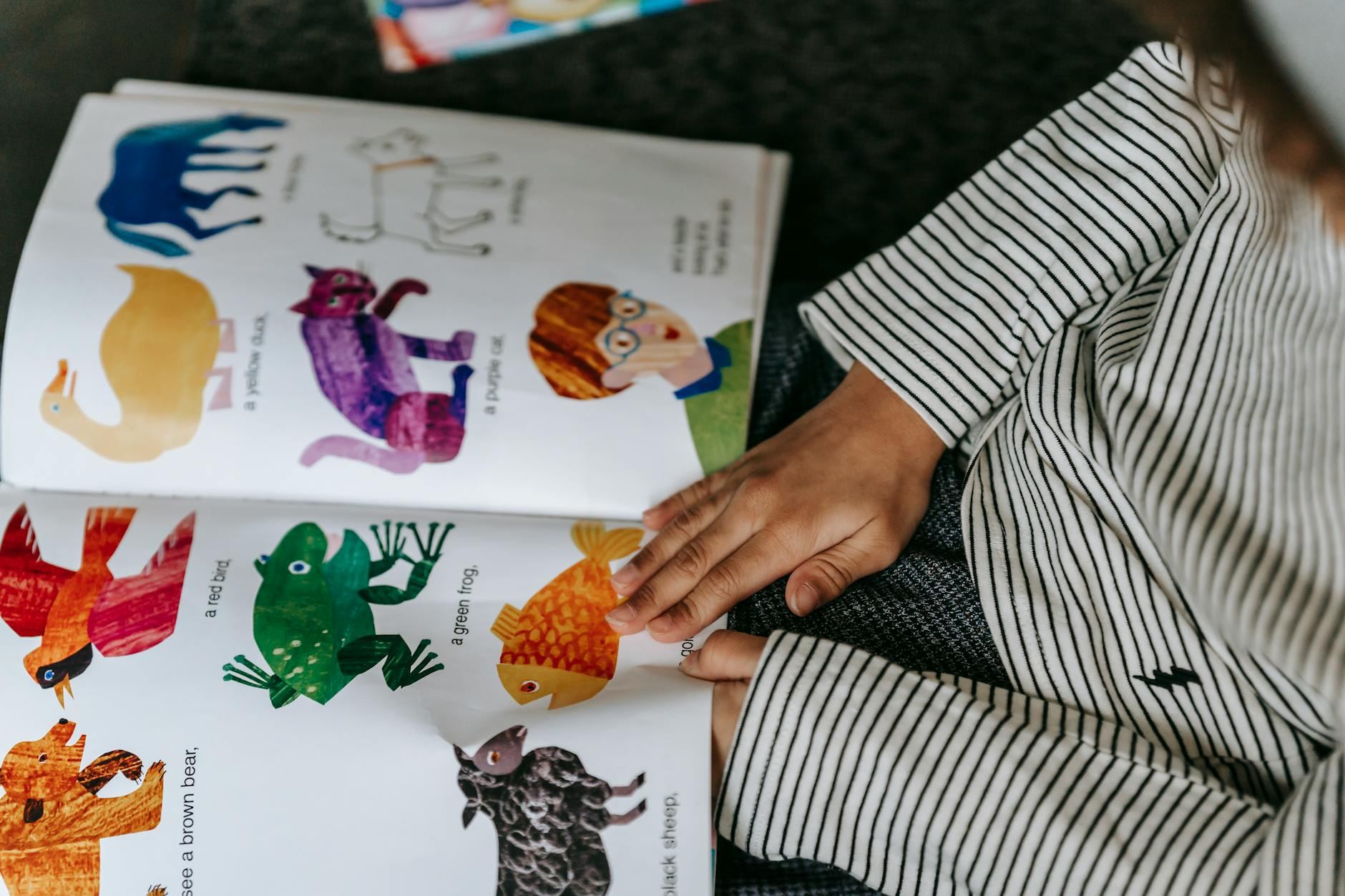
Children's book illustration doesn't just decorate pages — it carries the story's weight, revealing character and advancing plot through visuals alone.
Learning children's book illustration as a beginner centers around the enchanting process of sketching characters and harmonizing visuals with text. Painting spreads, and perfectly arranging words and images.
Children's book illustration brings stories to life visually. You decide what a character's fear looks like, where a joke will land, and how to use negative space effectively.
Whether using watercolor, digital paint, or pencil, you create everything from simple board books to detailed picture books. Each choice you make affects how a reader experiences the story.
In children's book illustration, you engage in sequential tasks such as sketching whimsical characters and scenes, layering paint or digital elements, and refining visuals to create narrative-driven pages for imagined stories, often in focused sessions lasting 2-6 hours.
This hobby induces a flow state through its rhythmic, detail-oriented process, offering skill feedback via quick iterations and tangible milestones, fostering a sense of accomplishment and creative expression that transforms mundane items into vibrant stories.
You think illustrating children's books means just drawing cute pictures.
You're imagining whimsical drawings that kids love, but it's so much deeper than that.
Illustrations often tell the entire story. In many children's books, the illustrations take on the narrative weight that the text barely sketches out. Your images must show character motivation, drive the plot, and convey mood—all through composition and color.
Young readers understand images before words. They will drop a book with weak visuals even if it's a great story.
You'll find yourself staring at a blank page, feeling pressure to create something "cute" or "perfect." Finally, you sketch something loose and messy that feels more alive than any careful attempt.
Children's books pack more text per page than you expect. It surprises many that illustrations must fit around the words, not just fill empty spaces.
When you color something in, using a muddy brown will ruin the whole spread. This teaches restraint.
A character's expression can carry unexpected emotion. This small discovery makes you want to try again.
When to start: Early morning
Duration: 1.5 hours
Cost to try: $10
Success criteria: If you created a colored draft spread with at least one character, one background element, and a clear action scene, do session 2.
Most beginners assume illustration skill is the main barrier. It rarely is. The mistakes that stall children's book projects are almost always structural — decisions made before a single brush stroke that quietly wreck the book's pacing, clarity, or budget.
If the text says "She wore a red coat," painting a girl in a red coat adds nothing. Beginners do this because it feels safe — like you're confirming the story. But the illustration slot is wasted.
Each spread is a chance to add a new layer — emotion, subtext, humor, a visual detail the text never mentions. Show what the words leave out, not what they already cover.
More visual detail feels like more effort — so beginners load pages with background characters, props, and competing focal points. Young readers don't read those pages. They skip them.
One clear focal point per spread keeps young readers locked in. Everything else should support that focal point or come out entirely.
Art school instincts push toward concept and interpretation. That's a liability in children's books, where a confused four-year-old is your benchmark.
Test every spread with a simple question: can a child identify what's happening without reading the text? Abstraction should deepen the meaning — the moment it obscures the action, it's hurting the book.
Illustrating a draft feels productive. Then the text changes, the page breaks shift, and three finished spreads become unusable. This is one of the most expensive mistakes in the process.
Wait until the manuscript is final and the page layout is mapped before drawing anything beyond rough thumbnails. Thumbnails are cheap to revise. Finished art is not.
A book where every spread shows the same two characters at the same distance in the same room reads like a slideshow. Beginners default to what's comfortable to draw. The result is a flat, monotonous read.
Plan your visual variety before you start illustrating. Mix close-ups, wide shots, interior and exterior settings, and different times of day across the arc of the book. The story's visual rhythm depends on it.
Join the 'Creating Children's Books' group in Oakland if nearby. With 558 members and run by Cherilyn, it's a bustling hub for creatives.
KidsLitATL in Decatur is your go-to in Atlanta. This group is organized by TeMika and has 347 members.
In Littleton, check out the Squid Works Comics Cooperative. Al Steffen leads this community of 454 comic creators.
For those near Brighton, the Brighton Illustrators Group offers a network of 124 illustrators with organizer Michi.
Explore Illustration Buddies in Chicago for a vibrant community led by Joshua Gilley.
Don't miss L'illustrAtelier in Marseille if you're in France, hosting 26 members.
Online platforms are great for broader exposure.
Reedsy is perfect for finding vetted talent. Also, keep an eye on Childrensillustrators.com, a specialized directory.
Cartoonish illustration is the dominant style in children's publishing for a reason. Big eyes, exaggerated features, animals doing human things — kids respond to faces that perform emotion at full volume.
It's also the most forgiving place to start. You're simplifying, not perfecting. Most first-time illustrators find their footing here.
Realistic illustration means accurate proportions, real lighting, and textures that look like the actual thing. This is the hardest style to pull off and the least tolerant of shortcuts.
It works best for emotionally grounded stories and educational content where a misdrawn animal or wrong-looking tool breaks the reader's trust. Not a beginner's first project.
Whimsical and fantasy illustration trades accuracy for atmosphere. Fluid shapes, soft environments, magical lighting — the world doesn't follow real rules, and that's the whole point.
This style rewards mood over precision. If you find yourself drawn to illustration as world-building, this is likely your lane.
Watercolor, ink, pencil — traditional media leaves evidence of the hand behind it. That warmth and imperfection is exactly what makes it feel timeless rather than dated.
Classic storybooks and nature-focused stories have long leaned on this look. The tradeoff is that mistakes are harder to fix and scanning for print adds a step to your workflow.
Minimalist illustration strips everything back — limited colors, bold shapes, nothing that competes for attention. Board books for toddlers live here, and simple doesn't mean easy to do well.
Every shape has to do real work. The fewer elements on the page, the more each one matters.
If the texture of this appeals to you, Pencil Drawing is built on similar bones.
If this resonates, Home Decor Styling explores a similar direction.
Forget about technical perfection for a moment. Anatomy and perspective won't create the connection you need.
Real impact lives in expressive faces. It lives in the eyes, eyebrows, and mouth. Draw simple, convincing expressions. Suddenly, your imperfect art captures attention.
Technical skills can be impressive, but an emotionally flat illustration falls short. The next section explores the art forms where this emotional skill matters most.
Engage in five short drawing sessions over the next month. Sketch each week and reflect after to see if it sparks joy or challenges.
If sketching feels like a playful escape and you keep finding yourself doodling, you're on the right path. Dive into learning some practical skills like character consistency and color theory to enhance your art.
If those sessions felt like just ticking a box and the excitement wasn't there, give it one more go with a simple, fun topic aimed at kids. If it still doesn't captivate you, this might not be your creative outlet.
If focusing on detailed storytelling sounds exhausting, not freeing, then don't force it. Some thrive on expression through abstraction or concept—find what excites you.
A true sign you're meant for this: you stay up sketching after everyone else has gone to bed, caught up in your own world.
If childrens book illustration doesn't feel like the right fit, our hobbies list has plenty of other directions to try.
For ideas that take five minutes instead of five weeks, see things to do when you're bored.
You'll need basic art supplies like colored pencils, markers, or watercolors, plus paper or a sketchbook to practice. Many beginners start with digital tools like an iPad with Procreate or free software like Krita, which offer flexibility and easier editing. The investment can range from $20 for traditional supplies to $500+ for a quality drawing tablet, depending on your preferred medium.
Most people see noticeable improvement in 3–6 months with consistent daily practice of 1–2 hours. However, developing a professional-level portfolio typically takes 1–2 years of dedicated work and continuous learning from tutorials, mentors, or online courses. The timeline varies greatly depending on your starting experience and learning pace.
No, formal training isn't required—many successful illustrators are self-taught through online courses, books, and practice. A portfolio demonstrating your skills and style matters far more to publishers and clients than formal credentials. That said, art courses or a degree can accelerate your learning and provide valuable networking opportunities.
Traditional illustration (watercolor, markers, pencils) offers a unique tactile quality and often commands higher prices, but requires physical materials and rescanning for publication. Digital illustration allows unlimited revisions, easier color adjustments, and direct file delivery to publishers, making it faster and more convenient for most professionals. Both are equally viable—choose based on your preferred workflow and artistic style.
Study different illustrators and children's books you admire, then experiment by drawing regularly and intentionally blending techniques that resonate with you. Focus on recurring elements like your line weight, color palette, character design, and composition choices to create consistency. Your unique style naturally emerges over time as you practice and refine what feels authentic to you.
Yes—illustrators earn through book advances and royalties, freelance illustration for publishers, self-publishing illustrated books, licensing artwork, and teaching others. Income varies widely; beginners might earn $500–$2,000 per project, while established illustrators command $5,000–$15,000+ per book. Building a strong portfolio and professional network typically takes 2–3 years before earning substantial income.