BoredomBusted — Find Your Next Favorite Thing To Do
Discover hobbies, activities, places, and ideas that spark joy. Whether you're looking for something creative, active, social, or relaxing, BoredomBusted helps you find your next favorite thing to do.
Browse our hobby guides, things-to-do collections, and place ideas to never be bored again.
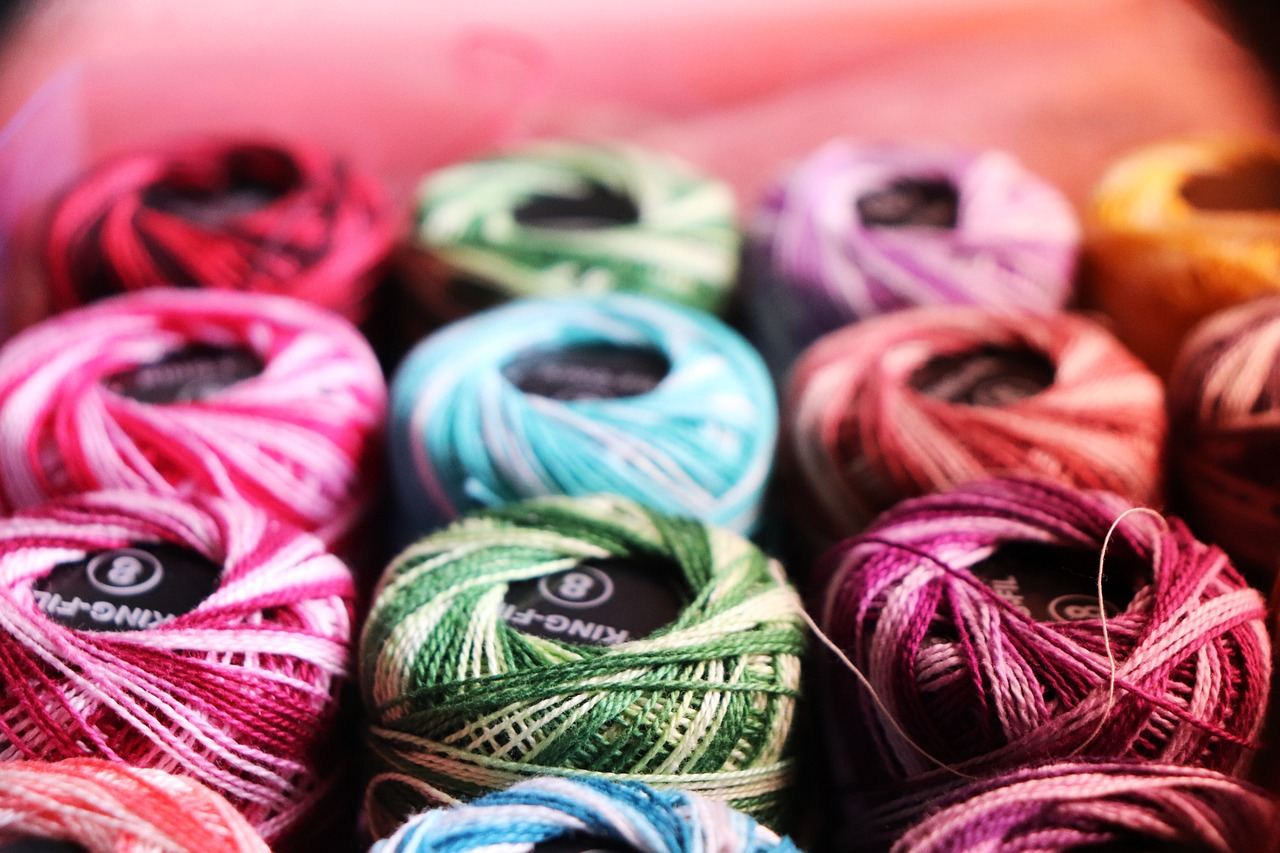
Fiber arts aren't just for grandmothers; today's creations range from avant-garde fashion to intricate art installations, breaking traditional molds.
Getting started with fiber arts as a beginner opens up a world of creative possibilities in crafting textiles from various fibers.
Whether you're knitting a cozy sweater, crocheting a colorful blanket, or weaving a decorative wall hanging,
fiber arts offer a rewarding blend of creativity and craftsmanship.
In fiber arts, you engage in hands-on manipulation of materials like yarn and thread, performing repetitive actions such as knitting, crocheting, or weaving to create items like scarves or decorative pieces, requiring comfort and focus on colors, textures, and patterns.
Fiber arts induce a flow state through rhythmic, tactile repetition, providing immediate visual feedback with each completed stitch or row, which fosters a sense of accomplishment and boosts self-esteem, while also offering a creative outlet that counters monotony.
You think of fiber arts as the domain of grandmothers, sitting by the fire knitting scarves.
Today's fiber artists span all ages and interests, crafting with sustainability and creativity in mind.
It's not limited to just making cozy accessories.
Modern fiber artists are breaking new ground with innovative creations. They're designing avant-garde fashion and creating intricate installations, using fiber as a medium for unlimited personal expression.
Your hands will feel clumsy in ways you didn't expect. Yarn slips off needles, hooks catch at weird angles, and your fingers fumble to hold tension that experienced crafters maintain without thinking. The physical coordination required takes real time to build — it doesn't arrive naturally in the first sitting. You'll likely spend your first hour undoing more than you create.
The part that catches most beginners off guard is tension. Every stitch needs consistent pressure — too tight and your fabric puckers and stiffens, too loose and it looks uneven and gaps. Tension is invisible in tutorials but becomes the first real obstacle in your hands. Nobody warns you that a single row can look completely different at each end because your grip changed mid-project.
Around session two or three, something quieter happens. The rhythm starts to settle. You stop counting every step out loud and your eyes begin reading the stitches instead of guessing at them. That shift — from effortful thinking to something almost automatic — is when fiber arts actually start feeling like a hobby rather than homework. It won't be smooth yet, but it won't feel impossible either.
Progress in the early sessions is measured in inches, not finished objects. A swatch, half a row, one clean stitch repeated ten times in a row — that's real ground covered. The honest benchmark isn't a finished scarf — it's building enough muscle memory to stop staring at your hands. Once you understand what's actually tripping beginners up at the start, the mistakes section ahead will make a lot more sense.
When to start: Morning
Duration: 1-2 hours
Cost to try: $20
Success criteria: If you cast on and complete 3 neat rows of stitches that match the pattern count, do session 2.
The pattern looks beautiful. You want to make that. The problem is it calls for five techniques you haven't tried yet, and you'll hit a wall by row three. Enthusiasm pulls beginners toward ambitious projects, but the frustration of not finishing tanks motivation fast.
Start with a single-technique project you can finish in one or two sessions. A simple knit scarf, a crochet dishcloth, a small woven sampler. Finishing something builds more momentum than starting something impressive.
Uneven stitches, a fabric that curls or bunches — beginners usually blame themselves. But tension is almost never about trying harder. It's about how your hands hold the yarn and the tools, and it shifts as you relax into the craft.
Stop correcting and start noticing. Work a swatch with no pressure to make it perfect. Watch where your grip tightens. Tension evens out once you stop fighting it and start paying attention to it.
The yarn aisle is genuinely seductive. You buy the beautiful chunky wool, the silk blend, the hand-dyed skein. Then you get home and realise none of it suits the project you wanted to start. Now you have a stash and no clear path forward.
Choose your first project, then buy exactly what that pattern specifies. Weight, fiber content, and yardage all matter. Matching yarn to a specific purpose teaches you far more than accumulating options.
A lot of beginners watch a tutorial once, then jump straight into a project and try to figure it out as they go. When something looks off, they can't diagnose it because they never really understood the mechanics of the stitch to begin with.
Practice each new stitch in isolation before using it in a real project. Cast on a small swatch, work the stitch twenty times, and look closely at what you're creating. Once you understand what a correct stitch looks like, mistakes become obvious and fixable.
Frogging — unraveling your work — becomes a reflex for some beginners. One dropped stitch, one uneven row, and the whole thing comes apart. This creates a loop where you never actually move forward.
Let small mistakes stay in and finish the piece anyway. A completed project with a few flaws teaches you infinitely more than a perfect restart. The flow state fiber arts are known for — that calm, absorbing rhythm — only kicks in once you stop second-guessing every row.
Start with Ravelry — it's the closest thing fiber arts has to a dedicated social network. You can browse free patterns, join craft-specific groups, and find local knit-alongs or crochet-alongs organized by other members.
On Reddit, r/knitting, r/crochet, and r/weavingare active daily communities where people share WIPs, ask technique questions, and troubleshoot projects. For weaving specifically, r/weaving is small but genuinely helpful.
Local yarn stores (LYS) are the best physical starting point. Most host weekly sit-and-knit sessions or structured beginner workshops. Walk in, buy some yarn, and ask about their schedule.
Meetup.com has active fiber arts groups in most mid-size cities and larger. Search "knitting," "crochet," or "stitch and sip" to find casual in-person meetups at coffee shops, libraries, and community centers.
Instagram and TikTok both have thriving fiber arts communities under tags like #WIP (work in progress), #KnittingCommunity, and #CrochetTok. Following those tags connects you to makers at every skill level.
The Craft Yarn Council also maintains a directory of guilds and regional fiber festivals — events like Vogue Knitting LIVE and regional sheep-and-wool festivals are where serious crafters gather in person once or twice a year.
Crochet moves fast. A single hook and some yarn can become a hat, a dishcloth, or a small bag in just a few hours.
It's the best pick if you need to see a finished object quickly to stay motivated. The learning curve is gentle, and the payoff is almost immediate.
Knitting is the craft that puts most people into a genuine flow state. Two needles, a repeating stitch pattern, and your hands start moving on autopilot.
The meditative quality is the whole point — you can follow a complex cable pattern or zone out entirely on a simple stockinette. Knitting suits people who want a calming ritual alongside a tangible result.
Weaving lets you build color and texture the way an artist builds a composition. You set up a grid of threads, then work color across it row by row.
It's a slower practice, but the visual payoff is unlike anything else in fiber arts. Weavers tend to love structure and color theory in equal measure.
Macramé turns knotting rope or cord into sculptural wall art. There's no loom, no needles — just your hands and a dowel.
It appeals to people drawn to interior design as much as craft. The finished pieces look intentional and modern, which makes it easy to share your work without feeling like you're showing off a hobby project.
Spinning and dyeing sit at the start of the fiber arts process. You work with raw or minimally processed fiber, turning it into yarn or giving plain yarn a completely new color.
This path suits people who care as much about craft sustainability and sourcing as they do about the finished object. It's also a natural fit for anyone who finds chemistry or botany interesting — natural dyes pull from both.
Fiber art installation and textile sculpture treat yarn, thread, and fabric as a fine art medium. The goal isn't a wearable or a home accessory — it's a piece with a concept behind it.
This version of the hobby is where fiber arts push closest to contemporary art. It works best for people who already think in terms of composition, narrative, or material experimentation.
If this resonates, Film Photography explores a similar direction.
If the texture of this appeals to you, Stained Glass Painting is built on similar bones.
Another variant that pulls from the same roots is Handmade Goods.
The skill that separates people who improve from people who plateau is reading your material, not just following your pattern.
Beginners treat fiber arts as instruction-following. They count stitches, match the row number, and trust the pattern completely. That works — until it doesn't. Yarn behaves differently depending on its fiber content, twist, and how tightly you're holding it. The pattern tells you what to make. Your hands and your material tell you how it's actually going.
Learning to notice tension shifts, how a yarn wants to drape, or why a seam is pulling — that's the real skill. It's tactile awareness built through repetition. Once you have it, you stop panicking when something looks off. You can feel the problem before you see it.
That awareness is also what lets you adapt — swap a yarn weight, adjust a stitch count, or riff on a pattern without unraveling the whole project. The next section covers the tools and materials that make developing that instinct a lot faster.
Commit to four sessions over two weeks — roughly every three to four days. That's enough time for your hands to stop fighting the yarn and for you to actually feel what this hobby is.
You'll know fiber arts have hooked you when you start carrying a project in your bag. The pull to get back to a piece between sessions is the real signal — not whether it was easy. If that's happening, start exploring a specific craft: knitting, crochet, and weaving each have distinct feels, and finding your one will accelerate everything.
Indifference after four sessions usually means you haven't hit the right medium yet. Crochet moves faster than knitting, and weaving is more visual and spatial — a flat reaction to one doesn't mean the others will feel the same. Try switching before writing the whole category off.
If the repetition felt like endurance rather than rhythm, that's a real data point. Fiber arts live or die on whether the repetitive, tactile loop feels meditative to you — and for some people it just doesn't. Woodworking or ceramics scratch a similar "making something with your hands" itch with more physical variation per session.
If you find yourself zooming in on someone's knitted sleeve on the subway or mentally noting the stitch pattern on a stranger's blanket, that involuntary attention is the clearest sign this hobby has already claimed you.
If nothing here clicks, our guide to what to do when bored covers shorter, lower-commitment options.
Knitting uses two needles to create fabric with interlocking loops, while crochet uses a single hook to form loops one at a time. Crochet is generally considered easier for beginners because it's more forgiving if you drop a stitch, whereas knitting requires more coordination between two needles.
You can start with a beginner kit for $15–$30, which includes needles or a hook and yarn. Most people spend $50–$100 in their first month as they experiment with different materials and techniques, though costs vary based on yarn quality and project ambition.
A simple scarf or dishcloth can take 5–10 hours of work depending on your speed, while a basic hat might take 8–15 hours. Your pace will improve significantly as you gain experience and become more comfortable with the fundamentals.
No prior experience is needed—fiber arts are designed for all skill levels. Most beginners pick up basic knitting or crochet techniques within a few practice sessions using online tutorials or local classes.
To start, you only need needles or a hook and yarn—no other tools required. As you progress, you might add stitch markers, yarn cutters, and a row counter, but these are optional and can be acquired gradually.
Yes, fiber arts are excellent for stress relief because the repetitive, meditative motions help calm the mind and improve focus. Many practitioners report that the activity quiets anxious thoughts and provides a sense of accomplishment as projects come together.