BoredomBusted — Find Your Next Favorite Thing To Do
Discover hobbies, activities, places, and ideas that spark joy. Whether you're looking for something creative, active, social, or relaxing, BoredomBusted helps you find your next favorite thing to do.
Browse our hobby guides, things-to-do collections, and place ideas to never be bored again.
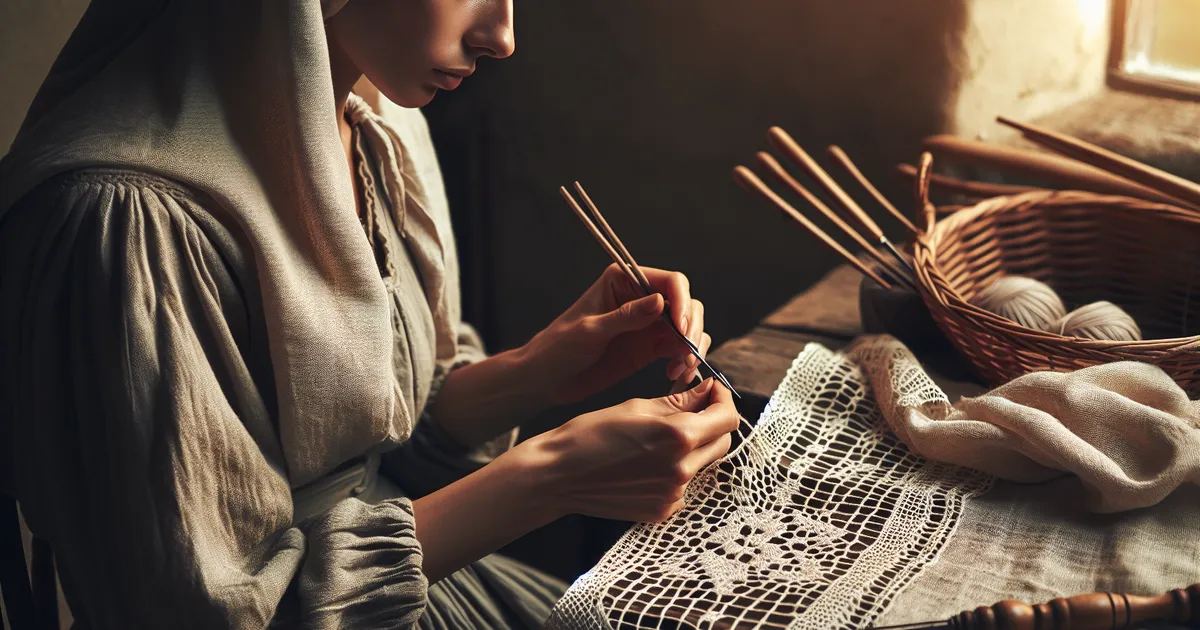
Lacemaking isn't a quaint pastime; it sharpens your brain with complex thread tracking and offers the deep focus people pay for in meditation apps.
Getting started with lacemaking as a beginner opens up a world of creativity, allowing you to create decorative openwork fabric through the twisting, braiding, or looping of thread into intricate patterns.
Unlike knitting or crochet, there's no continuous yarn – each thread is a separate strand, manipulated around pins on a pillow to build the structure as you go.
That precision is what separates it from every other fiber art.
In lacemaking, you hold pairs of bobbins in each hand, executing precise movements like twisting and crossing threads while following a specific pattern, anchoring threads with pins on a firm pillow to create intricate lace fabric.
Lacemaking fosters a meditative state through its repetitive actions, allowing you to enter a flow state as you focus on the tactile manipulation of threads, which cultivates a sense of accomplishment and creative expression as you see your patterns develop.
You think lacemaking is for grandmothers. Dusty, slow, and vaguely medicinal. Something done in a rocking chair to pass the time.
It's actually a real-time spatial puzzle, tracking dozens of threads and making decisions on crossings and twists that affect the whole piece.
There's real history too. Lace was once more valuable than gold by weight. It was a status symbol for kings, smuggled across borders sewn into clothing.
A bobbin lace maker on a *Torchon* pattern creates a grid of logic, move by move.One wrong crossing twenty moves back reveals itself as an unmistakable flaw.
System, not patience, is what leads to precision. The next section shows this system for beginners.
Looming bobbins and tangled threads will greet you at your first lace-making attempt. It feels like deciphering a puzzle with unfamiliar patterns and uncooperative strings.
Your first session is mostly chaos. Bobbins scatter, creating a maze of threads before you've even begun. The pattern seems daunting, like a language you don't speak. But this messy start is essential, paving the way for future fluency.
Weeks in, the cross-and-twist motion begins to feel as natural as breathing. Tension varies and edges waver, but your confidence grows. Eventually, a small sample emerges, flawed but recognizably lace. You'll see every mistake and want to redo it, eager to improve.
With time, reading a pattern becomes fluid, reducing pauses and creating a sense of progress. The first successful piece reframes previous attempts as practice, not failure. It's not about patience; it's about redefining the learning curve until the process becomes rewarding.
Prepare by setting up your bobbins in pairs with matching lengths. Mismatched threads lead to tangles that misrepresent your skill level, making you doubt yourself needlessly. Next, we'll dive into the mistakes to avoid during early sessions.
When to start: Early morning
Duration: 1-2 hours
Cost to try: $15
Success criteria: If you complete one 2-inch lace motif with straight edges, even loops, and no broken thread, do session 2.
Beginners often pick thin thread because it gives lace an authentic look. But that choice amplifies every tension mistake, causing warped patterns.
Start with a thicker cotton thread, like size 10 or 12, for your first few patterns. Your hands will learn consistent tension this way.
Setting pins too far in advance seems efficient. However, those sections may shift without notice, causing your angles to drift.
Pin only two or three moves ahead so your lace remains anchored exactly where you're working.
Beginners often wind bobbins unevenly, leading to threads running out mid-pattern. This results in unattractive joins exactly where you want a smooth pattern.
Wind all bobbins in one sitting, measuring against a finished pattern diagram to ensure even amounts.
Crosses get more attention because they're visible, but twists are often treated as optional. Skipped or miscounted twists leave your lace floppy and shapeless.
Write the twist numbers directly on your printed pricking at each pin point to make the counts automatic.
Yanking bobbins to fix loose stitches seems instinctive but distorts the lace. It pulls the wrong threads and leaves permanent puckers.
Guide the thread gently with your fingertip near the pin and ease tension inward to correct issues smoothly.
Lacemaking is a solo-friendly craft, often enjoyed at home. A pillow, good light, and maybe a cup of tea are all you need.
Community centers and craft studios often host meetings for local guilds. Some yarn or fiber shops offer dedicated lace nights.
Say you're starting fresh when you join your first meeting. It's common to be lent a pillow, pattern, and bobbins to get you going.
Bobbin lace, also known as pillow lace, involves crossing threads wound on bobbins over pins stuck into a pillow. Most beginners enjoy this long-term because the structure helps maintain your place. It's ideal for anyone wanting a hands-on experience. Expect to spend $40–$80 for a starter pillow kit with bobbins — a one-time investment.
Needle lace is built on a paper pattern using a single needle and thread. No special equipment is needed beyond your basic sewing needle and thread, making it the most accessible way into lace crafting. Perfect for those who already sew or embroider.
Tatting uses small shuttle tools to loop and knot thread into intricate rings and chains. Expect a steep learning curve; many quit in week one, but those who persist often become devoted. It's great for those who love portable and pocket-sized crafts.
Torchon lace, a geometric subtype of bobbin lace, follows diagonal grid patterns. Best for methodical learners, its repeating logic makes spotting mistakes easier. Ideal for those who prefer a structured approach over freestyling.
Knitted lace uses yarn-overs and decreases to create a lace-like effect. This is the fastest way for knitters to transition without learning new skills. It's perfect for knitters who want the look of lace without new tools.
For something adjacent, see Cross Stitch.
A close neighbor worth considering: Applique.
Some of the same instincts show up in Visible Mending — worth a look if this clicked.
Mastering thread tension by touch transforms your work.
Feeling the tension in your fingers—not just seeing it—before you move to the next pair, is essential.
Tension control keeps your lace flat and your patterns consistent without guesswork. Errors in tension hide in plain sight. You might blame the pattern, but consistent tension exposes the true flaw.
Consistent tension creates a genuine grid in Torchon lace.
It isn't just for looks; it defines the structure.
Plan for 8 sessions in 30 days. Aim for twice a week to push past initial clumsiness and dive into actual pattern work.
The sessions fly by, and you find yourself thinking about your pillow and thread outside of class. Adjusting thread tension begins to feel intuitive, not forced. You're ready to upgrade your thread and take on more complex patterns.
Each session feels neutral, lacking excitement or frustration. Your brain might need more challenge. Tackle 4 extra sessions with a complex design before deciding; sometimes indifference is a sign you haven't hit the engaging complexity yet.
If sessions felt tiresome with punishing counting, you clearly didn't enjoy it. That feeling is an honest signal. It's not for you, and that's okay.
You catch yourself researching finished lace pieces without intent to buy—just to appreciate them. Seeing how negative space contributes to patterns hooks you. That curiosity aligns perfectly with lacemaking's rhythm, making the slow pace enjoyable.
Fine motor challenges or painful joints make bobbin work genuinely unpleasant. If you need quick project completions to stay motivated, lacemaking's pace will frustrate you—imagine spending 6–10 hours for a simple bookmark. Without a dedicated workspace, constant setup and teardown might disrupt your flow before you truly begin.
Want broader ideas first? Our list of hobbies gives you the lay of the land.
For quicker fixes, see our roundup of things to do when you're bored.
You can begin lacemaking with a beginner kit for $30–$100, which includes basic tools like bobbins, a pillow, pins, and thread. As you progress, you may invest in higher-quality equipment, but initial costs are relatively modest compared to many other crafts.
Basic lacemaking techniques can be learned in 2–4 weeks of regular practice, though mastering complex patterns takes several months to years. Most beginners can produce simple pieces like coasters or bookmarks within their first few weeks.
The two main types are bobbin lacemaking (uses weighted bobbins to weave thread) and needle lace (uses a needle and thread on a pattern). Each has distinct techniques and results, so beginners often choose based on available resources and personal preference.
Lacemaking has a moderate learning curve—it requires patience and attention to detail, but it's not inherently harder than other fiber crafts. Most beginners find it manageable once they grasp the fundamental movements and rhythm.
Small projects like handkerchiefs or edgings can take 10–20 hours, while larger pieces like doilies or garment panels may require 40–100+ hours depending on pattern complexity. Time investment varies significantly with your experience level and the design's intricacy.
Lacemakers create garment trims, doilies, table runners, shawls, handkerchiefs, jewelry, and home decor items. Many lacemakers also sell their finished pieces at craft fairs and online marketplaces.