BoredomBusted — Find Your Next Favorite Thing To Do
Discover hobbies, activities, places, and ideas that spark joy. Whether you're looking for something creative, active, social, or relaxing, BoredomBusted helps you find your next favorite thing to do.
Browse our hobby guides, things-to-do collections, and place ideas to never be bored again.
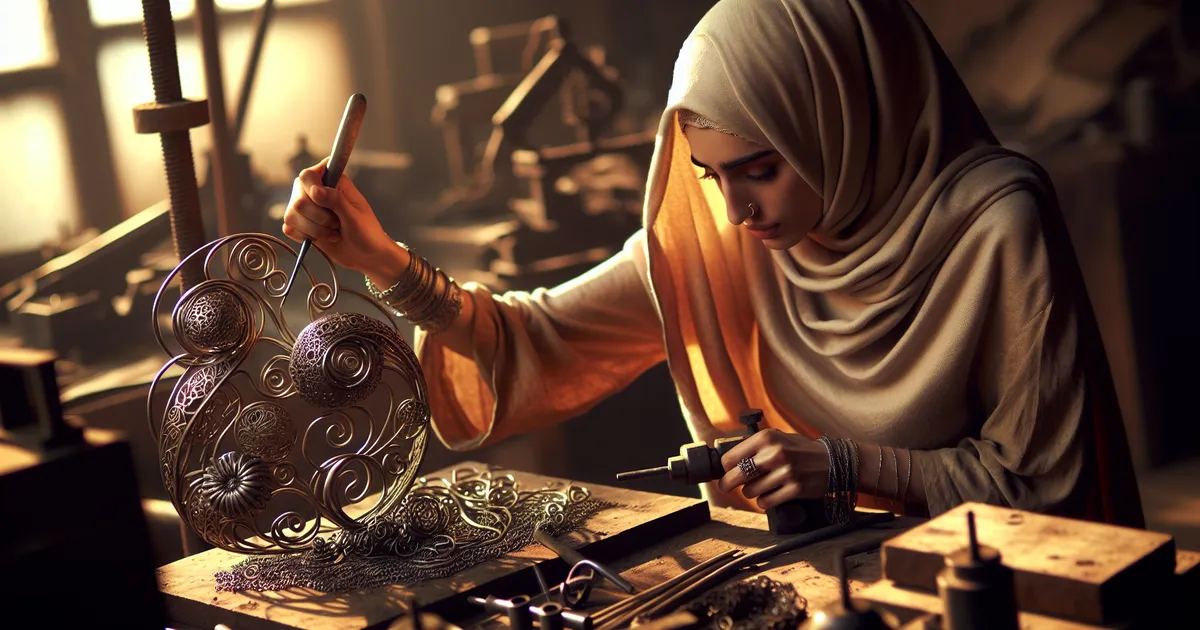
Metal sculpture isn't just for welders; you can create stunning pieces using basic tools and cold-working techniques in a weekend.
Learning metal sculpture as a beginner involves understanding the tools and techniques needed to transform raw metal into stunning three-dimensional art. Using tools like grinders, welders, and hammers, you can create unique pieces that reflect your artistic vision.
You're not decorating a surface – you're building structure from raw material, which separates it from crafts like jewelry-making or metalwork kits.
The form holds itself up. That's the difference.
In metal sculpture, you transform raw or scrap metal into artistic forms through a process that includes visualizing ideas, welding pieces together, cutting and shaping metal, and refining textures using tools like MIG welders and grinders.
This hobby engages you in creative problem-solving and incremental skill development, providing tangible feedback through physical actions and a sense of accomplishment as you progress from simple to complex sculptures.
You think metal sculpture is for welders. People with garages full of equipment, years of trade school, and a tolerance for sparks flying at their face.
This assumption closes off a creative hobby you can start with simple tools.
You don't need a welder to start – wire, sheet metal, and aluminum foil-gauge material can be shaped, bent, and joined with tools you already own or can grab for under $30.
Cold-working techniques like hammering, coiling, and layering mean your first real sculpture can exist without a single flame involved.
A first-time sculptor with no background made a freestanding bird from copper wire and steel mesh in an afternoon – no welding, no special workspace, just a pair of pliers and a reference photo on her phone.
The mental shift that actually matters: This is problem-solving in three dimensions – and that clicks faster than almost any other visual art form.
The real question isn't whether you can do this.
It's what tools actually help you go from bending wire to building something with real structure – and that list is shorter than you think.
Starting to weld feels like stepping into a different world, where sparks fly and the garage fills with a mix of anticipation and the sharp tang of metal.
The gap between expectation and reality is surprising. Your initial attempts produce twisted scraps and seams that crawl across the surface like caterpillars, not the sleek lines you envisioned.
As you become more familiar with the torch, awkwardness gives way to understanding. Holding the torch steadily without fear becomes a small victory. Seeing your first solid joint sparks a sense of accomplishment that keeps you coming back for more.
By the fourth session, the materials start communicating back. Decisions flow more naturally and you realize that working with the metal, instead of against it, is the only way forward.
The next section reveals the mistakes that welders often make early on, and how to avoid them.
When to start: Morning
Duration: 1.5 hours
Cost to try: $20
Success criteria: if you finished without fully following a planned design, do session 2.
Beginners often treat welding as the main event, neglecting the finish. However, a bad grind can ruin a good weld. Practice controlling your angle grinder on scrap steel. Achieve flat, even passes before attempting any welding.
Hardware store offcuts might seem like a deal, but using unknown alloys leads to issues. They can warp, crack, or fail to bond with mild steel. Use labeled, known-grade steel like A36 or 1018 until you understand the heat behavior of each material.
It feels right to lay a full weld immediately, but metal shifts during heating. Without tacks, your piece may warp mid-weld. Tack joints at both ends first, then double-check angles before a full pass.
Plans look perfect on paper, but reality is different. Metal doesn't stay exactly where you place it—it shrinks. Add 1–2mm of tolerance at every joint when designing. Use magnets or clamps to mock up before you weld.
A dull flap disc doesn't just slow you down—it overheats surfaces, causing stress which leads to cracks. Use the correct disc type for each task (flap for finishing, cut-off for cutting) and replace it when removal rate drops.
Metal sculpture takes place in maker spaces, community art studios, and specialized welding workshops that rent time by the hour.
Got garage space and a few hundred dollars? Start there. A home setup is possible right from the start.
Community college metal fab courses connect you to real shops. Search "community college metal fab course [your city]" for classes that offer hands-on experience.
The International Sculpture Center (ISC) has the closest network. They run member directories, regional events, and the Sculpture magazine community.
Walking into any workshop with this line gets results. Say: "I'm a complete beginner and I want to learn – what's the safest way to get started here?" This usually gets you a safety orientation, tool rundown, and someone willing to mentor.
Cut and join steel using MIG or TIG welding for sculptures.Ideal for structural, large-scale projects if you don't mind the learning curve of welding safely. Startup costs are real: a decent MIG welder runs $300–$600, plus safety gear.
Bend and wrap wire into figures or abstract forms by hand without welding. This is the easiest entry for beginners, letting you explore 3D metal work without a big spend. A basic set of pliers and wire costs under $30.
Work with flat metal by cutting, folding, and riveting without any melting. Geometric, architectural shapes call for precision over organic forms. Perfect for detail lovers. Start with aviation snips and a hand seamer at $40–$60.
Combine scrap metal like gears, pipes, and chains into new creations using welding or bolting. More about creativity than precision. Costs are low if you source materials from salvage yards, but joining tools are essential.
Blacksmithing involves heating metal and shaping it with hammers and anvils. It's perfect for those who enjoy process and aren't afraid of noise, heat, and space demands. Entry-level setups start at $500–$1,500, so it's not a casual start.
If the texture of this appeals to you, Sand Sculpture is built on similar bones.
Readers who enjoy this often gravitate toward Clay Sculpture next.
Readers who enjoy this often gravitate toward Stone Sculpture next.
The massive insight beginners miss is that the real challenge isn't in perfecting clean welds. It's understanding how metal behaves with heat. This isn't guesswork.
Anticipating heat movement makes tack sequences purposeful. Suddenly, your work matches your design. Without this, you're stuck in a cycle. Correct a warp, create a new one, and repeat. Mistakes in heat control kill projects and confidence.
These exercises refine your control. We will now cover where heat mapping impacts project outcomes most.
Plan for 6 sessions over 30 days. That's just over one a week, which gives you enough time to move past struggling with the tools and start making real decisions with metal.
If you're already thinking about your next metal piece before finishing the current one, that's a sign. Your brain sees this as more than a pastime; it's a creative outlet. Start gathering scrap metal and consider setting up a dedicated workspace.
Feeling indifferent means you're not opposed but also not excited. This suggests the medium isn't quite clicking, though the urge to create might be there. Attempt a session with no plan at all and see if that changes anything before making a decision.
If you find yourself consistently uninterested, it's important to recognize that the physicality of metalwork might not appeal to you. Sometimes, the allure wears off when the reality of the activity doesn't match your expectations.
Watching MIG welding videos at odd hours or a sudden interest in scrap yards indicates genuine intrigue. That natural draw toward fabrication is more telling than completing a beginner class without strong feelings.
Looking for something lighter? Our boredom-busters guide is built for exactly that.
Beginners typically need basic hand tools like hammers, chisels, and files, plus safety gear including gloves, goggles, and an apron. For more advanced work, you'll want access to welding equipment or a metalworking studio, though many beginners start with cold-working techniques on softer metals that require minimal investment.
A basic starter kit with hand tools and safety equipment can run $100–$300, but costs escalate if you purchase a personal welder ($300–$1,000+) or rent studio space. Many hobbyists begin at community studios or makerspaces with membership fees of $50–$150/month, eliminating the need for expensive equipment upfront.
No prior art experience is necessary—metal sculpture is as much about problem-solving and engineering as creative expression. Many sculptors come from technical backgrounds, and foundational skills like design thinking and spatial reasoning matter more than drawing ability.
Simple projects for beginners can take 5–20 hours across a few weeks, while more complex pieces may require months of work. The timeline depends on your design complexity, available studio time, and whether you're learning new techniques alongside creating.
Metal sculpture involves risks like burns from welding and hot metal, sharp edges, dust inhalation, and eye damage from sparks and grinding. Proper protective equipment, well-ventilated workspace, and training on tool handling are essential to work safely.
Cold-working techniques like bending, filing, and patina work can happen in a home garage with basic tools, but welding and metal-cutting require proper ventilation and safety infrastructure. Most home practitioners start with hand-tool methods, then graduate to shared studio spaces when they're ready for heat-based techniques.