BoredomBusted — Find Your Next Favorite Thing To Do
Discover hobbies, activities, places, and ideas that spark joy. Whether you're looking for something creative, active, social, or relaxing, BoredomBusted helps you find your next favorite thing to do.
Browse our hobby guides, things-to-do collections, and place ideas to never be bored again.
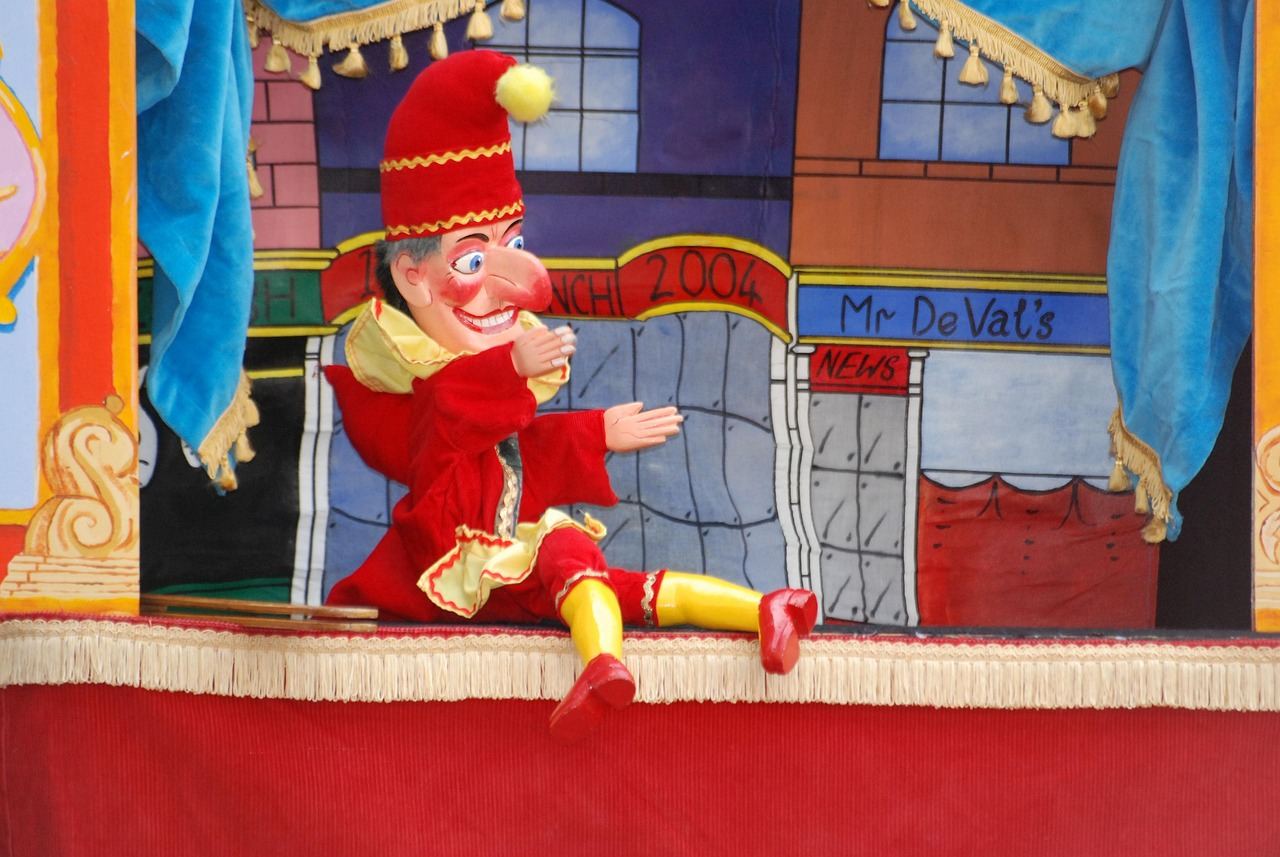
Puppetry's true magic isn't the performance itself—it's the focused attention that sweeps away intrusive thoughts and sparks creativity.
Learning puppetry as a beginner allows you to bring characters to life using various techniques such as marionettes, hand puppets, shadow forms, and rod puppets.
Your movements control the puppet through direct contact or strings, translating them into the puppet's expressions.
Your presence fades away, allowing the audience to focus solely on the puppet as it takes on a life of its own.
In puppetry, hobbyists construct and manipulate puppets through hands-on activities like tracing patterns, cutting materials, sewing components, and painting details, followed by performing with them using techniques to control mouth movement, gestures, and expressions.
Puppetry fosters a flow state through the precise manipulation of puppets, requiring focused attention and offering real-time feedback on performance, which helps combat intrusive thoughts and engages the mind creatively.
You think puppetry is for kids' birthday parties and afternoon TV. A grown adult, hunched over a sock with googly eyes – that's the image, right?That assumption is costing you one of the most technically demanding, weirdly expressive art forms most people never try.
Puppetry is split-focus performance – you're animating a character, managing your own body, and reading the audience simultaneously, all in real time. Most performers spend years just learning to do two of those at once.
Professional puppet builders work with the same materials as special effects studios – foam latex, silicone, cable rigging, mechanical joints. The craft side alone takes most people 6–12 months to get comfortable with.
It's one of the few art forms where voice, movement, and visual design all have to agree – if any one element breaks the illusion, the whole thing collapses. That tension is exactly what makes it interesting.
Jim Henson started with a 5-minute local TV segment using a ping-pong ball and a scrap of fleece. The sophistication didn't come from better materials – it came from obsessive attention to how a character moves, specifically the rule that the eyes lead everything. That single principle is what took Kermit from a felt tube to something people cried over.
If you're still filing this under "not for me," the gear and entry point are going to surprise you – and they're closer than you'd expect.
At first, controlling a puppet feels more like wrestling laundry than creating life. Your hand may shake, the mouth might move unpredictably, and the eyes could end up gazing into space.
The puppet looks drunk. It'll twitch and freeze, like it's confused about being inanimate.
In your first week, you'll be juggling head and body control all at once. Two hands in battle. By the second week, just when you think you've nailed the lip sync, adding movement throws it all off again.
Sync the mouth on vowels, not consonants. Most start with every syllable and miss that crucial detail.
By week three, you'll begin nailing eye focus. When it finally seems to look at something, it's a small but exciting win. By week four, you'll manage a 10-second routine that feels incredibly rewarding.
That rough start isn't a sign of failure. It's a sign that you're right where you should be. Next is understanding the mistakes that keep people from moving past this stage.
When to start: Early morning
Duration: 1 hour
Cost to try: $10
Success criteria: If you gave your sock puppet a clear name, face, and voice, and performed a 30-second script without losing the character, do session 2.
Beginners move the puppet around a lot to show emotion, but it doesn't work. Audiences connect through the puppet's eye direction, not how it moves.
Pick a single focus point for the puppet, and only move it when its attention shifts.
Nervousness causes sync issues causing the mouth to move incorrectly or stay shut, ruining the illusion.
Record yourself and watch it back on mute. Pay attention to whether open-mouth beats align with stressed syllables.
New puppeteers let their arm sag when tired. This drops the puppet's height and the audience loses interest.
Incorporate a 60-second wall-hold drill into practice. Keep the puppet at eye level with your arm up.
Beginners use their own body language to convey emphasis, which draws attention away from the puppet.
Stay still from the shoulders down while practicing in front of a mirror. Let the puppet do all the emoting.
Most beginners start with a funny voice before mastering the craft, which hinders development.
Use your normal speaking voice initially. Focus on technique first, then build the character.
Puppetry thrives in community theaters, puppet theaters, local libraries, and schools. Occasionally, you'll find it happening right in someone's living room with a camera and a green sheet.
Ask directly if you're a beginner wanting to learn. Mention your interest in construction or manipulation to join workshops, not auditions.
If you prefer observing first, say "I just want to watch for now." That approach often lands you a spot at the build table within twenty minutes.
Puppetry isn't one-size-fits-all. Start in the wrong place, and you'll feel stuck for months.
Slide your hand inside and let your fingers animate the puppet. Foam and fabric will bring your character to life, without complex tools or mechanics. Hand and rod puppets are ideal for most beginners.
Marionettes require strings and a control bar, offering endless possibilities. Yet, mastering a fluid walk isn't easy. Expect a steep learning curve, perfect for those seeking technical challenges.
Shadow puppetry is basic and budget-friendly. Use flat materials like cardboard, a light, and a screen to create stories. Low costs make it an easy entry point.
Bunraku uses large, intricate puppets, operated by multiple people. You'll hone both puppetry and teamwork. Not for newcomers — ideal for those who want a real challenge.
In ventriloquism, you're the star. You'll focus on vocal talent and creating distractions. It's just you and the puppet on stage, under all eyes.
If this resonates, Improv Acting explores a similar direction.
Readers who enjoy this often gravitate toward Baton Twirling next.
If this resonates, Stand-Up Comedy explores a similar direction.
Beginners often focus on mechanics like hand position and mouth movement. They aim for perfection but overlook the character. The puppet moves flawlessly but lacks life.
The one skill that changes everything is focus. It's all about where your puppet's eyes point and why.
A puppet's eye focus transforms it from a mere prop into a character. The audience instinctively follows eye direction. If the puppet stares into space, it has no presence.
Focus makes the audience believe that there's a mind at work behind those eyes.
A clear sightline from your puppet changes perception. It stops being a puppet. It becomes intention, action, character.
Every other element—voice, movement, lip sync—gains impact once focus is maintained. There's finally someone for the audience to connect with.
Commit to eight sessions over 30 days. Aim for twice a week to experience both puppet-building and performing.
If you're picking up the puppet outside of scheduled sessions, it's more than just a passing interest. Practicing voices in the car and checking your reflection means you're already engaging as a performer. Dive deeper by exploring puppet-building workshops and joining local community theater groups.
If the sessions ended and you felt no pull to return, consider that a lack of interest in performance. It might mean you're drawn to the creative aspect without the stage. Look into prop-making or costume design for creative outlets that don't involve performance pressure.
If attending each session was a chore and you felt uneasy, it's a sign. Puppetry isn't for you if self-consciousness persists past the fourth session. Trust what these eight sessions have revealed about your relationship with performing.
The strongest signal to notice? You find yourself intrigued by how puppeteers work their magic — not just watching, but curious about the mechanics. That curiosity is key.
Curious what else is out there? Skim our list of hobbies for ideas that go in a different direction.
If nothing here clicks, our guide to what to do when bored covers shorter, lower-commitment options.
Beginners typically start with hand puppets, sock puppets, or simple stick puppets—all require basic materials like fabric, stuffing, and markers. Marionettes and shadow puppets are more complex but become accessible once you master foundational techniques.
You can start puppetry for $20–$50 with basic craft supplies like felt, fabric scraps, googly eyes, and glue. More elaborate setups with puppet-building kits or performance stages may cost $100–$300, but aren't necessary when starting out.
A simple hand puppet takes 1–2 hours to make, while a short 5–10 minute performance can be prepared in a few practice sessions. More complex productions with multiple puppets and scenery take weeks or months to develop.
No—puppetry welcomes absolute beginners, and many performers discover their skills through practice rather than formal training. The puppet becomes your character, which actually makes it easier to express emotions without traditional acting experience.
You can perform puppetry anywhere—behind a simple cardboard puppet theater, on a tabletop, or even without a formal stage. A small corner, bedroom, or classroom is enough to start; professional stages are optional, not required.
Puppetry appeals to all ages—adults create sophisticated puppet art, perform at festivals and theaters, and use puppetry for storytelling in educational and therapeutic settings. It's equally engaging whether you're a child or adult.