BoredomBusted — Find Your Next Favorite Thing To Do
Discover hobbies, activities, places, and ideas that spark joy. Whether you're looking for something creative, active, social, or relaxing, BoredomBusted helps you find your next favorite thing to do.
Browse our hobby guides, things-to-do collections, and place ideas to never be bored again.
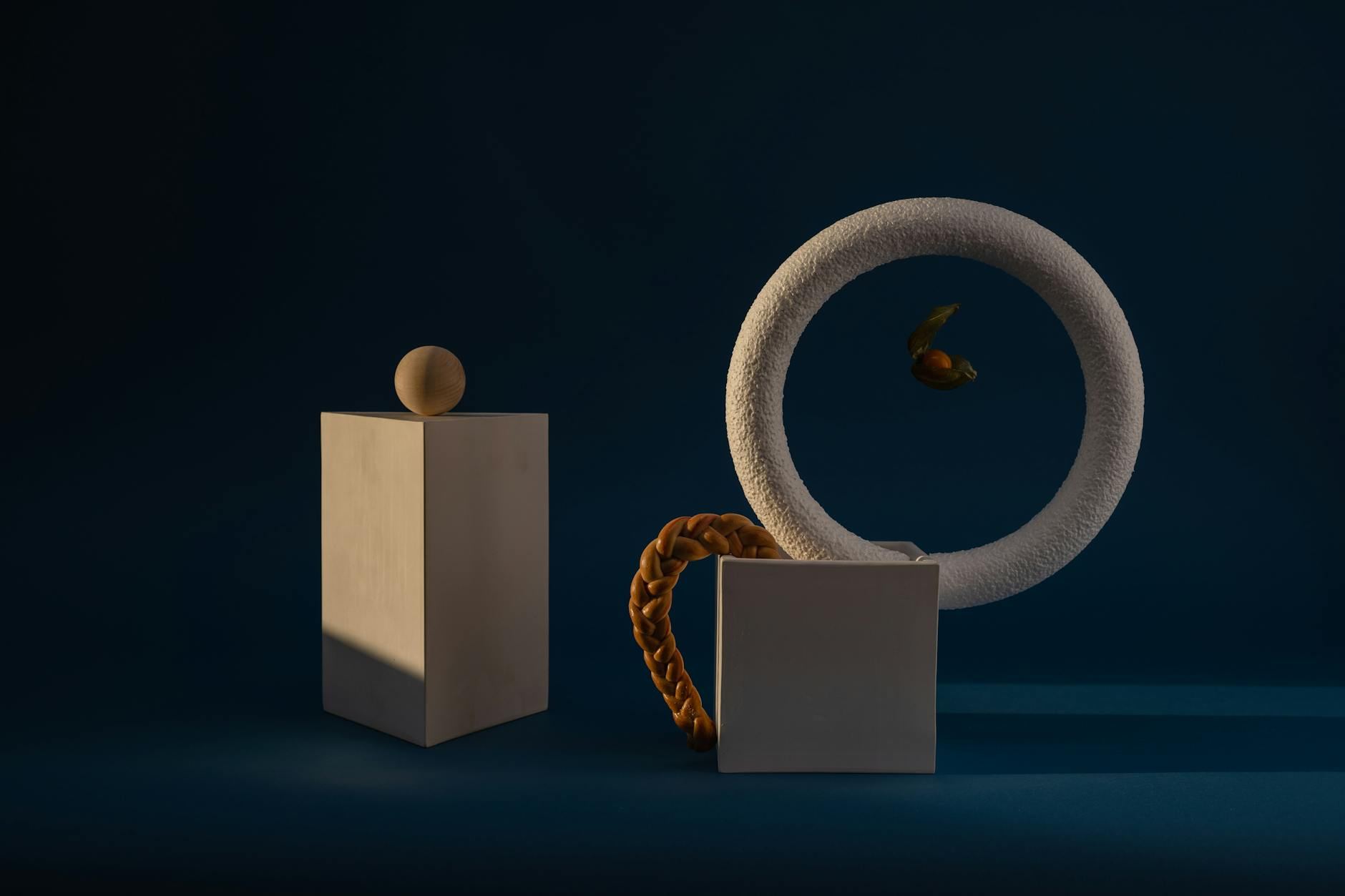
Installation art isn't confined to big galleries—your living room can host a transformative experience with just creativity and found objects.
Getting started with installation art as a beginner involves understanding how to manipulate space and engage the senses. Installation art transforms spaces into interactive environments full of sensory experiences.
Sculpture, sound, and lighting combine to engage multiple senses and create a cohesive experience.
In installation art, you physically assemble mixed-media environments by arranging everyday or scavenged materials like vintage plates or canvases in specific spatial configurations, testing their placement and lighting while iterating on designs through sketches and photographs over multiple sessions.
Installation art alleviates boredom by facilitating a flow state through the complex challenge of spatial assembly, providing immediate visual feedback and incremental skill mastery that fosters creative expression and a sense of accomplishment in transforming mundane spaces into engaging environments.
You probably assume installation art demands large gallery spaces and big budgets. That idea can hold you back.
Think smaller. A living room corner or local spot can become a vibrant installation site.
Use what's around you. Found objects or recycled items turn into art with some imagination, without draining your wallet.
Focus on the experience. Build stories and engage your audience, making the environment a unique part of their journey.
We'll dive into how to start your own project next.
Your first session will feel less like making art and more like moving furniture. You'll pick up an object, set it down, step back, squint, move it six inches left, step back again. The room looks ordinary. Nothing clicks. The gap between what you imagined and what's in front of you is the first real thing you'll learn to sit with.
The part most beginners don't expect is how much lighting changes everything — and how little control you have over it at first. Natural light shifts across an afternoon and makes the same arrangement look completely different. A cluster of vintage plates that felt balanced at noon can look flat and lifeless by 4pm. You're not just arranging objects; you're arranging light, shadow, and the time of day. That realization usually lands mid-session, right when frustration peaks.
Photographs are your sharpest tool in those early sessions, even if they feel like a chore. Your eye adjusts to a space over time and stops seeing it clearly. A photo doesn't. Shooting the arrangement every time you make a change gives you an outside perspective you can't fake. Many beginners skip this step and then can't remember why an earlier version felt stronger.
Progress across those first few sessions is incremental and quiet — a corner that finally has tension, a sightline that pulls you across a room. It rarely announces itself. Once you start trusting the slow iteration, the work compounds fast. The next section covers the specific mistakes that stall that momentum before it builds.
When to start: Morning
Duration: 1-2 hours
Cost to try: $30
Success criteria: If your installation creates a clearly defined space with at least 3 arranged objects and one obvious focal point, do session 2.
Most beginners sketch a concept, gather materials, and then try to execute the full installation in one go. The space fights back. Corners are awkward, light falls wrong, and the whole thing feels smaller or larger than expected.
Before you touch a single material, spend one full session just living in the space — observing how light moves through it at different times of day. Take photos from every angle. That time isn't wasted. It's what separates installations that feel intentional from ones that just feel cluttered.
Scavenging is genuinely fun. Vintage plates, old frames, rope — it all looks promising in a thrift store. The problem is that collecting without a concept means you end up with a pile of interesting objects that don't talk to each other.
Start with one clear emotional idea — a single word or feeling — and only collect materials that serve it. "Fragility" pulls you toward glass and paper. "Weight" pulls you toward stone and metal. That filter keeps your materials from becoming noise.
Once something is placed, it's tempting to leave it. Moving things feels like admitting failure. But installation art is inherently iterative — your first arrangement is just a rough draft with physical objects.
Photograph every arrangement before changing it, so you can compare without relying on memory. You'll often find that the third or fourth configuration is dramatically stronger than the first. The photos also build a record you can learn from across future projects.
Lighting is usually treated as the final touch — something you sort out after the materials are placed. In practice, it shapes the entire mood of the piece. A harsh overhead light can flatten an installation that would feel compelling under a warm directional lamp.
Introduce your lighting setup by the second session, not the last. Even a single repositionable lamp changes what you see. Shadows become part of the composition. Texture either comes alive or disappears. You need to know which before you commit to any arrangement.
It's easy to optimize for one hero shot — the angle that looks great on a phone screen. But installation art is a spatial experience. Someone walking through it encounters the work from a dozen different positions and distances.
Walk through your installation from every entry point before calling it finished. Crouch down. Stand at the far edge. Notice what someone sees when they first step in versus when they're standing in the middle of it. The camera comes after the experience is right — not before.
Start with r/InstallationArt and r/ContemporaryArt on Reddit. Both have active members sharing works-in-progress, critiques, and open call announcements. For broader mixed-media discussion, r/Art and r/ArtificialIntelligence (for generative installation work) round out the Reddit side.
Facebook Groups like "Installation Art Collective" and "Mixed Media & Installation Artists" connect you with working artists globally. Instagram is where the real portfolio sharing happens — search hashtags like #installationart, #sitespecificart, and #spaceandform to find creators at every level.
Local artist-run cooperatives and community art centers regularly host open studio nights and group critique sessions. These are the rooms where serious feedback happens. Look specifically for "open studio" events at warehouse art districts in your city — not commercial galleries, but working studio complexes.
Search Meetup.com for "experimental art," "contemporary art," or "mixed media" groups in your area. Many cities also run annual open-studio weekends where you can walk through working installation spaces and introduce yourself directly to practicing artists.
Site-specific installation focuses on one defined space. You work with its existing walls, light, and dimensions as part of the piece itself.
This is the most accessible starting point for anyone working at home. A bedroom corner, a stairwell, or a window alcove is enough.
Immersive installation treats the viewer as a participant. They move through the space instead of standing in front of it.
It suits artists who care more about how the space feels than how it looks in a photo. Texture, sound, and scale all come into play.
Found-object installation uses scavenged or everyday materials as its core medium. Vintage plates, salvaged wood, old clothing — anything with texture or history works.
This approach is ideal for people who want to make art without spending money on materials. The constraint becomes part of the creative process.
Light-based installation uses lamps, projected images, or natural light as the primary material. The objects in the space are almost secondary to the shadows and glows they cast.
It works best for artists drawn to atmosphere over form. Small changes in bulb position or color temperature can completely shift how a piece reads.
Narrative installation arranges objects and environments to guide a viewer through a sequence of meaning. Each element is chosen because it contributes to a larger message.
This suits makers who think conceptually first and build backward from an idea. Sketching the story before assembling the space is common practice here.
Collaborative installation is built by a group, with each person contributing materials, ideas, or labor. The process itself is often as important as the finished piece.
It's a natural fit for people who find solo creative work isolating but still want a hands-on artistic outlet. Community spaces, shared studios, or even a friend's backyard can host the work.
Playwriting is a sibling pursuit and often surfaces the same kind of curiosity.
If you want a related angle, Doll Making is the natural next stop.
Readers who enjoy this often gravitate toward Wheel Throwing next.
The skill that separates improving installation artists from those who stall is spatial reading — the ability to look at an empty or cluttered space and immediately sense what it wants to do.
Most beginners treat a space like a blank canvas. They bring their materials in and start placing things. The shift happens when you start treating the space itself as a material — something with weight, direction, and mood before you add a single object. That corner with the low ceiling already creates pressure. That window throwing afternoon light already creates warmth. Your job is to work with those forces, not against them.
This is why photographs matter so much during the build process. A photo collapses a three-dimensional space into a flat frame. Suddenly you see dead zones, visual clutter, and balance problems you walked right past in person. Iterating with a camera in hand trains your eye faster than any other method.
Once spatial reading clicks, decisions about lighting, object placement, and audience flow stop feeling like guesswork. The next step is understanding what materials actually do inside a space — and why that changes everything about how you build.
Give this four sessions over two weeks — roughly every three or four days — each one focused on arranging, photographing, and adjusting a small corner of a real space.
You sat down to move a few objects around and suddenly an hour is gone. That absorption is the signal — not inspiration, not excitement, but the inability to stop tweaking.
If that happened even once, move forward with intention. Start sketching concepts for a larger piece, scout a second location, and begin sourcing materials with a specific arrangement in mind.
Neutral isn't failure — it often means the constraint was wrong, not the hobby. Working alone in a blank room pulls the energy out of installation art, which is inherently spatial and social.
Before closing the door on it, try one session in a more charged environment — a cluttered garage, a stairwell, or an outdoor spot with natural light variation. Change the space first, then reassess.
Physically arranging objects in a room and iterating on their placement requires a tolerance for ambiguity. If the open-ended spatial problem felt frustrating rather than interesting, that's useful information about how you're wired — not a shortcoming.
Redirect toward creative hobbies with clearer structure — photography, printmaking, or ceramics all reward visual thinking but give you more defined feedback loops at every step.
If you caught yourself mentally rearranging a space you weren't even working in — a café corner, a friend's hallway — installation art has already started shaping how you see. That involuntary reframing of everyday environments is the clearest sign of genuine fit.
For quicker fixes, see our roundup of things to do when you're bored.
Installation art is an immersive, site-specific art form that transforms entire spaces rather than existing as standalone objects like paintings or sculptures. It engages multiple senses and encourages viewers to interact with or move through the artwork, creating an experience rather than a passive viewing moment.
Starting costs vary widely depending on your materials and space. You can begin with recycled or found materials for nearly zero cost, or invest $50–$500+ for supplies if using specialty materials. Many artists start with small-scale projects in borrowed or public spaces before investing in larger installations.
Installation art doesn't require traditional fine art skills—conceptual thinking and spatial reasoning matter more. You'll benefit from basic construction knowledge, problem-solving abilities, and creativity, though you can learn these skills as you go through experimentation and collaborative projects.
Timeline varies from days for small room-based installations to months for large-scale projects. Most beginner installations take 1–4 weeks from concept to execution, depending on complexity, available space, and materials.
You can work in galleries, museums, public spaces, abandoned buildings, outdoor environments, or even your own home—permission depending. Many artists start with community art events, pop-up spaces, or collaborative studio environments where you can both create and learn from other artists.
Installation art thrives on collaboration—most professional projects involve teams of artists, architects, fabricators, and volunteers. However, you can start solo with small personal projects while gradually building connections with other artists to tackle larger, collective installations.