BoredomBusted — Find Your Next Favorite Thing To Do
Discover hobbies, activities, places, and ideas that spark joy. Whether you're looking for something creative, active, social, or relaxing, BoredomBusted helps you find your next favorite thing to do.
Browse our hobby guides, things-to-do collections, and place ideas to never be bored again.
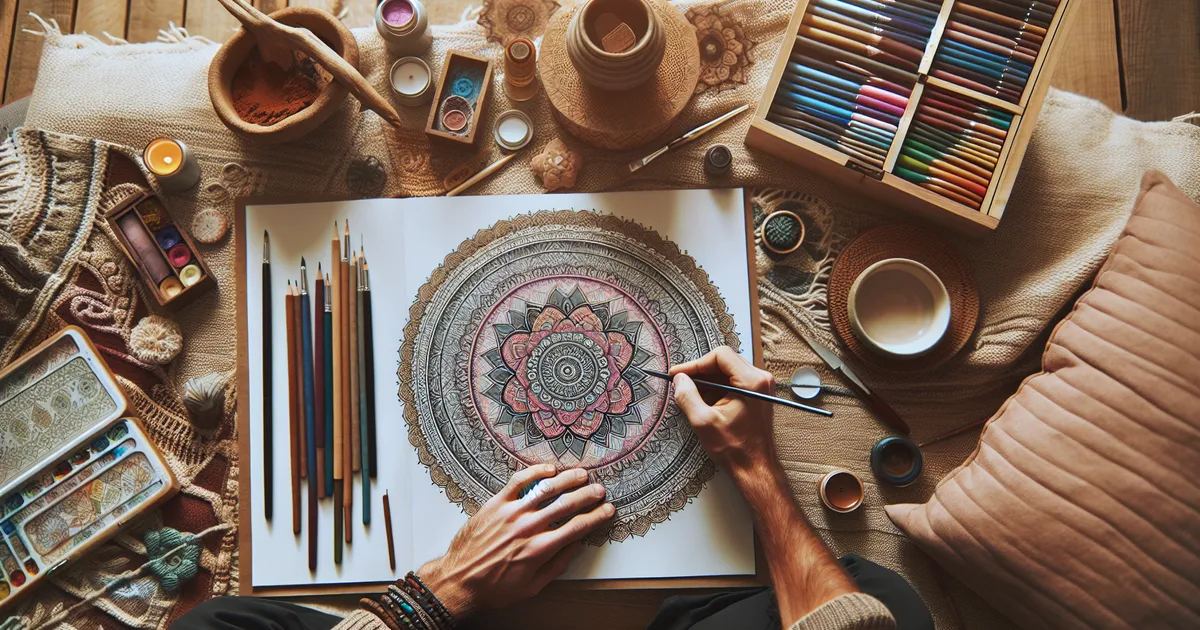
Mandala coloring isn't just stress relief — it's a complex skill requiring spatial decision-making and the ability to maintain focus on long-term projects.
Learning mandala coloring as a beginner is a relaxing way to engage your creativity while filling beautiful geometric or floral patterns with color – working from the center outward, repeating shapes and symmetry as you go.
Unlike freehand drawing or paint-by-numbers, the structure is already there; your only job is choosing how color moves through it.
In Mandala Coloring, you select a pre-printed mandala design and fill its sections with color using fine-tipped tools, focusing on precise strokes to create symmetry and balance while allowing your instincts to guide your color choices, often in a quiet personal space.
This hobby induces a flow state by demanding sustained focus on intricate patterns, suspending inner dialogue and providing skill feedback as you see immediate visual results, which fosters engagement and reduces mind-wandering.
You think mandala coloring is for those who can't commit to real art. Printed circles and colored pencils, maybe a podcast in the background. It's adult busywork with better PR.
That assumption is wrong. It's blocking you from a surprisingly rewarding hobby.
Consider a 12-ring mandala with 80 to 200 sections. Choose colors on autopilot and it falls apart visually by ring six. Completing a mandala is about making calculated decisions, not just filling in blanks.
This isn't just about repetition. It's about working within constraints, the same way designers train creative judgment. Finishing mandalas builds focus and decision-making skills that go far beyond coloring.
So, what do you actually need to start? The answer isn't what's waiting in your Amazon cart.
Coloring a mandala might seem like a peaceful practice from afar. In reality, the first session is often fraught with uncertainty. Expect to spend about 20 minutes debating color choices before realizing your shading looks uneven.
You'll likely feel a creeping sense of dissatisfaction early on. The page you found beautiful turns daunting, and the chosen colors don't translate as well in practice.
Contrast matters more than sheer color choice. A lack of color value contrast often makes early attempts appear flat. Aim for a mix of light, medium, and dark shades to create depth.
You'll encounter pages that feel irredeemable.
Resist the urge to abandon them. Completing an imperfect mandala teaches more than starting anew. Often, a fixable choice led to the perceived failure — and it's a mistake you'll sidestep in the future.
When to start: Early morning
Duration: 1 hour
Cost to try: $5
Success criteria: If you filled one mandala with at least 4 distinct colors and kept the circles and petals mostly within the lines, do session 2.
The outer rings are more complex, so beginners assume finishing them first gives structure – it doesn't, it just traps you with no room to balance your palette.
Work center-outward so each new ring responds to what's already established.
A fresh set of 48 pencils is hard to resist – but more colors across the full mandala creates visual noise, not richness.
Heavy-handed shading early on fills the tooth of the paper, so you can't build depth or blend over it later.
Start with a light pass – barely touching the page – and layer pressure gradually toward your darkest values.
Beginners treat white as "just the background," then finish and realize every uncolored gap reads as a mistake rather than contrast.
Before you touch color, decide once which sections stay white and mark them lightly in pencil – then don't second-guess it.
One petal blue, the next teal, the next purple – it feels creative in the moment and chaotic on the page.
Complete the full ring in your chosen color before moving on; visual harmony in mandalas comes from repetition within boundaries, not variety within them.
Mandala coloring is often a solo activity at home. However, you can also enjoy it in art studios, libraries, and wellness centers. These places frequently host mindfulness and creative therapy sessions where coloring is included.
Start with Facebook Groups by searching for "mandala coloring" plus your city. These groups are surprisingly active and easy to join.
Meetup.com is another great place to look. Filter by "coloring" or "art therapy" in your location to find local meetups under wellness or crafts.
Check events pages for Michael's or Hobby Lobby stores in your area. They host free in-store coloring nights more often than you might think.
For more resources, explore Etsy and Reddit's r/Adultcoloring community. While not local, both have threads linking to regional Facebook groups and Discord servers.
There's no national organization for mandala coloring. It's a hobby, and that's part of its charm.
If you're new, simply mention it's your first group experience. You'll likely get useful advice and avoid buying the wrong supplies.
Printed mandala books are the easiest entry point. Designs are pre-drawn, bound, and ready to color. A decent book runs $8–$15 and lasts months. Perfect for beginners who want to start coloring immediately.
Digital mandala coloring uses apps like Procreate on a tablet. No physical supplies required, just an iPad and Apple Pencil. The undo button lets you experiment freely. Great for those who hesitate to commit to a color.
Dot Mandala or Dotillism involves painting raised dots with acrylic paint. A blend of crafting and coloring, it's tactile and satisfying. Ideal for creators wanting a displayable final product. Starter kits cost $20–$40.
Geometric and Sacred Geometry designs feature repeating shapes like triangles and hexagons. They feel more architectural, appealing to those who find traditional mandalas too ornate.
Creating a Sand Mandala involves detailedly pouring colored sand over days or weeks. Rooted in Tibetan Buddhism, this is a meditative practice rather than a casual hobby. Not the starting point for most beginners.
Some of the same instincts show up in Adult Coloring Books — worth a look if this clicked.
Another variant that pulls from the same roots is Strings.
Another variant that pulls from the same roots is Knitting.
Value control is what elevates mandala art from mundane to mesmerizing. Beginners often fixate on chasing the perfect palette and miss the actual game-changer: using light and dark effectively within each hue.
The real magic happens when you make two adjacent sections of the same color vary in brightness. It draws the viewer's eye through the design, creating a sense of movement and depth. Having this skill means your mandala guides the eye naturally, making your work feel intentional, not chaotic.
Strong value contrast draws the eye inward, making a mandala feel complete. Without varying lightness and darkness, even the most beautifully colored mandala can seem static and unimpressive from a distance. It's not about how many colors you use; it's about how they play off each other in terms of value.
Six sessions over 30 days gives this hobby a fair shot. That's twice a week, with each session lasting 20–30 minutes.
If you're reaching for the coloring book before you're scheduled to, that's not just a habit – it's an attraction. The quiet focus is offering something unique. If that's the case, upgrade your supplies and dive into more intricate designs.
Feeling indifferent after completing the sessions usually points to isolation rather than the practice itself. Experiment with joining a coloring group, following a YouTube session, or trying a mandala style you haven't explored. Commit to three more sessions with a different approach.
If you found yourself counting the minutes, that's valid data. Some people need movement or social interaction to feel engaged. Structured silence might feel like punishment rather than rest. Trust that this hobby might not be the match you're looking for.
You can't stop noticing mandalas in random places. Whether on a café wall or a tote bag, this low-level awareness suggests the designs are drawing you in even before you pick up a pencil.
When you don't want to commit, things to do when bored is a better starting point.
You'll need coloring materials like colored pencils, markers, or gel pens, along with mandala coloring books or printable designs. Many beginners start with basic colored pencils and a simple mandala book from a local bookstore or online retailer—no specialized equipment required.
Most mandalas take 20 minutes to 2 hours to finish, depending on size, complexity, and your pace. Beginners often spend longer on intricate designs, while experienced colorers work faster as they develop their style and technique.
Yes—the repetitive, meditative nature of mandala coloring activates the parasympathetic nervous system, lowering stress and anxiety. Many people report feeling calmer and more focused after even short coloring sessions, making it an effective mindfulness practice.
No artistic experience is necessary. Mandalas are pre-drawn with patterns already in place, so you simply choose colors and fill in the spaces—there's no drawing ability required, making it accessible to absolute beginners.
You can start for $10–$20 with a basic coloring book and a set of colored pencils. Premium supplies like quality markers or imported books cost more, but the hobby scales to any budget—you can begin affordably and upgrade tools as you progress.
Mandalas feature symmetrical, geometric patterns with spiritual or meditative roots, creating a rhythmic coloring experience that enhances focus. Unlike character-based coloring books, mandalas emphasize the meditative process over representational art, making them uniquely calming.