BoredomBusted — Find Your Next Favorite Thing To Do
Discover hobbies, activities, places, and ideas that spark joy. Whether you're looking for something creative, active, social, or relaxing, BoredomBusted helps you find your next favorite thing to do.
Browse our hobby guides, things-to-do collections, and place ideas to never be bored again.
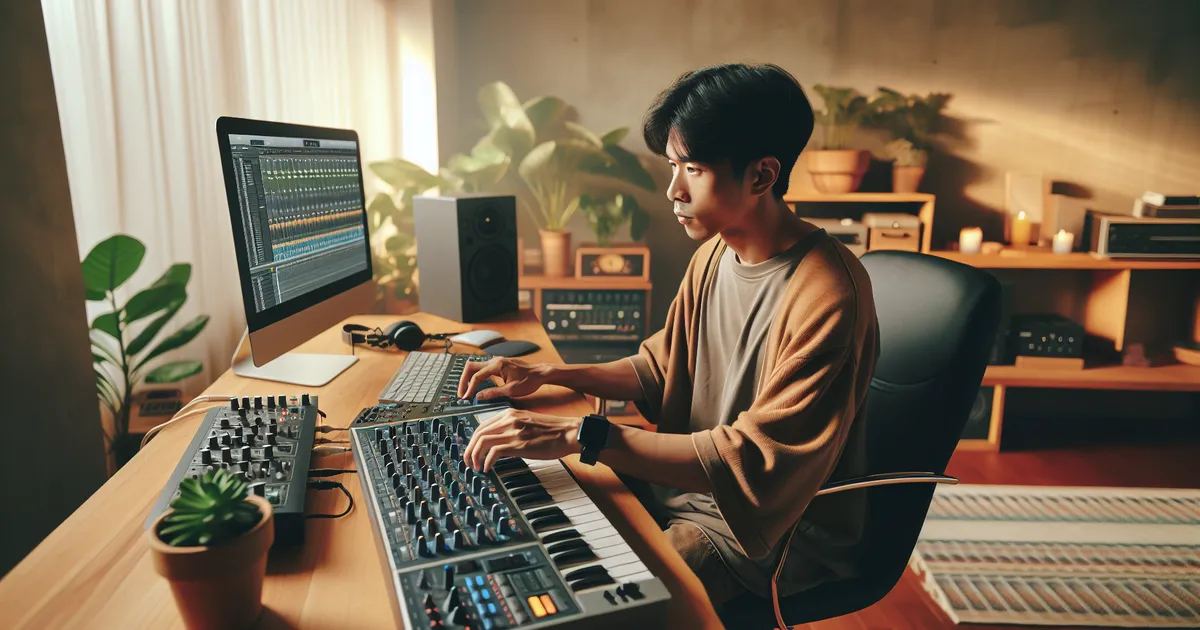
Electronic music production isn't just about software; it's a deep dive into compositional thinking where your ability to express ideas trumps knowing which buttons to press.
Getting started with electronic music production as a beginner involves learning to create beats and tracks on your own, using software, hardware, or both.
Record or program sounds, arrange them, and shape the result with effects. It's about crafting every element
You're the composer, performer, and producer, with no need for a band or studio.
In electronic music production, you manipulate sounds using a Digital Audio Workstation (DAW), arranging loops and samples, adjusting audio parameters, layering elements, and crafting unique sounds through synthesizers and audio effects.
This hobby fosters a flow state by matching skill challenges with your growing competence, providing rapid feedback through sound adjustments, and allowing for creative autonomy that keeps you engaged and motivated.
You believe it's all about the software.
Got a laptop and a free trial, and suddenly you're a music producer.
That's missing the real excitement — the mind behind the music.
A producer with two years under their belt isn't simply clicking faster.They're hearing their track differently.
They listen to a loop. Sense the missing low-end space. Spot the absent counter-melody. They know when a hi-hat pattern is too dull.
That listening skill takes time to develop.
But you can start refining it right away — and that's exactly what comes next.
When you see a producer in action, it's a dance of chaos and logic.
Sitting down with the software feels like jumping into chaos without a map. Every control seems alien, every tutorial adds confusion. An hour feels like eternity, and nothing resembling music comes out.
The surprise comes when bad sounds become teachers. Four bars of coherent sound feel like triumph. You start focusing on choices instead of finished tracks.
At first, most of your effort is spent navigating, not creating.
Finishing anything, no matter how rough, is a huge deal. By week three, your ears detect more mistakes than your hands can fix.
When one element finally clicks, like a bassline or a rhythm, it resembles something familiar.
Choose a genre and know its tempo before you begin. House is around 128 BPM, hip-hop sits at 85–95, and drum and bass starts at 170.
One right tempo can make your first session coherent. Suddenly, sounds start to fit together.
The cycle of quitting and starting over defines the early journey. Even top producers started with this messy loop. The following section dives into mistakes that can keep you longer in this loop than needed.
When to start: Morning
Duration: 1-2 hours
Cost to try: $0
Success criteria: If you can build a 16-bar loop with drums, at least 2 synth layers, and audible reverb/delay, do session 2.
Free VST bundles and synth deals feel like progress – they're not.
Finish ten tracks using just one synth, one sampler, and one reverb. This constraint forces creativity before you add anything else.
Beginners tweak EQ and compression mid-idea, killing the session.
Keep writing with rough, unbalanced levels. Finish the arrangement first; leave mixing for later.
Drums sound good in isolation but vanish on small speakers.
Compare your drums to a track in the same style. A/B test every few minutes while building.
When everything is loud and moving, nothing stands out.
Highlight one element per track section. Pull back other elements to guide the listener's focus.
That loop is comforting because you've looped it endlessly.
Force an arrangement at the end of each session. Even using rough sections like drop, build, breakdown, and outro helps more than endless looping.
Forget the need for a fancy studio. Electronic music production thrives at home, whether it's a bedroom setup or a kitchen table with headphones. Some move to recording studios, but your creative journey starts right where you are.
When you show up to a meetup or beat battle, say: "I'm early in learning my DAW and mostly here to listen and get feedback." This one line clarifies your skill level and usually gets you paired with someone who'll walk you through their setup instead of just displaying their skills.
Perfect if you grew up with rap, R&B, or lo-fi. The focus is on loops, samples, and drums, making this a great entry point. The genre rewards repetition and feel over complex sound design. A basic DAW with a sample pack is all you need to get started.
This suits those who crave understanding why sounds work. Synthesis in techno, house, or EDM involves creating sounds using oscillators, filters, and envelopes. It's less about arranging and more about engineering. Start with a synth plugin (free options exist) and expect a learning curve.
Great for those who find traditional structures frustrating. Ambient and experimental music have fewer rules and slower builds, with texture taking precedence over rhythm. It's forgiving of technical mistakes, ideal if you're starting out and want to avoid sounding generic.
Designed for those who already think in scenes rather than tracks. Sound design for film and games focuses on mood and function. Using tools like FMOD adds cost and complexity but allows for Foley and tension-building over dancefloor beats.
For those ready to take production onstage. Live electronic performance involves real-time triggering and improvisation. While modular setups can be costly, Ableton Live sets are more accessible for beginners.
For something adjacent, see Electronic Drumming.
If you want a related angle, Acoustic Drumming is the natural next stop.
Forget gear and plugins. They're the traps beginners fall into.
The real game-changer is critical listening. Training your ears to dissect a professional track exposes its construction, not just its appeal.
Listen to a favorite track and focus on each element's frequency space. Notice where silence resides and what parts propel the track's energy.
Once you can identify the structure in professional music, you avoid creating cluttered mixes.Pro tracks often thrive on space.
Without this understanding, you might build layers without purpose, wondering why it all sounds jumbled.
Building clarity in your mixes starts with this practice.
Commit to 8 sessions over 30 days. Two per week, 45–60 minutes each.
If you keep opening the software during breaks, eager to tweak sounds or reverse-engineer beats, you've got the bug. Dive into sound design and start finishing tracks, not just browsing.
Showed up all 8 times but felt nothing? Mismatched genre might be the issue. Try 4 more sessions in a different genre. A shift from house to drum and bass can hit the right note.
If producing felt like a chore, that's not a challenge; it's a clear signal. Frustration can be fun, but boredom means it's not for you.
Can't stop thinking about music? Noticing a new way songs are structured? This perceptual shift means you've found your groove as a producer.
Want broader ideas first? Our list of hobbies gives you the lay of the land.
At minimum, you'll need a computer, a digital audio workstation (DAW) like Ableton Live, FL Studio, or Logic Pro, and studio headphones or monitors. Many free DAWs like Reaper's trial, GarageBand, or Cakewalk exist if you're testing before investing. As you progress, you can add a MIDI keyboard, audio interface, and synthesizers, but you can start producing quality tracks with just software.
You can begin for free using open-source or trial DAWs, costing nothing upfront. A beginner setup with a budget DAW ($100–$400), basic MIDI keyboard ($50–$150), and headphones ($100–$300) runs $250–$850. Professional-grade equipment and plugins can exceed thousands, but quality music can be made at any budget level.
You can create a basic track within weeks of starting, but developing foundational skills in sound design, mixing, and arrangement takes 3–6 months of consistent practice. Becoming proficient enough to produce release-quality music typically requires 1–2 years of dedicated learning and experimentation.
The basics are accessible—modern DAWs have intuitive interfaces and countless tutorials make learning approachable. However, mastering sound design, music theory, and mixing requires patience and practice. Most beginners find it rewarding because you hear results quickly, even as you develop deeper skills over time.
No prior music experience is required—many producers start without knowing music theory or playing an instrument. Basic computer skills and willingness to learn are enough to begin; you'll pick up music fundamentals and production techniques through practice and tutorial resources.
Yes, many professional and chart-topping electronic tracks are produced entirely from home with standard equipment. Quality depends more on skill, ear training, and workflow than on having a fancy studio—though treating your room acoustically and investing in good monitoring helps achieve release-ready mixes.