BoredomBusted — Find Your Next Favorite Thing To Do
Discover hobbies, activities, places, and ideas that spark joy. Whether you're looking for something creative, active, social, or relaxing, BoredomBusted helps you find your next favorite thing to do.
Browse our hobby guides, things-to-do collections, and place ideas to never be bored again.
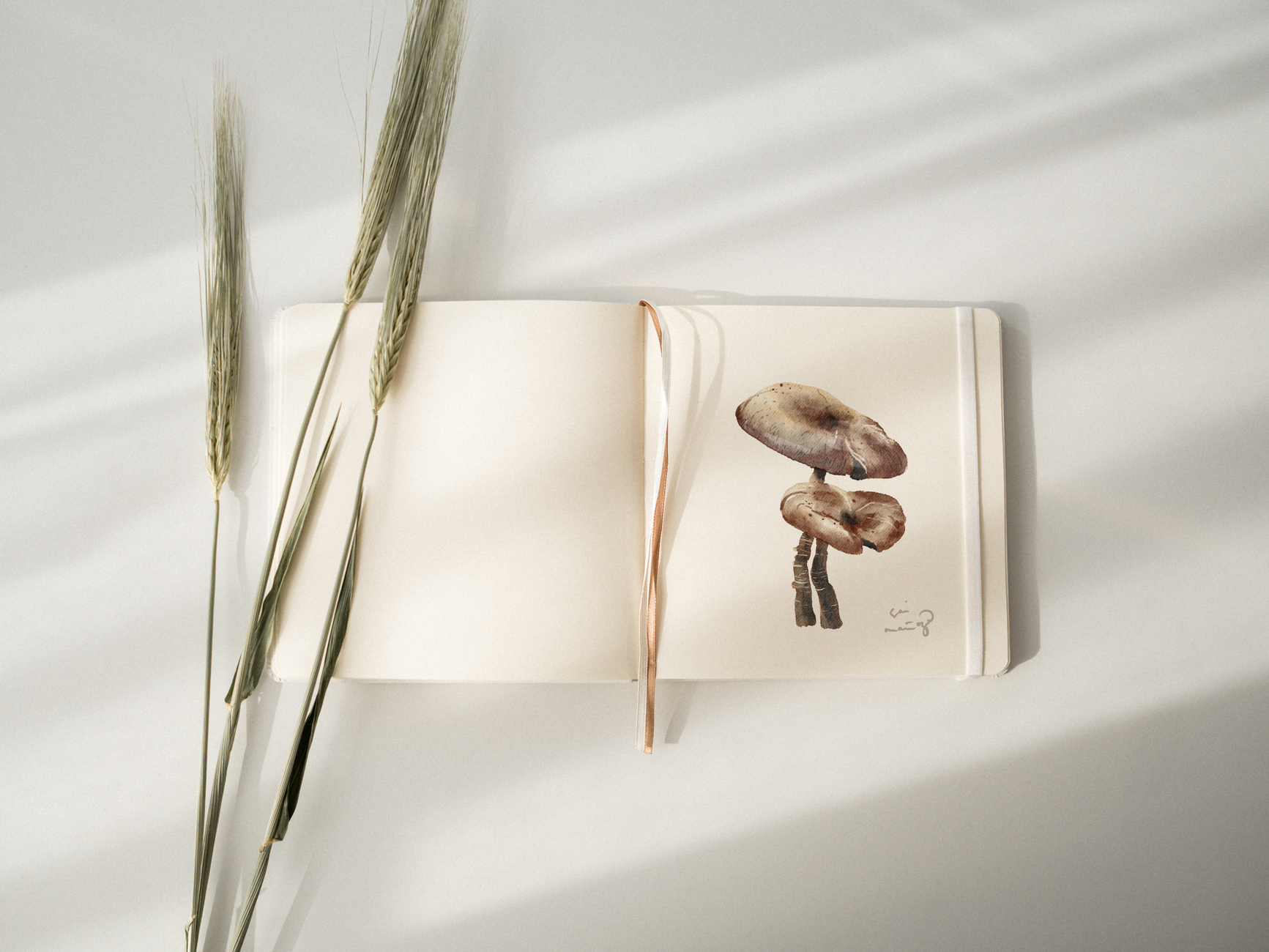
Nature journaling isn't really an art hobby. The drawing is a trick that forces you to look at one leaf or bird longer than you ever have.
Nature journaling is keeping a field notebook where drawing, writing, and numbers share the same page. You sit somewhere outside, pick one small subject, and record what you see. It could be a leaf, a crow, or a puddle skinning over with ice.
A session starts with the boring metadata of date, time, place, and weather, which is what makes a page useful later. Then you sketch for ten minutes or so, add labels and a measurement or two, and jot down a few questions. The page is a record of attention, not a finished picture.
Naturalist and educator John Muir Laws popularized three prompts that keep the page moving: I notice, I wonder, it reminds me of. Notice is what you see, wonder is a question you can't answer yet, and reminds-me-of is a comparison to something you already know. A lopsided beetle with good labels beats a pretty drawing with no information in it, so you don't need drawing skill to start.
You sit outdoors with a pocket notebook and record one subject in three ways: a quick sketch, a few written observations, and a measurement or count. Prompts like "I notice, I wonder, it reminds me of" keep the page moving, so you're never staring at a blank sheet wondering what to do next.
Boredom often means your attention is skimming the surface. Nature journaling gives it one small target and a built-in question loop, so a patch of weeds turns into a dozen things you hadn't seen. The time passes faster than you'd expect, and you leave with a page that proves you were paying attention.
People hear "journaling" and picture a diary with a pressed flower stuck in it. The older tradition is closer to fieldwork.
Joseph Grinnell, who ran the Museum of Vertebrate Zoology at UC Berkeley in the early 1900s, trained his students to keep strict field notes. Date, locality, conditions, observations, and a catalog of what they found. Researchers still use those notebooks to measure how wildlife ranges have shifted over a century.
Your notebook won't be science, but it borrows the same engine. You can't draw what you haven't actually looked at.
Most of us identify a thing and move on: oak, robin, cloud. The label goes on and the brain walks away.
Drawing blocks that shortcut. You find out the oak leaf has uneven lobes, and the robin has pale arcs around its eye. Memory research on the "drawing effect" points the same way: sketching something tends to lock it in better than just writing its name.
Add the wonder questions and you get a loop: look, ask, look again. That loop is the actual hobby. The notebook is just the evidence you did it.
Session one is awkward in a predictable way. You sit down with a pencil and realize you have no idea what to look at.
So you pick a leaf. Ten minutes later you have an oval with a stem, and you're quietly annoyed. That's mostly a seeing problem, not a hand problem.
Around minute twelve something shifts. You notice the veins branch in pairs, or that an ant has been crossing the same twig the whole time. The clock gets fuzzy.
You draw faster and label more. The page gets uglier and more useful at the same time. Aim for three real observations about the subject, not a better drawing.
Some people start thinking in sentences here, like "that's a different bird than yesterday." Others quit because the pages look childish. Your drawings will look rough for weeks, and the notes are what you'll actually reread.
Expect wind, bugs, damp paper, and the odd feeling of someone walking past your bench. Most people glance and keep going. A few ask what you're drawing, which is free practice at explaining it.
When to start: A calm morning or late afternoon, when the light is soft
Duration: 20-30 min
Cost to try: Free
Success criteria: If you found at least one detail you hadn't expected and you're curious what the next session might show you, do session 2.
You've seen the gorgeous notebook spreads online. They're edited, redrawn, and often assembled at a desk later.
A field page should be messy and fast. If you're not willing to ruin a page, you won't learn anything from it.
A wide valley view has too many parts and no entry point. You freeze, draw three lines, and close the notebook.
Start small: a feather, a pinecone, one flower. A single object gives you a finishable page, and finished pages build the habit.
It feels like admin when you're excited about a drawing. In six months it's the only thing that makes the page useful.
Write the metadata first, every time. Seeing that you noticed the first buds on March 12 and again on March 30 is where the real payoff of a notebook shows up.
The moment you identify something, curiosity switches off. Look it up after you've drawn it and listed what you noticed.
Your own observations will make the field guide entry mean far more. Apps like iNaturalist are great for this second step, not the first.
Hands-on-the-ground drawing is how people find poison ivy, ticks, and wasp nests. Check the spot before you sit, and wear long pants in tick country.
Keep a respectful distance from wildlife and don't touch unfamiliar plants or fungi. If a subject needs you to get closer to see it, use a hand lens or binoculars instead.
Nature journaling grows through nature centers and online groups more than through any one club. You can start with a stranger's free tutorial tonight and find a local group within a month.
John Muir Laws's site (johnmuirlaws.com) hosts free lessons and videos, and the Wild Wonder Foundation he co-founded runs programs and an online community. Watch one lesson, then try the exercise on your own porch.
Reddit helps for feedback and ID help. Try r/sketchbooks for sharing pages, r/birding for bird questions, and r/whatsthisplant when a leaf has you stumped.
Search for your local Audubon chapter on audubon.org and look for walks or workshops. Chapters often run beginner outings that welcome a notebook.
Then check county and state park naturalist programs, nature centers, botanical gardens, and your public library's events page. Many states run Master Naturalist programs with volunteer training and field days.
Meetup and Facebook have groups for nature journaling and sketching, though activity varies a lot by region. Urban Sketchers has local chapters, and its members usually welcome nature subjects. If you like drawing places as much as nature, urban sketching is the city version.
If nothing exists near you, start something tiny. A monthly "sit and draw" at a park bench with two friends counts.
Nature journaling splits into a few styles. Pick the one that matches what you want from it.
Use the Grinnell-style format: date, place, weather, then observations and a species list. You'll learn local plants and animals faster than from any app.
Best for list-makers and curious types. It pairs naturally with birding, since a species list is half the page.
Add watercolor or colored pencil and spend more time on composition. You'll draw fewer subjects per session, but the results look great.
Best for people who already like art supplies. If the art side takes over, botanical drawing goes deeper into plants.
Return to the same tree or patch every week and record first buds, first bloom, first migrants, and leaf drop. Programs like Nature's Notebook from the USA National Phenology Network turn this into real data. Best for patient types who like long-term projects.
Choose one place, sit for 20 minutes, and write more than you draw. Sounds, thoughts, and small movements all count.
Best for stressed people who want an hour outside without a goal. It sits close to everyday journaling, just with the outdoors as your prompt.
Use the three prompts as a shared game: everyone notices three things, then shares a wonder. Kids often out-notice adults. Best for parents, teachers, and friend groups.
The one skill behind everything else is looking slowly and specifically before you draw a single line. Drawing skill follows from it, not the other way around.
The fastest way to practice is the notice list. Before you pick up the pencil, spend two or three minutes writing five observations about your subject. Make them specific: "the stem is hairy," not "the plant is green."
Add one sound, one smell, and one thing you can feel, like bark texture or wind direction. These details feel unrelated to drawing. They're what turn a sketch into a memory of a place.
After the list, write one wonder question, like why the leaves on this side are chewed. You don't need the answer today.
Measure one part against another instead of guessing: is the beak half as long as the head, or the leaf as wide as your thumb? Proportions beat shading for making a drawing look like the real thing.
Do this for 20 minutes, three times a week, and your drawings improve almost as a side effect.
Commit to 12 sessions of 20 minutes over 30 days. That's about four hours, with supplies you may already own.
One or two sessions can't tell you much, because the first ones feel clumsy for everyone. By session twelve you'll know whether the looking habit has stuck.
You start noticing outside the notebook. You catch a bird's behavior on a walk or realize you know your block's trees now. Keep going.
You like the paying-attention part but hate drawing. Switch to words and numbers only, or try phenology. The notebook is the tool, not the point.
You find the sitting still tedious. Your brain probably wants motion. Try birding or hiking with a pocket notebook instead.
If you pull out the notebook for something you would have walked past a month ago, you're in. If you keep finding reasons not to start session after session, that tells you something too. Honor it and move on.
No. The drawing is a tool for seeing, not a performance. Stick-figure diagrams with good labels and measurements are useful records. Most journalers find their drawing improves just from the habit of looking closely, even when the pages stay rough and a bit wobbly.
Each entry usually has the date, time, place, and weather, then a sketch or two, written observations, a measurement or count, and a question or two. Many people use the prompts "I notice, I wonder, it reminds me of" to organize the page.
A small notebook and a pencil or waterproof pen are enough. Add a hand lens, colored pencils, or a small watercolor set later if you want. Binoculars help if you get into birds, but they're not a day-one purchase, and borrowing a pair works fine.
Regular journaling mostly records your thoughts and feelings. Nature journaling points outward and records a real subject you're observing, using drawings, notes, and measurements. Your thoughts still show up on the page, but they're attached to something specific outside you.
Twenty minutes is a solid starting point. That covers a couple of minutes of looking, about ten minutes of drawing, and a few minutes for notes and questions. Shorter sessions still count, and longer ones feel natural once your attention builds. Set a timer so you don't quit at minute five.
Yes. Pigeons, weeds in sidewalk cracks, street trees, clouds, and a single houseplant by a window all work as subjects. Nature journaling is about attention, not remote wilderness, and urban spots often offer surprising variety if you look closely and return often.