BoredomBusted — Find Your Next Favorite Thing To Do
Discover hobbies, activities, places, and ideas that spark joy. Whether you're looking for something creative, active, social, or relaxing, BoredomBusted helps you find your next favorite thing to do.
Browse our hobby guides, things-to-do collections, and place ideas to never be bored again.
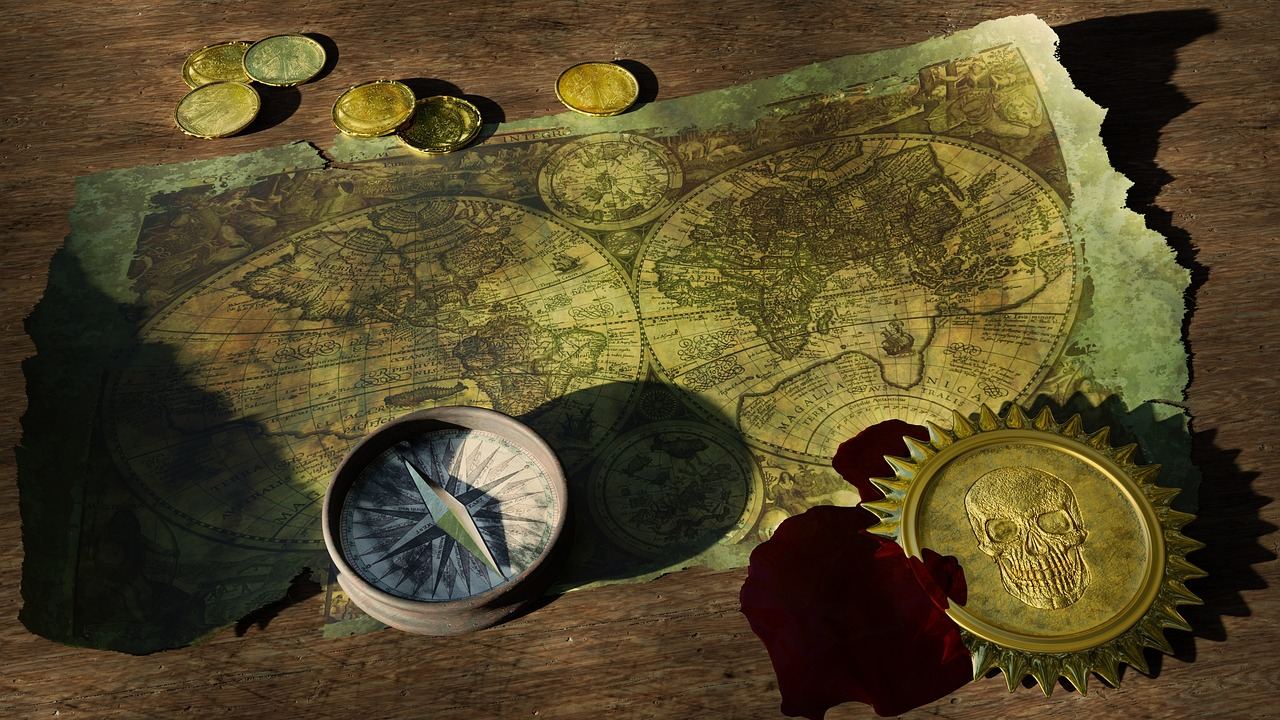
Treasure hunting isn't just for pros — with a basic metal detector and curiosity, anyone can uncover local stories and surprises beneath their feet.
Learning treasure hunting as a beginner can be an exciting adventure, where you use a metal detector to uncover items lost for decades. The finds range from pocket change to genuine historical relics — you never know until you dig.
Most hunters work beaches, parks, and historical sites. Coins and jewelry are the common finds. But the occasional artifact — a Civil War button, a medieval coin — is what keeps people coming back.
Treasure hunting involves using maps, GPS devices, or clues to locate hidden items or caches in outdoor settings. Participants engage in searching, solving puzzles, and often interacting with the environment or others to uncover these treasures, which can range from natural artifacts to hidden geocaches.
Treasure hunting stimulates a sense of adventure and curiosity, activating intrinsic motivation through the pursuit of tangible rewards and completing challenges, ultimately fostering a state of flow where time and distractions fade away.
You probably picture treasure hunting as a serious operation. Expensive gear, years of experience, maybe a research team.
That picture is wrong. Entry-level metal detectors from brands like Garrett start around $200 — and beginners regularly pull up colonial-era coins and old jewelry on their first few outings. The equipment ceiling is low enough that curiosity matters more than gear.
No research team.
No credentials.
Just a weekend afternoon and a patch of ground with some history behind it. Most finds won't be worth money — but the story of what you pulled out of the ground, and where, is what actually keeps people hooked.
That's worth knowing before you start thinking about where to actually look.
Your first time out feels physically strange before it feels fun. The detector swings in a slow arc, your arm already tiring faster than you expected. The headphones feed you a constant wash of crackles and pops — and you have no idea which signals mean something and which are just buried junk. Most beginners spend their first session digging up bottle caps and pull tabs, wondering if they're doing something wrong. They're not. That's just what the ground holds.
The thing that catches most people off guard is the patience it demands. There's no moment where the machine suddenly starts behaving itself and coins start surfacing on cue. Reading signals takes repetition. The detector is only as useful as your ability to interpret what it's telling you — and that ear develops slowly, over hours of digging both good targets and bad ones. Expect to dig a lot of bad ones early.
Then something shifts — usually around the second or third outing. You pull a coin out of the dirt and the date stamped on it is from before your grandparents were born. It's corroded, small, worth almost nothing at a coin shop. But you're holding something that nobody has touched in over a century, and that feeling is genuinely hard to describe. That's the moment most people stop wondering if they'll stick with it.
Those early sessions will also hand you a few avoidable mistakes — the kind that cost you time, access, or a good find. Knowing what those mistakes look like before you make them changes your first month completely. That's where we're headed next.
When to start: Early morning
Duration: 1.5 hours
Cost to try: $0
Success criteria: if you completed the site visits and took notes without finding any treasure, do session 2.
Most beginners obsess over which detector to buy. They compare specs, read forum debates, and upgrade before they've found anything. The detector isn't the problem. Technique accounts for more of your success than hardware ever will. A $200 Garrett swung slowly and consistently will outperform a $1,000 machine swung sloppily.
Pick one entry-level detector and spend your first month learning its signals. Every machine has a distinct audio tone for different metals — knowing yours by ear is the actual skill. Buy the gear once. Practice the rest.
Wandering into any open field and expecting finds is the fastest way to get bored. The ground only gives back what people lost there — so you need to go where people actually were. Old fairgrounds, former homestead sites, and well-used historic parks are where coins and relics concentrate.
Before you go anywhere, spend 20 minutes with old maps. Historic USGS maps and county atlases are free online and show structures that no longer exist above ground. A building that stood in 1880 almost certainly dropped coins and objects into the soil around it. That's your target.
New hunters dig everything — every beep, every blip. You end up with a pile of pull tabs and bottle caps and a sore back. After a few sessions of that, most people quit. Learning to read your detector's discrimination display before you dig is what separates people who stick with it from people who don't.
Most detectors show a VDI number — a numerical target ID — alongside the audio tone. Coins typically read consistently in the same range; trash signals jump around. A repeatable, steady signal from two directions is worth digging. A single erratic beep usually isn't. This one habit will double how much you enjoy a session.
Metal detecting is restricted — sometimes outright banned — in national parks, many state parks, and protected archaeological sites. Beginners often find out only after someone approaches them. Getting caught detecting on protected land can mean fines, confiscated equipment, and a permanent ban from a site. It's not worth it.
The easy workaround: stick to county parks, private land with permission, and beaches while you're learning. Private landowner permission is often easier to get than people expect — most owners are curious and happy to let you search in exchange for showing them what you find. Start there.
Most things you dig up won't be worth money. That's just the reality. Hunters who chase dollar value burn out quickly because the math rarely works in their favor. The hobby pays in stories, not cash — and once you find a 150-year-old coin with a face still visible, you'll understand exactly what that means.
Shift the goal early. A wheatie penny from 1932 isn't a financial windfall — but it was in someone's pocket during the Great Depression. The object's age and context is the reward, not the resale price. Hunters who frame it that way are still hunting years later.
Reddit is the fastest way in. r/metaldetecting has over 100k members posting finds, asking site questions, and recommending gear — it's active daily. r/geocaching covers the GPS-based side of the hobby with the same energy.
For geocaching specifically, Geocaching.com is the single most useful place to start — it maps every active cache near you and has a built-in community of local hiders and finders. The free account gets you access to millions of caches worldwide.
Local metal detecting clubs are more common than people expect. The Federation of Metal Detector and Archaeological Clubs (FMDAC) maintains a directory of affiliated clubs across the US — searchable by state. Joining a local club gets you permission access to private land that solo hunters rarely get.
Clubs also run organized hunts at fairgrounds, farms, and historical properties a few times a year. Those events are where beginners make their first real finds — and meet the people who know which local spots are worth hunting.
Metal detecting is the most common entry point. You buy a detector, pick a promising location, and start sweeping. Beaches, parks, old fairgrounds — anywhere people gathered for decades is fair game.
This version suits people who want immediate, tangible results from a solo afternoon outdoors. You might dig up bottle caps for an hour — then pull out a silver coin from 1887.
Geocaching replaces the metal detector with a GPS and a sense of logic. Someone hides a small container, posts the coordinates online, and you track it down. The cache could be wedged in a park bench or tucked under a rock on a mountain trail.
It's the treasure hunting version for people who enjoy the puzzle as much as the payoff. There are millions of active caches worldwide — many are a short drive from wherever you're sitting.
Relic hunting focuses on specific historical sites — old homesteads, Civil War battlefields, colonial-era farmland. The goal isn't random finds. It's recovering objects tied to a specific place and time.
This variant attracts people who want to hold something that connects directly to a historical event. It takes more research upfront — but a uniform button or artillery shell fragment hits differently than a lost quarter.
Underwater treasure hunting — snorkeling or scuba diving shallow reefs, riverbeds, and coastal drop zones — combines physical activity with the hunt. Lost jewelry, old coins, and occasionally shipwreck debris sit in water that most detectors can't reach.
The barrier is higher: you need water access, swimming ability, and ideally a waterproof detector. But the competition drops dramatically once you get below the surface — most hunters never go there.
Organized treasure hunts and adventure races build a structured challenge around clues, maps, and timed objectives. Some are local community events. Others are large-scale competitions with actual prize money attached.
This works best for people who want the adventure framed for them rather than self-directed. You show up, follow the rules, and compete. No research required — just problem-solving under pressure.
Readers who enjoy this often gravitate toward Foraging next.
For something adjacent, see Deep Sea Fishing.
If this resonates, Bushcraft explores a similar direction.
The skill that separates hunters who find things from hunters who don't is reading a location before you swing a single pass. It's called site research, and most beginners skip it entirely.
A metal detector finds metal. That's all it does. It can't tell you whether the field you're standing in has ever had a house on it, hosted a fairground in the 1880s, or been a gathering point for the last two centuries. That context is what turns random swinging into a real dig. Old maps — USGS topographics, Sanborn fire insurance maps, county plat records — show you where people actually were. People drop things where they spend time. The hunter who spends an hour in a historical archive before heading out will outfind the hunter who drives around looking for open grass every single time.
This is the moment it clicks: the detector is just the last step. The real work happens at a desk or a screen, cross-referencing old photographs with satellite imagery, looking for the tree line that used to mark a property boundary or the road that moved fifty years ago. That's where the finds actually live — in the gap between what a place looks like now and what it used to be.
Once you understand how to read a location, you'll know exactly which gear settings and search patterns make sense for it — and that's where the next part of this picks up.
Run four sessions over about a month — one every week or two. Keep each one to two or three hours at a real site, not your backyard.
That's the signal. You're mid-dig and already thinking about the old fairground two towns over, or the beach you passed on the drive home. The hobby works because the anticipation is half the point — and people who are genuinely hooked feel that pull between sessions, not just during them. At that point, start reading about your local history. The research deepens the finds.
Indifference after four outings usually means the format isn't right, not the hobby itself. Solo metal detecting and group geocaching feel like completely different activities — one is quiet and methodical, the other is social and puzzle-driven. If solitary sweeping felt flat, try a geocaching event with other people before writing the whole thing off.
That's honest information. Treasure hunting runs on delayed reward — most of your time is slow, repetitive scanning with long gaps between finds. If that loop felt like waiting rather than suspense, the hobby isn't the problem. You probably want something with faster, more frequent feedback. Photography, urban exploration, or even hiking with a field ID guide might hit closer to what you're actually after.
If you caught yourself pulling up a county historical map at 11pm — just to see what used to stand near that park — that involuntary research reflex is the clearest sign this hobby has its hooks in you. Follow it.
You'll need a metal detector, digging tools (trowel or small shovel), a backpack, and a map or GPS device to mark locations. For beginners, a basic metal detector under $200 is sufficient to start discovering coins, jewelry, and relics in your local areas.
Most beginners find their first items within their first few outings, though results vary by location and skill level. Popular sites with historical activity yield faster results than unexplored areas, so choosing the right spot matters as much as technique.
Laws vary by location, but many public parks and beaches allow metal detecting with permission from local authorities. Always check local regulations and private property laws before hunting, as some areas require permits or forbid digging entirely.
Metal detecting is a recreational hobby focused on finding valuable items like coins and jewelry, while archaeological treasure hunting requires formal training and works to preserve historical context. Most hobbyists practice metal detecting on accessible public lands without formal credentials.
Income varies widely—casual hunters might find $50–$500 worth of items monthly, while serious collectors can earn more selling rare finds. Most treasure hunters pursue it as a hobby rather than primary income, though consistent effort in productive locations can be profitable.
Learning to interpret metal detector signals and distinguishing between valuable finds and junk takes practice and patience. Many beginners struggle initially with false signals and digging in the wrong spots, but these skills improve significantly after 10–20 outings.