BoredomBusted — Find Your Next Favorite Thing To Do
Discover hobbies, activities, places, and ideas that spark joy. Whether you're looking for something creative, active, social, or relaxing, BoredomBusted helps you find your next favorite thing to do.
Browse our hobby guides, things-to-do collections, and place ideas to never be bored again.
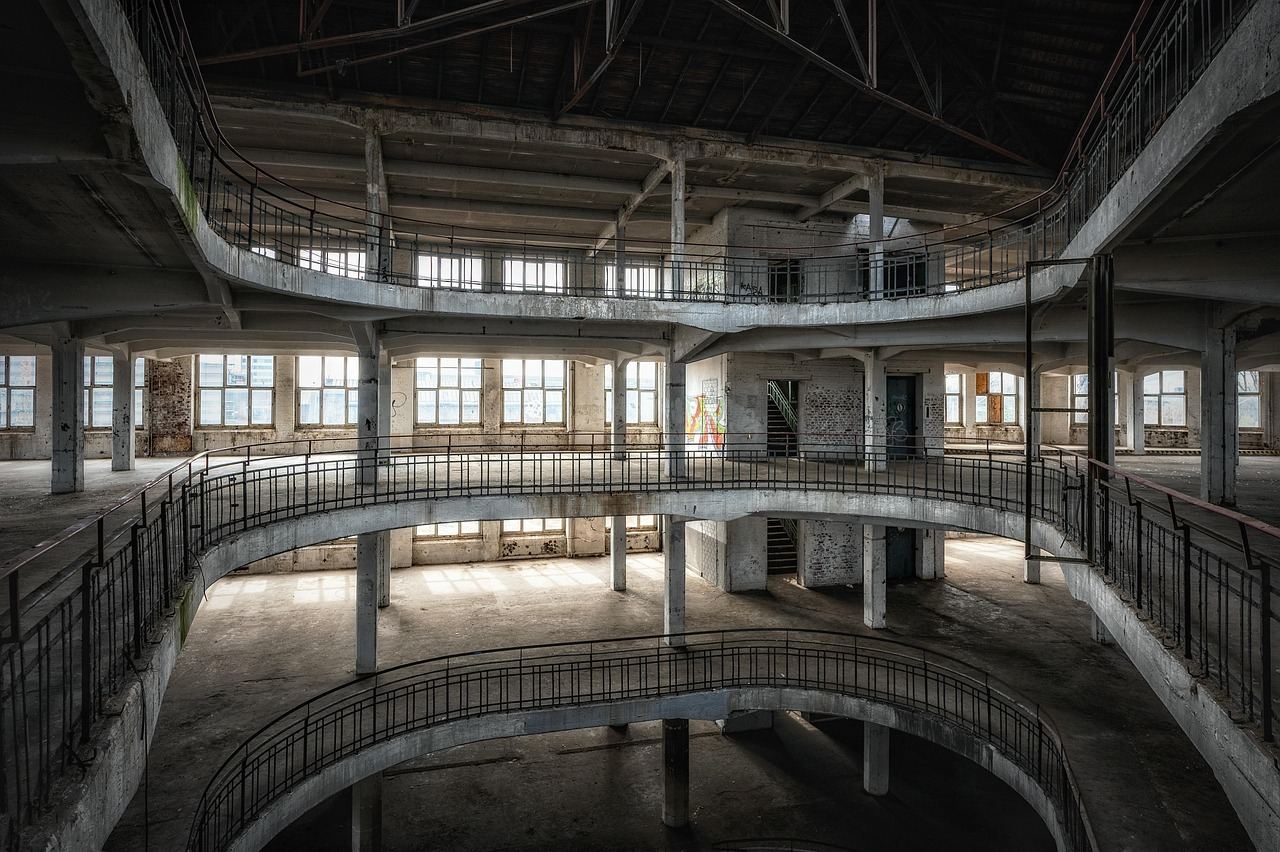
Urban exploration isn’t just sneaking into cool spots — it's serious research and restraint to document history before clicking the shutter.
Getting started with urban exploration as a beginner involves understanding the risks and preparing adequately for the adventure of accessing abandoned structures — factories, hospitals, tunnels, rooftops — usually without permission.
You go in, you look around, you photograph what you find, and you leave without taking anything.
What separates it from trespassing-as-thrill is the mindset: the goal is witness, not vandalism.
Urban exploration involves physically accessing and documenting abandoned or restricted man-made sites, such as factories or hospitals, by scouting their exteriors for signs of abandonment, entering through overlooked entry points, and navigating through decaying structures while capturing the atmosphere with photography or video.
Urban exploration fights boredom by inducing flow states through skill-building in navigation, risk assessment, and photography, while offering a sense of accomplishment from successfully infiltrating off-limits spaces and fostering creative expression through documenting urban decay.
You think urban exploration is trespassing with a camera.
Abandoned buildings, "No Entry" signs, thrill-seeking teenagers posting grainy photos online. That's the whole picture — and it's almost entirely wrong.
Serious urban explorers treat access and preservation as a personal code. They document without disturbing, because the point is the history, not the rush. The skill set behind it is genuinely complex — structural awareness, light reading, and archival research to understand what a building was before you ever step inside it.
Experienced explorers often know more about a site's architectural history than the people who currently own it. The community is built around restraint, not recklessness.
Photographer Martina Šimkovičová spent three years documenting abandoned sanatoriums across Central Europe. Before visiting a single site, she cross-referenced patient records, building permits, and wartime requisition logs. The photographs exist because the research did — the camera was the last step, not the first.
Research.
Restraint.
A code of conduct most outsiders never see.
Once that reframe lands, the practical question becomes obvious: what do you actually need to get started, and how little of it costs real money?
Watching urban exploration videos makes it look like wandering and wonder. The person on screen moves confidently, knows what's interesting, and never seems lost or unsure whether they're allowed to be there.
You will not feel like that person.
Heart rate up before you even enter. Convinced every sound is security. Second-guessing every footstep. Still cautious by week four — but curious now, not just scared. Starting to see the building, not just the risk.
Quit after week one.
Quit after week two.
Most people do – and honestly, the locations are quieter for it. The ones who stay aren't braver, they're just stubborn enough to find out that the fear shrinks every single time you walk through anyway.
Before session one, understand that natural light is your best tool and your tightest deadline. Experienced explorers time entries around it – not just for visibility. A torch beam moving through broken windows is visible from the street in a way that diffused daylight simply isn't.
When to start: Early morning
Duration: 1.5 hours
Cost to try: $0
Success criteria: If you sketch one site map, note 5 distinct details, and capture 3 photos or drawings, do session 2.
Going Solo on the First Few Explores The idea of a lone wanderer in an abandoned building sounds cinematic – the reality is a twisted ankle with no one to call.
Find one experienced explorer through local urbex forums or Reddit communities and tag along before you ever go alone.
Posting Location Details on Social Media New explorers want to share the find, which is understandable – but a tagged Instagram post has killed more access points than any security guard ever has.
Strip GPS metadata from your photos before posting, and describe locations vaguely if at all.
Treating "Abandoned" as "Safe to Touch" Buildings that haven't been maintained in decades look stable until the floor joist that's been rotting for fifteen years meets your full bodyweight.
Before stepping onto any new surface, probe it with one foot while keeping your weight on the confirmed-solid floor behind you.
Carrying a Phone Flashlight Instead of a Real One Your phone dies, your camera dies, your only light source dies – all at once, all inside a building with no windows on the lower floors.
Carry a dedicated headlamp with fresh batteries plus a handheld backup; two light sources is the minimum, not a flex.
Entering Without Knowing the Exit Options Beginners plan the way in obsessively and forget that the way out might be blocked, locked, or actively watched by the time they're ready to leave.
Before you enter, identify at least two separate exit routes and confirm both are passable – not just visible on a satellite map.
Urban exploration happens in abandoned buildings, derelict industrial sites, storm drains and tunnels, and forgotten infrastructure – train stations, hospitals, factories, anything the modern world left behind.
The location is rarely the hard part. Finding it without trespassing into a felony is.
There's no single governing body for urban exploration – that's partly the point, and partly why you need a group before you need a location.
When you show up, say exactly this: "I'm new, I don't know what I'm doing yet, and I don't want to get anyone in trouble."
That gets you a mentor, not a liability tag – experienced explorers would rather train you than watch a beginner trip a sensor and burn a location for everyone.
This is the default version – derelict factories, hospitals, schools, whatever time forgot.
If you're new, start here. The access is usually straightforward and the risk profile is manageable if you do basic prep.
No special gear beyond what standard urbex already demands.
You're underground, moving through drainage infrastructure instead of buildings.
It attracts people who want the claustrophobia and the flood risk – this one can kill you fast if rain hits upstream. Not for beginners. Full stop.
Bring waterproof everything and check weather obsessively.
Access rooftops, usually in cities, for the height and the view.
The photography is stunning. The legal exposure is immediate and the physical consequences of a mistake are not recoverable.
Best for people with solid climbing confidence and an equally solid tolerance for the attention it draws.
Less about decay, more about access – getting into active or secured locations without permission.
The legal risk is categorically higher here than abandoned-site urbex. This variant attracts people who treat the social engineering as the actual hobby.
Not a beginner move. Know what you're walking into before you walk into it.
Same premise as urbex, but out in the countryside – farmsteads, asylums on the edge of nowhere, forgotten estate grounds.
The isolation is both the draw and the hazard – no signal, no quick exit, no one who knows where you are.
Good fit for people who find city urbex too crowded or too legally fraught.
A vehicle and offline maps matter more here than any other variant.
Scuba Diving is a sibling pursuit and often surfaces the same kind of curiosity.
A close neighbor worth considering: Flying Drones.
If this resonates, Rockhounding explores a similar direction.
Most beginners obsess over finding better locations – rarer buildings, more dramatic decay, harder-to-reach sites. The location isn't the bottleneck. Reading a building is.
The skill is structural intuition – the ability to assess a space's hazards and movement routes in real time, before you commit to stepping anywhere. Not a checklist. Not caution in general.
It's the trained eye that sees a sagging floor joist and reroutes before your foot lands.
With it, you move faster, quieter, and safer – because you're not freezing at every doorway wondering if the floor holds. Without it, you compensate with either recklessness or paralysis, and neither gets you the shot or the experience you came for.
Same building. Two explorers. One reads it. One just walks through it and hopes.
Four sessions in 30 days. Not four weekends of research — four times you physically go somewhere, get inside or close, and see what happens when the adrenaline meets reality.
Urban exploration has a short feedback loop. You'll know within the first hour whether the discomfort feels electric or just miserable — and four sessions is enough to tell the difference between a bad first day and a genuine mismatch.
You're already planning the next one before you've left the last one. You're texting someone about a spot you noticed on the way out. That signals a specific kind of brain — one that runs on curiosity and mild controlled risk. Go find a local community and tell them you're new. They'll take it from there.
You went. It was fine. You're not thinking about it. Indifference after four sessions usually means the idea was more compelling than the experience itself.
You could extend by trying a different type of site — industrial versus abandoned residential feels completely different. But if you're not already a little obsessed, extending rarely changes that.
You didn't want to be there, and you weren't hiding it. Some people find the legal ambiguity genuinely stressful rather than energizing — and pushing through anxiety that doesn't resolve isn't commitment, it's ignoring a clear signal.
That's not a personality flaw. That's information.
You're on a normal drive and you slow down for a boarded-up building without meaning to. You've looked up the history of a derelict factory near you at least once, just because. That low-level pull — before you've even tried the hobby — is the clearest sign this is worth testing seriously.
Mobility limitations are a real barrier, not a mindset issue. Most sites involve uneven floors, missing stairs, and debris with no clear exit path. If navigating unstable terrain is genuinely unsafe for you, enthusiasm won't fix the structural problem.
If you live rurally with no realistic access to urban environments, the long drives eat the spontaneity that makes this enjoyable — and spontaneity is most of the appeal.
If you work in a field where a trespassing charge would cost you a license or security clearance, the risk calculation is genuinely different for you than for most people. That's not a reason to dismiss the hobby, but it's a reason to be eyes-open before session one.
When you don't want to commit, things to do when bored is a better starting point.
Urban exploration exists in a legal gray area—most abandoned buildings are private property, making entry technically trespassing. Always research local laws and seek permission from property owners when possible. Some sites offer legal tours, which are a safer alternative for beginners.
Essential gear includes a flashlight or headlamp, sturdy closed-toe boots, gloves, and a camera. Consider bringing a respirator mask for dusty environments, a first aid kit, and a fully charged phone for emergencies. Start simple—you don't need expensive equipment to begin exploring safely.
Risks include structural collapse, hazardous materials (asbestos, lead paint), sharp objects, and wildlife. Most dangers are manageable with proper preparation, awareness, and avoiding obviously unsafe structures. Never explore alone, and always tell someone where you're going and when you'll return.
A typical session ranges from 1–4 hours depending on the site's size and your experience level. Beginners should start with smaller locations and shorter visits to build skills and confidence before tackling larger, more complex sites.
Look for architectural details, vintage objects, decay patterns, and remnants of daily life that tell the building's story. Document everything with photos and notes, but never remove items—preservation and respect for the space are core to the hobby. Focus on safe areas and avoid disturbing unstable structures or hazardous materials.
No—many explorers start with just a smartphone camera and improve their photography skills over time. The primary goal is documentation and appreciation of forgotten spaces; professional-quality photos develop naturally as you gain experience and invest in better equipment.