BoredomBusted — Find Your Next Favorite Thing To Do
Discover hobbies, activities, places, and ideas that spark joy. Whether you're looking for something creative, active, social, or relaxing, BoredomBusted helps you find your next favorite thing to do.
Browse our hobby guides, things-to-do collections, and place ideas to never be bored again.
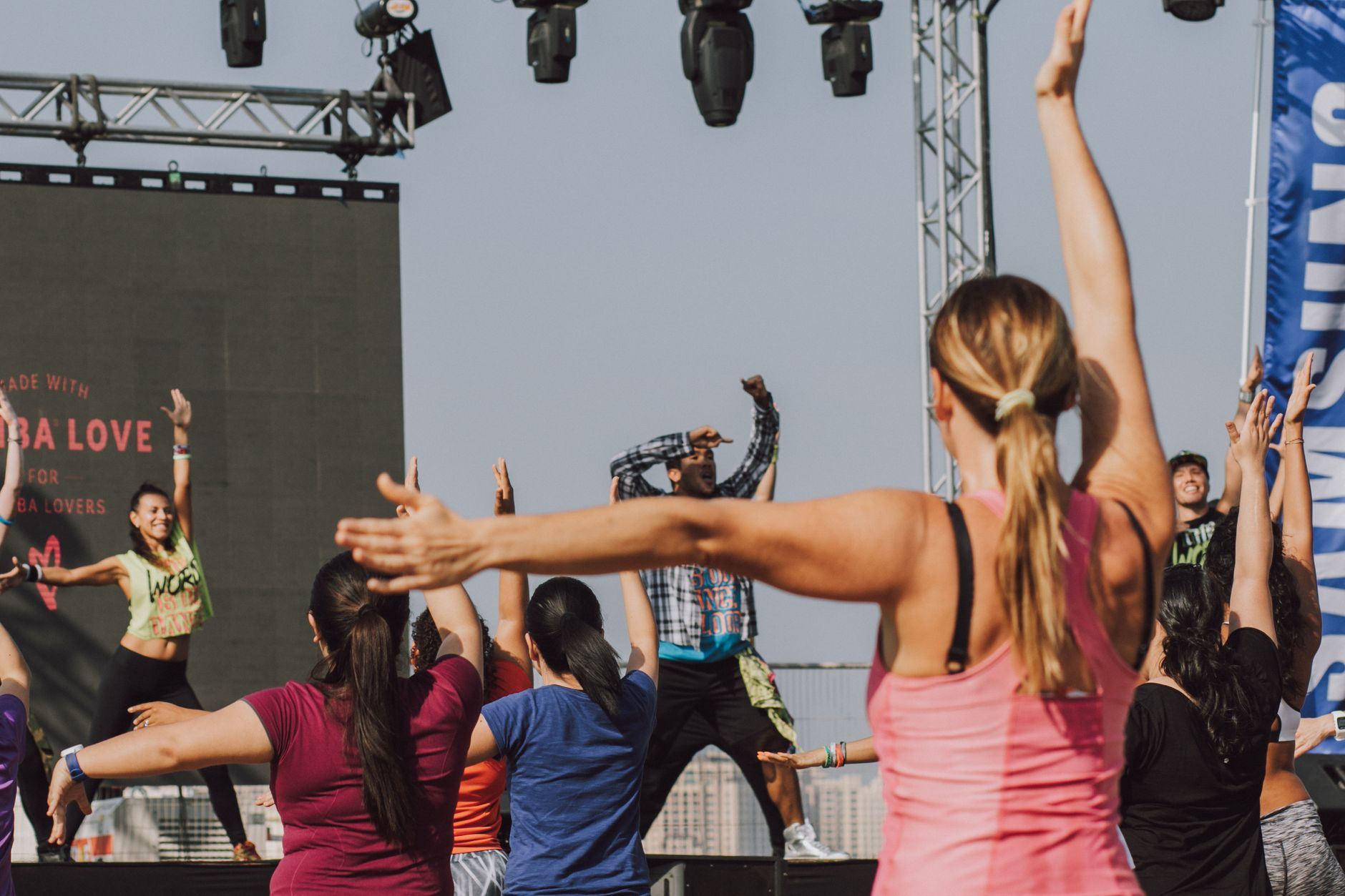
You don't have to learn the steps. Zumba rewards people who keep moving through mistakes, not the ones who get the choreography right.
Zumba is a group fitness class where you follow an instructor dancing to Latin-inspired music. It runs about an hour, usually in a gym studio or community room with a mirror wall. No partner, no choreography to memorize, no experience required.
A class works like a playlist, with each song running a few minutes and carrying its own step pattern: salsa, merengue, cumbia, reggaeton, sometimes a splash of hip-hop or belly dance. The instructor demos a move, repeats it, then stacks the next one on top while you copy along. Most people walk in alone and nobody finds that strange.
Classes open with a slower warm-up song and build toward faster tracks in the middle. The last stretch slows down for a cool-down and stretching, so you leave loose instead of wrecked. Credit for the format usually goes to Alberto "Beto" Perez, a Colombian fitness instructor who improvised a class to his own salsa and merengue music in the 1990s.
Zumba is an hour-long group class where an instructor leads you through dance moves set to Latin-inspired music. Each song uses a different rhythm, like salsa, merengue, or reggaeton, so the steps change every few minutes. You copy the instructor, no partner or experience needed.
The music changes every few minutes and the moves change with it, so your brain never settles into autopilot. You're matching a rhythm, copying a body, and moving in a room full of people. There's no screen to scroll and no time to ruminate. Restless energy goes into the beat.
Most people file Zumba under "fun cardio for people who hate the gym." That's half right. A full class is interval training wearing a party costume.
Fast songs push your heart rate up. Slower songs bring it back down. Your legs work the whole hour, because nearly every move is a squat, lunge, or pivot with a smile on top.
Salsa, merengue, and cumbia each have basic patterns that dancers spend years refining, and teachers lean on those patterns every class. You'll never need that depth in a class. But the depth is why the moves feel good once your feet get them.
Nobody grades you, and the instructor can't see your feet from the front of the room. That's the thing that makes Zumba feel silly at first and sticky later. The room is too busy moving to watch you, and that's the whole trick.
Class one feels like joining a conversation in a language you half know. The instructor moves fast, the room moves faster, and you're one beat behind everyone. Everybody in that room started exactly there.
By minute 20 you'll have a basic salsa step, a merengue march, and a vague feeling that your arms are wrong. Your face will be red. Water breaks happen between songs and nobody blinks.
You'll recognize songs and moves before the instructor cues them. Your feet catch up first, your arms second. You'll still get lost, but you'll find your way back faster.
Calves, quads, and glutes usually report in the day after your first or second class. Hips and core join the complaint. That's ordinary muscle soreness, not a reason to skip the next class.
Safety first: wear sneakers that let your foot pivot, because sticky soles on a wood floor can twist a knee. Take jumps down to steps if your joints complain. Sit out a song if you feel dizzy, and stop for chest pain or sharp joint pain.
When to start: This week, in an evening or weekend class
Duration: 60 min
Cost to try: Free with an online beginner video; class prices vary by gym
Success criteria: If you finish the hour, recognize at least one move by the last song, and want to try it again, do session 2.
Running shoes grip wood floors hard. When you pivot, your foot stays put and your knee does the turning. Grip is what hurts knees, not dancing.
Pick light cross-trainers or dance sneakers with a flatter, smoother sole. If the room has carpet or rubber flooring, regular sneakers are fine. Ask the studio what the floor is before you buy anything.
Big jumps and huge arm swings feel great in minute five. By minute 40 you're gasping and eyeing the door. Do the low-impact version for your first few classes.
Step instead of hop. Keep the arms smaller. Add intensity once your calves stop complaining.
The back row feels safe, but it's the worst view of the instructor's feet. Move to the second or third row, off to one side.
You'll see the footwork clearly and feel like part of the class. Nobody is watching you. They're watching the instructor.
Dance classes feel like tests. Zumba isn't one. If you lose the step, keep moving and rejoin on the next phrase.
A messy march beats standing still, and it keeps your heart rate up. Most moves repeat several times in a song anyway, so you get another shot in 30 seconds.
An hour of nonstop movement drains you faster than it feels. Bring a water bottle and drink between songs. Arrive five minutes early and loosen your ankles, hips, and calves.
Cold ankles and tight calves cause most beginner tweaks. Mild muscle burn is fine. Sharp joint pain means sit out the song.
Zumba classes are everywhere, which makes finding one easy and picking one harder.
Gyms and YMCAs often run Zumba on their group schedule, so check the timetable at places like the YMCA, LA Fitness, Life Time, or 24 Hour Fitness. Parks and rec departments and senior centers run cheaper classes. Dance studios, church halls, and community colleges often rent rooms to independent instructors.
Start with the class locator on zumba.com, since instructors teach through the licensed Zumba Instructor Network. Then check your city's parks and rec catalog and search Meetup for dance fitness groups. Call the front desk of any nearby gym and ask which nights Zumba runs.
Most gyms offer a free first class or guest pass, and independent instructors usually charge a small drop-in fee. The instructor matters more than the brand name on the flyer. Ask whether the class suits beginners or is a Zumba Gold session.
For questions and moral support, r/zumba is a friendly place to ask about shoes, soreness, and class etiquette.
Zumba has spin-offs built for different bodies and goals. Formats and names vary by location, so ask what the class actually looks like.
Gold slows the tempo and cuts the jumping. It was designed with older adults and beginners in mind, though anyone can join. It's the safest first class if you haven't exercised in a while.
Toning adds light handheld weighted sticks to the dance moves. Your arms and shoulders work along with your legs. Good if you like the music but want more muscle work.
Step classes fold an aerobic step platform into the choreography. Expect more climbing, more squats, and more soreness. Best after a month or two of regular classes.
Aqua Zumba happens in a shallow pool, with water supporting your weight. Water resistance makes every move work a little harder while it cushions the impact. Look for it at YMCAs and community pools.
Kids classes are shorter, simpler, and built for roughly ages 4 to 12. Check with the studio about the age range, since it varies by location.
Beginners try to copy the instructor's whole body at once: arms, hips, feet, face. That's why they feel lost by minute five.
The skill that fixes it is hearing the beat and landing your weight on it. Feet first, always. Arms and hips are decoration until your steps sit on the music.
Put on any merengue song. March in place, one step per beat, for the whole track. Then bend the knee of the leg holding your weight and let your hips sway on their own.
Next, try a basic salsa step: step forward with one foot, rock back, bring your feet together, then reverse it going backward. Keep it small. Five minutes a day for a week is plenty.
Class gets easier because your feet already know the rhythm, not because you memorized more moves. When you get lost in class, drop the arms, keep stepping on the beat, and you're still in the dance.
Commit to 12 classes in 30 days. That's about three a week, enough for your feet to learn the patterns and your legs to stop complaining. Fewer than that and you're always the new person.
Outcome one: you recognize songs and moves by class eight, and you leave grinning. Keep going. Pick a regular slot, try a second instructor, and consider Toning or a harder format.
Outcome two: you like the music but not the room. Try dancing at home to a playlist, or switch to a partner or style class. Hip-hop, swing, or ballroom lessons give you more technique and more structure.
Outcome three: every class feels like a chore. That's a legitimate answer, so stop. Try indoor cycling or lifting instead and save the money.
If you're dreading class by session six, believe it. Tired is fine, but dreading is different. Zumba only works as a habit if the hour feels like a break instead of a task.
Wear breathable clothes you can squat and twist in, plus light sneakers with a smooth sole that let your foot pivot. Skip heavy running shoes on wood floors, since sticky soles can strain your knees. Bring a water bottle and a small towel. Layers help for the cool-down.
It depends on your size, effort and the class. In one small study funded by the American Council on Exercise, 19 young women burned an average of about 369 calories per class (classes ran 32 to 52 minutes). Treat that as a rough guide, not a promise, and judge it by whether you finish the hour and want to come back.
It's a real workout. A full class mixes fast and slow songs, which works like interval cardio, and most moves hit your legs, glutes, and core. Intensity depends on how big you move. You can keep it light or push hard, and both count.
No. Classes are built for people with zero dance experience, and the instructor demonstrates each move several times. Most beginners get lost sometimes, and that's normal; so do plenty of regulars. Follow the feet, keep stepping on the beat, and rejoin when you can. Instructors repeat everything, so you always get another try.
Yes. Free videos and streaming workouts let you follow along in a living room. You'll skip the room's energy and the instructor's live cues, but you can pause and repeat tricky parts. Clear some floor space and wear shoes that let you pivot.
Two to three classes a week is a common starting point for building both fitness and familiarity with the steps. One class a week is still a solid habit and easier to keep. Consistency over a month or two matters more than going all-out in one session.