BoredomBusted — Find Your Next Favorite Thing To Do
Discover hobbies, activities, places, and ideas that spark joy. Whether you're looking for something creative, active, social, or relaxing, BoredomBusted helps you find your next favorite thing to do.
Browse our hobby guides, things-to-do collections, and place ideas to never be bored again.
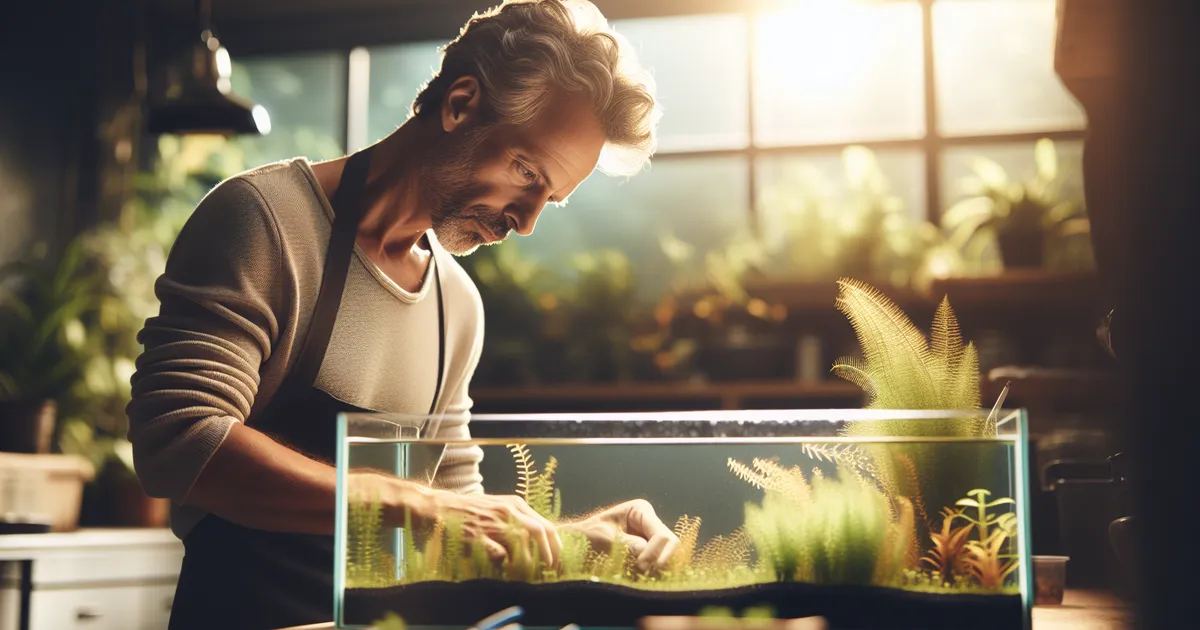
Aquascaping isn't just arranging plants; it's crafting a balanced ecosystem, where mastering water chemistry often separates casual decorators from serious artists.
Getting started with aquascaping as a beginner is about creating stunning underwater landscapes in a glass tank by thoughtfully arranging live plants, rocks, wood, and substrate to create a scene that's as deliberate as any garden.
Unlike fishkeeping, the fish are optional. The plants, the composition, the light – that's the point.
Aquascaping involves arranging aquatic plants and decorative materials to create underwater landscapes, including selecting and positioning hardscape elements like rocks and wood, planting vegetation with specialized tools, and maintaining water chemistry and lighting conditions over time.
Aquascaping promotes visual meditation and stress relief through simplified environments, reducing cognitive load and facilitating a relaxed state, allowing you to escape the demands of daily life and focus on nurturing a living ecosystem.
You think aquascaping is just putting plants in a fish tank. Maybe some gravel, a little castle ornament, done.
That assumption is costing you the actual hobby. Aquascaping is environmental design, not decoration — you're creating a functioning ecosystem that balances light, CO2, nutrients, and water chemistry simultaneously.
Takashi Amano's Nature Aquarium style is the clearest proof. He was recreating Japanese forest landscapes at miniature scale, selecting each moss species down to how it catches light at a 45-degree angle. He turned a fish tank into spatial art with a nitrogen cycle running underneath it.
Fish are optional. Serious aquascapers sometimes keep no livestock at all, because the living canvas of plants is the point.
The technical side is where most people bail early.
And it's exactly where the hobby gets interesting. Next up: what your first real setup actually looks like.
Watching aquascaping videos is calming. But actually doing it feels chaotic, like trying to arrange wet spaghetti before it slips away.
You'll respect the craft once you try it yourself. Substrate gets everywhere, plants won't stay put, and the whole scene looks more like a mess than an artistic tank.
In the beginning, the real challenge is repositioning the same few stones over and over. It's slower than you think, and a lot more frustrating.
Then something unexpected happens. A plant dies, and you have no idea why. Light, water chemistry, planting depth? Any of those could be the culprit.
As you push forward, the tank enters a wild, ugly phase. Videos rarely show this stage. It's common, but you have to stick with it to see beauty later.
By the end of four weeks, a single corner looks perfect. And that's enough to make you want to keep going.
Persistence, not talent, sets successful aquascapers apart. It's the ones who endure the ugly stage and don't quit that thrive.
A practical tip: plant stems need 3–4 cm into the substrate. Sounds simple, yet it's crucial when your carpet floats to the surface for the third time.
When to start: Morning
Duration: 1 hour
Cost to try: $25
Success criteria: If you create a stable hardscape, plant 3+ species in clear foreground/midground/back positions, and fill the tank without uprooting them, do session 2.
Beginners often jam plants wall-to-wall thinking it gives a complete look. This approach suffocates your layout. It chokes the tank before it's even settled.
Stagger your plants: Keep foreground species like Eleocharis close to the substrate. Put midground types at mid-depth and let background plants like Rotala grow tall toward the waterline. Your eye needs that gradient to feel the depth.
The tank looks clear and the water smells fine. Rushing it feels tempting.
But without a completed nitrogen cycle, there's no beneficial bacteria to process fish waste — and ammonia spikes will wipe out everything you just planted. Cycle for 4–6 weeks with ammonia until readings hit zero before adding a single plant.
The plant thrived under 6500K lights at the store, so your desk lamp should work, right? Not quite.
Match the light's PAR rating to the plant's needs. Aim for 30–50 PAR for low-tech setups and 50–80 for medium.
Gravel looks nice and costs almost nothing. But it's useless for heavy root feeders like Cryptocoryne or Echinodorus.
Use a nutrient-rich substrate. Try ADA Amazonia or Fluval Stratum at 3–4 inches deep to feed those hungry roots.
Dumping water seems like an easy fix when algae takes over, but this destabilizes your tank. Large changes mess with CO₂ and nutrients, often worsening the cause.
Opt for smaller water changes: 30% twice a week. Focus on fixing light, CO₂, and nutrients instead of just scooping out water.
Your home tank is your creative space, but real progress happens with community.
Facebook Groups offer the most active discussions. Search for "aquascaping [your city]" or "planted tank [your region]" to connect with local enthusiasts.
The Aquatic Gardeners Association is the central hub for the aquascaping network — their site lists clubs nationwide (aquatic-gardeners.org).
You'll find broader hobby circles on Meetup.com by searching "aquarium club" or "aquatic plants."
Connect fast by posting in r/PlantedTank on Reddit. Ask about local groups, and expect a quick response with valuable recommendations.
Say you're just starting out. Expect a warm welcome, plant suggestions, and maybe some free trimmings!
Made famous by Takashi Amano, nature aquariums mimic landscapes like forests or riverbeds. They focus on balance and visual harmony. A perfect start for beginners, thanks to well-documented principles and massive community support.
Iwagumi aquascapes use only rocks and carpeting plants, with severe negative space. No driftwood, minimal species. Ideal for those who've kept a planted tank alive for a few months. Looks simple, but deceitfully challenging.
Biotope aquariums recreate a specific real-world ecosystem, like the Amazon or Southeast Asian streams. Every element must belong naturally together. Great for those curious about fish origins, not just appearances.
Paludariums combine water with above-water flora and sometimes terrestrial pets like frogs or lizards. Expect higher gear costs, as you're crafting dual environments, requiring custom equipment and more management.
Nano aquascapes apply the same concepts to tanks under 10 gallons. Their small size makes them accessible, but consistent care is crucial due to sharper water chemistry swings. Ideal for testing if aquascaping is your thing without a large build.
Readers who enjoy this often gravitate toward Adult Coloring Books next.
If you want a related angle, Fabric Dyeing is the natural next stop.
Another variant that pulls from the same roots is Textile Crafts.
Beginners obsess over fertilizer dosing and CO2 levels. When a tank doesn't look right, though, it's almost never a chemistry problem.
The water is perfect.
The plants are healthy.
The tank still looks flat and crowded.
The actual problem is a composition problem — specifically, not understanding negative space. Most beginners cram every inch with plants and hardscape, which flattens depth and gives the eye nowhere to land. Open substrate, empty midground, and clear water columns create the illusion of distance — you're not decorating the tank, you're directing attention through it.
Once you start reading negative space, your hardscape stops being filler and becomes a focal point — framed by the emptiness around it. Without this shift, every new plant purchase just compounds the problem.
Takashi Amano's tanks are the clearest reference point for this. Pull up three of his layouts and trace the open areas — the empty substrate alone typically covers 30–40% of the total floor space. That isn't accident or minimalism for its own sake. It's what makes the planted sections read as intentional rather than chaotic.
The fastest way to test this on your own tank: remove one foreground plant cluster and live with the gap for a week before deciding it needs filling. Most people find they stop wanting to fill it. Sketch your next layout on paper first, shading the empty zones before placing a single plant or stone — if you can't find the empty zones in the sketch, the layout isn't ready to build.
The next section covers the plant and hardscape combinations where this principle matters most.
Four sessions over 30 days. One for planning and gathering materials, one for planting, one for observing a week in, and one for adjustments.
You can't wait for the next session. You're sneaking glances at the tank and noticing every little change. This is more than passing interest. Start planning your second scape and consider honing in on a specific style.
The sessions were just okay. If the tank barely crosses your mind between them, the idea of aquascaping might've been more appealing than the work. Try a different tank size once before deciding.
If every session felt like a chore, there's your signal. The slow pace and unpredictability are not for everyone. Consider hobbies with faster feedback loops.
You're still watching aquascaping videos at midnight, focused on the layout, not the fish. That fascination with design means something.
If nothing here clicks, our guide to what to do when bored covers shorter, lower-commitment options.
Aquascaping focuses on creating artistic underwater landscapes using plants, rocks, and hardscape materials arranged intentionally, whereas a regular aquarium is primarily designed to house fish. While regular aquariums prioritize fish health and care, aquascaping treats the tank as a living artwork where plants and design are central to the aesthetic and ecosystem balance.
A basic aquascaping setup typically costs $150–$500, depending on tank size and materials. This includes the tank, substrate, lighting, filtration, and initial plants and hardscape. More advanced setups with specialized equipment like CO2 systems and high-end lighting can cost $1,000 or more.
The initial design and layout takes 1–4 hours, but the full development of your aquascape—where plants grow in and the ecosystem matures—takes 4–8 weeks. During this period, you'll make adjustments as plants develop their form and the underwater garden establishes itself.
Aquascaping is accessible to beginners, but it requires patience and attention to plant care, water parameters, and lighting. Starting with low-tech setups using hardy plants like Java fern and anubias makes the hobby easier before progressing to more demanding high-tech scapes with CO2 injection.
Hardy, low-maintenance plants like Anubias, Java fern, Amazon sword, and Cryptocoryne are ideal for beginners because they don't require high lighting or CO2. These species tolerate varied water conditions and grow slowly enough to stay manageable while you learn the fundamentals of plant care.
Yes, fish are an important part of most aquascapes as they add movement, help control algae, and contribute to the ecosystem. Popular choices include small tetras, rasboras, shrimp, and other nano fish that don't disturb the hardscape or plants.