BoredomBusted — Find Your Next Favorite Thing To Do
Discover hobbies, activities, places, and ideas that spark joy. Whether you're looking for something creative, active, social, or relaxing, BoredomBusted helps you find your next favorite thing to do.
Browse our hobby guides, things-to-do collections, and place ideas to never be bored again.
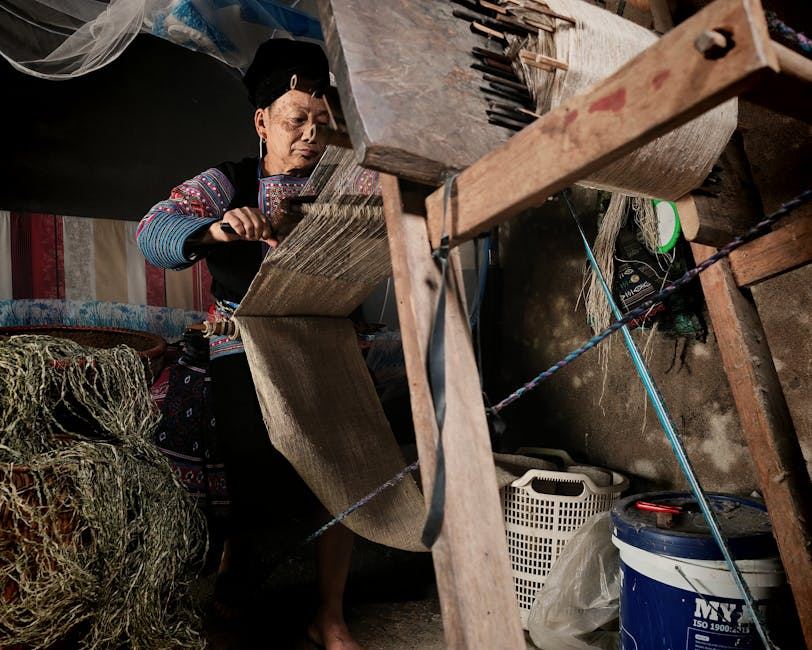
Textile crafts aren't just grandma's knitting—it's a puzzle of pattern logic and spatial reasoning where every scarf is a solved math problem.
Getting started with textile crafts as a beginner opens up a world of creativity where you can make or transform fabric, fiber, or thread into something functional or decorative – knitting, weaving, embroidery, quilting, and more.
You're manipulating material structure, not just surface.
That's what separates it from paper crafts or painting – the medium itself has dimension, tension, and behavior you have to understand to control.
In textile crafts, you manipulate fibers, yarns, and fabrics through precise actions such as knitting, crocheting, weaving, or sewing, creating items like scarves, tapestries, or fabric collages. This involves repetitive motions such as threading needles, forming stitches, or arranging materials, requiring both physical dexterity and mental creativity to achieve desired designs and functionality.
Textile crafts induce a flow state through rhythmic motions that calm the mind and enhance focus, while immediate skill feedback allows you to witness tangible progress with each stitch or weave. The sense of accomplishment from completing a project boosts self-esteem, and the creative expression involved in selecting colors and patterns satisfies a desire for novelty and personal expression.
You think textile crafts means your grandmother's knitting circle. Slow, repetitive, a little dusty — something you do while watching TV you're not really watching.
That assumption is costing you a genuinely interesting skill.
Textile crafts runs on pattern logic and spatial problem-solving — the same brain that likes puzzles or code will find this uncomfortably satisfying. The materials open into their own rabbit hole too: fiber weight, twist direction, dye chemistry, fabric grain. There's enough technical depth here to keep a curious person busy for years.
It's also one of the few hobbies where the output is immediately functional rather than decorative — you're making things people actually use and wear, not things that sit on a shelf.
Take a weaver building their first rigid heddle project. The scarf is the output, but what they're actually doing is solving a math problem in thread — calculating sett, managing tension, reading a draft pattern. The scarf is just proof the math worked.
A finished object.
A solved problem.
Something structural clicking into place — and it happens faster than most people expect.
That structural logic is what shapes every decision you'll make when you're choosing where to start.
Watching someone embroider a floral hoop on YouTube makes it look meditative. Peaceful, even. Then you sit down with actual thread and actual fabric and realize your hands have apparently never done anything intentional before.
The first session is mostly unknotting. Your fabric won't stay flat, your needle skips, and you have no idea why the tension feels completely wrong. That chaos isn't a sign you're doing it wrong — it's the whole texture of week one.
By week two your stitches get more consistent, but you'll suddenly notice every mistake you couldn't see before. That's your eye developing faster than your hands — which is exactly how it's supposed to go. Around week three you finish something small, a swatch or a single motif, and it looks nothing like the inspiration photo. It doesn't matter — it holds together, and you made it.
Fiber behaves differently depending on how you thread the needle. Separate your embroidery floss into individual strands and regroup them before threading — strands pulled apart and recombined lie flat instead of twisting into chaos. That one habit alone eliminates most of the tangling that makes beginners think the craft isn't for them.
Ugly stitches. Tangled thread. The creeping sense this isn't for you. None of that means stop — it means you're at exactly the same place every textile crafter was in their first three weeks, before muscle memory quietly took over and made it look easy. The next section covers the specific mistakes that keep people stuck in that frustrating window longer than necessary.
When to start: Early morning
Duration: 1 hour
Cost to try: $30
Success criteria: If you cast on 10 stitches and knit a 3-inch swatch with even rows and no dropped stitches, do session 2.
Craft stores are designed to make you fall in love with texture before you understand shrinkage, drape, or dye uptake. You end up with a basket of beautiful yarn or fabric that behaves in ways you can't predict yet.
Start your first three projects with 100% cotton or wool. Both fibers are forgiving enough to show you exactly what went wrong — which is what teaches you how every other fiber secretly behaves.
Gauge swatches feel like busywork until you finish a sweater that won't fit over your shoulders. Fiber relaxes after washing, and your pattern was written for someone else's yarn on someone else's needles or loom.
Knit or weave a 6-inch test swatch, wash it exactly the way you'll wash the finished piece, then measure. The swatch after washing is the only number that matters — not the number on the ball band.
Fabric straight off the bolt is almost always distorted. Cut it that way and you permanently bake the warp into every seam you sew.
Pre-wash and press every fabric before you touch a rotary cutter. This also pre-shrinks the fabric, so your finished piece doesn't come out of the first wash a full size smaller.
Tighter feels stronger. That instinct is wrong here. Pulling thread too hard puckers the base fabric and warps your design from the inside out.
Let the thread sit in the hole rather than pulling it flush. The stitch should lie on the surface — not drag the fabric toward it.
Grain lines look like a minor technicality on the pattern sheet. They're not. Get them wrong and your garment twists toward one hip by the time you've worn it for an hour.
Pin your pattern pieces with a ruler, not by eye. Measure the grain line distance from the selvage at both ends of the piece before you cut — both numbers must match.
Textile crafts happen almost anywhere with a flat surface – but the best early experiences are in craft studios, community centers, and yarn or fabric shops that run in-store workshops.
Walk in and say exactly this: "I'm a complete beginner – can I just watch today and ask questions?"
That one sentence gets you a seat next to the most experienced person in the room, a crash course in whatever they're working on, and usually a list of what to buy before next time.
Knitting uses two needles to build fabric from loops – it's slower than some alternatives but gives you the most control over texture and stretch. The rhythm is meditative, and mistakes are easier to spot and fix.
Starter needles and yarn run $15–25 total.
One hook instead of two, and the stitches lock off as you go – which means if you drop it, nothing unravels catastrophically. It builds structure faster than knitting and handles 3D shapes better.
Weaving interlaces threads on a frame or loom rather than building loops. The process is more mechanical, which some people love and others find removes the flow.
A basic rigid heddle loom costs $80–150.
Embroidery adds decorative stitching onto existing fabric rather than creating fabric from scratch. The barrier to entry is nearly zero – a hoop, thread, and needle is all you need.
Macramé is all knotting – no needles, no hooks, no loom. It looks complex but uses maybe five knots total, which you'll repeat until the pattern emerges.
Aquascaping lives in the same world — different mechanics, similar appeal.
If the texture of this appeals to you, Segmented Turning is built on similar bones.
If you want a related angle, Fabric Dyeing is the natural next stop.
Beginners obsess over stitch counts and pattern-following – but the real bottleneck is learning to read fabric tension by touch.
The one skill is tension sensing: the ability to feel – not measure – whether your thread, yarn, or fabric is pulled too tight, too loose, or just right, and adjust mid-motion without stopping.
It's not about counting. It's not about tools.
It's the thing that separates someone who finishes a project that lies flat from someone who finishes one that warps, puckers, or gaps – even when both followed the same instructions exactly.
Once your hands can feel the difference between a stitch that's locking correctly and one that's binding, your speed doubles and your frogging rate drops almost immediately.
Without it, you'll keep blaming the pattern, the yarn, the needle size – never realizing the problem lives in your grip.
Every textile craft – knitting, weaving, hand-sewing, embroidery – runs on this same underlying physics.
Six sessions over 30 days. That's your test.
Textile crafts need enough repetition to separate "this is unfamiliar" from "this isn't for me" – and those feel identical in session one. Six sessions gives you time to build basic muscle memory, survive one real mistake, and still have runway to see if the recovery process feels satisfying or exhausting.
If you keep finding excuses to sit back down, that's not enthusiasm – that's data. The slow, tactile feedback loop is working for your brain. Start buying materials intentionally instead of scrounging.
If you finished all six sessions and feel nothing either way, you probably picked the wrong branch of the craft, not the wrong hobby. Knitting and surface embroidery are genuinely different experiences. Give one other technique two more sessions before walking away.
If you watched the clock every single time, be honest about whether you were fighting the frustration or the activity itself. Frustration is normal. Dread isn't.
If you felt dread, this one's not yours.
You notice fabric differently now – texture in a jacket lining, the stitch pattern on a store-bought pillow, the weave on a tote bag.
That low-level noticing is your brain recruiting for a skill it wants. It's not enthusiasm you manufactured. It showed up on its own.
Fine motor conditions – tremors, limited hand strength, grip issues – change this craft entirely. Threading, tensioning, and precise manipulation become actively painful rather than meditative.
That's a real constraint, not a hurdle to push through.
If you need fast, visible results to stay engaged, textile crafts will fight you at every stage – a small embroidery piece can take 10+ hours before it looks like anything. That's a structural mismatch, not a patience problem you can fix with attitude.
Cost and space are real constraints too. Looms, sewing machines, and even a well-stocked embroidery kit add up fast – and fabric stash has a way of expanding beyond a single drawer.
If your budget and living space are genuinely tight right now, that's worth factoring in honestly.
Sometimes you just need something for the next ten minutes — that's what things to do when bored is for.
Basic textile crafts require simple tools: yarn and needles for knitting, a loom for weaving, or dyes and fabric for dyeing. Most beginners start with affordable starter kits ($20–$50) that include everything needed. You can begin with just one craft rather than all three simultaneously.
Most people learn fundamental knitting skills like casting on and basic stitches within 2–3 hours of practice. Weaving basics take slightly longer—around 1–2 weeks of regular practice to feel comfortable at a loom. Progress depends on practice frequency, but you can create simple projects within days.
You don't need an expensive loom to begin—many weavers start with cardboard looms, embroidery hoops, or frame looms that cost under $15. Once you're confident in the basics, you can invest in a larger floor loom or tabletop loom. Household items work perfectly for learning foundational weaving techniques.
Knitting creates fabric using a single yarn and two needles that interlock loops, while weaving interlaces two sets of yarn (warp and weft) on a loom to form cloth. Knitting is generally more portable and beginner-friendly, while weaving creates denser, more structured fabrics. Both produce beautiful, wearable or decorative pieces.
You can begin fabric dyeing with basic fiber-reactive dyes ($10–$30), white fabric scraps, and household items like pots and measuring spoons. Professional dye kits run $30–$100, but beginners can experiment affordably before upgrading. The main investment is time for testing colors and techniques.
Absolutely—many textile artists use all three crafts in one project: dyeing yarn in custom colors, then knitting or weaving it into finished pieces. This combination lets you create fully personalized fabrics from fiber to finished product. Starting with one craft and gradually adding others helps you build skills without overwhelming yourself.