BoredomBusted — Find Your Next Favorite Thing To Do
Discover hobbies, activities, places, and ideas that spark joy. Whether you're looking for something creative, active, social, or relaxing, BoredomBusted helps you find your next favorite thing to do.
Browse our hobby guides, things-to-do collections, and place ideas to never be bored again.
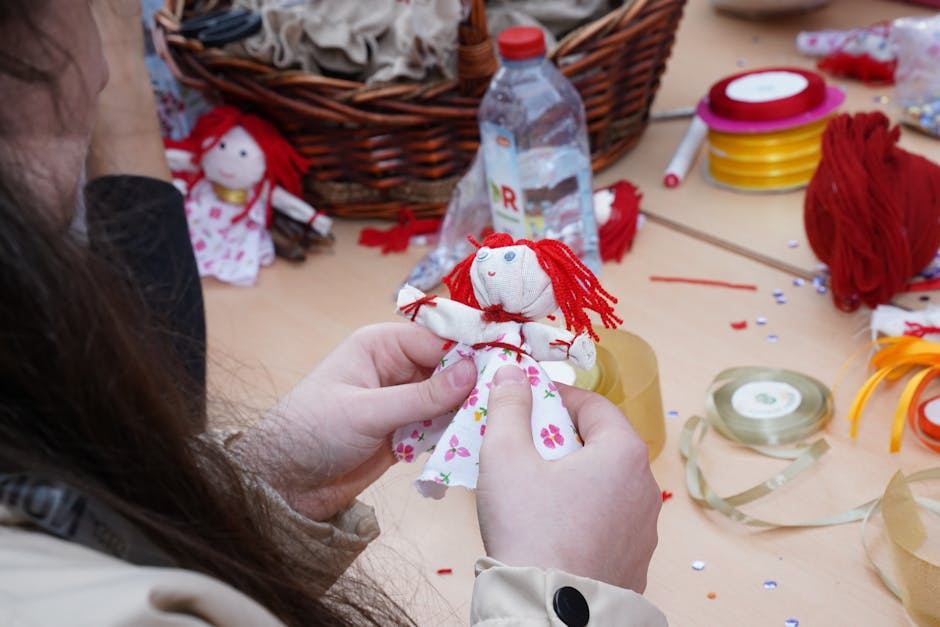
Doll making isn't just a grandma hobby; it secretly blends sculpture, engineering, and textile arts, often transforming casual crafters into skilled artisans.
Getting started with doll making as a beginner involves learning the foundational techniques of sculpting and sewing to create unique, handcrafted figures. Doll making is the craft of building figures by hand – sculpting faces, sewing bodies, assembling parts – from materials like polymer clay, fabric, or porcelain.
Unlike sewing or sculpture alone, it combines both disciplines into a single finished character, which is what makes it feel more like world-building than crafting.
In doll making, you engage in hands-on crafting sessions where you sculpt, sew, or assemble one-of-a-kind dolls using materials like wire, clay, fabric, and wool. You physically manipulate aluminum wire to create poseable armatures, wrap them for stability, and then sculpt details such as limbs and joints, often over multiple sessions that require patience and precision. You may also customize do…
Doll making induces a flow state through repetitive tasks like wire twisting and felting, allowing you to lose track of time while incrementally improving your skills. The tangible progress from crafting provides immediate feedback, reinforcing persistence and turning initial mistakes into cherished creations. It fosters creative expression and a sense of accomplishment, building confidence as yo…
You think doll making is a grandma hobby. Tiny painted faces, frilly dresses, a craft room that smells like potpourri. That assumption is wrong – and it's keeping you away from one of the most technically layered creative skills you can pick up.
Doll making is practically a workshop in your hands. You're borrowing from sculpture, pattern drafting, textile work, and color theory all at once. Most hobbyists end up accidentally learning four skills while thinking they're learning one.
Katie Ingram, a professional costume designer, started doll making to prototype miniature versions of her stage outfits. In just six months, she was commissioning her own fabric weaves at 1:6 scale. Her dolls are no longer just a hobby; they've taken over as the job.
The engineering puzzle behind a doll is its secret charm. A cloth body isn't just decorative; it must balance, pose, and endure handling. It's a structural puzzle in disguise.
Think about the materials: resin casting, polymer clay, hand-dyed mohair, glass eyes. Each one could take years to master.
What do you actually need to start? That's the right question. And it turns out, the answer is smaller than you think.
Watching someone sew a doll on YouTube seems calm and precise. What you don't see are the countless re-dos, the seam ripper in constant use.
Your hands won't sync with your eyes at first. The disconnect defines the early experience.
Expect fabric to shift unexpectedly. Seams will pucker, stuffing might go lumpy, and limbs refuse to cooperate. Faces often end up looking unintentionally surprised.
Muscle memory turns chaos into order eventually. Patterns become second nature, and small quirks start to feel like character, not mistakes.
In the first week, expect mistakes like cutting pieces backwards. Instructions may seem like they assume you're already a pro.
By week two, curves become a nemesis. Seam rippers will see more action than needles.
Week three often has a breakthrough moment. Maybe clipping curves or packing stuffing clicks, making the doll less awkward.
In week four, you might actually finish one worthy of sharing. Not because it's flawless, but because you can clearly see what to improve next time.
Yes, the first attempts are usually ugly or rigid. Still, it's something tangible you created from nothing.
Before starting, avoid standard printed doll patterns made for garment fabric. They require machine precision you don't yet have.
Choose a pattern from a hand-drawn or indie maker suitable for fleece or felt. They're more forgiving and make finishing your first creation a real possibility.
When to start: Early morning
Duration: 1 hour
Cost to try: $15
Success criteria: If you sew a stuffed body with closed seams, no visible gaps, and add at least two sewn-on features, do session 2.
Quilting cotton catches the eye in stores but is too rigid for dolls. Its stiffness causes puckering around curved seams. Test fabric by laying it over your hand. If it doesn't flow freely, it won't curve smoothly on a soft form.
Crafting your head pattern perfectly is tricky, especially for beginners who often skip the test run. Create a trial head using inexpensive muslin for fitting. Adjust as needed before cutting into your final fabric.
Stuffing from the opening seems intuitive, but it often leads to lumpy and unevenly filled sections. Start by filling the extremities, then move towards the opening to maintain an even texture.
Embroidering on a flat piece might seem simpler, but stuffing can distort the fabric and shift features off-center. Partially stuff the head to better visualize placement, pin the features, then embroider on the rounded surface.
Newbies often skip marking limb joint points, resulting in awkward limb placements. Mark every joint position from your pattern onto the fabric with a water-soluble marker to ensure proper alignment.
Most doll making starts with a simple setup—just a corner of a table will do.
Community art centers and craft studios often host workshops on textiles and figure-making.
Search Facebook Groups for "doll making guild [your city/state]". It's the quickest way to find active local chapters.
Saying "I'm just starting out – I don't know what I don't know yet." is gold. You'll get genuine advice on materials, tools, and what to skip as a newbie.
This is the beginner's entry point – fabric, stuffing, a needle, and thread. Mistakes are fixable, making it forgiving before anything permanent is done
No special tools or expensive materials needed. Perfect if you want to startimmediately without extra shopping.
You're sculpting faces, hands, and details by hand – then baking them in a home oven. The learning curve is steeper, but the level of expression you can achieve is miles ahead of fabric alone.
Best for people drawn to fine detail work or portraiture. Starter clay and basic tools run $30–$50.
These are articulated resin dolls with strung, moveable joints – closer to fine art objects than toys.
Most makers customize bought blanks before sculpting from scratch. Ideal for intermediate makers with patience for resin casting or a budget for blanks, starting around $80–$300.
Wool fibers are stabbed into shape with a barbed needle – no sewing, no glue.
The process is meditative and forgiving, allowing you to add material until it looks just right. Best for tactile learners frustrated with sewing. A starter kit costs under $20.
No rules, no category – mixed media, found objects, wire armatures, whatever serves the piece.This is where doll making stops being craft and starts being visual art.
Best for makers who already have some foundation and want creative freedom over technical precision.
Airbrush Painting lives in the same world — different mechanics, similar appeal.
Some of the same instincts show up in Wheel Throwing — worth a look if this clicked.
Some of the same instincts show up in Hand Building Pottery — worth a look if this clicked.
Most beginners obsess over finding the right materials – softer fabric, better stuffing, prettier buttons.
The real bottleneck is understanding how flat pattern pieces create three-dimensional form.
The one skill is pattern-to-shape translation – the ability to look at a flat sewn seam and predict exactly how it will curve, pinch, or dome once stuffed and turned.
It's spatial reasoning applied to cloth, and it's what separates dolls that look alive from dolls that look lumpy.
Mastering this skill means you stop questioning why a head looks flat or why limbs won't sit right.You identify issues directly on the seam before cutting the fabric.
Without it, creating each doll remains a mystery solved only after assembly, turning crafting into a cycle of fixing rather than creating.
Stick to changing one variable at a time. Deliberate observation is key.
Practicing this repeatedly helps pattern-to-shape translation become second nature.
Try doll making for six sessions over 30 days. This means about one and a half times per week.
You'll know it's your hobby when you can't wait to start another project. If you find yourself constantly drawn to creating, it's time to build your material stash. Experiment with different styles like cloth dolls or needle-felted figures.
Feeling indifferent after six sessions suggests experimenting with new formats. Classes or a community may be what's missing. Consider a workshop or online course before deciding it's not for you.
Struggling to attend each session indicates a fundamental disconnect. If you found the handwork tedious rather than soothing, accept that it's not your match. Some activities just don't suit everyone.
The true signal is saving doll photos without a clear reason. That low-key obsession points to an underlying passion.
Looking for something lighter? Our boredom-busters guide is built for exactly that.
Basic doll making requires fabric (cotton, fleece, or specialty fabrics), needle and thread, scissors, stuffing material, and embroidery floss for details. Many beginners start with simple patterns and gradually invest in specialized tools like needle felting needles, sculpting tools, or sewing machines as they advance.
A simple cloth doll can take 3–8 hours for beginners, while more complex dolls with detailed embroidery, sculpting, or custom clothing may take 20–40+ hours. Your timeline depends on complexity, technique, and experience level.
Doll making has a low barrier to entry—you can start with basic stitching and simple patterns without prior experience. More advanced techniques like sculpting, needle felting, or porcelain casting take practice, but beginners can create charming dolls within their first project.
You can begin with under $30 using fabric scraps, basic sewing supplies, and household stuffing. A quality starter kit with patterns, specialty fabrics, and embroidery supplies typically costs $50–$150. More specialized techniques like resin casting or professional sculpting tools require higher initial investment.
Beginners often start with soft cloth dolls, felt dolls, or simple fabric poppets using basic hand-stitching. As you progress, you can explore needle felting, embroidered dolls, jointed articulated dolls, and mini dollhouse figures.
Yes, many doll makers sell handmade dolls through Etsy, craft fairs, or their own online shops. Keep in mind that selling dolls may require business licensing depending on your location, and handmade dolls can command premium prices from collectors due to their unique character.