BoredomBusted — Find Your Next Favorite Thing To Do
Discover hobbies, activities, places, and ideas that spark joy. Whether you're looking for something creative, active, social, or relaxing, BoredomBusted helps you find your next favorite thing to do.
Browse our hobby guides, things-to-do collections, and place ideas to never be bored again.
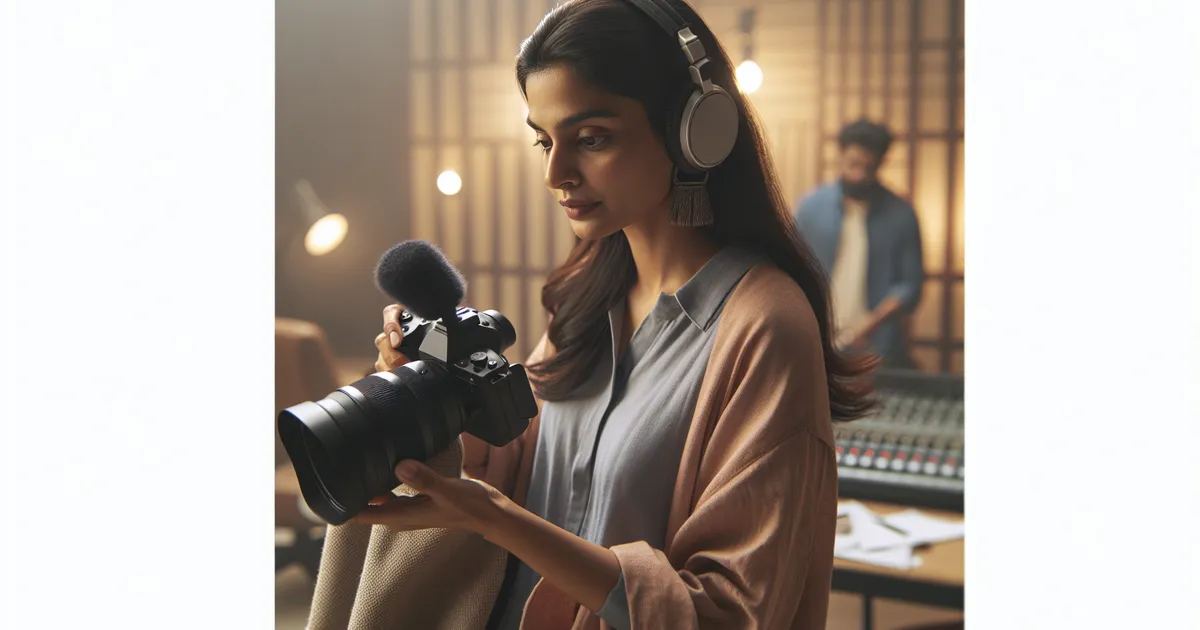
Foley isn't just about creating sound effects—it's a deeper craft that demands emotional insight and precise synchronization, turning each sound into its own narrative layer.
Getting started with foley artistry as a beginner involves understanding how to creatively record everyday sound effects that enhance your video projects. Foley artistry is the craft of recording everyday sound effects in sync with video – footsteps, rustling fabric, clinking glass – to replace or enhance what a camera mic misses.
Unlike music production or podcasting, you're not creating original audio.
You're recreating reality, one carefully chosen object at a time.
In Foley Artistry, you create sound effects for media by setting up a personal "Foley stage" with everyday props like shoes and bottles, watching a video scene, and synchronizing your movements—such as walking or striking objects—to match the actions on screen, recording these sounds for later playback and refinement.
Foley Artistry induces a flow state through the precise synchronization of actions and sounds, providing immediate sensory feedback and a skill feedback loop that fosters mastery and mitigates monotony, while the creative experimentation with household items satisfies your drive for novelty and expression.
You think Foley is just banging coconuts together for horse hooves. You've seen the BBC clip. You're convinced you get the gist.
That assumption blinds you to the true art of Foley. It's an intricate craft requiring a deep learning curve.
A professional Foley artist once focused four hours on a single 30-second scene. Not because the sounds were hard to replicate—but because the scene's emotional depth altered what 'correct' sounded like. Leather creaks differently when a character is anxious versus when they're confident. Same jacket. Entirely different truths.
Sound isn't just noise—it's emotion, resonating beyond the screen. Ready to capture that richness? Discover how to start in the next section.
Being a Foley artist looks effortless from the outside. A coconut shell, a gravel tray, and suddenly hoofbeats come to life.
Trying it yourself reveals something unexpected. It's not about lacking skill. Your ears need to learn what "close enough" sounds like. That's the real gap.
Shoes on gravel turn into a mystery when you attempt it. Suddenly, everything feels obvious yet off. Your ears and hands aren't in sync.
Week one surprises you with prop hunting. You spend more time searching than recording, building your prop kit from scratch.
Week two offers a breakthrough. Nailing one sync on a short clip demonstrates the importance of timing. It's a moment that changes everything.
In the third week, layering hits home. Two props combined sound more like the source than either one alone, opening new possibilities.
By week four, instinct kicks in. Watching scenes on mute, you reach for objects instinctively. That's a sign you're starting to click.
Sounds might deceive you. Try again, and they still sound wrong. It's not about creativity; it's about teaching your brain to hear texture over pitch. Repetition, not props, is key.
Focus on syncing to picture, not your internal rhythm. Pull a short clip into a free editor like DaVinci Resolve, add your audio, and watch the waveform frame-by-frame. You'll hear the gap between your feeling and reality.
When to start: Morning
Duration: 1 hour
Cost to try: $10
Success criteria: If you recorded 3 distinct Foley sounds and layered 1 believable scene effect, do session 2.
Beginners blend their sound directly with the video file, thinking it saves time. This makes it impossible to isolate or adjust later.
Record Foley on a separate mono track in your DAW. Export a clean, silent video reference first, allowing each sound to remain independent.
We assume a punch should sound like a punch, leading to misguided prop choices. A leather belt hitting a phone book is more effective than a fist on a table.
Focus on the sound's texture, not its visual source. Listen three times before choosing your prop to capture the right texture.
Foley artists tend to sync visually, causing footsteps to lag. This is because our eyes react slower than our ears.
Listen with closed eyes to get the timing right first. Perform the sync using rhythm, then check the picture lock.
A single wooden board sounds the same across all scenes, ruining variety. From gravel to carpet, everything sounds like the same kitchen floor.
Create a pit box with multiple surfaces. Include options for hard, soft, and loose surfaces to match different environments.
Newcomers overdo it, thinking big movements equal professionalism, but subtle scenes need quieter performances. Otherwise, clips feel distorted and emotionally off.
Match your energy to the scene's mood. Let the emotional tone guide your performance, not dramatic gestures.
Foley work is mostly done at home, with a home studio being the norm. But some places, like community college audio labs and film schools, offer short-term stage access.
Introducing yourself as a beginner focused on practical sound design—not just digital plugins—often leads to studio tours or a demo.
Capture sounds from household items in your living room. Common items and a basic mic make unique soundscapes easy to create. Great for anyone starting fresh without a studio or fancy gear.
Unpredictable and vivid sounds from the world around you. Rain falling, footsteps on gravel, or busy markets add depth to audio. Perfect for those who explore the outdoors with a camera or notepad.
Syncing sound effects to footage like the pros do. Watching the screen, you craft sounds to match the action precisely. A perfect fit for anyone enhancing film projects with realistic audio.
Sounds need to loop and layer cleanly. It's about assembling a collection, not performing. Ideal for those who love systematic approaches or are familiar with game production.
Focus on texture and subtlety. Crafts slow, deliberate audio experiences without syncing to visuals. Perfect if you appreciate sensory experiences and enjoy the unique sounds that come from close-mic techniques.
For something adjacent, see Junk Journaling.
A close neighbor worth considering: Soap Making.
Some of the same instincts show up in Cartoon Drawing — worth a look if this clicked.
Mastering foley isn't about finding the perfect prop.
Most beginners fixate on props, obsessing over replicating exact sounds.That's not your main goal. Chasing perfect replicas keeps you stuck.
Trusting your sync instinct is the real skill. It's about matching your movement to on-screen actions, focusing on timing, not just sound.
Imagine watching a character step, and feeling exactly when to mimic that step with your body. It requires physical awareness, not prop details.
When you nail the instinct, your work feels alive, integrating frictionlessly with the visuals.
It's not bad props that create the uncanny valley in foley. It's when the sound timing is just slightly off that viewers sense something's wrong.
Once you understand this, techniques to refine sync instinct await.
Commit to six sessions over 30 days— about one-and-a-half per week. That's enough to move beyond novelty into the first frustrations and still have time to manage them.
Foley involves two distinct learning curves: finding your props and synching them with video. A session a week won't build muscle memory, while twice a week risks burnout before hitting the rewarding parts.
If your mind is already thinking about collecting objects like a gravel tray or a leather jacket, you're in. This shows a true sensory curiosity, which is the heart of Foley.
If you're indifferent, it means fun sounds felt superficial. Integrating video might change this feeling—syncing audio to picture turns experiment into art.
If you didn't want to be there, don't force it. The repetition felt pointless, and no feedback stuck. That's a clear signal this isn't your fit.
The subtler sign you can't ignore is when a film hypnotizes you with its sounds.If you're consistently focused on footsteps rather than the plot, Foley might just be your calling.
Want broader ideas first? Our list of hobbies gives you the lay of the land.
Not ready to pick a hobby yet? The boredom busters page has smaller things to try first.
Foley artistry is the practice of creating sound effects for film and media by recording everyday objects in sync with on-screen action. A foley artist uses items like shoes, fabric, and props to replicate sounds—footsteps, rustling, door slams—that make scenes feel authentic and immersive. These recorded sounds are then layered into the final film or show during post-production to enhance the viewer's experience.
You can start foley artistry with minimal investment—$100–$500 for a basic USB microphone, headphones, and recording software like Audacity (free) or Adobe Audition. As you advance, you might invest in a better microphone ($200–$1,000+) and a dedicated recording space, but beginners can practice at home with everyday objects they already have.
Basic foley techniques can be learned in a few weeks of consistent practice, but developing professional-level skills typically takes 6 months to 2 years. The learning curve depends on your attention to detail, listening skills, and how much time you dedicate to experimenting with different objects and recording techniques.
No—you can begin foley artistry in any quiet room with a basic microphone and your computer. While a dedicated studio with acoustic treatment is ideal for professional work, beginners can record high-quality sounds at home by closing windows, using blankets to dampen noise, and selecting a naturally quiet space.
Foley artistry is accessible to beginners but requires patience and a keen ear for detail. The main challenge isn't technical complexity; it's learning to listen critically, match sounds to movements, and experiment creatively with objects. Most people with average listening skills can start producing usable foley effects within weeks.
You can absolutely practice foley artistry purely as a hobby without formal training—many enthusiasts create sound effects for personal projects, indie films, or online content. However, pursuing it professionally typically benefits from courses, mentorship, or experience in audio production, though portfolio work and self-teaching can also lead to professional opportunities.